
Quick Look
Free toddler clothing sewing patterns let beginners sew a wearable garment in one sitting. These patterns use small pieces, skip zippers and buttonholes, and fit a forgiving toddler body. Whether you are sewing for back-to-school, holiday gifting, or everyday play, this guide includes a free downloadable PDF with dimensions for sizes 2T through 5T, cutting layouts, fabric picks, and step-by-step assembly with fix-it notes.
Why Are Toddler Clothing Patterns the Best Beginner Sewing Project?
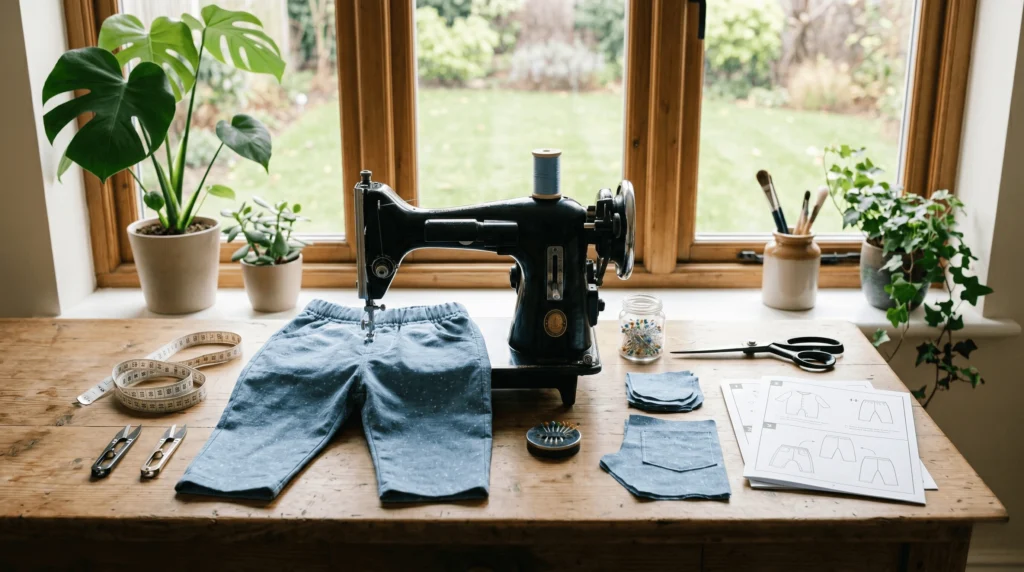
Toddler clothing patterns teach the same core skills as adult garments (straight seams, casings, hems) in a fraction of the time and with far less fabric waste.
Most people who abandon sewing do so after a failed first project. The fabric puckers, the seam goes crooked, or the finished garment does not fit. One maker on Reddit, r/sewing shared, “I spent $50 on fabric, and the whole thing puckered. I don’t even know if it’s the tension, the needle, or if I broke the machine.” That frustration is almost always a project selection problem.
Toddler clothing eliminates most of those failure points. The pieces are small, so you use less fabric per attempt. Elastic waistbands replace zippers and buttonholes. And the fit is forgiving because toddlers move constantly and do not care about precise darts.
A pair of elastic-waist toddler pants takes 60 to 90 minutes for a beginner. A simple A-line dress takes 2 to 3 hours. These are real-time estimates, not optimistic ones.
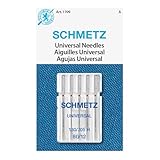
- SEWING MADE SIMPLE: SCHMETZ Universal Needles work with all home sewing machines and handle everything from delicate silks to heavy denim, making them perfect for any quilting, embroidery, craft, or home décor project
- CONVENIENT 1-NEEDLE SOLUTION: These all-purpose 80/12-sized needles handle a wide variety of materials, saving you time and effort in your sewing routine
- VERSATILITY & VALUE: This needle set delivers reliable performance across many fabrics, offering great value for your sewing kit
- READY FOR EVERY CHALLENGE: These needles are built for the long haul, tackling even the toughest sewing projects with ease, and delivering professional-quality results on woven and knit fabric
- SNAG & DAMAGE-RESISTANT: With a slightly rounded point, these needles glide through woven and knit fabrics without snagging, making them perfect for both beginners and complex projects
This article contains affiliate links. If you purchase through these links, we may earn a small commission at no extra cost to you. All products are editorially selected and flagged for hands-on testing before confirmation.
What Fabric Should You Use for Toddler Clothing?
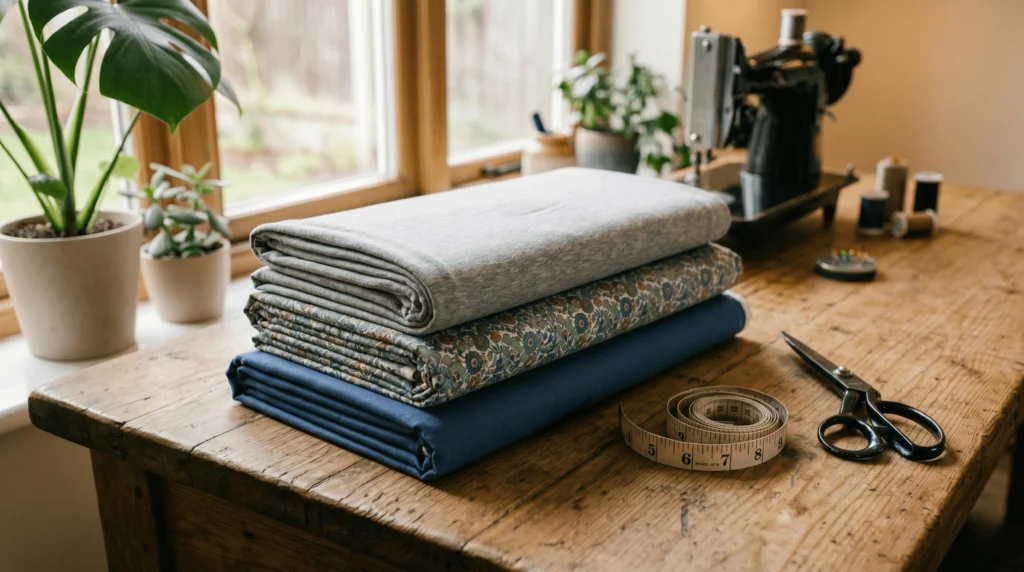
Medium-weight cotton (quilting cotton, cotton poplin, or cotton interlock) is the most forgiving fabric for toddler clothing because it presses cleanly, feeds evenly through a home machine, and survives repeated washing.
Quilting cotton and cotton poplin work best for pants and dresses. They hold a crease when pressed, do not slip under the presser foot, and come in prints that toddlers actually want to wear. For stretchy tops, cotton interlock is more forgiving than single jersey because it does not curl at the cut edges.
Avoid silk, chiffon, heavy denim, and slippery polyester for your first project.
You do not need to buy new fabric. One adult cotton shirt from a thrift store yields enough material for a full pair of toddler pants. As one reviewer on Goodreads noted, “I can take them apart and re-assemble the fabrics into something my kids love, at little to no cost.”
Buy an extra quarter yard beyond what the pattern requires. Use it for test stitching before you cut into your good fabric. A rotary cutter and self-healing mat set makes cutting small toddler clothing pieces faster and more accurate than scissors alone. For help selecting the right needle for your fabric, see the Schmetz needle type guide.
Read the full fabric types guide
How Do You Set Up Your Machine for Sewing Toddler Clothes?
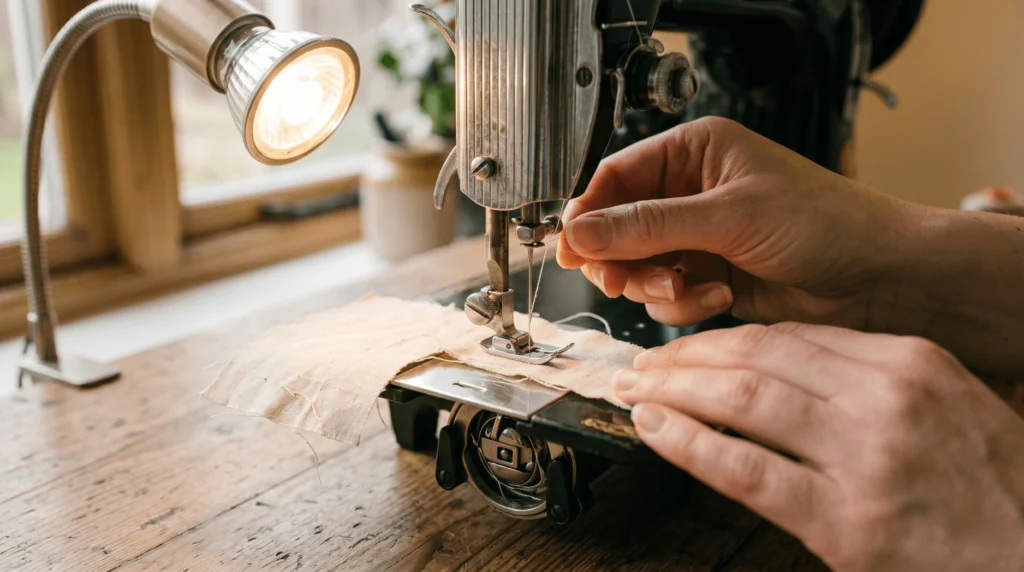
Two minutes of machine prep prevents the most common failures when sewing small garments: puckered seams, skipped stitches, and tunneling elastic casings.
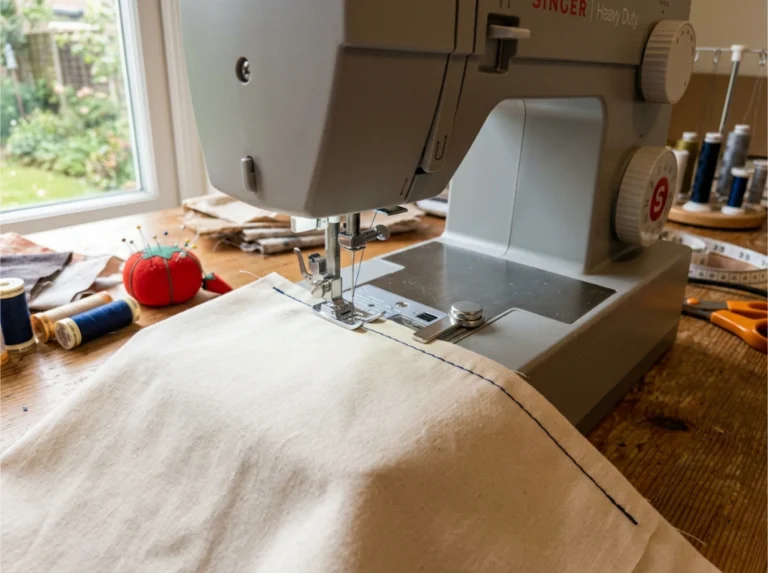
Start with the needle. For woven cotton, use a universal needle in size 80/12, such as the Schmetz Universal 80/12 5-pack. For knit fabrics like cotton interlock, switch to a ballpoint or jersey needle in the same size. A dull or wrong needle causes more stitch problems than any other single factor.
Thread the machine from scratch, even if it looks correctly threaded. Forty percent of machine errors are threading errors.
Set the stitch length to 2.5mm for seams and 3.0mm for elastic casings. Test on a scrap of your project fabric before cutting. If the stitch puckers, reduce the top tension by one number and test again.
If the bobbin thread shows on top, the top tension is too tight. If the top thread loops underneath, the bobbin is threaded incorrectly or the top tension is too loose.
Learn how to adjust sewing machine tension

- Package: This set includes 2 rolls of flat elastic bands in black and white colors. Each roll is 5 yards in length and approximately 3/4 inch in width, making it easy to cut to meet your sewing needs
- Material: Polyester and Natural Latex Rubber
- Widely Used: This elastic band is suitable for a variety of applications such as swimwear, underwear, pants, baby clothes, sportswear, T-shirts, hats, socks, DIY projects, and more. It can also be used to adjust the size of clothes as needed
- Good Elasticity: This elastic band can easily revert to its original length without deformation within the allowable tensile range, and it won't narrow when stretched, making it ideal for exposed waistbands on gathered skirts or pants
- Sewing Elastic Spool Features: This elastic band is comfortable, breathable, and durable, making it a great choice for all your sewing projects
This article contains affiliate links. If you purchase through these links, we may earn a small commission at no extra cost to you. All products are editorially selected and flagged for hands-on testing before confirmation.
How Do You Cut and Assemble a Free Toddler Clothing Pattern?
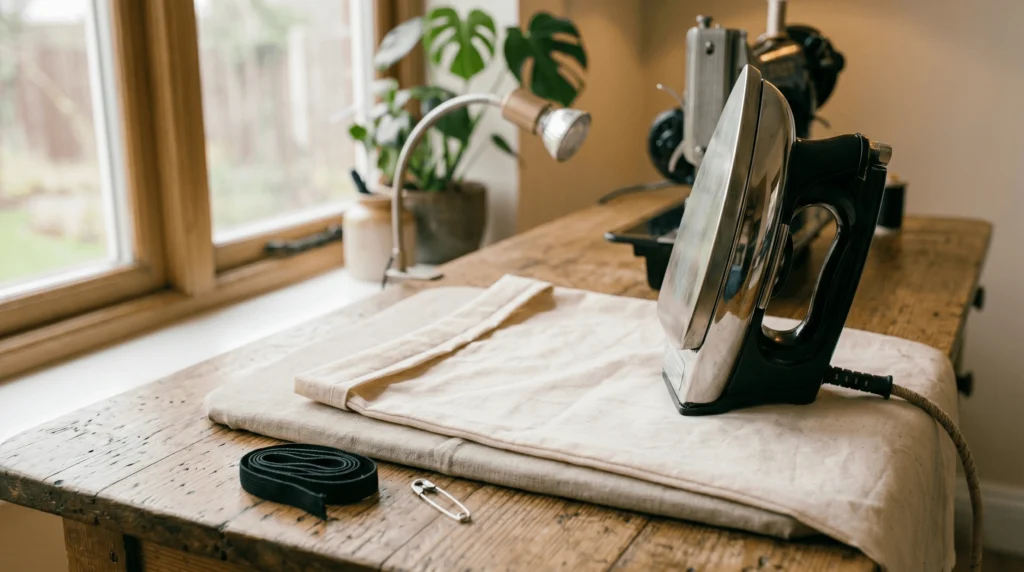
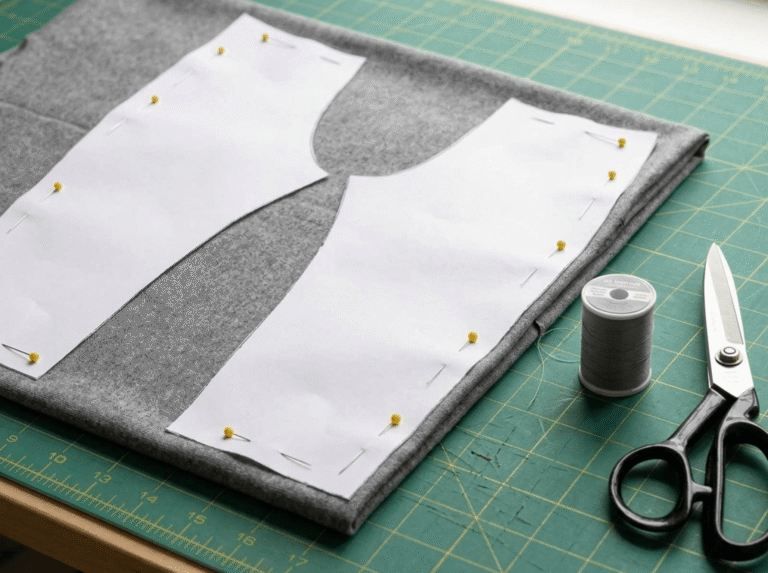
The fastest method for toddler garments is flat construction: complete all hemming, elastic insertion, and neckline finishing while the fabric is still flat, then close the side seams last.
This approach solves the biggest frustration sewers report with small garments. As one experienced maker explained in the PatternReview Beginner’s Forum, “sew as much as you can FLAT, and then make them in the round.” Another described working on miniature curves “as if you were sewing inside a tea cup.” Both methods reduce the difficulty of handling tiny necklines and pant legs.
Download the free Toddler Clothing Pattern Guide (PDF) for printable dimensions, cutting layouts, and fabric yardage for sizes 2T through 5T. The assembly sequence for elastic-waist pants follows this order:
Hem both legs while the fabric is still flat. Create the waistband casing on each piece while flat, leaving a 2-inch opening for threading elastic. Sew the inseam with right sides together, then sew both side seams from waist to hem. Press seams open.
Thread the elastic through the casing with a safety pin. Use 3/4-inch braided elastic, such as this 10-yard white/black elastic set, which covers multiple toddler projects. Overlap the ends by half an inch, stitch with a zigzag, and close the casing opening. Topstitch through all layers at each side seam to lock the elastic and prevent twisting.
If your elastic twists inside the casing, pin it at the side seam before stitching the casing closed.
Follow the full elastic casing tutorial See pressing and technique guidance for every skill level
Download the free Toddler Clothing Pattern Guide (PDF) for the complete walkthrough with fix-it notes at every step.
How Can You Modify These Patterns as Your Child Grows?
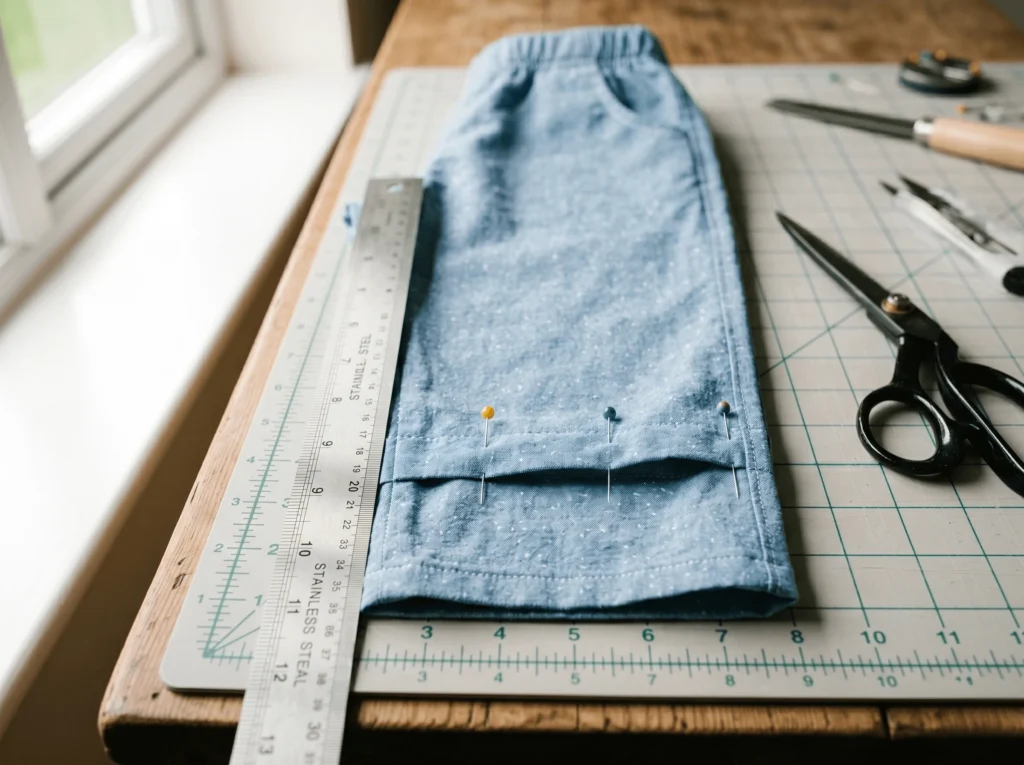
Adding 1 to 2 inches at the hem and using a deeper waistband casing lets you size up a toddler clothing pattern without redrafting the entire piece.
Toddlers grow fast. One community member on PatternReview put it simply: “This era passes swiftly, and DGD won’t be tiny for long!” The good news is that basic toddler clothing patterns are easy to adjust because they use simple geometry.
To size up, add half an inch at each side seam and 1 to 2 inches at the hem. The elastic waist adjusts automatically. To size down, reduce by the same amounts.
A growth tuck extends garment life. Before hemming, fold a 1-inch horizontal tuck into each leg above the hem line and stitch it. When the child outgrows the length, release the tuck for an extra inch.
Once you finish your first pair of pants, convert the same pattern to shorts by shortening the inseam, or add patch pockets for a design variation.
Learn the basics of pattern drafting and alteration
What Should You Sew First for Your Toddler?
Elastic-waist pants or shorts are the strongest first project for any beginner. They require only straight seams, one elastic casing, and two hems. No fitted necklines, no closures, no set-in sleeves.
Check your machine first: fresh needle, correct threading, test stitch on a scrap. Cut second. Sew flat, close last.
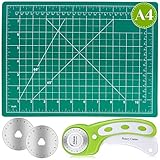
- Rotary Cutter Set – Fabric rotary cutter set includes 1pc 45mm rotary cutter, 2pcs SK7 replacement blades and 1pc 9" x 12" self healing cutting mat for sewing and crafting. Ideal for artist, crafters, quilters, engraver and hobbyists
- Rotary Cutter for Fabric – 45mm rotary cutter with ergonomic design increase grip control and reduce joint fatigue. Eligible for both right and left-handed users. This rotary cutter has a safety button that you can use to keep the blade shut or open. The rotary cutter makes cutting fabric, leather, paper and felt vinyl easy and fast!
- Self Healing Sewing Mat – A4 rotary cutting mat for sewing made of 5-layer self healing PVC material to protect your work surface and keep the blade sharpness, compatible with rotary cutter and straight blades. This rotary cutting mat for crafts is double sided printed with inches, metric gridlines and different angles help you to cut precisely, perfect sewing cutting mat for crafters
- Extra Rotary Cutter Blades – 45mm fabric rotary cutter equipped with 2 extra replacement rotary cutter blades. This quilting cutting blade made of SKS-7 steel, sharp and hardly dull, help to cut beautifully and straightly, perfect blades for quilting, sewing, art and crafts
- Multipurpose Fabric Cutter Set – Audab rotary cutter and mat set applicable to sewing, scrapbooking, clothes making, quilting, needlework, paper craft or other DIY hobby projects.
This article contains affiliate links. If you purchase through these links, we may earn a small commission at no extra cost to you. All products are editorially selected and flagged for hands-on testing before confirmation.
Download Your Free Toddler Clothing Pattern Guide
The free PDF includes printable dimensions for sizes 2T through 5T, cutting layouts for pants and a dress, a fabric yardage chart, a machine setup checklist, and assembly instructions with fix-it notes. For sleepwear projects, review the CPSC children’s clothing safety standards before choosing fabric.
Check this video from Style by Siddhi.
Frequently Asked Questions
-
What is the easiest toddler clothing pattern for a complete beginner?
Elastic-waist pants or shorts are the easiest first project. They require only straight seams, one elastic casing, and two hems. A beginner with a working machine can finish a pair in 60 to 90 minutes. No zippers, buttons, or fitted necklines are involved.
-
How much fabric do I need for a toddler clothing sewing pattern?
Most toddler clothing patterns in sizes 2T through 4T require 0.5 to 1 yard of 44-inch-wide fabric. Pants need about 0.75 yard. A simple dress needs about 1 yard. Always buy an extra quarter yard for test swatches and cutting errors.
-
Can I use knit fabric instead of woven cotton for toddler clothes?
Yes, but knit fabric requires a ballpoint or stretch needle and a slightly longer stitch length (3.0mm) to prevent skipped stitches. Cotton interlock is the most beginner-friendly knit because it does not curl at the edges the way single jersey does.
-
What needle size should I use for sewing toddler clothing?
Use a universal needle in size 80/12 for most woven cotton toddler projects. For knit fabrics, switch to a ballpoint or jersey needle in the same size. Replace the needle at the start of every new project because a dull needle causes puckering and skipped stitches.
-
How do I keep the elastic from twisting inside the waistband casing?
Pin the elastic to the fabric at the side seam before closing the casing. After threading the elastic through, overlap the ends by half an inch and stitch with a zigzag. Then close the casing opening and topstitch through all layers at each side seam to lock it.
-
Can I modify a toddler clothing pattern to fit a bigger or smaller child?
Yes. To size up, add half an inch at each side seam and 1 to 2 inches at the hem. To size down, reduce by the same amounts. For elastic-waist garments, the waist adjusts automatically with the elastic length. Cut the elastic to the child’s actual waist minus 1 inch.
-
Do free sewing patterns work as well as paid ones for toddler clothing?
Free patterns from reputable sources include the same core information as paid patterns: finished measurements, seam allowances, and assembly instructions. The difference is usually in the range of sizes and design variations offered. For a basic toddler project, a well-made free pattern is fully sufficient.
Why did you vote that way? Drop your take in the comments.