
Start Here
Related: Back-to-School Clothing Sewing Patterns Kids Will Actually Wear
Most “free” toddler pants patterns online make you dig through an email funnel, download a file with three pages missing, or guess at a size that never fits right. This one skips all of that. You get a complete, printable pattern and a tutorial written in plain language, with every step tested before it landed on this page. If you can sew a straight line and thread elastic through a casing, you can finish a pair of toddler pants in one sitting.
This toddler pants pattern is built for a first project: one sitting, one fabric type, no fitting guesswork.
What Do You Need to Sew Toddler Pants at Home?
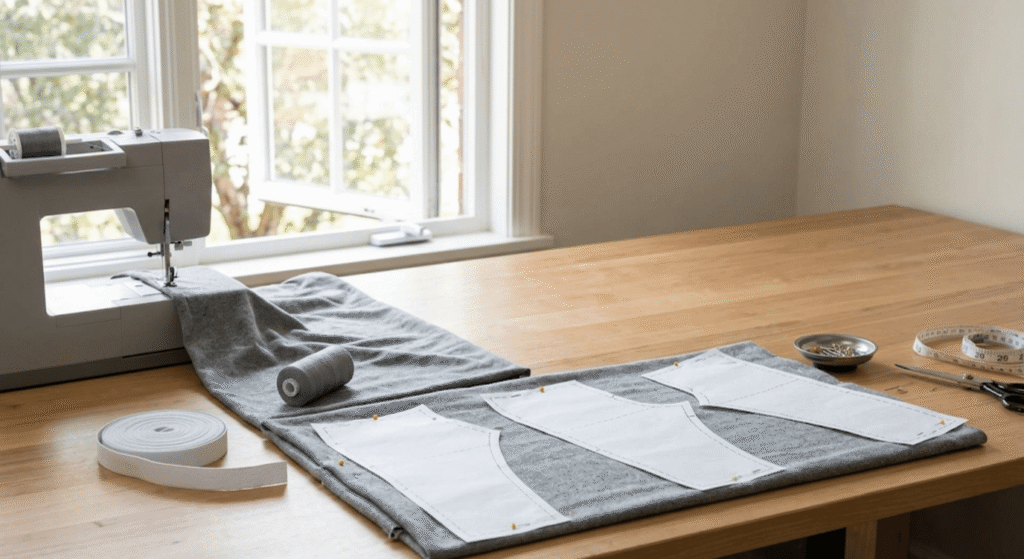
You need less than you think. Grab a half yard to three-quarters of a yard of stretch knit fabric, depending on the size you’re cutting. Knit fabric is the easiest starting point for toddler pants because it forgives small mistakes and doesn’t need a zipper or button closure. You’ll also need 3/4-inch or 1-inch elastic, matching thread, and a ballpoint or stretch needle. A regular universal needle will skip stitches on knit fabric, so don’t swap it out to save a trip to the store.
If you’re using a woven fabric like quilting cotton instead of knit, the pants will still work, but the fit will be looser through the waist and legs since woven fabric doesn’t stretch. Either way, the elastic waistband does the real work, so you don’t need advanced fitting skills to get toddler pants that actually stay on. If you’re new to sewing with knit fabric, (PENDING-JULIUS-SLUG: beginners-guide-stretch-fabric) walks through machine setup for stretch fabric before you start cutting.
How Do You Get the Free Toddler Pants Pattern?
The pattern comes as a printable PDF with all pieces included, sized 2T through 5T. Print at home on regular letter paper and tape the pages together using the guide marks, or take the file to a copy shop and print it full-size on A0 paper if you’d rather skip the taping. Before you cut into your fabric, print just the first page and check the one-inch test square against a ruler. If it’s off, your printer is scaling the file down, and every piece will come out the wrong size.
Always check the test square before you cut. A scaled-down pattern ruins every piece it touches.
What You Need
● 1/2 to 3/4 yard of stretch knit fabric (amount depends on size)
● 3/4-inch or 1-inch elastic, cut to your child’s waist measurement plus 1/2 inch
● Matching all-purpose thread
● A ballpoint or stretch needle (a universal needle will skip stitches on knit)
● A safety pin for threading the elastic
● An iron and pressing surface
How Do You Sew Toddler Pants Step by Step?
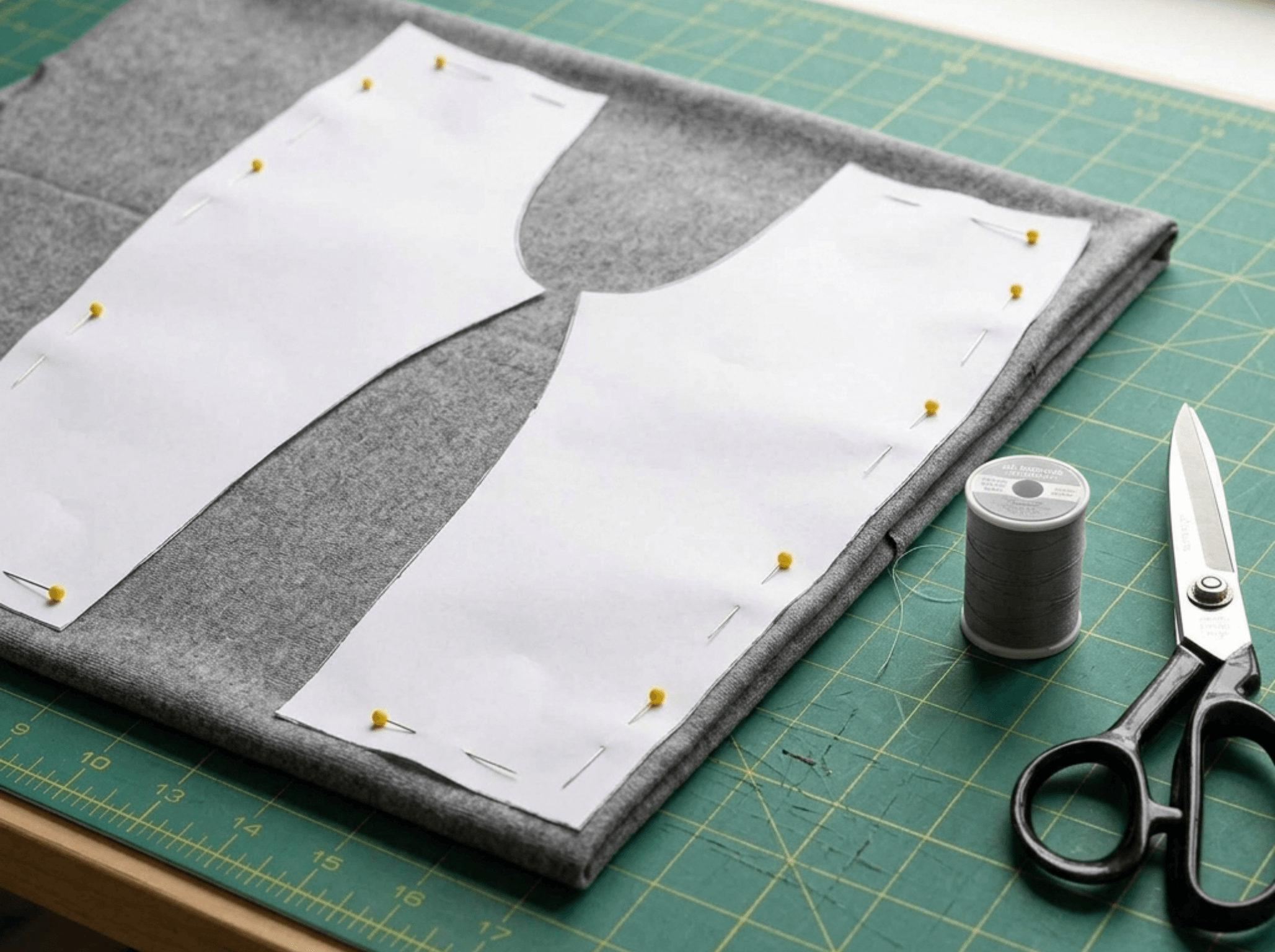
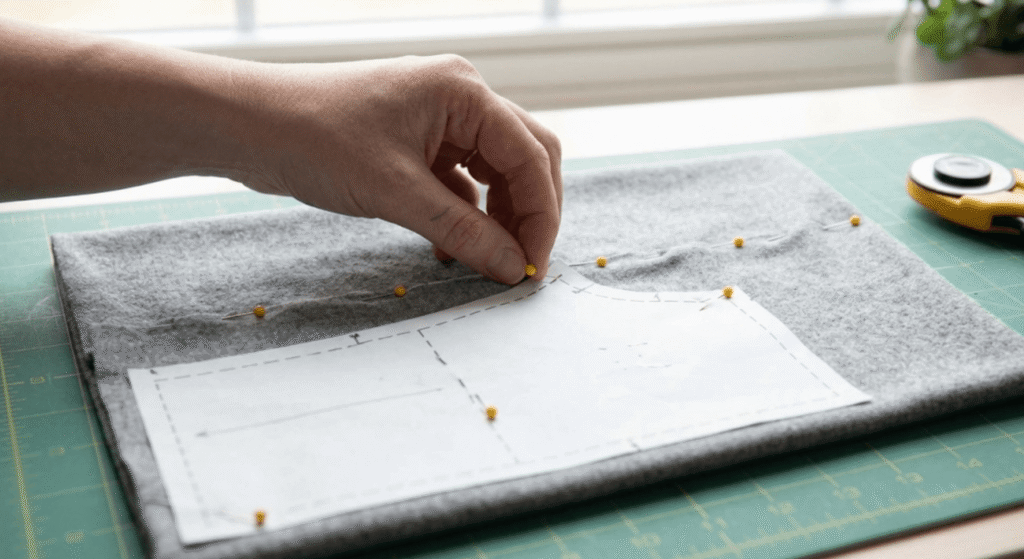
Step 1: Cut your pattern pieces. Fold your fabric right sides together and lay out the front and back pattern pieces along the fold line marked on the pattern. Pin in place before cutting so the fabric doesn’t shift. Cut two front pieces and two back pieces.
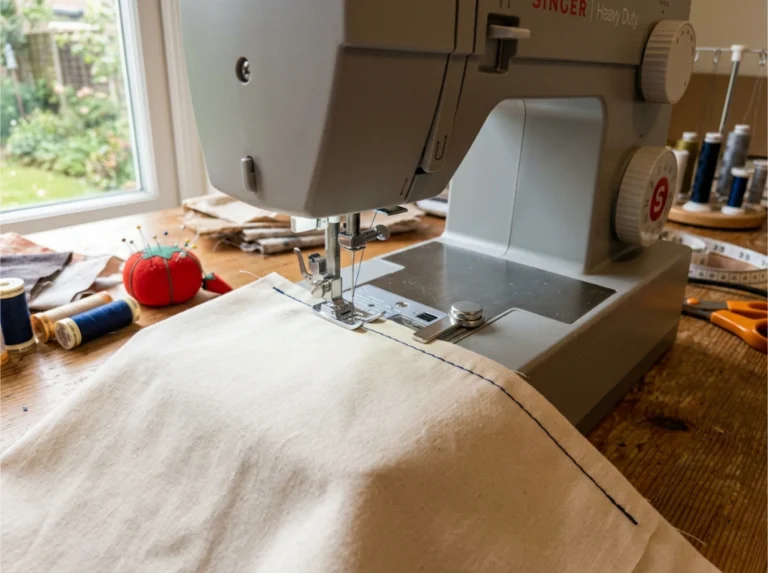
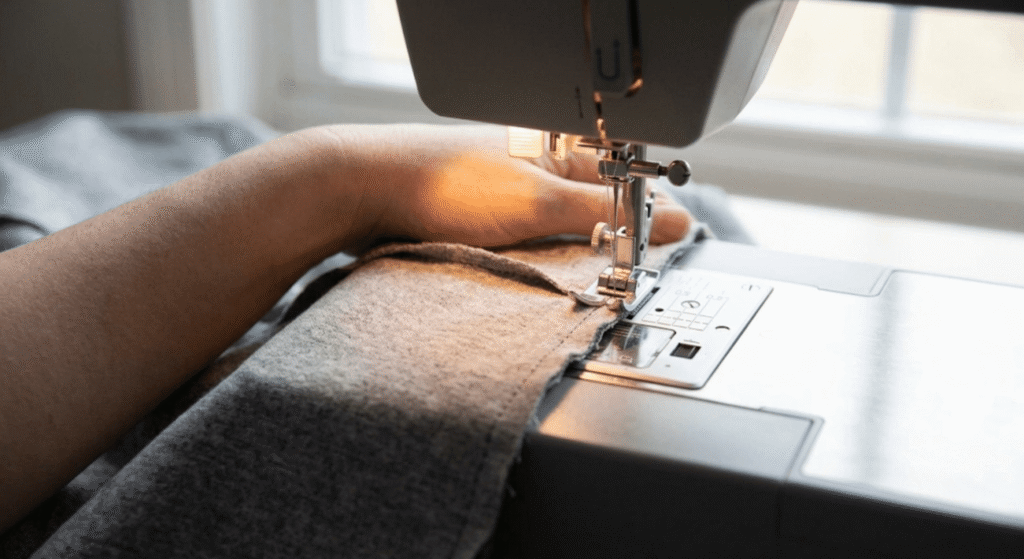
Step 2: Sew the crotch seams. With right sides together, sew the front pieces together along the crotch curve, then repeat with the back pieces. Use a 1/2-inch seam allowance unless the pattern tells you otherwise. Go slowly around the curve. This is the seam that fails first if you rush it, so keep your stitch line even instead of speeding through.
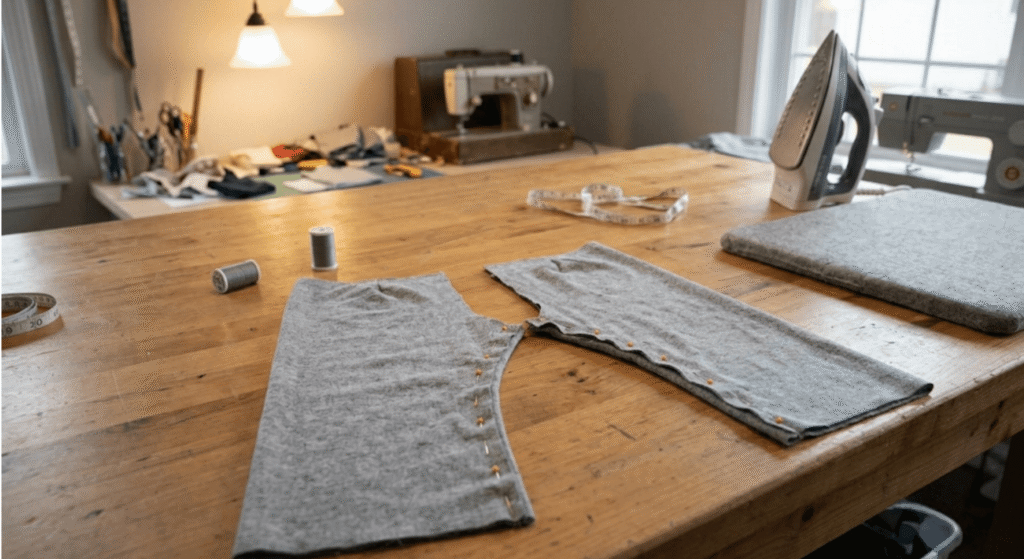
Step 3: Sew the inseam. Open up your front and back pieces so you have one long tube shape. Match the inseam edges from ankle to ankle, right sides together, and sew in one continuous line. Press the seam open before you move to the next step.
Step 4: Create and sew the waistband casing. Fold the top edge of the pants down to form a casing wide enough for your elastic to pass through, plus a little extra room. Sew around the casing, leaving a two-inch gap open. This gap is where the elastic goes in, so don’t sew it closed yet.
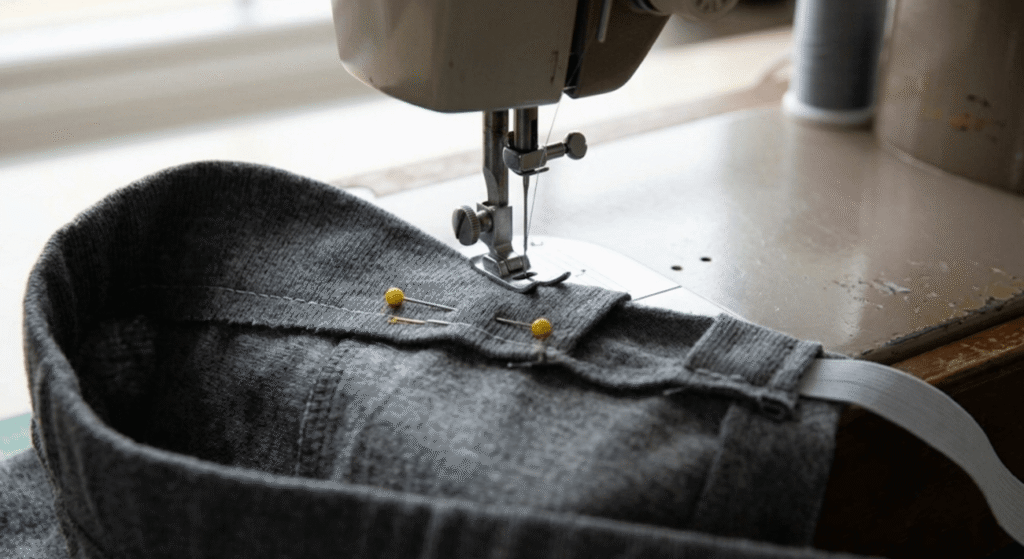
Step 5: Thread and secure the elastic. Attach a safety pin to one end of your elastic and feed it through the casing gap, working it all the way around until both ends meet. Overlap the ends by about half an inch and sew them together securely. Once the elastic is joined, close the gap in the casing.
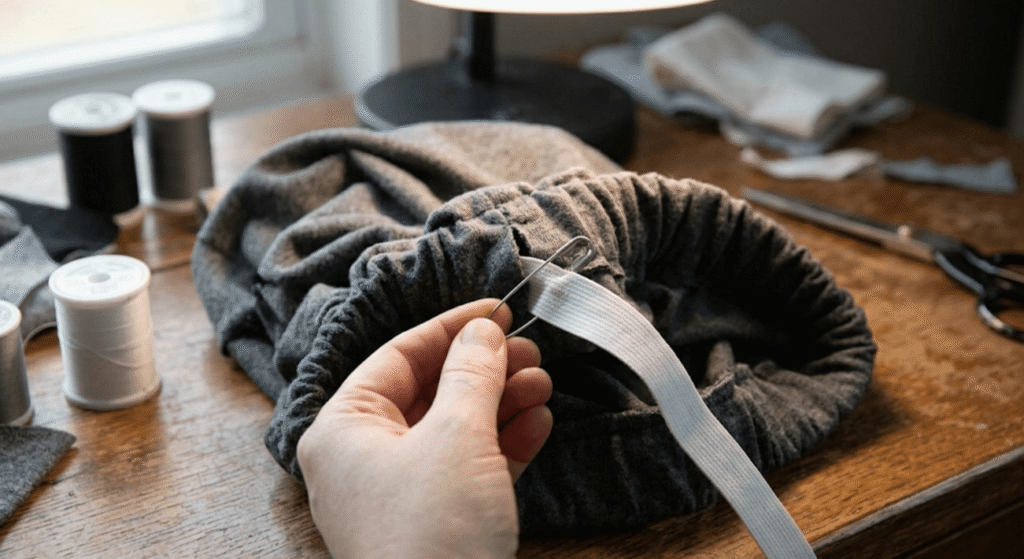
Twisted elastic is one of the most common complaints with homemade elastic waistbands. If your finished waistband keeps rolling or twisting after a wash, stretch it out fully and let it snap back to straighten the twist, then ditch-stitch through the waistband and elastic at the side seams to hold it flat for good.
Step 6: Hem the leg openings. Fold the bottom edge of each leg under twice, about a quarter inch each fold, and sew close to the inner fold. This hides the raw edge and keeps the hem from fraying in the wash.
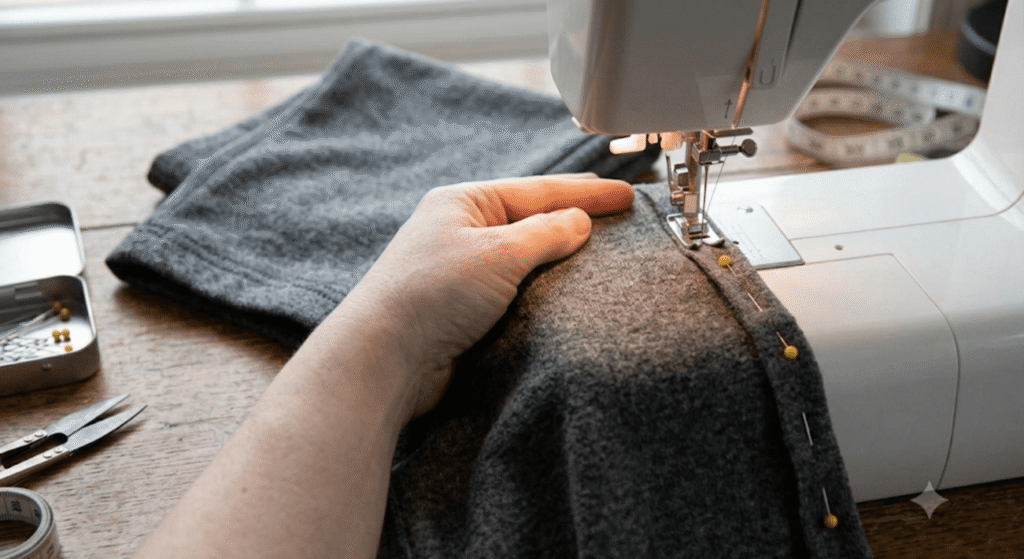
The elastic step is where most first-timers rush. Slow down here and the waistband holds up through washes.
What Toddler Pants Sizes Does This Pattern Cover?
This pattern covers 2T through 5T. Sizes with a “T” are cut with extra room through the hips and seat to fit over diapers, so if your child has already moved to underwear, you may notice extra fabric bunching at the hips and thighs. That’s normal, not a mistake in your cutting. To measure your toddler, wrap a soft tape around the fullest part of the waist and hip while they’re standing, and measure from waist to ankle for the inseam length. Compare those numbers to the pattern’s size chart rather than going by age alone, since toddler sizing varies a lot between kids. For a deeper look at adjusting fit through the hips, (PENDING-JULIUS-SLUG: fitting-kids-pants-hip-adjustment) covers the trim-down method step by step.
What Mistakes Ruin a Toddler Pants Fit?
The waistband is too tight or too loose. This usually happens when the elastic is cut to a guess instead of an actual measurement. Measure the elastic snugly around your child’s waist before cutting, then add half an inch for overlap.
The crotch curve puckers or pulls. This happens when the seam is sewn without a little ease built in, or when the curve is stretched while sewing instead of guided gently. Slow down through the curve and let the fabric feed naturally instead of pulling it through.
The hem looks uneven. This is almost always a measuring problem, not a sewing problem. Measure both legs from the same point before you hem, and mark your fold line with pins on both legs before you sew either one.
None of these mistakes mean you did something wrong as a beginner. They’re the three most common fixes readers ask about with this toddler pants pattern, and each one is a five-minute correction, not a reason to start over.
Ready to Sew Your Own Toddler Pants?
You now have a finished pair of toddler pants made from a free, tested pattern, without wasting fabric on guesswork. Download the pattern, print your first test page, and get cutting. Once you’ve made one pair, the second and third go twice as fast. Looking for your next project after this one?
How to Sew Perfect Toddler Pants by Nathalie Blue.
Frequently Asked Questions
How much fabric do I need for toddler pants?
Most sizes need a half yard to three-quarters of a yard of fabric, depending on the size you’re cutting. Smaller sizes like 2T use less, larger sizes like 5T use more. Buy an extra quarter yard if you’re new to sewing knit fabric, so you have room for a test seam first.
Can I use woven fabric instead of knit for this pattern?
Yes, but the fit will change. Woven fabric like quilting cotton doesn’t stretch, so the pants will fit looser through the waist and legs than the knit version. The elastic waistband still works with woven fabric, so this is a fine substitution if knit isn’t available.
My elastic waistband keeps twisting. How do I fix it?
Stretch the waistband out fully and let it snap back into place to straighten the twist. Then ditch-stitch through the waistband and elastic at the side seams. This holds the elastic flat through future washes without adding bulk.
What size toddler pants should I sew first?
Measure your toddler’s waist, hip, and inseam and match those numbers to the pattern’s size chart instead of guessing by age. Toddler sizing varies enough between kids that age alone often leads to the wrong fit, especially around the hips.
How long does this project take for a beginner?
Most beginners finish one pair in about one to two hours, including cutting. The waistband and hemming steps take the longest the first time through, but they go faster on your second pair.
Can I wash and dry the fabric before I cut it?
Yes, and you should. Pre-washing and drying your fabric the way you’ll wash the finished pants prevents shrinkage after the garment is sewn. Skipping this step is one of the most common reasons a finished pair fits differently after the first wash.
Do I need a serger to make toddler pants?
No. A regular sewing machine with a straight stitch or narrow zigzag handles every seam in this pattern. A serger finishes raw edges faster, but it isn’t required to complete or wear the finished pants.
Why did you vote that way? Drop your take in the comments.