
Quick Look
The best free sewing patterns for beginners in 2026 come from Mood Fabrics Sewciety, Peppermint Magazine, and Fabric Store NZ. Start with straight-seam projects like elastic-waist shorts or a tote bag that finish in under two hours, then build skills one technique at a time. Startup cost beyond a machine: under $50.
This guide curates beginner DIY patterns for summer 2026, organized by difficulty tier so you can pick a project that matches your skill level, finish it, and actually wear the result.
Where Can You Find Reliable Free Sewing Guides Online?
Not every free pattern is worth the fabric you cut it from. A bad pattern will make you blame your skills for a problem you did not create.
The internet has thousands of downloadable patterns. The problem is quality. One reviewer put it bluntly: “So so bad, what is going on with the patterns on Etsy? Nothing like the pic, scammed me again.” (Etsy) Others echo the concern: “It really saddens me that these are likely the first patterns beginners buy and give sewing such a bad rep.” (Substack)Here is where to look instead. Mood Fabrics Sewciety publishes dozens of free garment patterns with full instructions and inclusive sizing. Peppermint Magazine offers a rotating library of printable PDF patterns from independent designers. Fabric Store NZ provides cleanly drafted patterns with clear layout guides. Community hubs like So Sew Easy and AllFreeSewing aggregate patterns from multiple contributors; quality varies, so check for a test square, labeled seam allowances, and a sewing tutorial. If a listing shows AI-generated photos, keep scrolling.
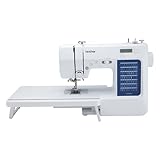
- 70 UNIQUE BUILT-IN STITCHES: The Brother CS7000X sewing and quilting machine includes 70 built-in stitches including utility, decorative, heirloom and quilting stitch functions, and 7 1-step auto-size buttonholes
- IMPROVED NEEDLE THREADER: Easier than ever to use, the automatic needle threader reliably pushes the thread through the needle. The convenient, jam resistant drop-in top bobbin easy to load and helps ensure your bobbin stays in place
- INCLUDED ACCESSORIES: The CS7000X includes a wide table, 10 sewing feet plus a quilt guide, protective hard case, a trilingual English/Spanish/French user manual and more
- METAL FRAME and FIXED NEEDLE BAR: The durable metal frame construction allows your machine to tackle any project, and the needle is fixed in place while you work, allowing for cleaner stitching and even lines
- LARGE NEEDLE-TO-ARM WORKSPACE: A larger workspace with increased width in needle-to-arm space allows users to work on larger projects including quilts

What Should a Complete Beginner Sew First This Summer?
Your first sewing project should use only straight seams, require no zippers or buttonholes, and be finishable in under two hours. That is the difference between the person who sews a second project and the person who puts the machine in the closet.
One recurring thread across sewing communities captures this cost: “Maybe I’m just not talented.” (Reddit, r/sewing) That thought is rarely accurate. It is a project-selection problem. If you are still building confidence, our beginner sewing skills guide covers the foundational techniques below.
Start here:
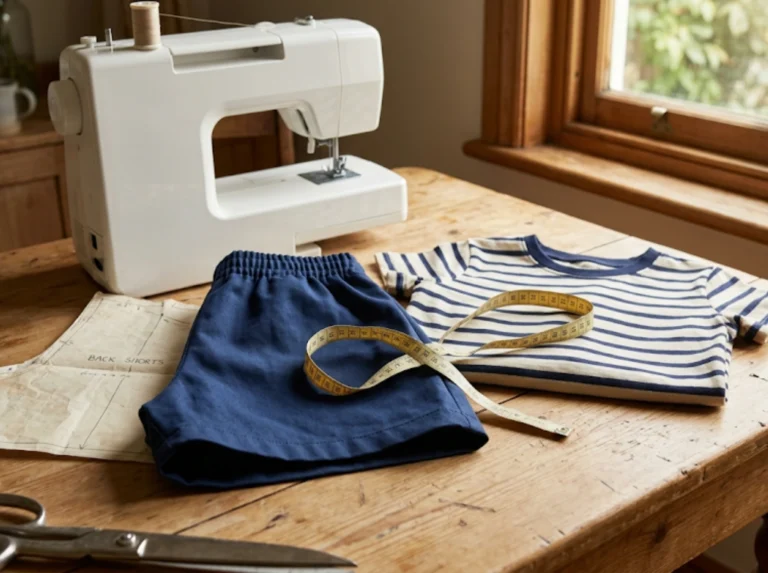
1. Elastic-waist shorts or skirt. Cut two rectangles, sew the side seams, fold a casing at the top, and thread elastic through. Estimated time: 60 to 90 minutes. Skill required: straight seam, pressing a fold.
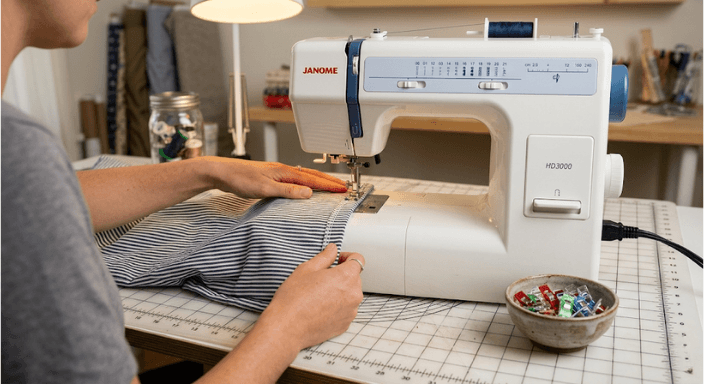
2. Simple tote bag. Two rectangles plus two straps. Four seams and a hem. Estimated time: 45 to 75 minutes. Skill required: straight seam, topstitching.
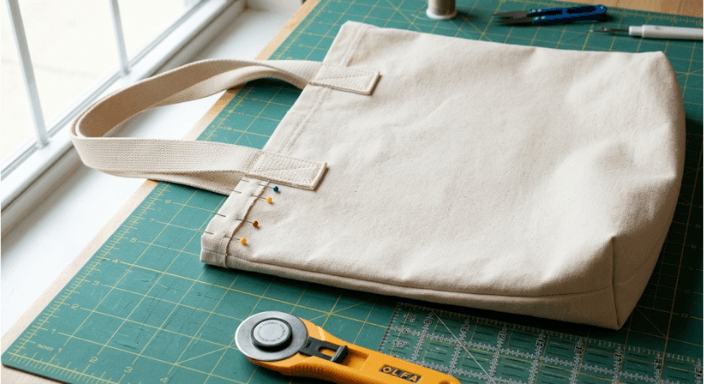
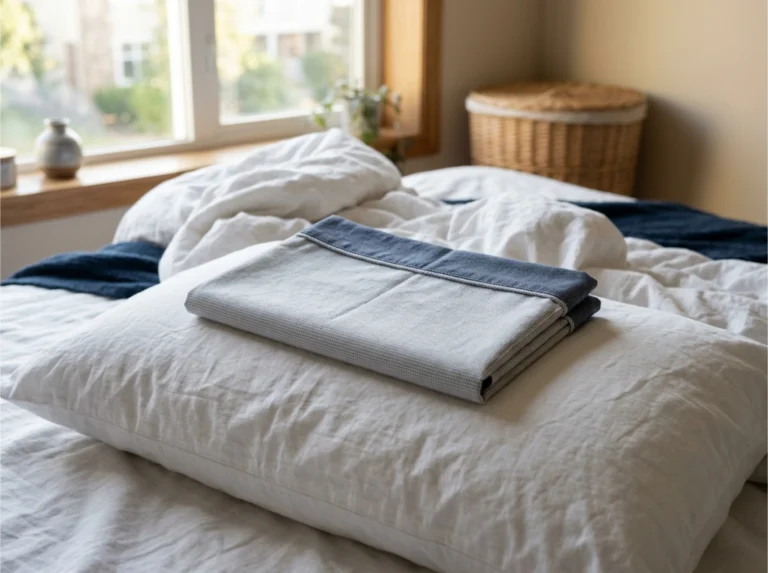
3. Envelope pillowcase. One rectangle, three hems, two overlapping folds. Estimated time: 30 to 45 minutes. Skills required: straight seam, hem pressing.
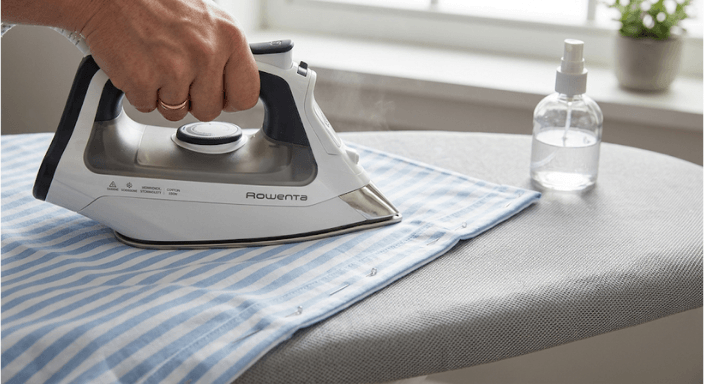
These are not exciting projects. They are projects you will finish. That matters more than aesthetics.

- ARTS AND CRAFTS STAPLE: All Purpose Fiskars Scissors for cutting a wide variety of fabric and crafts, including wrapping paper, paper, fabric, and more
- PRECISION ART SUPPLIES: High-grade, precision-ground stainless steel blades offer a sharp edge that cuts all the way to the tip
- LONG LASTING AND RELIABLE: A dependable addition to your quilting supplies and scrapbook supplies; Fiskars craft supplies and materials are built to last
- COMFORTABLE AND CONVENIENT: Legendary orange handle is lightweight and ergonomically sculpted for comfort and control; Bent handle design keeps materials flat for mistake-free cutting
- QUALITY TOOLS FOR ARTS AND CRAFTS: From scissors and cutting mats, rotary and paper cutters, to classroom essentials, scissors for kids, and quilting and scrapbooking supplies; Essential for holiday gift wrapping supplies
Which Free Patterns Build Real Skills After Your First Project?
After two or three finished straight-seam projects, introduce one new technique per project to build range without overwhelming your confidence. Not two. Not three. One.
Here is where you go next:
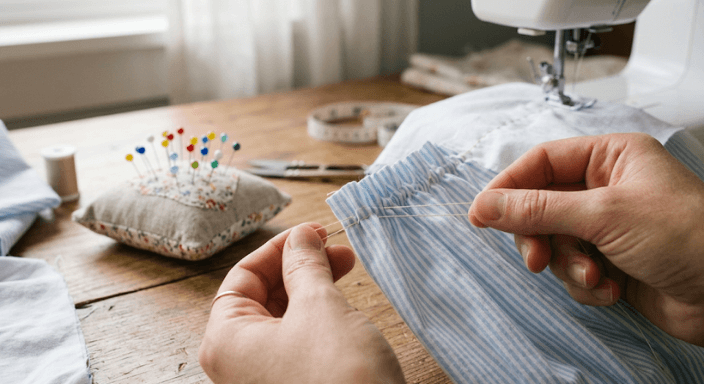
- Gathered skirt. You already know elastic waistbands. Now you learn to distribute fabric evenly along a basting stitch. Estimated time: 90 to 120 minutes. Prerequisite: one straight-seam project.
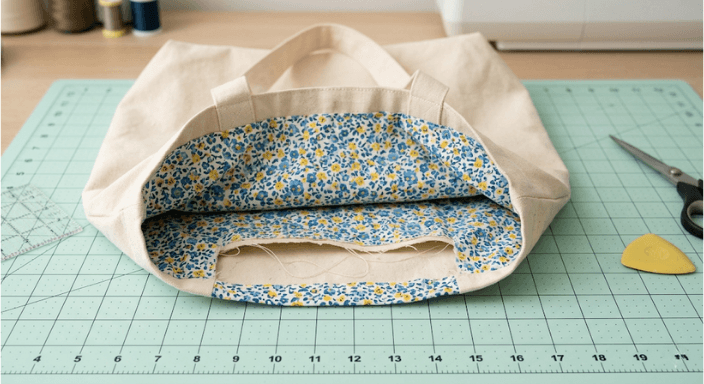
- Lined tote bag. Same construction as your first tote, but now you add an interior lining and turn the bag through an opening. Estimated time: 90 to 120 minutes. Prerequisite: one completed tote bag.
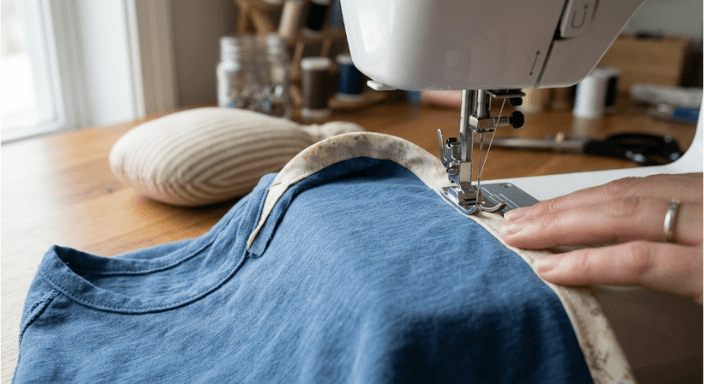
- A-line tank top or camisole. You already know straight seams. Now you learn to sew a curve and finish raw armhole edges with bias binding or a facing. Our basic sewing stitches guide covers each finishing stitch. Estimated time: 2 to 3 hours. Prerequisite: comfort with pressing and pinning.
Fit note for tops and dresses: If you are above a C cup, select your pattern size by your high bust measurement and check for a full bust adjustment. Add front length for a fuller bust. This is not advanced fitting; it is how you get a top that fits.
What Sewing Tools Do You Actually Need to Start for Under $50?
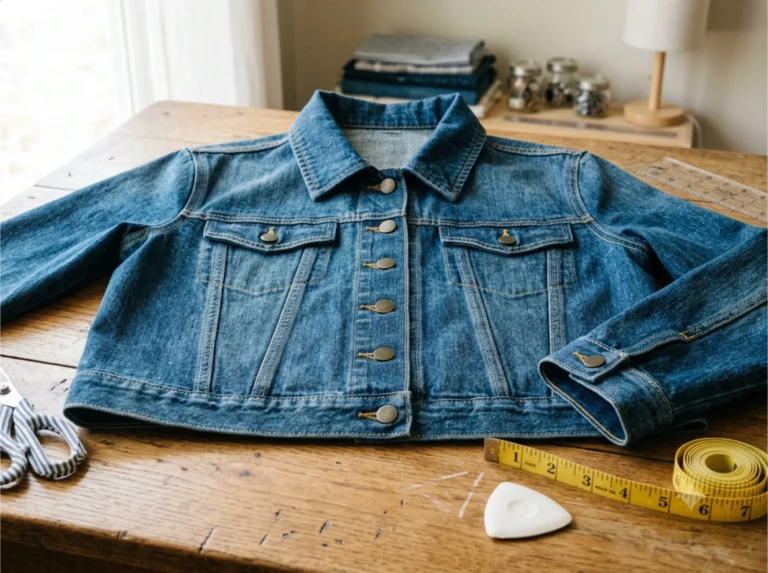
You need five items to begin, and you probably own at least two already: a sewing machine, fabric scissors, pins or clips, a measuring tape, and an iron. That is the full list. Everything else can wait.
Total cost for everything except the machine: $30 to $50. Still shopping? Our tested sewing machine guide for 2026 covers five models across multiple fabric types.
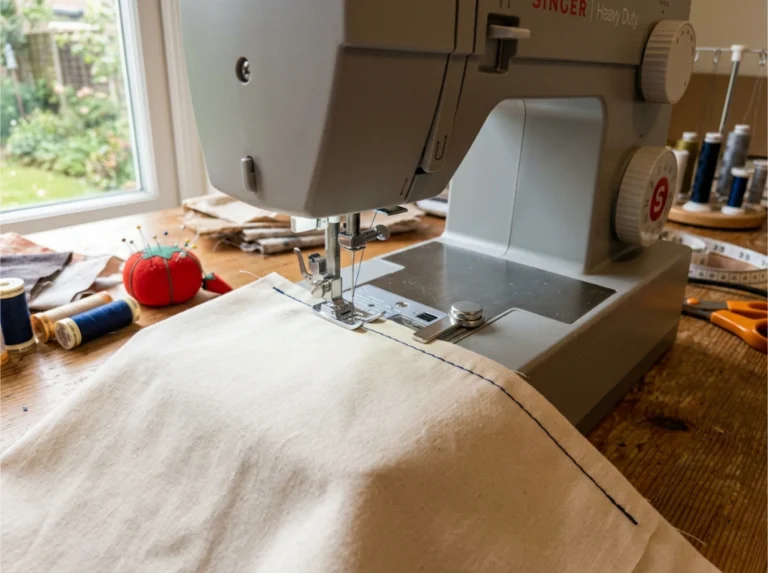
Before you cut any fabric, run this machine check. Re-thread from scratch (top thread and bobbin). Sew a test line on a scrap of your project fabric. If stitches loop, skip, or pucker, replace the needle. A fresh needle costs under a dollar and fixes more stitch problems than any tension dial. One community member captured the pain of skipping this: “I spent $50 on fabric, and the whole thing puckered. I don’t even know if it’s the tension, the needle, or if I broke the machine.” (Reddit, r/sewing)
Thread Frame Prompt: [Close-up of hands re-threading a sewing machine, the thread path visible from the spool pin through the tension discs down to the needle, a small pack of universal needles on the table beside the machine, even overhead lighting]
This article contains affiliate links. If you purchase through these links, we may earn a small commission at no extra cost to you. All products recommended below are flagged as pending hands-on review by our editorial team.
How Do You Print and Assemble a PDF Pattern at the Correct Size?
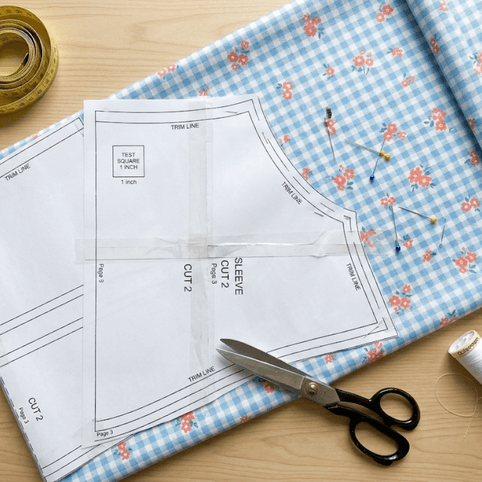
Most free sewing patterns arrive as multi-page PDFs. The top reason beginners get the wrong size is a printer scaling setting, not a drafting error.
Here is the fix:
Step 1. Download the PDF.
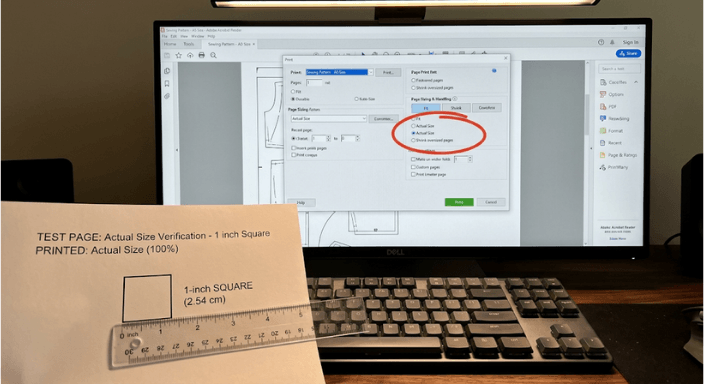
Open it in Adobe Reader (not your browser’s built-in preview, which sometimes rescales).
Step 2. In print settings.
Select “Actual Size” or set the custom scale to 100%. Never select “Fit to Page.”
Step 3. Print only the first page.
Measure the test square with a ruler. It must match the stated measurement exactly.
Step 4. If correct, print the remaining pages.
Trim overlap borders and tape pages together following the assembly diagram.
Step 5. Cut your pattern pieces.
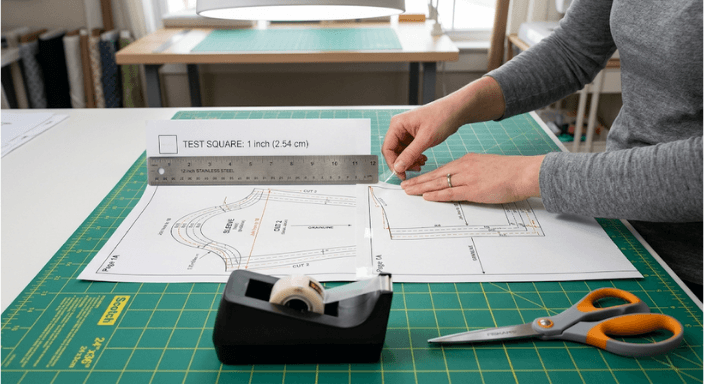
Pin or weight them on your fabric with the grainline arrow parallel to the selvage. Our sewing patterns guide explains grainline markings and layout symbols.
If your test square is off by even a millimeter, do not proceed. Adjust your print settings and reprint. One Etsy reviewer described the frustration: “Printing pattern was a nightmare and very time-consuming. Was like putting a puzzle together.” (Etsy)

- ★ Good quilt quality cotton fabric: Our cotton quilting fabric is made by 100% premium cotton which has a medium-weight 5.2oz (145g/square meter) plain weave. Our cotton fabric in medium weight won’t shrink much after washing. It has great strength and durability, breathable and soft touch, which is perfect for any sewing and crafting projects, from toys and bags to home decoration.
- ★ Fat quarter pack: Each Bundle Collection contains 10 designs- 1 each of Fat Quarter (18”x21”each sheet) with different printed patterns. The collection subject of this cotton quilting fabric pack is about Starry Sky
- ★ Precut fabric is always the first choice to use and store: Our fat quarter cotton quilting fabric can be cut for making quilt blocks depending on your needs such as typical 10”squares, 5”charm, or 2.5”mini charm. Cutting fat quarters for making fabric binding is also available.
- ★ Multi-purpose for crafting, sewing, embroidery projects: Our cotton quilting fabric is suitable for any sewing and crafting projects, from apparel to home decorations such as facemask, sew bags, baby clothes, dolls’ costumes, pillows, cushion covers, table cloth... and many other daily items. It is also good fabric choice for machine embroidery projects.
- ★100% Cotton Verification: We get it — sometimes you want to be sure about what you're buying. If you'd like to confirm our fabric's material, we encourage you to try this simple burn test. Simply burn a small swatch and observe: (1) Pure Cotton: Burns with a paper-like smell and leaves soft, crumbly ash. (2) Polyester Blend: Melts like plastic, drips, and forms a hard, bead-like residue.
Ready to Build Your Summer Sewing Collection?
You do not need 50 patterns right now. You need one project that matches your skill level, a working machine, and fabric on your table today.
Pick the project from the tiers above, download the pattern, run the machine check, and cut your fabric.
Your second project will teach you more than your first. But none of that starts until you finish the one in front of you.
Frequently Asked Questions
-
Where can I find free sewing patterns that actually work?
Trusted sources include Mood Fabrics Sewciety, Peppermint Magazine, Fabric Store (New Zealand), and So Sew Easy. These offer tested patterns with clear instructions and inclusive sizing. Avoid ultra-cheap Etsy listings with AI-generated product photos or no written instructions. Always check reviews before downloading any pattern, free or paid.
-
What is the easiest sewing pattern for a complete beginner?
An elastic-waist skirt or a simple tote bag. Both use only straight seams, require no zippers or buttonholes, and can be finished in one to two hours. Choose a medium-weight cotton fabric that does not stretch, which eliminates most tension and feeding problems while you learn your machine.
-
Can I sew summer clothes without a sewing machine?
Yes, but it takes significantly longer. Hand-sewing a simple garment like a wrap skirt is possible using a backstitch for structural seams and a slip stitch for hems. For anything beyond one project, a basic machine (even secondhand) saves hours per garment and opens up nearly all beginner patterns.
-
How do I print a PDF sewing pattern at the correct size?
Set your printer to “Actual Size” or 100% scale. Never select “Fit to Page” because it shrinks the pattern. After printing the first page, measure the test square with a ruler. If it matches the stated measurement exactly, your scale is correct. If not, adjust printer settings and reprint.
-
Do free sewing patterns come in plus sizes?
Some do, but not all. Check the size range before downloading. Mood Fabrics and Cashmerette offer inclusive sizing in their free patterns. If a pattern only goes to size L or XL, look for an alternative rather than forcing a grade-up. For fitted tops and dresses, size by your high bust measurement and adjust for cup size.
-
How much fabric do I need for a simple summer top?
Most beginner tank tops require 1 to 1.5 yards of 45-inch-wide fabric. Always check the pattern’s yardage chart for your specific size before buying. Purchase an extra quarter yard for test scraps. Cotton lawn, cotton voile, and quilting cotton are all good lightweight choices for summer garments that are easy to sew.
-
What should I do if my seams pucker on lightweight summer fabric?
Switch to a size 9 or 11 universal needle (smaller needles cause less puckering on thin fabric). Reduce your stitch length to 2.0 to 2.5mm. Lower the presser foot pressure if your machine allows it. If puckering continues, re-thread the machine completely, because threading errors cause more tension problems than the tension dial itself.
Why did you vote that way? Drop your take in the comments.