
Fast Facts
A vintage reproduction apron uses 1940s and 1950s construction techniques applied to a period-accurate silhouette. Free and paid patterns are available as PDF downloads and printed reproductions from Simplicity, indie Etsy designers, and curated free-pattern archives. The best beginner entry point is a gathered half apron in medium-weight cotton. This guide covers where to find patterns, which fabrics to choose, and how to sew with authentic methods at any skill level.
Related: Vintage Feedsack Fabric Sewing Patterns: History, Projects, and How to Start
Where Can You Find Free Vintage Apron Patterns Worth Sewing?
Free patterns are available from curated archives, major pattern companies, and indie PDF designers, but quality varies sharply between sources.
Sites like AllFreeSewing, SewingSupport, and TipNut host downloadable PDF booklets of public-domain vintage designs. FleeceFun offers a free half-apron pattern with photographic instructions. For printed patterns, Simplicity and Butterick reissue authentic 1940s and 1950s apron designs (including Simplicity 1221, 8571, and 8814) with modern size grading, typically priced between $8 and $15.
Etsy hosts hundreds of indie vintage apron patterns as PDF downloads, usually between $2 and $8. Quality varies widely. One maker noted, “The instructions are not clear at all which make it very difficult to follow.” Another reported, “The pattern was impossible to match up after printing, I ended up going to a local store and buying a pattern.”
Before purchasing, check three things. Does the pattern state its seam allowance? Is the sizing modern-graded or single-size? Are construction steps included, or does the pattern assume prior knowledge?
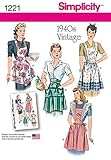
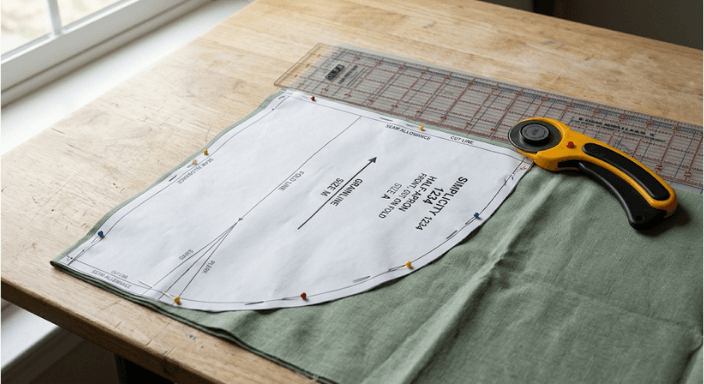
- PATTERN S1221 SIZING: Simplicity pattern includes women's sizes S-L so you can sew your ideal fit. Pattern sizing runs differently from ready-to-wear clothing, so measure and check the body size chart before cutting.
- IN THE ENVELOPE: Printed tissue pattern pieces and clear step-by-step illustrated sewing instructions guide you from start to finish. The envelope also lists the suggested fabrics and the notions you need, so you can shop for materials with confidence.
- AMERICAN SEWING HERITAGE: An American sewing icon since 1927 and proudly made in the USA, Simplicity has been trusted by home sewists for nearly a century for accurate, easy-to-follow sewing patterns.
- MAKE IT UNIQUELY YOURS: Create custom pieces using your favorite fabrics, prints, trims, and embellishments. Personalize your apron to reflect your style, or use the cover photos as inspiration for handmade makes that are truly your own.
- EASY AND REWARDING TO SEW: A satisfying sewing project for beginner and intermediate sewists, perfect for everyday kitchen use, backyard barbecues, baking, handmade gifts, and craft fairs.
What Makes a 1940s or 1950s Apron Different from a Modern Pattern?
Authentic 1940s and 1950s apron patterns use construction methods that modern patterns have largely abandoned, including bias-bound edges, French seams on lightweight fabric, and deeper pocket placements designed for actual kitchen work.
The silhouette comes first: fuller gathered skirts, cross-back or halter straps, scalloped hemlines, and decorative touches like rick-rack, piping, or applique pockets.
The construction is the more significant difference. Original vintage patterns used non-standard seam allowances (3/8″, 1/2″, or 5/8″ depending on company and decade) and minimal instructions. As one community member put it, “vintage patterns assumed the purchaser could sew and didn’t need all the steps detailed.”
Modern reproductions from companies like Decades of Style address some gaps by expanding into wider size ranges and adding clearer instructions. But a reproduction that only copies the shape without using period-appropriate techniques produces a retro-styled apron, not a genuine vintage reproduction apron. The distinction matters if authenticity is your goal.
Which Fabrics Work Best for Sewing a Period-Accurate Apron?
Period-correct choices are lightweight to medium-weight woven cottons, but modern blends offer better durability without sacrificing the drape that defines the silhouette.
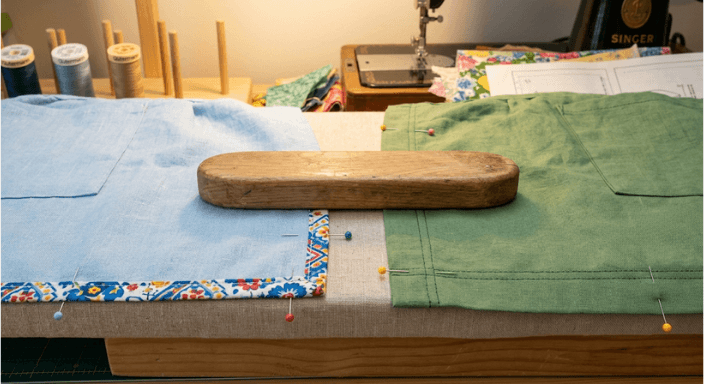
Cotton lawn, broadcloth, gingham, and calico were the standard fabrics of the era. Feedsack-print reproductions capture the exact aesthetic and are widely available. These lightweight cottons drape softly and gather beautifully, but they fray aggressively and need bias-bound edges or French seams.
Modern substitutes work with trade-offs. Quilting cotton is the most accessible option, but it has a heavier hand. Cotton-linen blends offer better durability and soften with each wash. Chambray is period-accurate for utility aprons.
Avoid slippery fabrics like rayon challis or polyester satin. They shift during cutting, resist pressing, and do not hold gathers.
Pre-wash everything. Vintage-weight cotton shrinks 3 to 5 percent on the first wash. Cut your pattern pieces after washing and pressing, not before.
How Do You Sew a Vintage Reproduction Apron Step by Step?
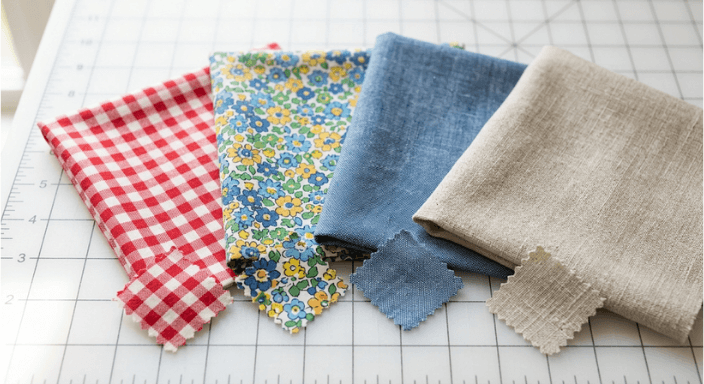
The construction sequence follows the same order regardless of skill level: cut, gather, attach pockets, finish edges, build the waistband, attach ties, and hem.
This project has two tracks. The Weekend Version uses machine-finished edges (60 to 90 minutes). The Heirloom Version uses bias binding and French seams (3 to 4 hours). Both use the same pattern pieces. Skill prerequisite: Gathering is a confident beginner technique. Bias binding is intermediate.
-
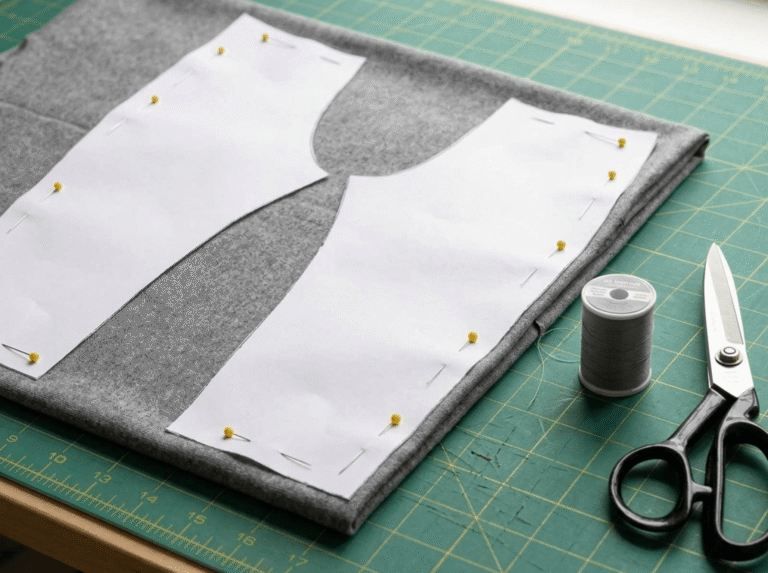
Pre-wash, press, and cut your fabric.
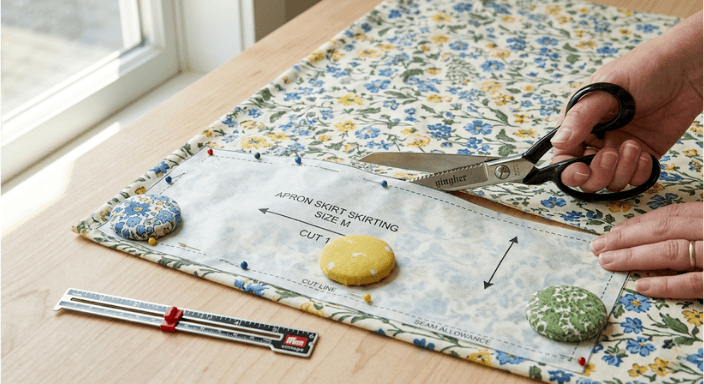
Check the seam allowance on your pattern before cutting.
-
Skirt Panel
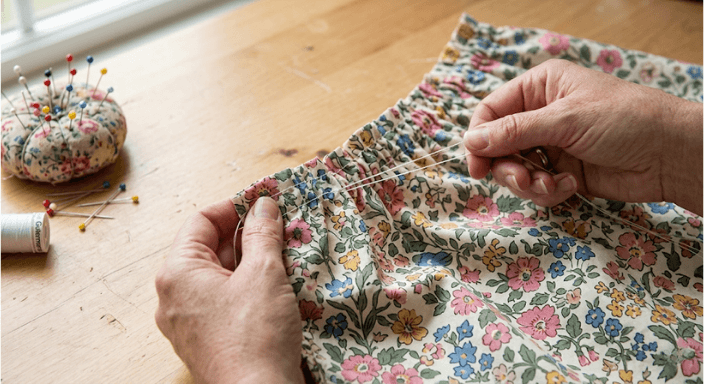
Gather the skirt panel using two parallel rows of basting stitches at 1/4″ and 1/2″ from the top edge.
-
Construct and attach pockets.
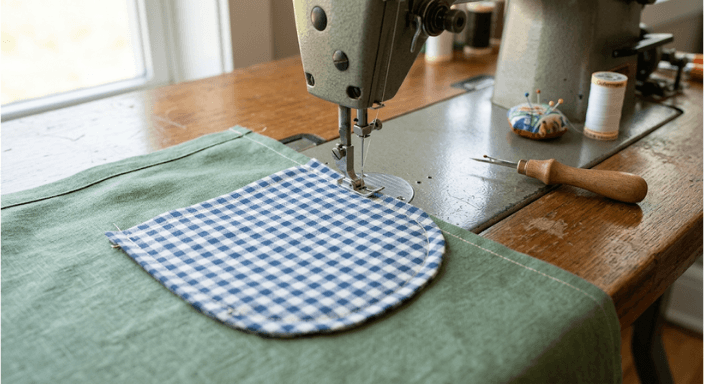
Press edges under, clip curves on rounded corners, and topstitch with bartacks at each top corner.
-
Finish raw edges.
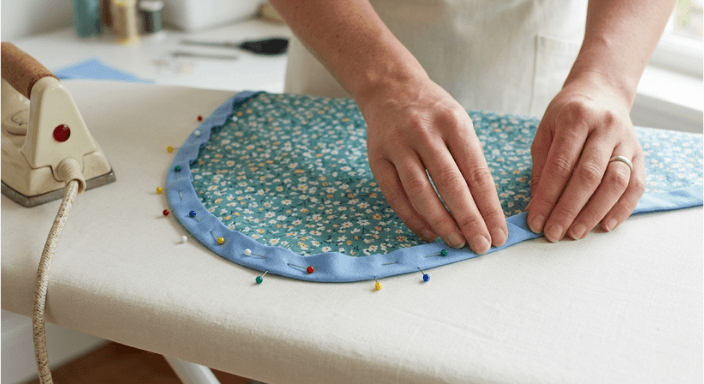
Weekend: Serge or zigzag. Heirloom: apply single-fold bias tape, easing (not pulling) around curves.
-
Assemble the waistband with fused interfacing.
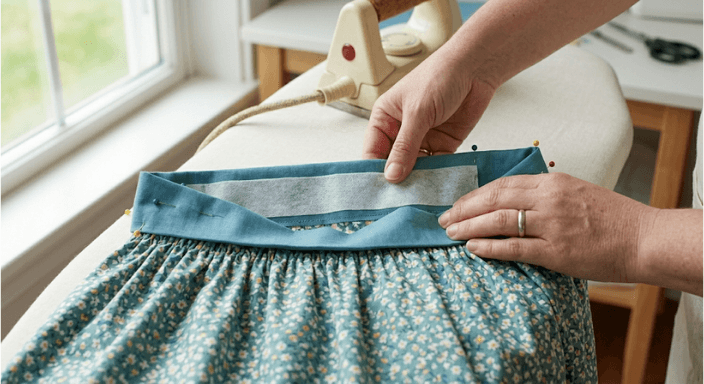
Attach the gathered skirt, fold, and topstitch closed.
-
Attach ties.
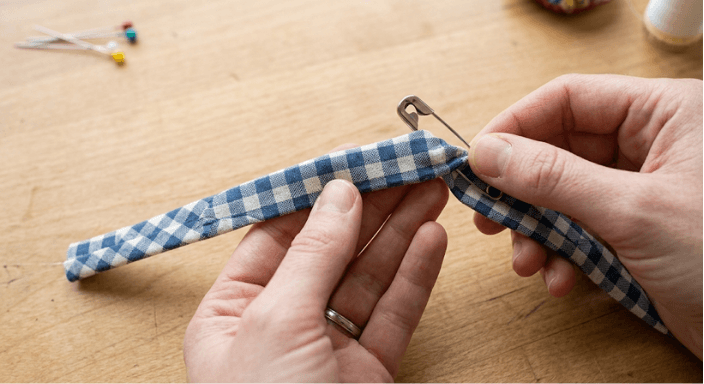
Weekend: turn tube ties right side out and insert into waistband seams. Heirloom: cut ties on the bias for softer drape.
-
Hem
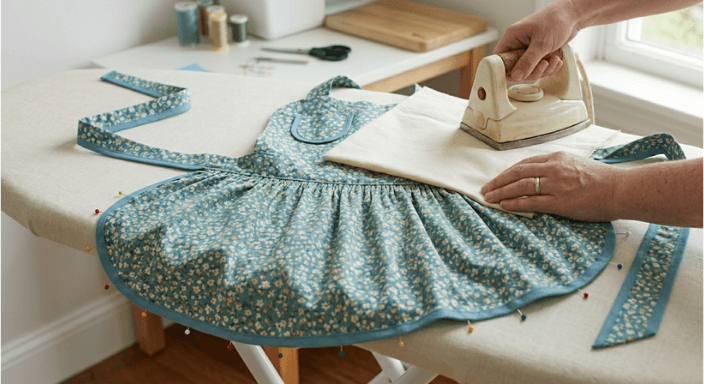
Give the entire apron a final press with a pressing cloth.
One buyer of a Simplicity vintage reissue flagged a common supply trap: “The bias tape used for this pattern will not be enough. This is an old pattern and back in those days the package of bias tape was 4 yards. The package of bias tape today is 3 yards.” Buy two packages if binding all edges.

- Extra wide double fold bias tape
- Made of 55 percent polyester and 45 percent cotton material
- It's great for binding straight or curved edges or as a color accent on apparel
- Colorfast and needs no ironing
- Available in white color and measures 3-yards length by 1/2-inch width
Can Beginners Sew This Style of Apron Successfully?
Yes, with the right pattern choice. A gathered half apron with a straight waistband and topstitched edges is a confident beginner project. A full bib apron with bias binding requires intermediate skills.
Start with a Simplicity reissue or a free pattern with photographic instructions. The reissues include modern-graded sizing and step-by-step guides. Indie PDFs frequently assume prior knowledge that beginners do not have.
The skills you learn from this project (straight seaming, gathering, topstitching, pressing) transfer directly to your next project. An apron teaches you to handle fabric, operate your machine, and finish a wearable item, all in one sitting

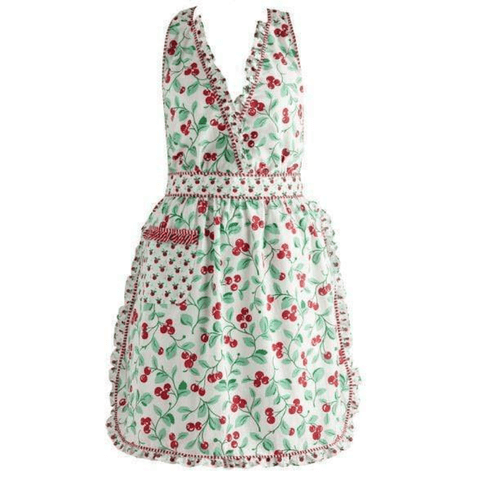
- 100% Cotton, Quality Fabric, the material is soft and durable.
- 63" wide. 1 Piece = 63 inches width by 39 inches length (Approx 1.09 by 1.75 Yard)
- Retro floral print cotton fabric is easy to cut, sew, iron and safe for kids.
- Washing Instructions: Machine Wash Cold / Tumble Dry Low
- Pre-Cut Fabric is perfect for any Quilting sewing and crafting projects, from quilts apparel crafts to home décor
Start with One Apron and Build from There
The best apron is the one you finish.
Make the Weekend Version this weekend. Wear it. Then decide if you want the Heirloom Version with bias-bound edges. Both are real aprons. Both teach real skills.
If you own a vintage or inherited apron that needs repair, consider mending it first. Restoring an original preserves the garment and its story. Making a reproduction is valuable. Restoring an original is equally so.
Download our free vintage reproduction apron construction guide for the complete walkthrough, fabric matrix, yardage chart, and fix-it notes for every step.
Check this video from Sage Lilleyman.
Frequently Asked Questions
-
Where can I find free vintage apron sewing patterns online?
Free vintage apron patterns are available from AllFreeSewing, SewingSupport, FleeceFun, and TipNut, which hosts downloadable PDF booklets of public-domain designs. Simplicity also reissues 1940s and 1950s apron patterns at retail. Check that any free pattern includes seam allowance information and construction steps before cutting.
-
What is the difference between a vintage original and a vintage reproduction apron pattern?
A vintage original is a pattern manufactured during the era it represents, printed on tissue paper with period sizing. A vintage reproduction is a modern reprint or redesign that recreates the silhouette using current paper, graded sizing, and sometimes updated instructions. Reproductions are easier to source and typically include more construction detail.
-
Do vintage apron patterns come in plus sizes?
Most original vintage patterns were cut to a single size or a narrow range. Modern reproduction patterns from companies like Decades of Style and Mrs. Depew often grade their vintage reproductions into extended size ranges, sometimes from 30″ bust through 52″ bust. Check individual pattern listings for available sizes before purchasing.
-
What fabric should I avoid when sewing a vintage-style apron?
Avoid slippery fabrics like rayon challis or polyester satin. They shift during cutting, resist pressing, and do not hold gathers cleanly. Stiff home-decor fabrics are also a poor choice because they produce a boxy silhouette instead of the soft drape that defines 1940s and 1950s apron styles. Stick with woven cotton or cotton-linen blends.
-
Why do vintage patterns have different seam allowances than modern ones?
Before the industry standardized on 5/8″ seam allowances, each pattern company set its own. You may find 3/8″, 1/2″, or 3/4″ allowances depending on the brand and decade. Always check the pattern instruction sheet before cutting. Cutting with the wrong seam allowance changes the finished dimensions of every piece.
-
Can I use quilting cotton for a vintage-style apron?
Yes, quilting cotton works and is widely available in retro prints. It is slightly heavier than the lightweight cotton lawn or broadcloth used in the original 1940s patterns, so your finished apron will have a stiffer hand. Pre-wash quilting cotton before cutting because it shrinks more than garment-weight cotton on the first wash cycle.
-
How much fabric do I need for a vintage full apron?
A full bib apron with a gathered skirt, waistband, and ties typically requires 1.5 to 2 yards of 44/45″ wide fabric. A half apron requires approximately 1 yard plus an additional half yard for the waistband and ties. Always check your specific pattern’s yardage chart because gathered styles consume more fabric than flat-front designs.
Why did you vote that way? Drop your take in the comments.