
Quick Look
Related: Summer Linen Dress Pattern: A Beginner Sewing Tutorial
What Makes a Summer Shift Dress the Right First Garment to Sew?
A summer shift dress teaches three transferable skills in one project with no zipper, no set-in sleeve, and no complicated fitting variable.
After finishing this project, you can sew and press a straight seam, apply a seam finish to a woven fabric, and complete a faced neckline. Those three skills carry into every woven garment you make next.
The boxy cut carries enough ease that minor seam width variations do not produce a failure. No zipper removes the most common first-garment frustration. No set-in sleeve removes the second.
Before you begin: this article assumes you can sew a straight seam and thread your machine. If those are new skills, work through our [basic sewing stitches guide] first.
Download the free summer shift dress guide PDF below to get started.
What Is the Best Fabric for a Summer Shift Dress?
Fabric behavior governs every construction decision in a summer shift dress, and medium-weight linen gets the technique sequence right from the first cut.
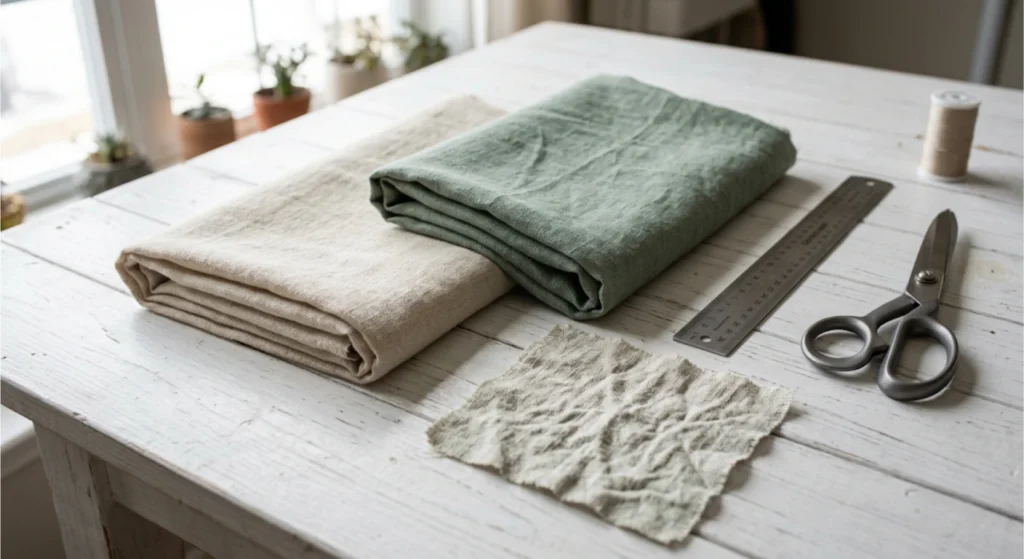
Choose medium-weight plain weave linen in the 5 to 7 oz range. It cuts cleanly, holds seam allowances without interfacing, presses into sharp creases, and softens with every wash. One maker in the PatternReview.com community observed that once you pre-treat linen properly, it becomes far easier to work with than its reputation suggests. The answer is pre-washing, and it is the one step you cannot skip.
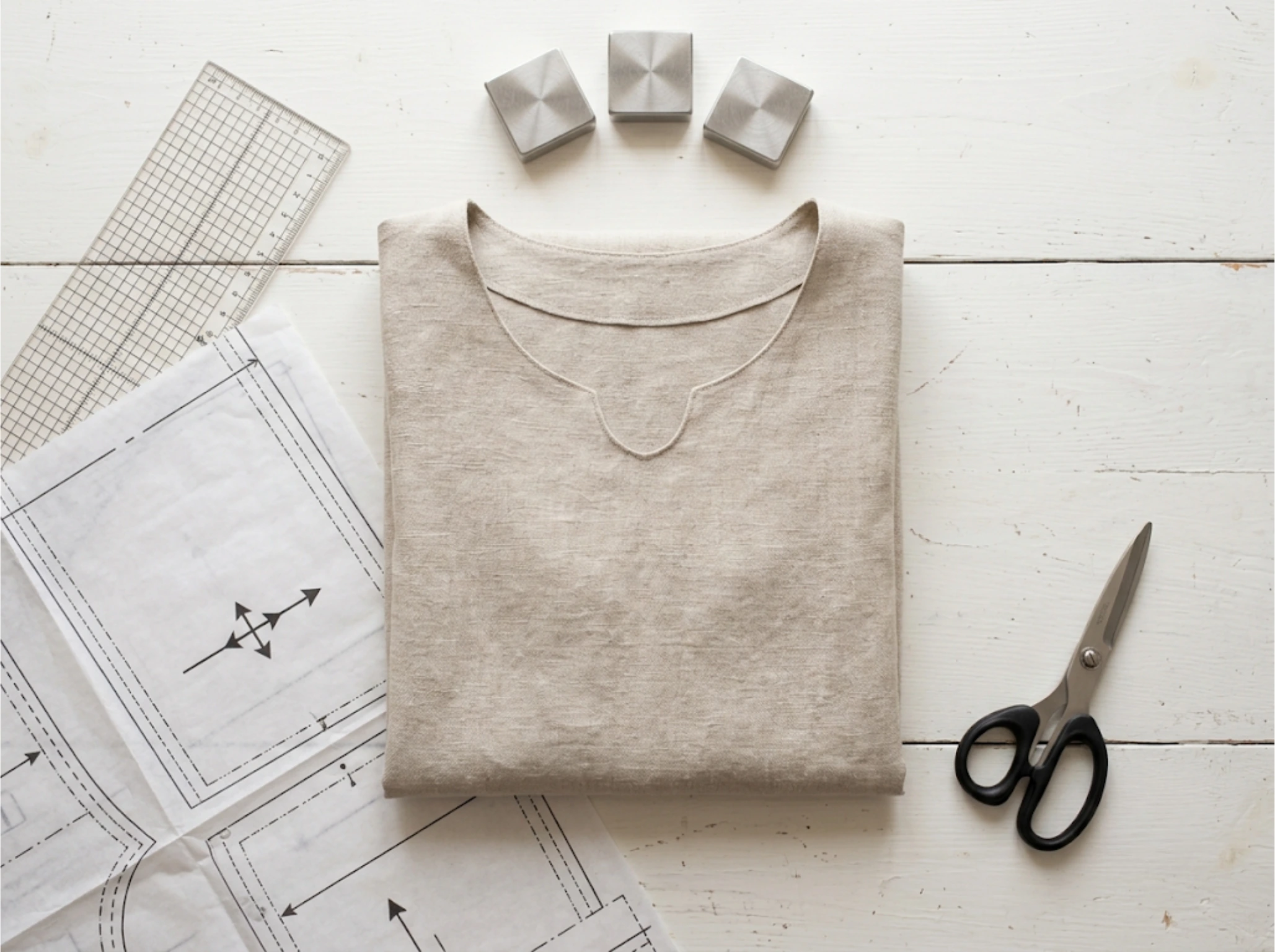
Linen shrinks 3 to 5 percent in the first wash. On 2.5 yards, that removes approximately 4.5 inches of length that cannot be fixed after sewing. Zigzag or serge the raw yardage edges, machine wash twice on warm at the temperature you will use for the finished dress, then press flat with steam before cutting.
Linen yardage is available at most fabric retailers in the $8 to $12 per yard range. [Affiliate link pending editorial approval: do not publish placeholder]
If linen is outside your budget, cotton lawn, double gauze, or chambray all behave similarly in a shift silhouette.
How Do You Get the Right Fit in a Boxy Shift Dress?
Measure your high bust and full bust before cutting your summer shift dress. If they differ by more than two inches, the standard size chart does not serve your body as written.
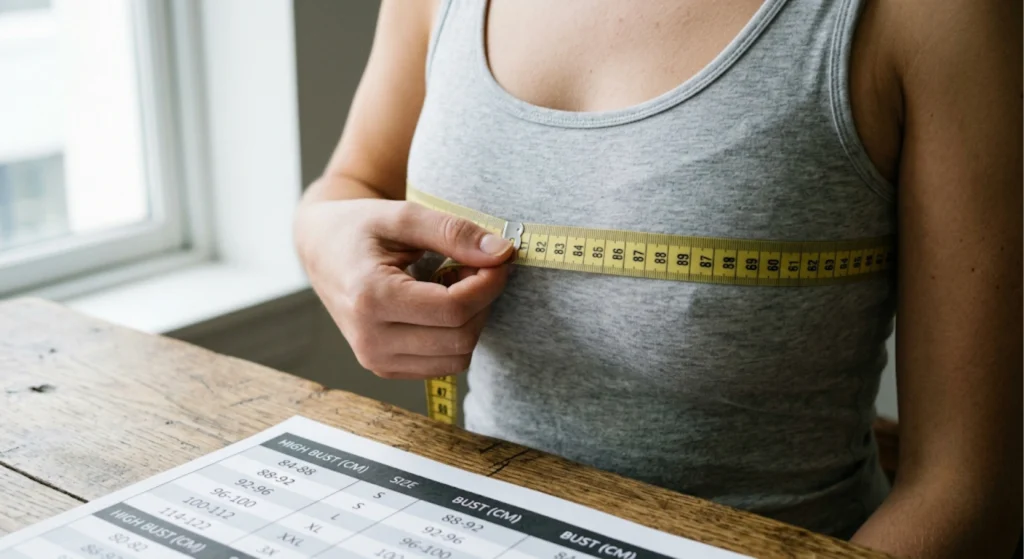
Select your pattern size by your high bust measurement, taken above the fullest part of the chest just under the arms. If your full bust exceeds your high bust by more than 2 inches, cut by your high bust size and add a full bust adjustment at the front bodice before cutting your linen. The PDF includes that step. Reviews of comparable patterns consistently surface the same failure: the summer shift dress was easy to sew but did not fit, because size was selected by full bust rather than high bust.
No muslin is required on a first project. Run this three-step pre-cut check: confirm measurements against the size chart, hold the front pattern tissue at your shoulder to check neckline placement, then cut the larger size if between sizes. Side seams are recoverable. Cutting too small is not.
Kids variant: size by chest measurement, not age. Confirm the neckline opening equals the child’s head circumference plus at least 2 inches of ease before cutting.
How Do You Sew a Summer Shift Dress Step by Step?
Staystitch every curved edge immediately after cutting your summer shift dress. This two-minute step prevents a stretched neckline that cannot be corrected after the facing is applied.
Skill requirement: straight seam, stitch length adjustment, basic seam finishing. Estimated time: 3 to 5 hours.
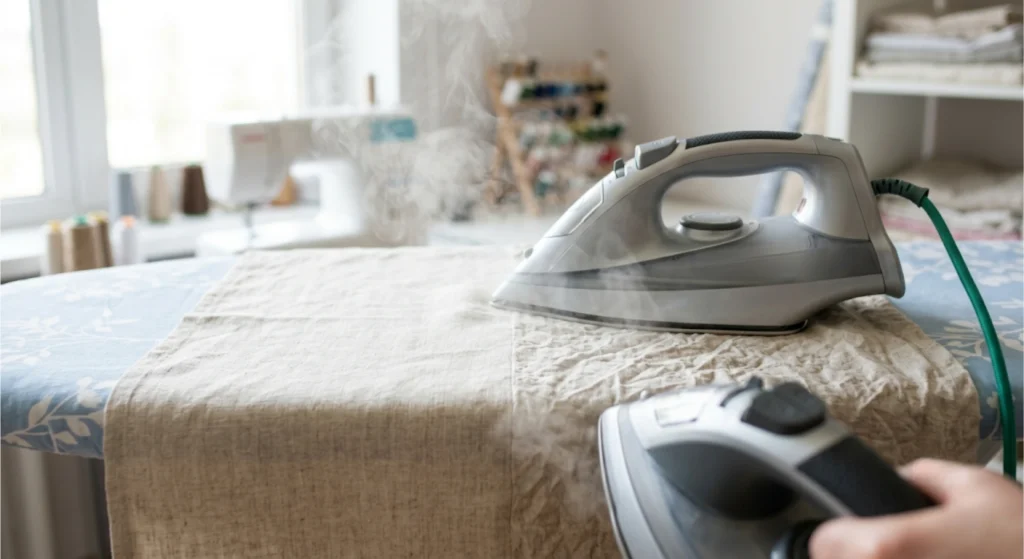
- Step 1: Pre-wash and press your fabric. Wash twice on warm, dry at the heat you will use for the finished dress, press flat with steam before cutting. Fix-it note: If fold lines remain, lightly mist with water and press again on the cotton setting with a pressing cloth.
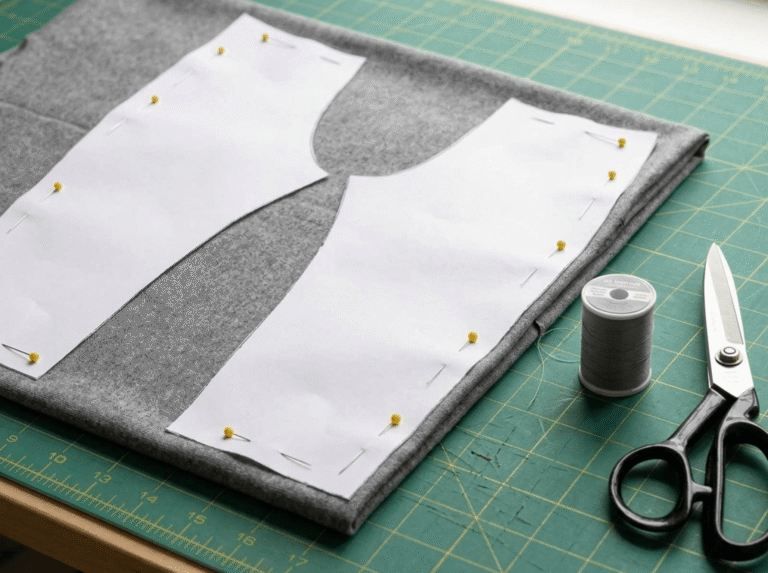
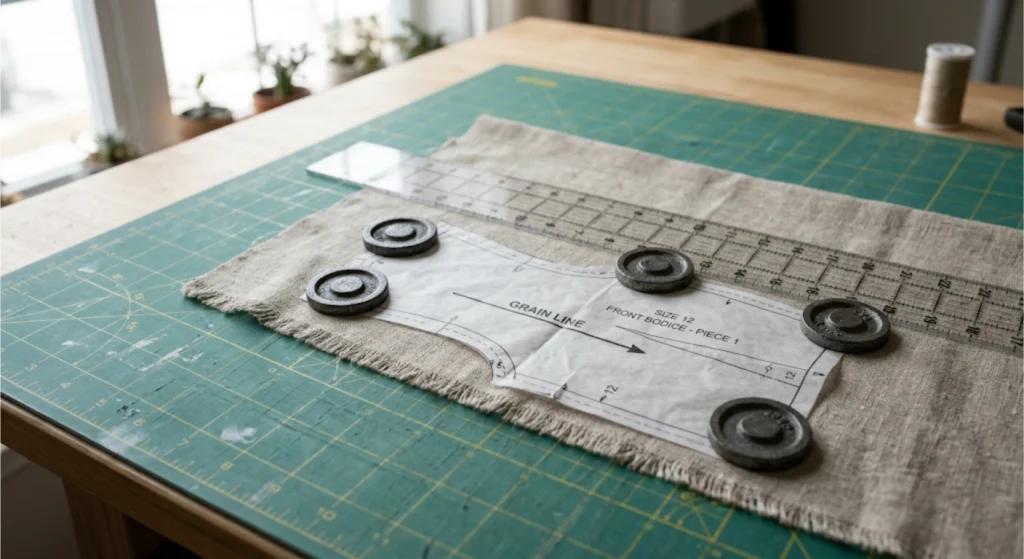
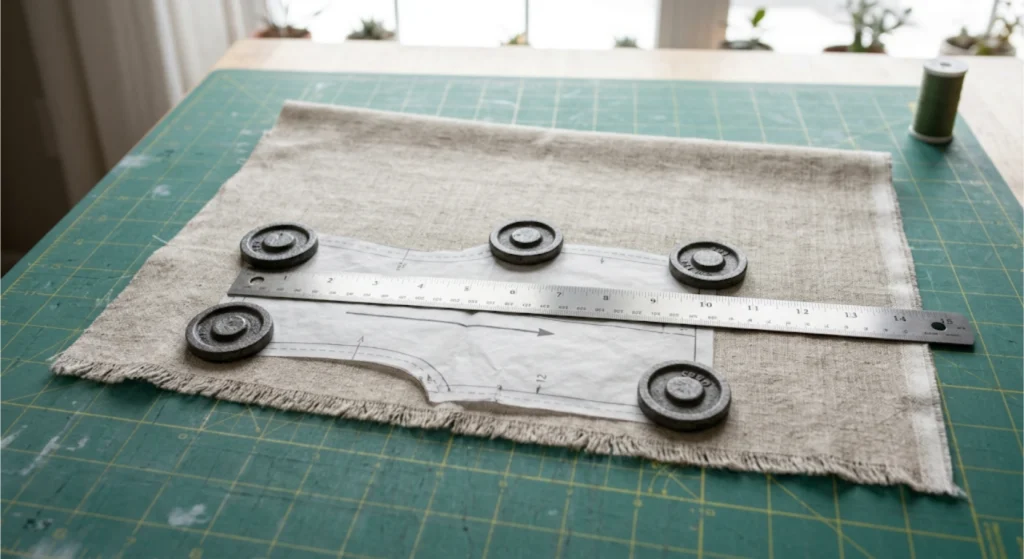
- Step 2: Cut on grain. Fold selvage to selvage. Align the grainline arrow parallel to the selvage and measure from the arrow to the selvage at both ends. Measurements must match within one-eighth of an inch. Use pattern weights rather than pins if the fabric shifts. Linen cut off-grain twists after the first wash. Fix-it note: If your grain check shows a quarter-inch difference at the arrow ends, shift the pattern piece. Do not stretch the fabric to compensate.
- Step 3: Staystitch curved edges immediately after cutting. Set stitch length to 2.0mm. Sew just inside the seam allowance on the neckline and armholes. Fix-it note: If the neckline edge has already stretched, re-staystitch at 1.8mm with the fabric slightly eased into the stitch to draw the edge back toward the original cut line.
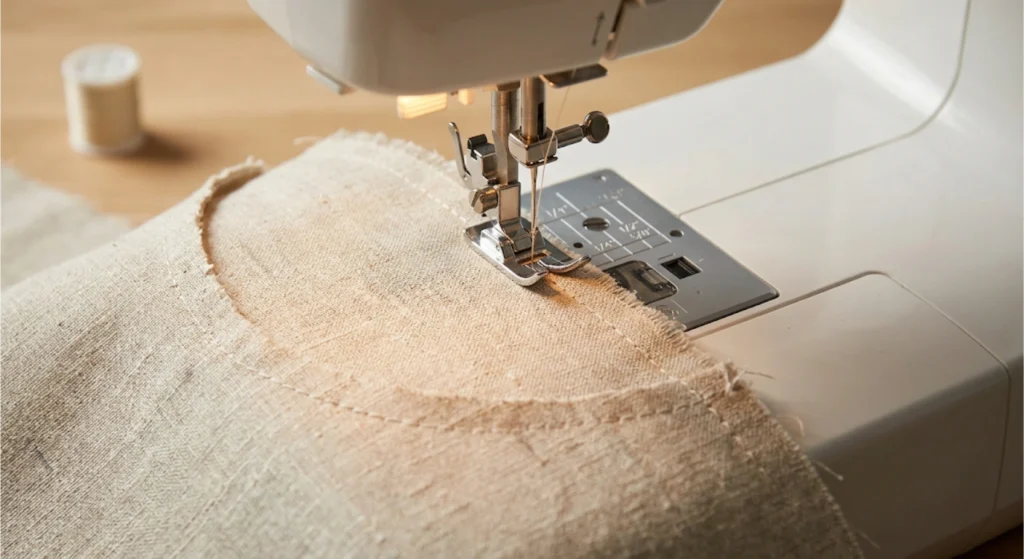
- Step 4: Finish seam allowances before assembly. Three options: French seam (sew wrong sides together at 3/8 inch, trim, press, fold right sides together, sew at 1/4 inch), serge each piece, or zigzag at 3 to 4mm. All three control linen fraying adequately on a regularly washed garment. Fix-it note: If the zigzag tunnels along the linen edge, reduce presser foot pressure by one step and test on a scrap piece first.
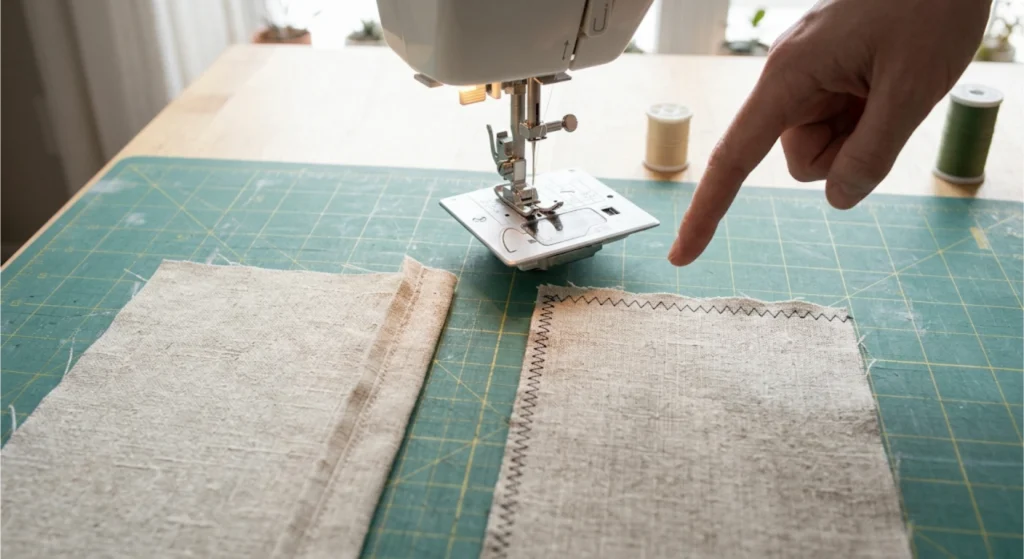
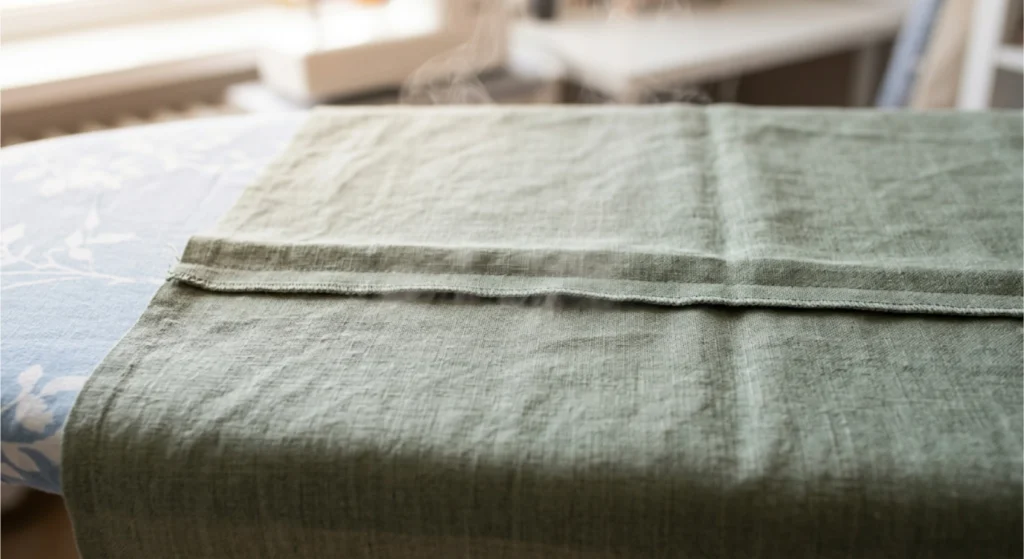
- Step 5: Sew side seams and press open. Sew right sides together at 5/8-inch seam allowance with a 2.5mm stitch length. Press each seam open before any seam crosses it. A seam crossed before pressing creates a permanent ridge. Fix-it note: If drag lines pull toward the back at the hip, let out the back side seam by 1/4 inch between hip and hem. Re-press and check before hemming.
How Do You Finish and Press a Summer Shift Dress?
The last two steps of a summer shift dress, neckline finishing and hemming, are where most beginners rush and where the quality of the finished garment is decided.
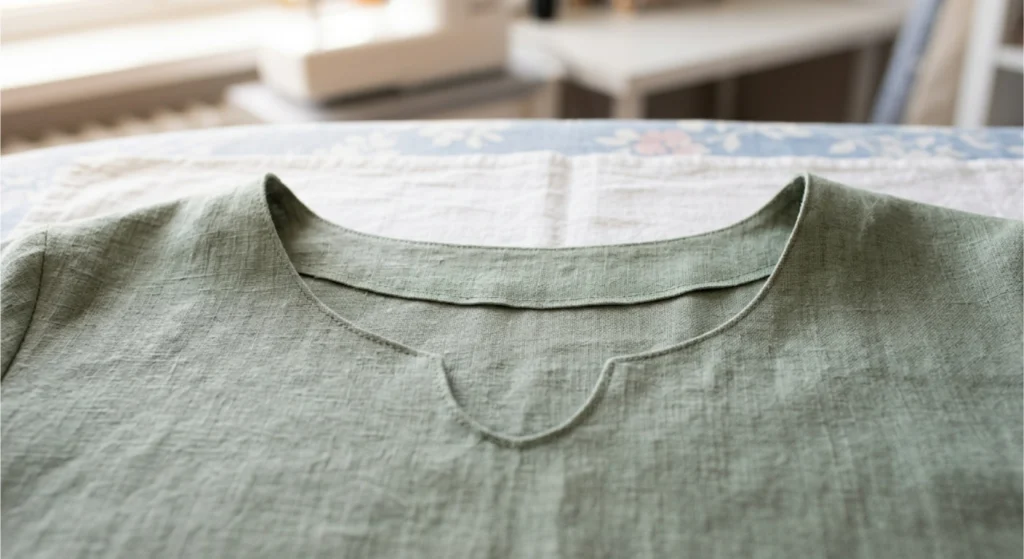
- Step 6: Apply the neckline facing or bias binding. Stitch the facing to the neckline right sides together. Trim to 3/8 inch and clip curves every half inch. Understitch: sew one stitch line through the facing and seam allowance close to the seamline before turning. Press. Turn the facing inside. Press again. Tack the facing to the shoulder seam allowances by hand at two or three points so it does not show at the neckline. Fix-it note: If the facing rolls to the outside after turning, the understitching step was skipped. Open, understitch, and re-turn.
- Step 7: Hem the dress. Fold the raw hem edge under 1/4 inch, press, fold again at 1 inch, press, and topstitch from the right side at 7/8 inch from the fold. Fix-it note: If the hem topstitch tunnels on the linen, reduce presser foot pressure and increase stitch length to 3.0mm.
Then give the finished summer shift dress a final press: neckline from the inside, side seams from the inside, hem from the right side with a pressing cloth. The dress is finished when it has been pressed.
At approximately $25 in materials, worn 50 times over two summers, the cost per wear is $0.50. Choose your linen in a color you will reach for on a regular weekday, not just the one that photographs well.
Check this video from Creative Bobbin.
Frequently Asked Questions
-
How much fabric do I need to sew a summer shift dress?
Most adult shift dresses require 2 to 2.5 yards of 44-inch fabric or 1.75 to 2 yards of 60-inch fabric. Taller makers and those cutting a larger size range should plan on 2.5 yards regardless of fabric width. Buy an extra quarter yard to account for pre-washing shrinkage and test seams before cutting pattern pieces.
-
Do I need a serger to finish the seams on a linen shift dress?
No. A zigzag stitch at 3 to 4mm width controls linen fraying adequately on a garment washed regularly. French seams are a serger-free option that produces a cleaner internal finish. A serger is faster but its absence does not lower the quality of the finished dress. Choose the method that matches your available tools.
-
What went wrong if my shift dress neckline gapes away from my chest?
A gaping neckline usually means the pattern was cut at a size larger than your high bust measurement, or the facing was not understitched before turning. Understitch the facing and tack it to the shoulder seam allowances by hand at two or three points. If the gap exceeds one inch, take in the shoulder seam in small increments.
-
What size should I cut if I am between sizes on the summer shift dress pattern?
Cut the larger size. Side seams are recoverable: taking in is faster and lower-risk than adding fabric you do not have. Baste the side seams before sewing permanently, try the dress on, then sew at the correct width. The boxy silhouette accommodates a minor size-up without fitting problems.
-
How do I pre-wash linen before sewing a summer shift dress?
Zigzag or serge the raw yardage edges first to control raveling, then machine wash twice on warm at the temperature you plan to use for the finished dress. Dry at the same heat setting. Press flat with steam before cutting. This removes the 3 to 5 percent shrinkage that cannot be corrected after the dress is sewn.
-
How do I adjust the pattern if the shift dress is too wide in the body?
Take in the side seams equally on both sides. Remove no more than one inch per side seam in a single adjustment, which removes two inches from the total body circumference without affecting the neckline or armhole shape. Baste the side seam first, try the dress on, and sew permanently only after confirming the adjustment is correct.
-
Can I sew a summer shift dress if I have never sewn a garment before?
Yes, with one condition: practice a straight seam on scrap fabric before cutting into your project fabric. The shift dress requires no zipper, no set-in sleeve, and no complex shaping. Those three absences make it the most forgiving entry garment in woven construction. Complete one practice seam first, then cut.
Why did you vote that way? Drop your take in the comments.