
Fast Facts
Related:
What Makes a Summer Linen Dress the Right First Garment for Beginner Sewers?
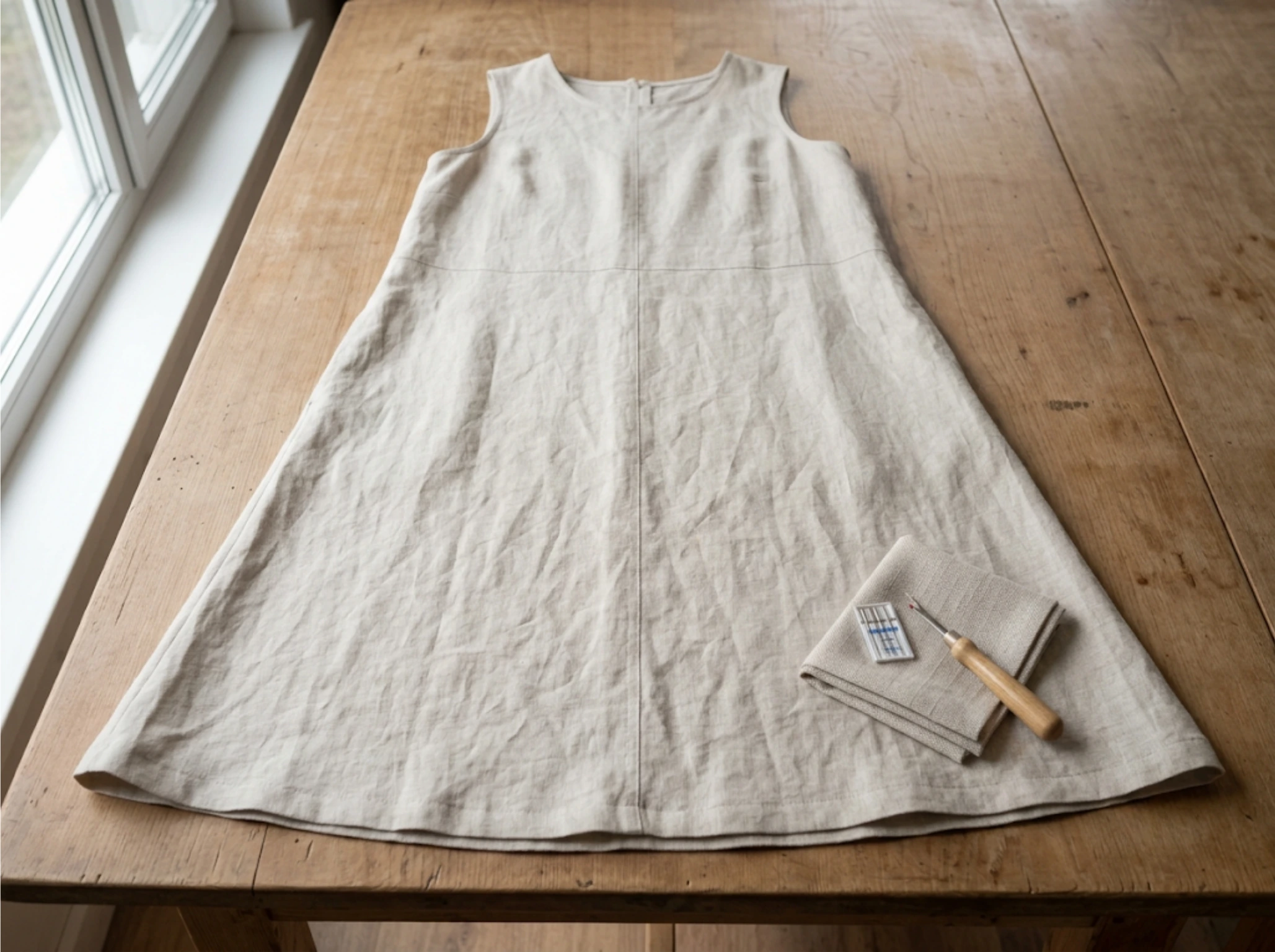
A summer linen dress is one of the few garments where the fabric and beginner skill level align well. Linen is a stable woven with no stretch, a clear grain line, and enough body to hold its shape while you sew. It does not slide on the cutting mat. Linen frays, wrinkles, and shrinks if you skip preparation. All three are manageable. One maker on PatternReview.com put it this way: once pretreated, linen “becomes softer, less wrinkle-prone, and so, so easy to work with.”
A loose A-line or shift removes the most common fitting obstacles and gives linen room to drape, breathe, and improve with every wash.

- SEWING MADE SIMPLE: SCHMETZ Universal Needles work with all home sewing machines and handle everything from delicate silks to heavy denim, making them perfect for any quilting, embroidery, craft, or home décor project
- CONVENIENT 1-NEEDLE SOLUTION: These all-purpose 80/12-sized needles handle a wide variety of materials, saving you time and effort in your sewing routine
- VERSATILITY & VALUE: This needle set delivers reliable performance across many fabrics, offering great value for your sewing kit
- READY FOR EVERY CHALLENGE: These needles are built for the long haul, tackling even the toughest sewing projects with ease, and delivering professional-quality results on woven and knit fabric
- SNAG & DAMAGE-RESISTANT: With a slightly rounded point, these needles glide through woven and knit fabrics without snagging, making them perfect for both beginners and complex projects
What Supplies Do You Need Before Cutting a Summer Linen Dress?
Gather everything before you start. A mid-cut interruption is one of the fastest ways to produce an off-grain piece.
- Fabric. Two to three yards of medium-weight linen (5 to 7 oz), 54 inches wide. Two options work: 100% linen (structured finish, traditional drape, gets softer with each wash) or linen-cotton blend (softer off the bolt, easier to press, more widely available). Both pre-wash and seam finish use the same protocol.
- Needle. Universal 80/12, freshly inserted. If you see skipped stitches on your test swatch, move up to a 90/14. Linen’s tight weave exposes a needle that is even slightly dull.
- Thread. 100% cotton or cotton-poly blend. Avoid polyester-only thread on any garment you wash regularly.
- Iron and pressing cloth. Non-negotiable. Linen does not lie flat without steam pressing at every stage.
- Seam finish. Choose one method: serger (fastest), zigzag stitch (any standard machine), or French seams (strongest enclosed finish, no serger needed). The FAQ covers French seams step by step.
Re-thread your machine from scratch and sew a test seam on a scrap of your actual linen before you touch the pattern pieces.
Having everything ready before you cut your summer linen dress is what separates a smooth session from a frustrating one.

- A-Express Natural Pure 100% Linen Fabric Soft Material Vintage Dressmaking Fashion Flax Bag 140cm Wide.
- Ideal for: Cushions, Dressmaking, Curtains, Bags, Dresses, Decoration, Tablecloths, Skirts, Any kind of fashion etc..
- Approximate Width (140cm). Approximate weight (200 gsm).
- Material: 100% Linen.
How Do You Pre-Wash Linen Fabric to Prevent Shrinkage After Sewing?
Pre-washing linen is Step 1 of construction for a summer linen dress, not a note to skim.
Linen shrinks 3 to 5 percent in the first wash. On 2.5 yards, a 5 percent shrinkage rate removes approximately 4.5 inches of length. That cannot be fixed after the dress is sewn. One maker in the PatternReview.com community put it plainly: “Why would you put in the work to make a garment and ruin it in the wash?”
Before cutting your summer linen dress fabric: zigzag or serge the raw edges of your yardage first, then machine wash on warm or hot at the temperature you will use for the finished dress. Dry at the same heat level. Repeat the full wash-and-dry cycle once. Most shrinkage happens in the first wash. Then press with steam before cutting. Wrinkled fabric produces inaccurate cuts.
Pre-washing linen twice before cutting is the single step that prevents irreversible shrinkage on a summer linen dress.

- Use plaid side (65% cotton/35% polyester) for woolens, synthetic blends & fabrics requiring low to medium temperatures
- Use cotton side (100% cotton) for cotton, linen & fabrics requiring medium to high temperatures
- Press with grain line of the fabric, using a gentle up and down motion
- Used for pressing and molding darts, sleeve caps and curved seams
How Do You Sew a Summer Linen Dress Step by Step, From Cut to Hem?
Before you begin: this section assumes you can sew a straight seam and thread your machine. If those are new skills, work through the basic sewing stitches guide first.
Take your full bust and high bust measurements before cutting. If your full bust is more than 2 inches larger than your high bust, cut by your high bust measurement and add volume with a full bust adjustment. A loose A-line or shift sidesteps most bodice fitting challenges for a first project.
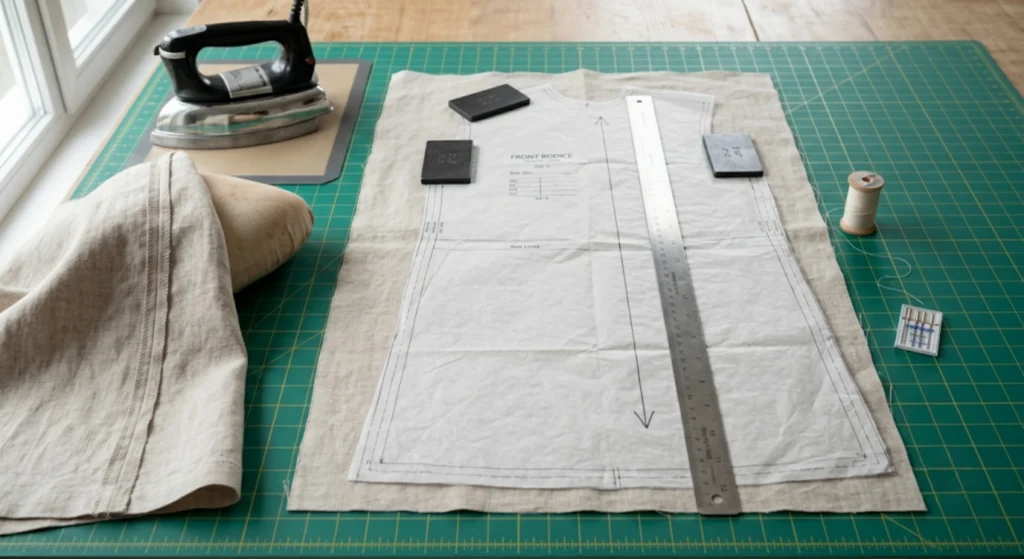
Step 1. Cut your pattern pieces on grain.
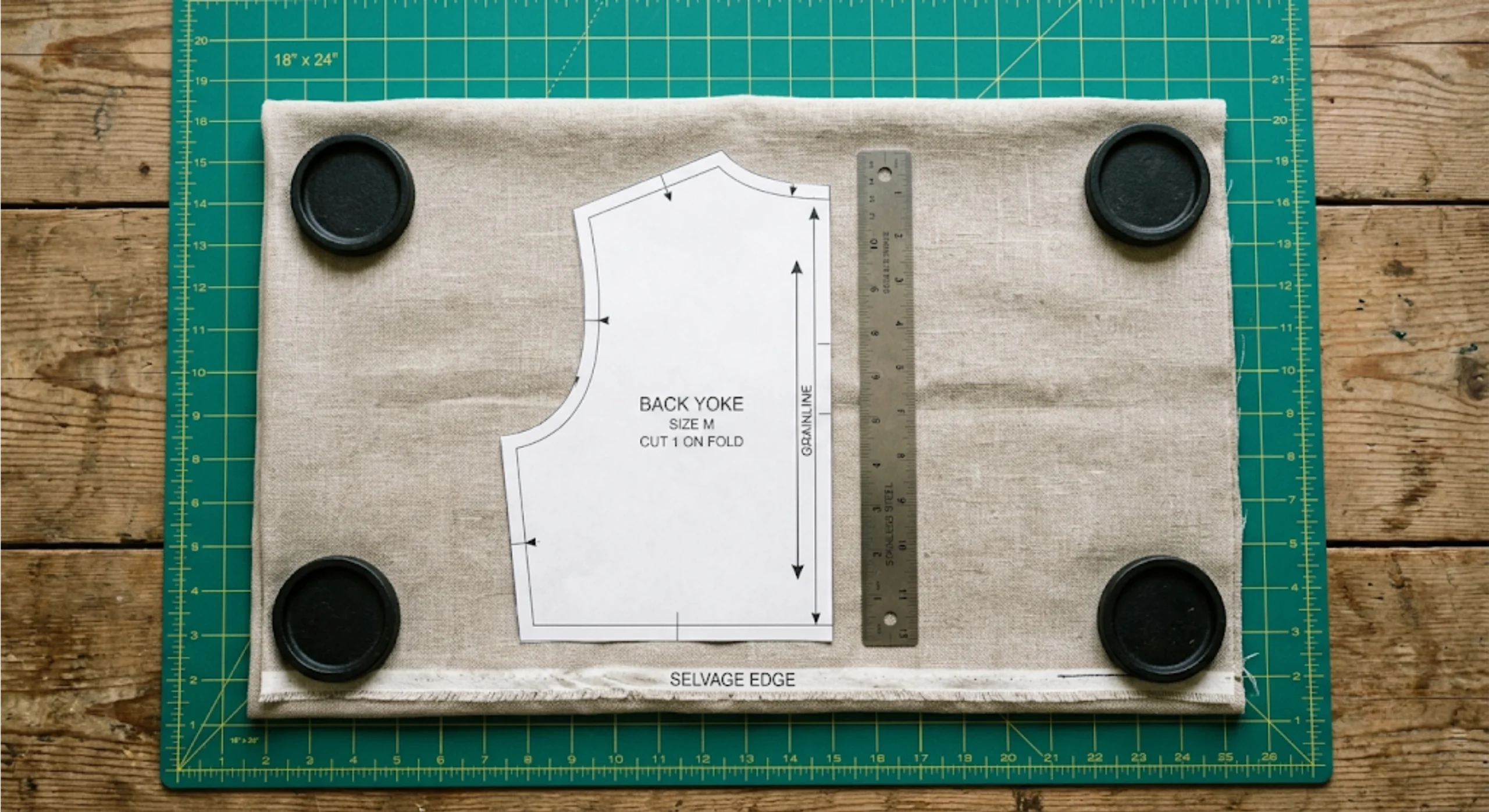
Fold selvage to selvage. Align each grainline arrow parallel to the selvage and measure from the arrow to the selvage at both ends. The measurements must match within one-eighth of an inch. Use pattern weights rather than pins if the fabric shifts. Linen cut off-grain twists on the body after the first wash.
Step 2. Staystitch curved edges before assembling.
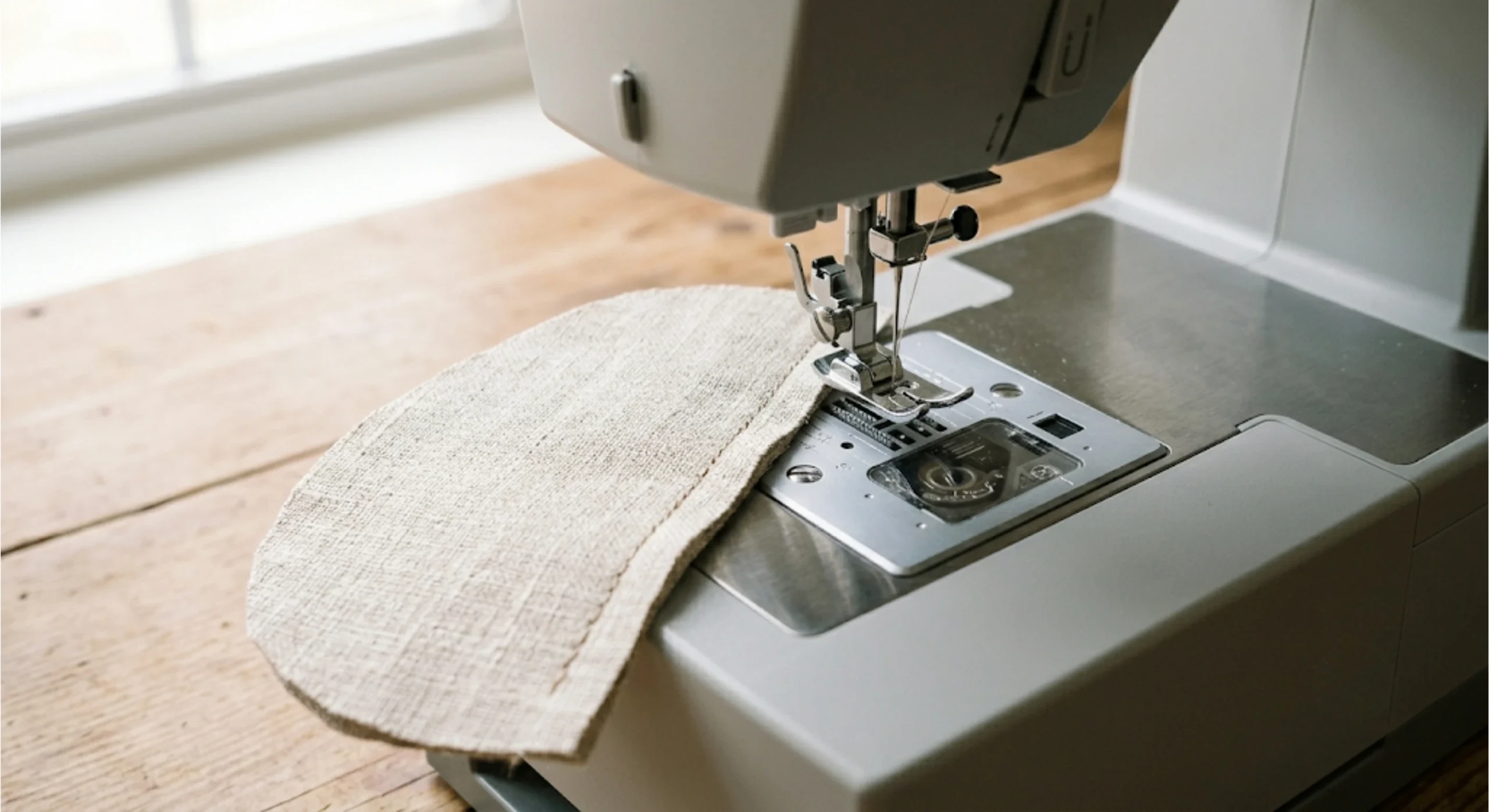
Immediately after cutting, run a staystitching line just inside the seam allowance on every curved edge: neckline, armholes, any curved hem. Set stitch length to 2.0mm. Linen stretches at cut curves during handling, and a stretched neckline cannot be corrected after the facing is applied. This takes two minutes total.
Step 3. Finish seam allowances before assembly.
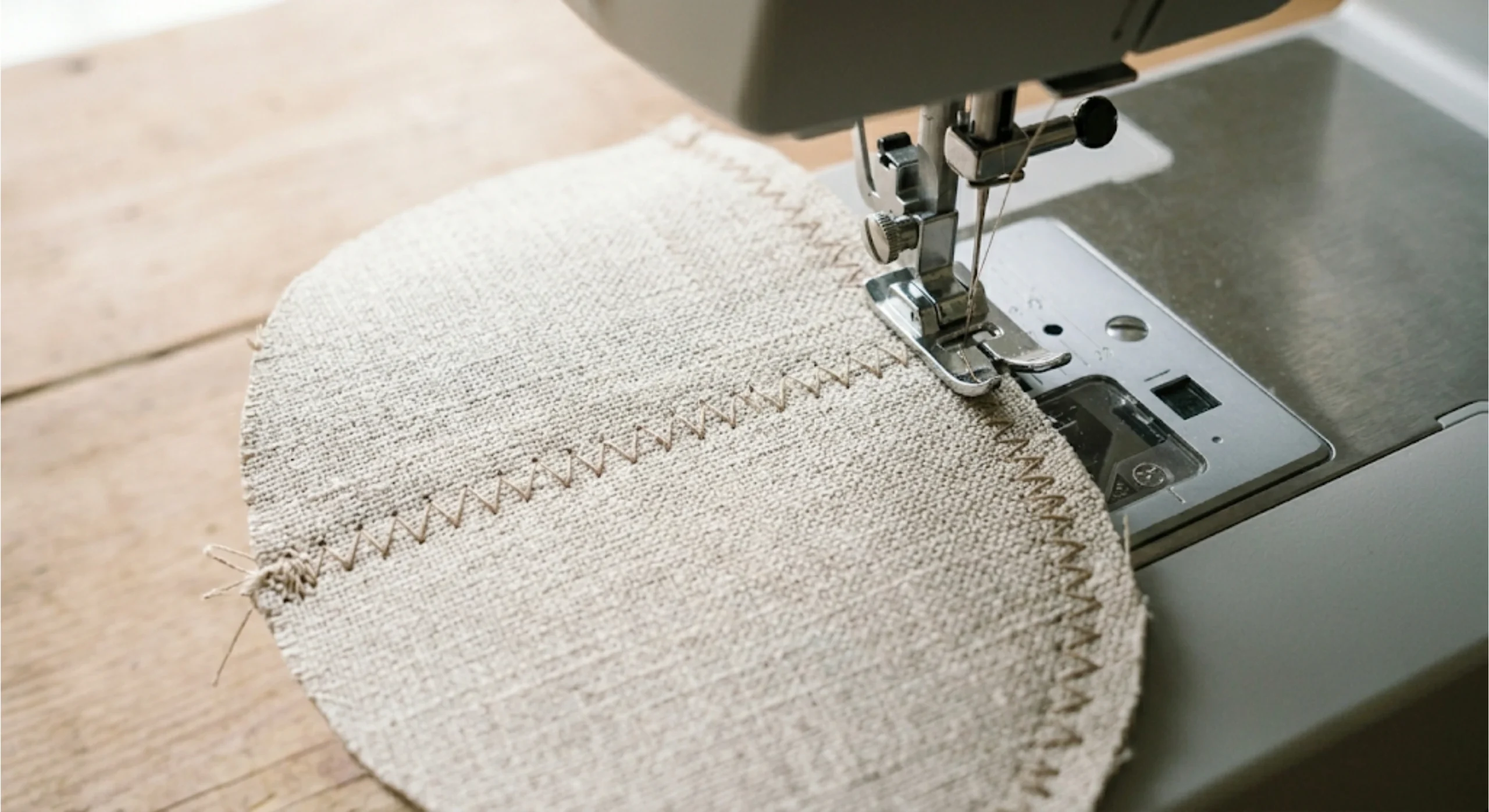
For your summer linen dress, serge, zigzag, or French-seam every edge before sewing the garment together. Finishing at the piece stage is faster and cleaner than finishing after assembly.
Step 4. Sew side seams and press before continuing.
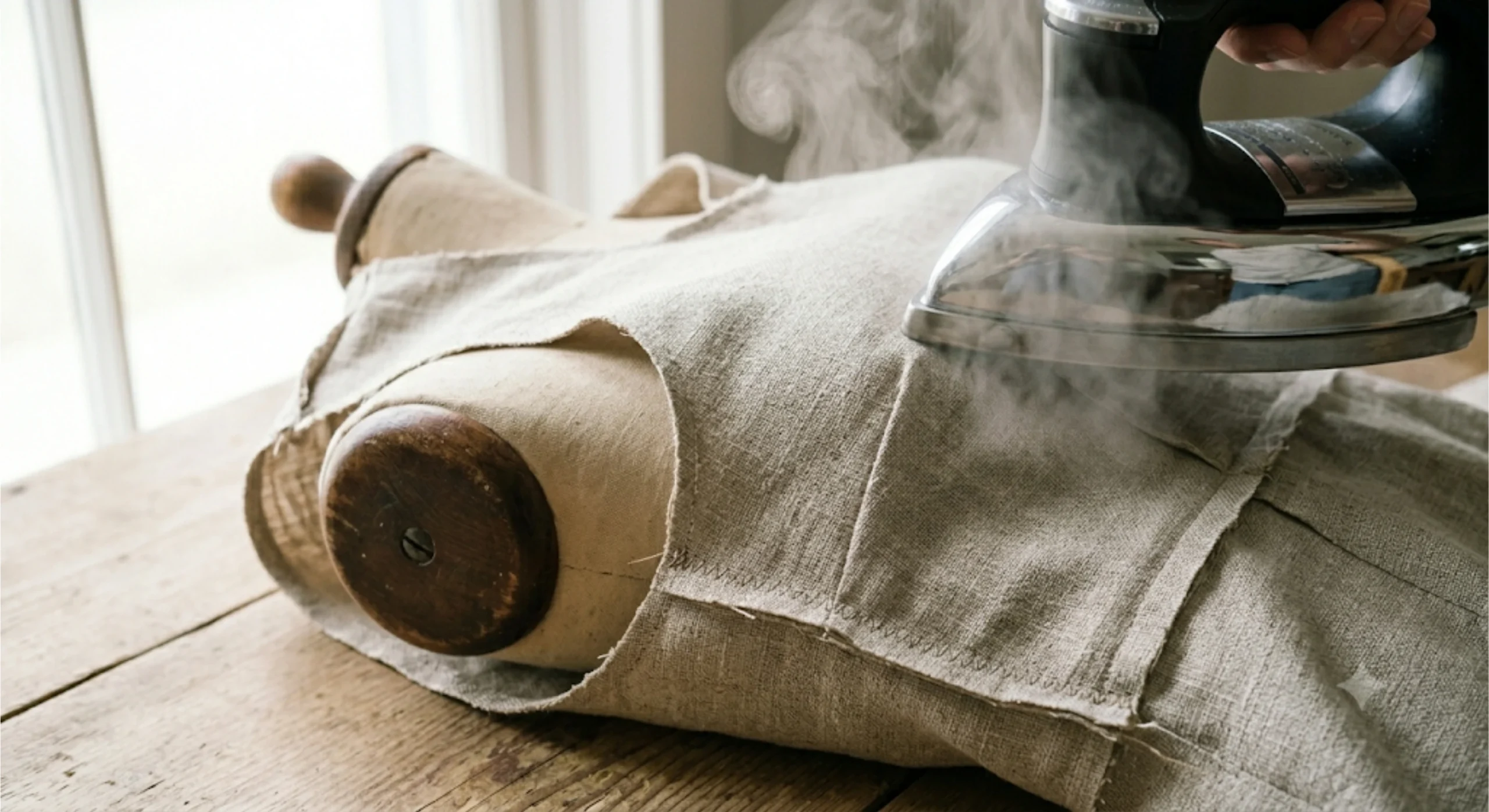
Sew side seams right sides together with a 5/8-inch seam allowance. Press each seam open before sewing any seam that crosses it. A seam crossed before pressing creates a permanent ridge. Press every seam before the next seam crosses it. On linen, pressing is what separates a wearable dress from a frustrating one.
Step 5. Attach the neckline facing and understitch.
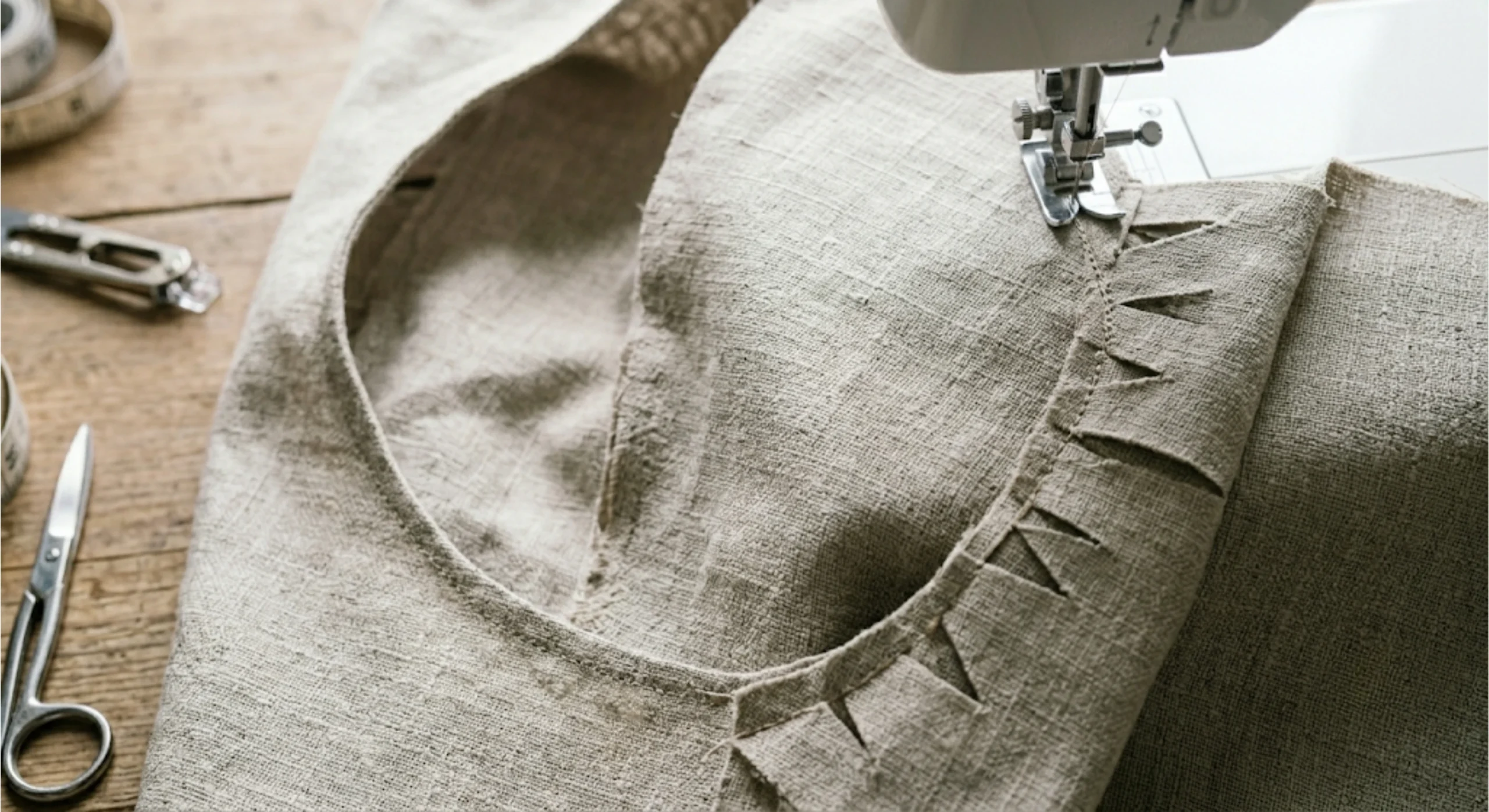
Sew the facing to the neckline right sides together. Trim to one-quarter inch and clip curves every half inch. Before turning, understitch: fold the facing away from the dress and sew one line through the facing and seam allowance, one eighth of an inch from the seam. Turn and press. Understitching prevents the facing from rolling to the outside after washing. It cannot be added after turning.
Step 6. Press and hem the finished dress.
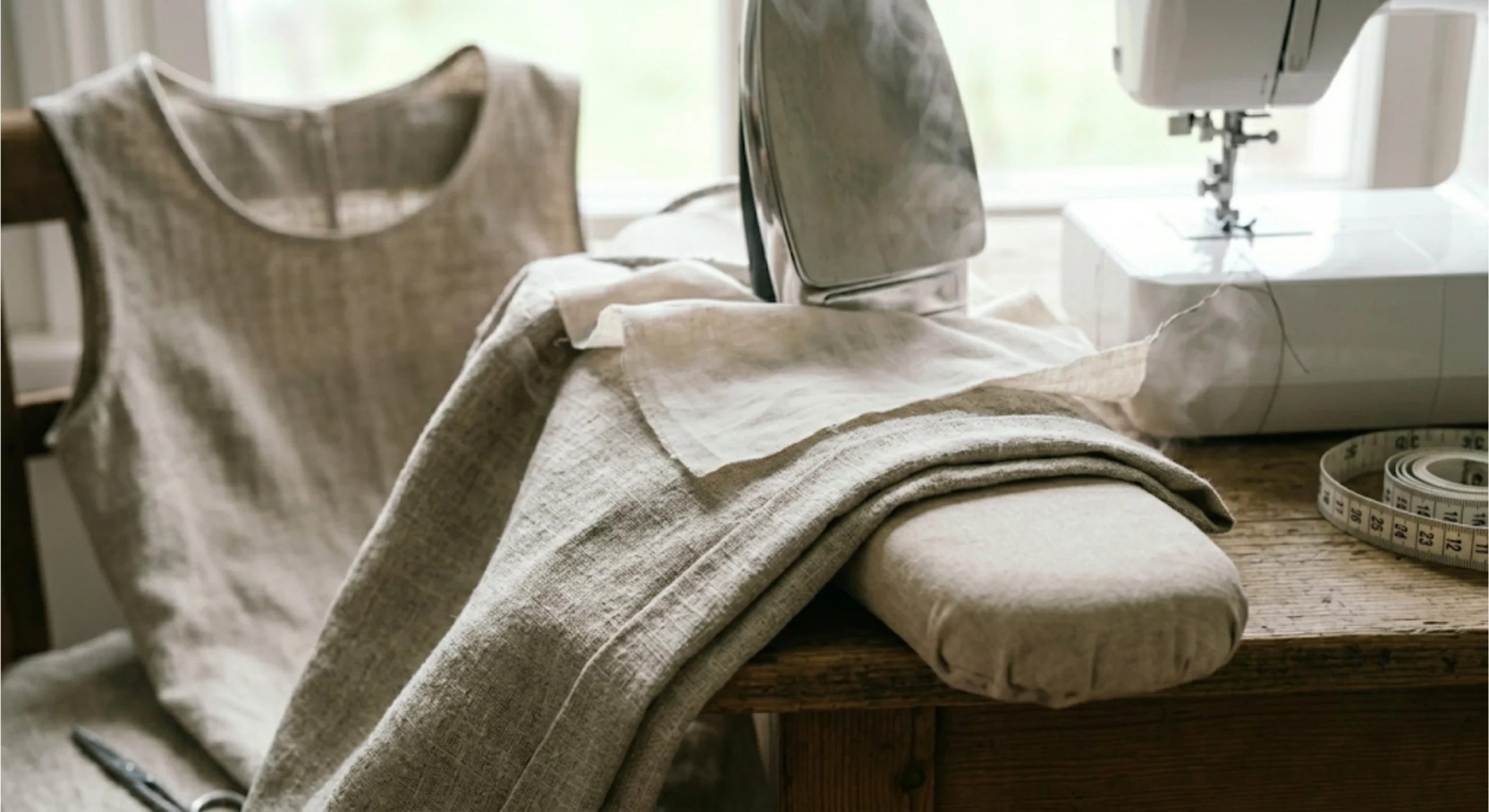
Hang the summer linen dress for at least one hour before marking the hem. Linen drops slightly once the side seams carry weight. Mark, trim to an even allowance, turn and press twice. Topstitch close to the fold, or slip-stitch by hand for an invisible finish. Press the completed hem from the right side under a pressing cloth.
What Sewing Mistakes Ruin a Linen Dress Before It Is Finished?
Most problems when sewing a summer linen dress are not skill failures. They are preparation failures that show up later. These are the four that beginners encounter most often.
- Skipping the pre-wash. Linen shrinks significantly. A summer linen dress that fits off the needle can emerge from the dryer two sizes smaller. Wash twice at the finished garment’s temperature, every time.
- Cutting off-grain. Even a small deviation from the straight grain causes linen to spiral on the body after washing. Measure the grainline arrow to the selvage at both ends of every piece.
- Skipping staystitching. Linen necklines and armholes stretch during handling. Two minutes of staystitching saves an hour trying to coax a stretched neckline back into shape.
- Skipping the understitch on facings. A facing that rolls to the outside after the first wash is a permanently visible problem. Understitching takes one machine pass and cannot be added after the facing is turned. It is part of attaching a facing, not an advanced upgrade.
Every one of these problems on a summer linen dress is a skip, not a skill gap. The fix for all four is to do the step you were about to skip.
No products found.
Your First Summer Linen Dress Is a Skill You Keep
The habits from this summer linen dress, pre-wash before cutting, finish seams before assembly, press at every stage, understitch every facing, carry forward to every woven project.
Check this video from Lina Silence.
Frequently Asked Questions
-
Can I use a linen blend instead of 100% linen for a summer linen dress?
Yes. A linen-cotton or linen-rayon blend works well for a first project. Cotton blends press more easily and are slightly more forgiving of needle deflection. Linen-rayon adds drape but requires a sharper needle and more careful cutting. Either choice pre-washes and seam-finishes using the same protocol as 100% linen.
-
What stitch length should I use for sewing a summer linen dress?
Set your machine to 2.5mm for main seams. Use 2.0mm for staystitching curved edges like necklines and armholes, where a shorter stitch resists stretching during handling. Avoid stitch lengths above 3.0mm on linen. The weave is open enough that long stitches produce visible gaps along seam lines.
-
Do I have to make a muslin before cutting my linen dress?
For a loose A-line or shift silhouette, a muslin is not required on a first project. Take your full bust and high bust measurements before cutting. If your full bust is more than 2 inches larger than your high bust, cut by the high bust measurement and add volume with a full bust adjustment before cutting into your linen.
-
How do I stop the facing from rolling to the outside after washing?
Understitch the facing before turning it to the inside. After sewing the facing to the neckline, trim and clip the seam allowance, then sew one stitch line through the facing and seam allowance close to the seam. This single step permanently anchors the facing. No amount of pressing at the finished stage replaces it.
-
How do I finish seams on a linen dress without a serger?
A zigzag stitch set to medium width and length works on any standard machine and controls linen fraying effectively. French seams are a strong no-serger alternative for straight seams: sew wrong sides together first, trim to 3mm, press, fold right sides together, and sew again to enclose the raw edge completely.
-
What is the difference between 100% linen and a linen blend for sewing?
100% linen is more structured, holds its grain firmly, and gets softer with each wash. Linen-cotton blends are softer off the bolt and easier to press, making them slightly more beginner-friendly. Linen-rayon adds drape but requires a sharper needle and more precise cutting. Both pre-wash and seam-finish using the same protocol as 100% linen.
-
How much linen fabric do I need for a summer linen dress?
For most adults, 2 to 3 yards of 54-inch-wide linen covers an A-line or shift dress in a standard length. If you are making a longer version, cutting larger sizes, or working with 44-inch fabric, buy 3 to 3.5 yards. Always calculate yardage after pre-washing and pressing, since shrinkage affects your total usable fabric.
Why did you vote that way? Drop your take in the comments.