
Key Facts
The best vintage-inspired sewing patterns for spring 2026 prioritize 1940s and 1950s silhouettes: sculpted shoulders, structured fitted bodices, and full or A-line skirts. Standout picks include the Charm Patterns Lamour Dress, the Charm Patterns Etoile Bodice (2026), Vogue V1864, and Butterick B6582. For any fitted bodice, size by your high bust measurement, not the number on the envelope, and make a muslin before cutting the final fabric. The construction step most tutorials skip is underlining. It stabilizes your fabric and makes every stage after it easier.
In This Article
- What Makes Vintage-Inspired Sewing Patterns Different?
- Which Spring 2026 Silhouettes Work Best?
- The Best Specific Vintage-Inspired Sewing Patterns for Spring 2026
- Tools You Need Before You Start
- How Do You Get the Right Fit?
- What Construction Details Make Vintage-Inspired Garments Look Authentic?
- What Fabrics Work Best for Spring 2026?
- FAQs
This article contains affiliate links. Sewing.com earns a commission on qualifying purchases at no additional cost to you.
“I love the fitted bodices and draped skirts. It’s hard to find fashion like this in today’s department stores.” (community thread, CollectorsWeekly) That pull is real, and so is the frustration that follows when a pattern sized for a body that no longer exists meets construction steps no one thought to explain. Vintage-inspired sewing patterns for spring 2026 are worth the effort: sculpted shoulders from 1940s tailoring, full skirts and cinched waists from the 1950s, lace overlay shifts from the early 1960s. Specific patterns worth your fabric investment this season include the Charm Patterns Etoile Bodice (2026), the Charm Patterns Lamour Dress, Vogue V1864, Butterick B6582, and Butterick 5882.
One terminology note used throughout: “vintage-inspired sewing patterns” refers to modern patterns designed to recreate vintage silhouettes, including Big 4 reproductions and indie designs. Original patterns from the era itself are called “original vintage patterns.” These are two different products, and treating them as interchangeable is where most vintage-reproduction projects run into their first problem.
What Makes Vintage-Inspired Sewing Patterns Different From Modern Patterns?
The differences come down to three things: sizing, construction assumptions, and fabric logic. They operate together, and first-time vintage reproducers consistently run into all three at once.
Sizing. Vintage-inspired sewing patterns and original vintage patterns approach sizing differently. Original vintage patterns were sized to the full bust measurement. Most modern vintage-inspired patterns use the high bust measurement, with ease built in proportionally across the rest of the pattern, though this varies by designer and should always be checked against the finished garment measurements. An original vintage size 14 at a 34-inch full bust corresponds roughly to a modern size 8 or 10. The number on the envelope means something different from what you expect.
- Construction assumptions. Original vintage patterns assumed the sewist already knew how to understitch a facing, press a dart correctly, and choose a tailor’s ham over a flat board on a curved seam. As one community member noted after returning to the originals: “When designing a pattern, they didn’t avoid more difficult or time-consuming steps but included all necessary steps to achieve an immaculate finished garment.” (PatternReview.com) Modern vintage-inspired sewing patterns from indie designers such as Charm Patterns tend to include thorough construction instructions. Big 4 reproductions vary: some retain the original’s technique depth; others remove steps to reduce difficulty, which reduces finished quality.
- Fabric assumptions. Vintage-inspired sewing patterns were drafted for structured wovens: silk, wool, cotton sateen, and linen. The construction logic, including the seam finish selections, pressing sequences, and ease allowances, only functions as intended when the fabric has the weight and stability the pattern expects. This is structural, not aesthetic.
Which Pattern Type Is Right for Your Project?
| Original Vintage Pattern | Big 4 Reproduction | Indie Reproduction | |
| Sizing system | Pre-1970 full-bust based | Era-specific: more waist suppression, less hip ease | Often modern multi-size with cup-inclusive grading |
| Construction instruction | Assumes competence; minimal written steps | Updated for modern home sewist; some steps removed | Often detailed and technique-forward |
| Size range | Limited to original print run | Broader modern range | Often sizes 2-34 with separate cup sizing (e.g., Charm Patterns A-H cups) |
| Ease conventions | $5 to $50 or more, depending on condition | Updated to modern standards | Varies by designer; always check finished measurements |
| Price range | Sewists who want an authentic aesthetic with modern, inclusive instruction | $15 to $25 | $12 to $22 PDF |
| Best for | Experienced fitters comfortable with vintage ease | Intermediate sewists entering vintage reproduction | Sewists who want authentic aesthetic with modern, inclusive instruction |
Which Spring 2026 Silhouettes Work Best as Vintage-Inspired Sewing Patterns?
Spring 2026 runways confirmed three vintage directions worth sewing: sculpted and structured shoulders with tailored blouses, full and A-line skirts with defined waistbands, and fitted bodice dresses with lace or sheer overlay elements. Each silhouette maps cleanly to a vintage era, and each requires a different skill set.
The sequencing principle matters here. A full circle skirt and a structured fitted bodice are both vintage-inspired sewing patterns, but they are not the same project. Start with the silhouette that matches your current construction experience, not the one that looks most appealing on the illustration.
Spring 2026 Silhouettes by Construction Requirement
| Silhouette | Vintage Era | Key Construction Technique | Skill Level | Pattern Source to Prioritize |
| Full circle or A-line skirt | 1950s casual | Interfaced waistband, French seams, hem weight | Beginner-Intermediate | Indie or Big 4 reproduction |
| Wrap dress | 1940s-1950s daywear | Bias-cut bodice, tie placement, directional seaming | Beginner-Intermediate | Indie reproduction |
| Sculpted shoulder blouse | 1940s tailoring | Shoulder pad placement, sleeve cap ease | Intermediate | Big 4 reproduction or original 1940s pattern |
| Lace overlay shift | 1960s cocktail | Lace underlining, facing, invisible zipper | Intermediate | Vogue or Butterick reproduction |
| Structured fitted bodice dress | 1950s formal | Underlining, boning channels, dart shaping | Intermediate-Advanced | Indie reproduction (detailed instruction required) |
One community member captured why the structured bodice dress sits at the top of this table: “Half of my sewing is done mentally before even starting a stitch. I discovered years ago that if I can conquer visualising, then I’m 90% done already!” (PatternReview.com)

- White Swedish Tracing Paper
- Sewable and Washable!
- Sticks to most fabrics
- Soft, Flexable, Tough, and Durable!
- 29 inches wide and 30 feet long
What Are the Best Specific Vintage-Inspired Sewing Patterns for Spring 2026?
The following five vintage-inspired sewing patterns represent the strongest options across skill levels and silhouette categories for spring 2026. Each entry includes construction notes, sizing guidance, and the skill prerequisite required.
Charm Patterns Lamour Dress
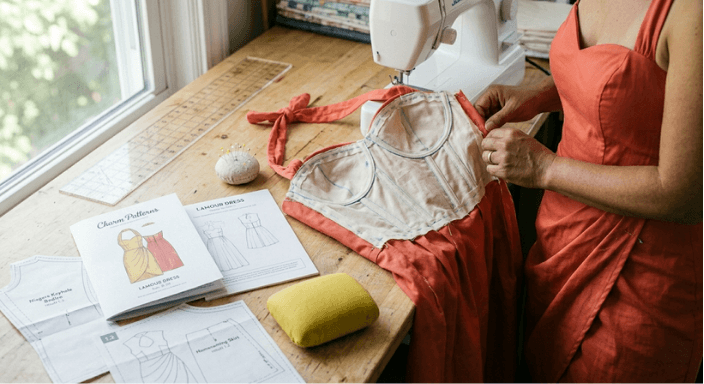
Skill level: Intermediate-Advanced. Sizes 2-34 with separate A-H cup sizing. The Lamour Dress is one of the most thoroughly engineered vintage-inspired sewing patterns currently available. It features a structured, boned 1950s bodice (halter or strap options), a full skirt, and construction instructions that walk through underlining, boning channel placement, and hand-finishing in detail. The cup-size grading (A through H) is what sets it apart from most vintage-inspired sewing patterns for full-bust sewists. Best fabric: silk dupioni, taffeta, or cotton sateen. Available at charmpatterns.com.
Charm Patterns Etoile Bodice (2026)
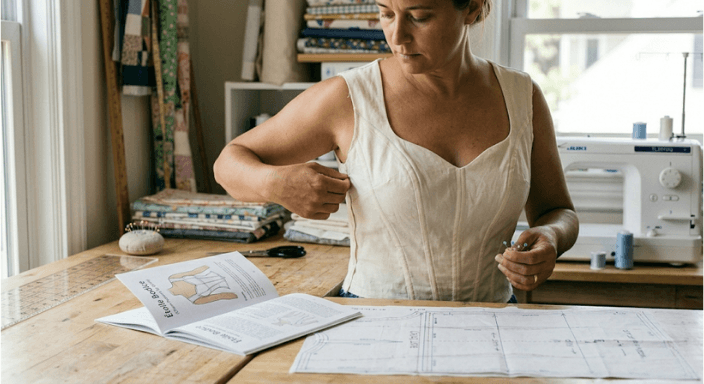
Skill level: Intermediate-Advanced. Available via Patreon membership. Released in 2026 and inspired by the Met Gala’s “Fashion is Art” theme, the Etoile Bodice is a structured vintage-inspired sewing pattern built for sculptural presentation. It requires underlining (cotton muslin for opaque fabrics, a visible underlining for sheers) and is drafted for light to medium-weight wovens: cotton sateen, silk dupioni, taffeta, and eyelet. Notably, Charm’s pattern documentation specifies underlining as a listed construction requirement rather than an optional step, which is the standard this article recommends for any structured spring 2026 silhouette. Available at charmpatterns.com.
Butterick B6582 Big
Skill level: Intermediate. Sizes 6-22. A contemporary reissue of a 1960s original, Butterick B6582 produces a semi-fitted dress with gathered shoulders and a straight or flared skirt. The gathered shoulder is the spring 2026 silhouette connection: it delivers the sculpted shoulder effect without requiring the full boning channel and underlining protocol of a 1950s formal dress. The Big 4 sizing runs large in the bodice on this pattern; community members consistently report needing to take the bodice in by one to two inches before the first fitting. Make a muslin.
Vogue V1864
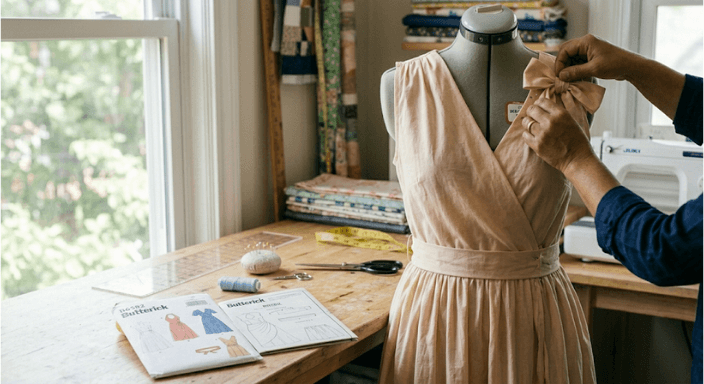
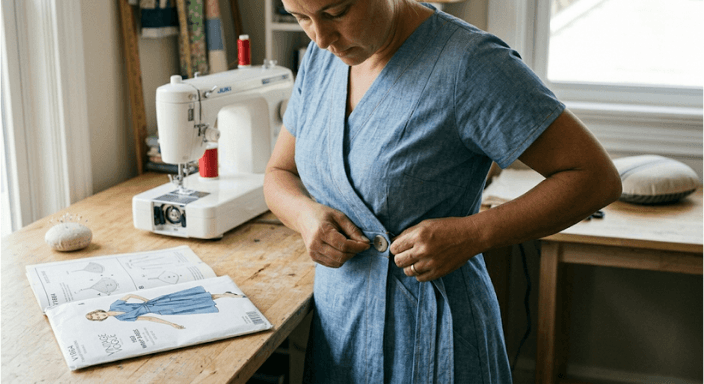
Skill level: Beginner-Intermediate. Sizes vary by print run. A reproduction of the original Vogue 8025 (1953), this wrap silhouette is the strongest entry-point vintage-inspired sewing pattern for sewists who have not worked with vintage-era patterns before. The wrap construction is self-adjusting for fit at the waistline, which removes some of the full bust adjustment complexity from the first attempt. It does not require underlining or boning channels. Best for building confidence with vintage ease conventions before moving to a structured bodice.
Butterick 5882
Skill level: Intermediate. Sizes 6-22. Butterick 5882 is a 1950s-inspired vintage pattern with a sweetheart neckline and full skirt. It remains available through resale and some retailers and represents a middle tier between the complexity of a fully boned Lamour Dress and the beginner accessibility of V1864. The sweetheart neckline requires careful facing and understitching work. Community reviews confirm the bodice runs small at the bust: size up from your usual and make a muslin of the bodice before cutting the final fabric.
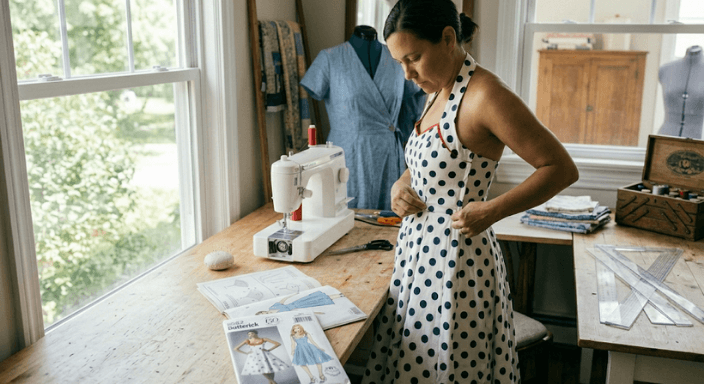
| Pattern | Skill Level | Sizing | Fabric Recommendations | Key Construction Notes |
|---|---|---|---|---|
| Charm Patterns Lamour Dress | Intermediate-Advanced | Sizes 2-34 (with A-H cup sizes) | Silk dupioni, taffeta, or cotton sateen | Features a structured, boned bodice and full skirt, requiring underlining and hand-finishing. |
| Charm Patterns Etoile Bodice (2026) | Intermediate-Advanced | N/A (Patreon membership) | Light to medium-weight wovens (cotton sateen, silk dupioni, taffeta, eyelet) | Sculptural design requiring underlining (cotton muslin or visible for sheers). |
| Butterick B6582 | Intermediate | Sizes 6-22 | Not specified | Features gathered shoulders; bodice runs large, so making a muslin is highly recommended. |
| Vogue V1864 | Beginner-Intermediate | Varies by print run | Not specified | Wrap silhouette that self-adjusts at the waistline; does not require underlining or boning channels. |
| Butterick 5882 | Intermediate | Sizes 6-22 | Not specified | Features a sweetheart neckline that requires careful facing; bodice runs small at the bust, so size up and make a muslin. |
What Tools Do You Need Before You Start?
The following tools are required for vintage-inspired sewing patterns at the intermediate level and above. Missing any of these does not make the project harder. It makes specific failures, including rolling facings, collapsed seam curves, and grain distortion, effectively unavoidable.
- Pressing tools: Tailor’s ham (required for curved seams on all bodice-fitted vintage-inspired patterns), sleeve roll (required for all set-in sleeve work), pressing cloth (required for silk and delicate wovens), clapper (optional but recommended for sharp-edge finishes on structured pieces).
- Cutting and pattern tools: Pattern weights, at least six (pins distort grain on tissue and lightweight wovens), Swedish tracing paper or cardstock for printing PDF vintage-inspired sewing patterns, chalk or a fabric marker for muslin corrections.
- Construction tools: Hand sewing needles, size 10 sharps (for hand-sewn hems and bar tacks), 1.5 yards of cotton broadcloth in a neutral color for muslin work, boning (spiral steel or rigilene, depending on the degree of structure required) for any project using the Lamour Dress or Etoile Bodice patterns.
- Machine requirements: A machine capable of sewing through four layers of woven fabric without skipping stitches. Clean and re-thread the machine before beginning any vintage-inspired sewing project. Internal link: [Sewing Machine Tension Troubleshooting Guide].

- Use plaid side (65% cotton/35% polyester) for woolens, synthetic blends & fabrics requiring low to medium temperatures
- Use cotton side (100% cotton) for cotton, linen & fabrics requiring medium to high temperatures
- Press with grain line of the fabric, using a gentle up and down motion
- Used for pressing and molding darts, sleeve caps and curved seams
How Do You Get the Right Fit From a Vintage-Inspired Sewing Pattern?
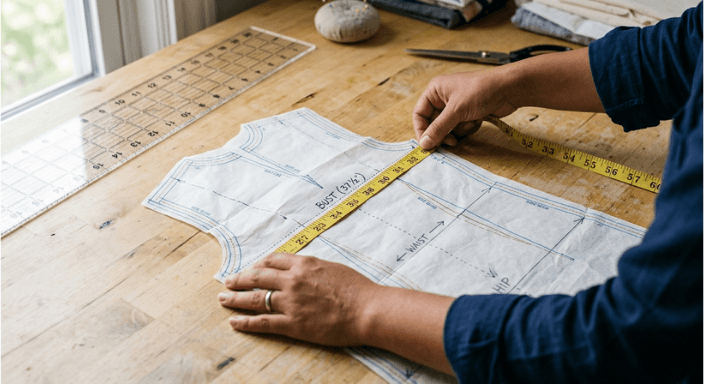
Take three measurements before selecting a size: full bust, high bust, and waist. Select your pattern size based on the high bust measurement. The difference between your full bust and high bust tells you what cup-size adjustment your bodice needs before you cut a single piece of fabric.
This is not an advanced correction. For anyone above a B cup, a full bust adjustment on a fitted vintage bodice is the default starting point. The pattern was not drafted for that body at the size the envelope suggests. That is a structural fact about how vintage-inspired sewing patterns were designed, not a statement about fitting ability. Internal link: [Full Bust Adjustment Step-by-Step Guide].
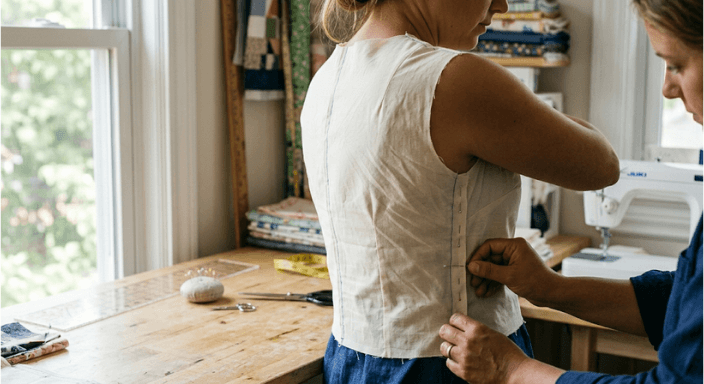
For any structured spring 2026 silhouette, make a muslin. Cut it in cotton broadcloth or a similar inexpensive woven fabric. Fit it on your body, not on a dress form. Mark every correction in a contrasting color before transferring to the pattern pieces. One afternoon with cheap fabric protects your investment in silk charmeuse, lace, or any other material planned for the final garment.
Curve-inclusive note: Full bust adjustments, swayback corrections, and broad-back adjustments all apply to vintage-inspired sewing patterns and are standard fit work. Vintage ease conventions tend to allow less hip room than modern patterns. Check the hip measurement on the pattern envelope against your own hip measurement plus two inches of ease before cutting.
Vintage ease conventions carry one additional variable: “fitted” in 1955 meant fitted over a structured undergarment, not over modern foundation garments. The ease is often built around a girdle or structured slip that is no longer part of most sewists’ wardrobes. If the pattern’s finished measurements feel too close to your body measurements, letting out the side seams by half an inch before the first fitting is a reasonable starting adjustment.
Fitting Step 1: Take three measurements (high bust, full bust, waist) and compare them against the pattern’s finished garment measurements, not just the size label.
Fitting Step 2: Baste the muslin together and fit it on your body before pressing any seams.
What Construction Details Make Vintage-Inspired Garments Look Authentic?
The difference between a vintage-inspired garment that looks handmade and one that looks finished comes down to four construction steps. None of them is a decorative choice. They are the correct technique responses for the fabrics and silhouettes these patterns specify.
“After having made up actual vintage patterns, I appreciate the methods used, the seam finishes, and the attention to detail. When designing a pattern, they didn’t avoid more difficult or time-consuming steps but included all necessary steps to achieve an immaculate finished garment.” (PatternReview.com) That observation points directly at what most Big 4 reproductions strip out and what the following steps restore.
1. Underlining
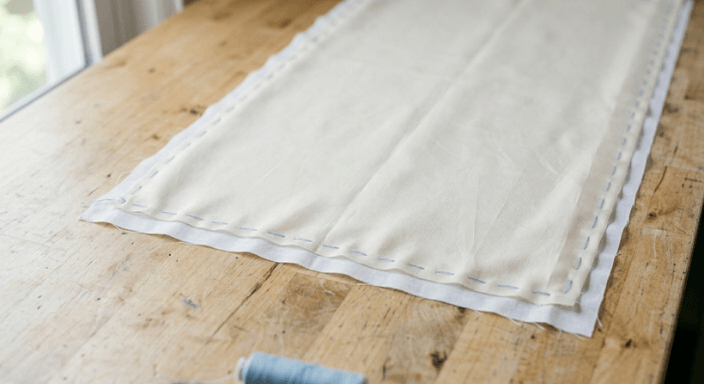
Underlining is a second layer of fabric cut from the same pattern pieces as your fashion fabric and hand-basted to it before construction begins. It stabilizes the grain during sewing, provides a base for hand-finishing, and conceals boning channels. For structured 1950s bodices, including the Lamour Dress and the Etoile Bodice, underlining is not optional. Use lightweight cotton batiste or silk organza beneath silk fashion fabrics, and cotton lawn beneath linen or cotton sateen.
2. French Seams
French seams encase raw edges inside the seam itself, producing a clean finish without bulk. Use them on any unlined blouse, skirt, or wrap dress in silk, cotton lawn, or fine linen. They are visible from the inside of the garment and signal construction quality. Press each stage before continuing: first seam wrong-sides-together, then second seam right-sides-together. French Seams 101.
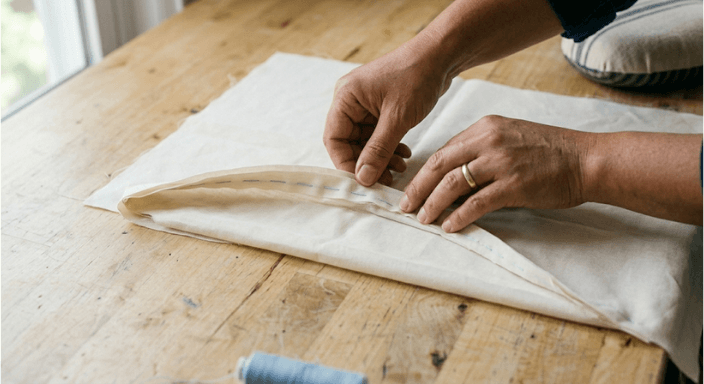
3. Understitching Facings
Understitching is a line of machine stitching through the facing and seam allowances, placed close to the seam line and sewn before the facing is turned to the inside. It holds the facing in place and prevents it from rolling to the outside of the garment. Skipping this step produces a facing that migrates toward the visible surface over time. It is the single most visible indicator that separates a professionally finished vintage-inspired garment from one that was not.
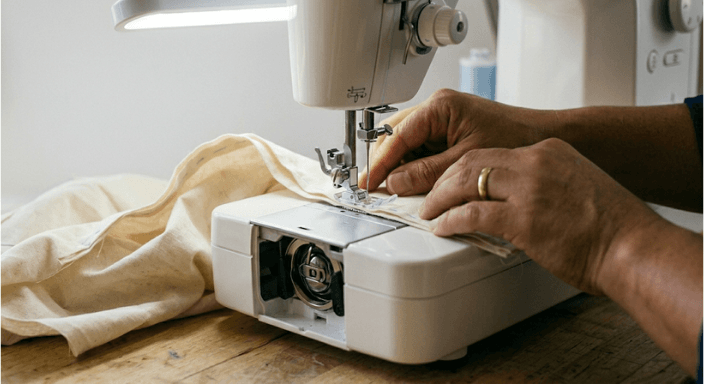
4. Pressing at Every Stage
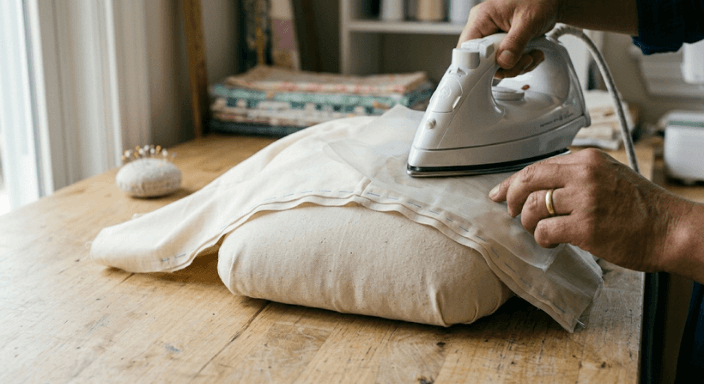
Press every seam before crossing it with another seam. Press every dart before cutting the next piece. Press facings before turning. A tailor’s ham is required for curved seams on bodices and princess-seamed pieces. A sleeve roll supports sleeve seams. Pressing is construction, not finishing. Deferring it produces seams that will not lie flat, regardless of how many times they are pressed afterward.
What Fabrics Work Best for Spring 2026 Vintage-Inspired Projects?
Match the fabric to the silhouette. Vintage-inspired sewing patterns were drafted for wovens with body and weight. That structural logic does not transfer to stretch fabrics, jersey, or lightweight synthetics.
For the full circle skirt: cotton sateen, medium-weight linen, or a cotton-silk blend. Weight at the hem is a feature of the silhouette.
For the tailored shoulder blouse: linen suiting or a cotton-linen blend. The shoulder structure requires a fabric that holds its shape without relying on underlining or interfacing alone.
For the structured fitted bodice dress (Lamour Dress, Etoile Bodice): silk charmeuse, silk habotai, silk dupioni, or taffeta. These fabrics require the full pressing and construction sequence described above. Charm Patterns specifically recommends “silks with body like dupioni, taffeta, and shantung” for the Etoile Bodice, a guidance that holds across all structured vintage-inspired sewing patterns at this silhouette tier.
For the lace overlay shift (Butterick B6582): cotton lace or stretch lace with a stable woven underlining cut from the same pattern pieces. The underlining does the structural work; the lace provides the surface.
For the wrap dress (Vogue V1864): matte crepe, cotton lawn, or a lightweight silk habotai. The wrap silhouette drapes, and the drape requires a fabric with fluid movement rather than structure.
Spring 2026 color direction runs toward Cloud Dancer (off-white), soft blues, and warm yellows. These translate naturally into cotton lawn, silk charmeuse, and linen across all the silhouettes above.
On pattern handling: original vintage tissue is fragile and should be traced before use. For reproduction of vintage-inspired sewing patterns, print on cardstock or Swedish tracing paper and cut from the copy. Pattern weights outperform pins on delicate fabrics and prevent the grain distortion that comes from pinning through tissue.

- Dimensional shape provides easy pick-up and placement
- Holds pattern pieces flat and prevents fabric from stretching, wrinkling and distorting when cutting
- Prevents holes and preserves tissue and paper patterns
- Ideal for knits and delicate fabrics that could be damaged by straight pin holes
- Suitable for both delicate and thick fabrics

Where to Start With Vintage-Inspired Sewing Patterns This Spring
If you have never sewn a vintage-inspired pattern before, start with Vogue V1864 or a full circle skirt. These projects establish your understanding of vintage ease conventions and construction logic without the full fitting and underlining work of a structured bodice.
If you have fitted modern bodices and want to try a structured vintage-inspired dress, start with the Lamour Dress or the Etoile Bodice. Take three measurements before selecting your size, make a muslin before cutting the final fabric, and plan for a full bust adjustment if you are above a B cup. That sequence is not extra work. It is the work.
If you are using an expensive or delicate fabric, identify its structure and pressing requirements before you cut anything. The construction steps a vintage-inspired garment needs are determined by the fabric, not by the pattern illustration.
The spring 2026 silhouettes reward careful preparation. They have rewarded it since the first time someone made them.
Download the free Vintage Pattern Fit Guide for a printable three-measurement sizing reference, a full bust adjustment checklist, and a construction sequence guide for spring 2026 structured silhouettes.
Fall Sewing Plans: Vintage Patterns & Fabric Pairings from Arietta’s Vintage Life.
Frequently Asked Questions
-
What is the difference between a vintage-inspired sewing pattern and an original vintage pattern?
A vintage-inspired sewing pattern is a modern design, whether from an indie designer or a Big 4 label, created to replicate the silhouettes of past eras using current drafting standards. An original vintage pattern is an actual pattern printed and sold during the era it reflects. Vintage-inspired patterns are generally easier to fit and include more construction instructions.
-
How do vintage pattern sizes compare to modern sizes?
Original vintage patterns are sized to the full bust measurement, not the high bust, and carry different ease conventions than modern patterns. An original vintage size 14 typically measures 34 inches at the bust, corresponding roughly to a modern size 8 or 10. Always check the finished garment measurements on the pattern envelope rather than relying on the size label alone.
-
Do I need to make a muslin for vintage-inspired sewing patterns?
For any fitted bodice, yes. Vintage ease conventions and sizing produce enough variation from modern expectations that a muslin is the minimum standard, not an advanced precaution. For a full skirt or wrap silhouette like Vogue V1864 with minimal fitting variables, a muslin is optional but strongly recommended when using expensive or delicate fabric.
-
What fabrics work best for 1940s and 1950s-inspired sewing patterns?
Structured wovens: cotton sateen, silk charmeuse, silk dupioni, taffeta, linen, and cotton lawn. These vintage-inspired sewing patterns were drafted for fabrics with weight and body. Stretch fabrics, jersey, and lightweight synthetic knits will not hold the intended silhouette and do not behave correctly in a vintage construction sequence.
-
Can beginners sew vintage-inspired sewing patterns?
Yes, at the right entry point. Full circle skirts, wrap silhouettes like Vogue V1864, and A-line skirts are achievable at an early intermediate level and teach transferable construction skills. Structured fitted dresses like the Lamour Dress are not beginner projects. Start with the silhouette that matches your current construction experience.
-
How do I add a full bust adjustment to a vintage-inspired bodice pattern?
If the difference between your high bust and full bust is more than one inch, you need a full bust adjustment. Select your pattern size by the high bust measurement, then use a slash-and-spread FBA to add cup-size volume to the front bodice only. This is the standard starting adjustment for anyone above a B cup on any vintage-inspired sewing pattern with a fitted bodice.
-
What is underlining and do I need it for a vintage-inspired dress?
Underlining is a second layer of fabric cut from the same pattern pieces and attached to the fashion fabric before construction begins. It stabilizes grain, supports hand-finishing, and conceals boning channels. Structured 1950s bodices in vintage-inspired sewing patterns, including the Lamour Dress and Etoile Bodice, require it. Casual wrap dresses and full skirts in stable cotton generally do not.
Why did you vote that way? Drop your take in the comments.