
Quick Look
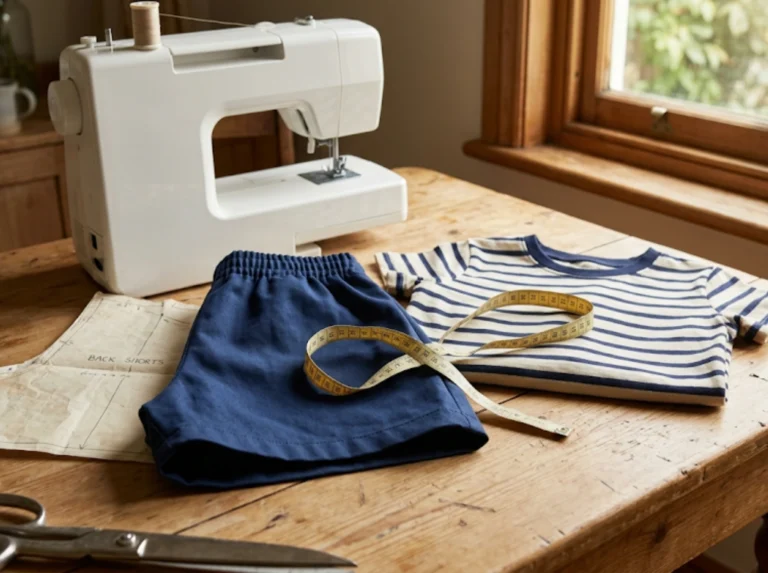
Related: Simple Linen Shorts Pattern for Kids
What Fabric Should You Use for a Toddler Beach Cover-Up?
A mid-weight cotton or linen-cotton blend is the forgiving choice for a first toddler beach cover-up, because it holds a seam without fraying out on you.
Quilting cotton, cotton lawn, or a linen-cotton blend all work for a toddler beach cover-up. You want something with enough body to hold a shape but light enough to dry fast after a swim. Skip anything advertised as “medium-weight” home decor fabric. It will feel stiff on a toddler and will not pack well for a beach bag.
Fabric choice is not a small decision on this project. One maker on Reddit summed up the risk of guessing wrong: “I spent $50 on fabric, and the whole thing puckered.” A toddler cover-up uses less yardage, but the same physics apply.
If you already own gauze, voile, or a loosely woven cheesecloth-style cotton, you can still use it. That fabric is popular for summer sewing right now because it breathes well and dries fast. But it frays differently than a stable cotton weave, and the standard seam finish below will not hold up on it. See the callout box in Step 3 before you cut.
A tighter weave has a second advantage beyond fraying resistance. The American Academy of Pediatrics recommends tightly woven fabric over loosely woven fabric specifically for sun protection, on top of hats, shade, and sunscreen. A mid-weight cotton or linen-cotton blend earns its place in this pattern twice over: it sews cleanly, and it blocks more UV on the walk to the water.

- This package contains 3yd of 1/4in polyester and rubber elastic
- Care: machine wash and dry
- Made in China

What Do You Need to Sew a Toddler Beach Cover-Up?
One yard of fabric, thread, and either elastic or ties covers this entire project, no specialty tools required.
Here is everything you need to sew this toddler beach cover-up:
- 1 yard of mid-weight cotton or linen-cotton blend, 44 inches wide (covers most toddler sizes 2T to 5T)
- Matching all-purpose thread
- 24 inches of 1/4-inch elastic or two 18-inch fabric ties
- A toddler t-shirt that fits, to use as a rough sizing guide

- Liquid seal sealant with fabric guide tip
- Prevents fabric, ribbon and trim edges from fraying
- Secures thread ends on stitchery or embroidery projects
- Machine washable and dry cleanable
How Long Does This Toddler Beach Cover-Up Take to Sew?
Plan on 35 to 45 minutes of hands-on sewing time once your machine is threaded and your fabric is cut, not counting cutting time.
That is longer than a lot of “quick” free patterns claim, and that is the honest number. Cutting takes 5 to 10 minutes. The neckline finish is the slowest step at 10 to 15 minutes, because you are working on a curved edge. The two side seams and the hem move fast once the neckline is done. If this is your first time sewing a curved seam, budget closer to an hour and do not rush the neckline. It is the one part of this project that actually requires patience.
Step 1: Cut Your Toddler Beach Cover-Up Pieces
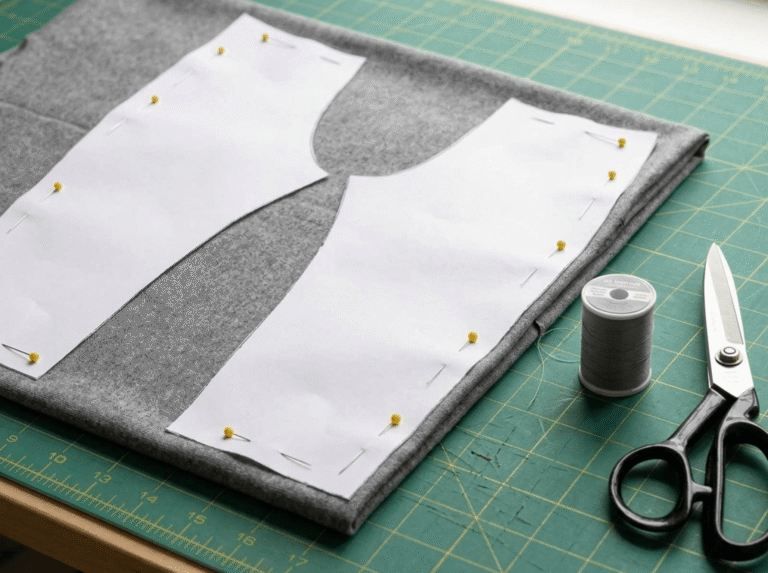
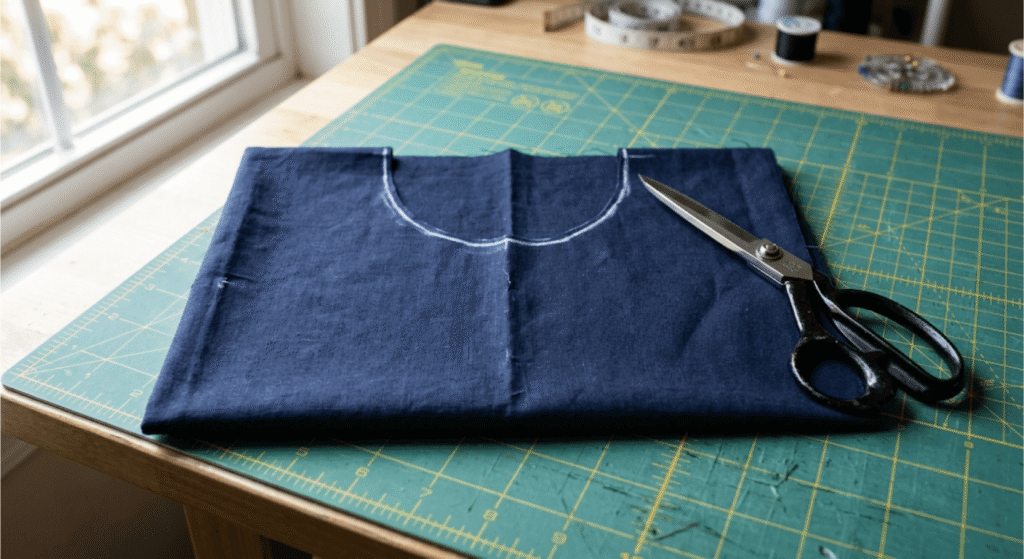
Cut one rectangle of fabric on the fold so you get a single front-and-back piece with no shoulder seam to sew.
Fold your fabric in half, right sides together, so you have a double layer 22 inches wide. For a 2T to 3T toddler, cut a rectangle 20 inches tall. For a 4T to 5T toddler, cut it 24 inches tall. Mark the center of the fold and cut a curved neckline opening about 5 inches across and 2 inches deep, so the fabric will pull over your toddler’s head without a zipper or buttons.
Step 2: Finish the Neckline on Your Toddler Beach Cover-Up
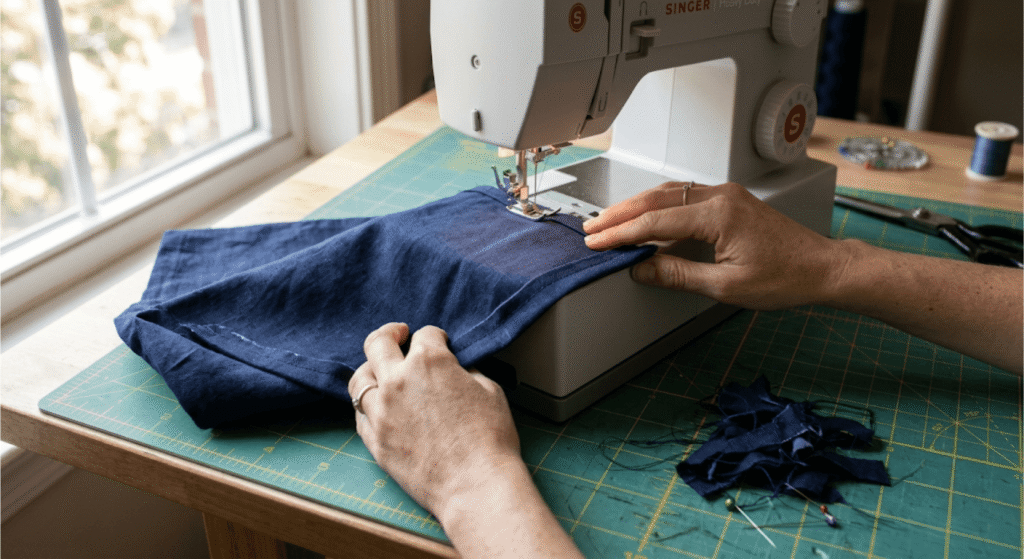
A narrow double-fold hem around the neckline keeps the raw edge from fraying every time your toddler pulls this over their head.
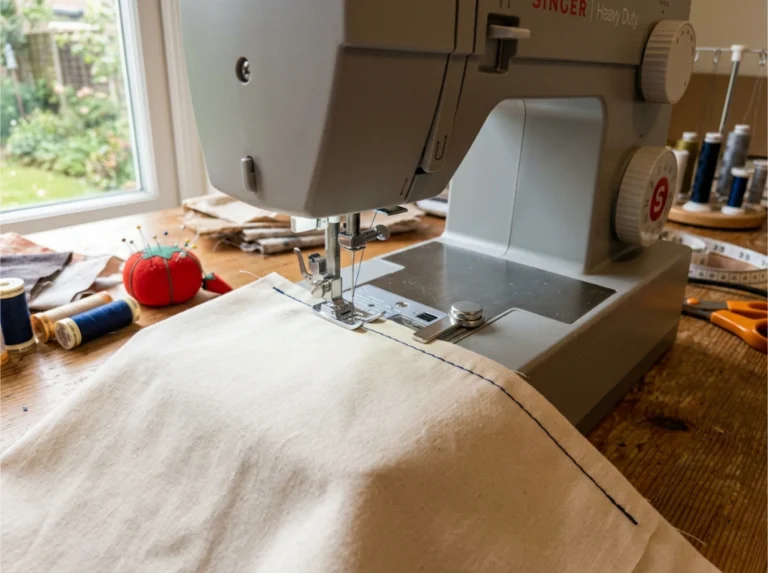
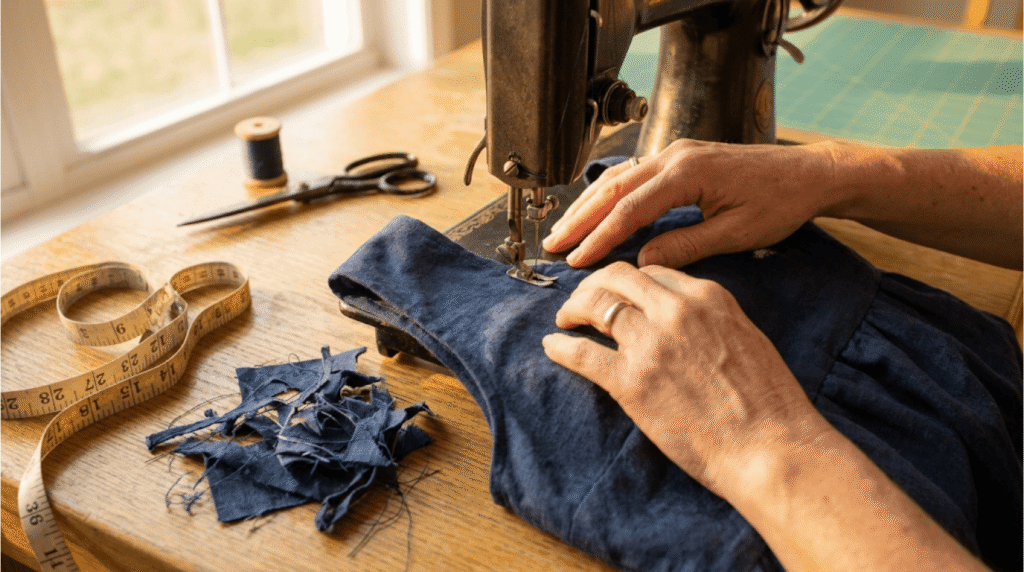
Press the raw edge of the neckline under a quarter inch, then press it under again so no raw edge shows. Stitch close to the folded edge all the way around the neckline. Go slowly on the curve and lift your presser foot every couple of inches to pivot the fabric, rather than trying to force it through in one pass. This is the step most beginners rush, and it is the one that shows the most if you rush it.
Step 3: Sew the Side Seams, Leaving Room for Arms
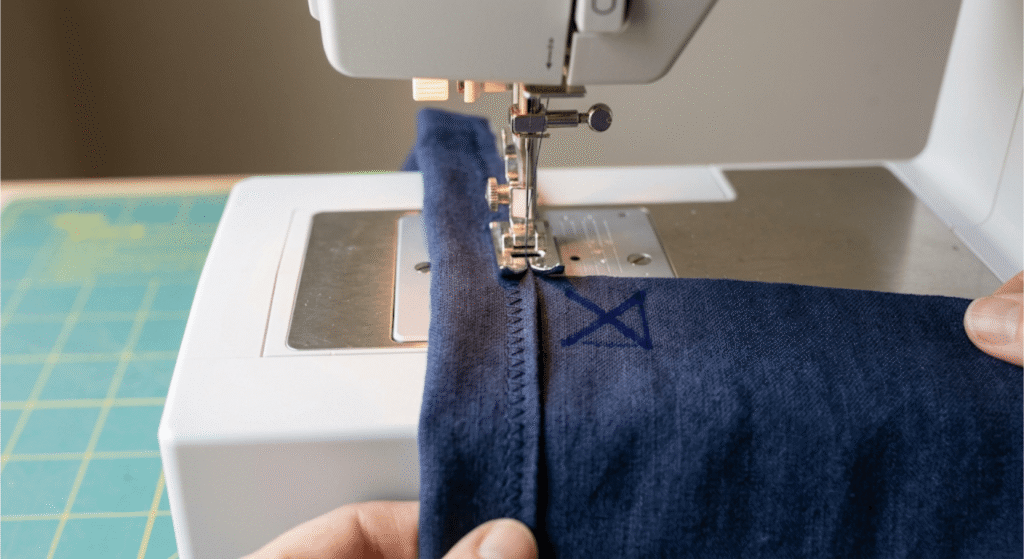
Sew each side seam from the bottom hem up to about 7 inches from the top, so your toddler has an armhole to slide through.
With the fabric still folded right sides together, stitch a straight seam down each side, starting at the bottom edge and stopping 7 inches short of the top fold. Backstitch at both ends so the seam does not pull open at the armhole. Finish the raw edge with a narrow zigzag stitch to keep the mid-weight cotton from fraying in the wash.
If you are using gauze, voile, or another loosely woven fabric, skip the zigzag finish above. Sew this same seam as a French seam instead. Stitch it first with wrong sides together at a narrow 1/4-inch seam allowance, trim close to the stitching, then flip the fabric right sides together and stitch again at 3/8 inch to fully enclose the raw edge. It takes a few extra minutes, but a zigzag alone will not hold on this weave, and you will be back at the machine after one wash instead of packing for the beach.
Step 4: Hem the Bottom of Your Toddler Beach Cover-Up
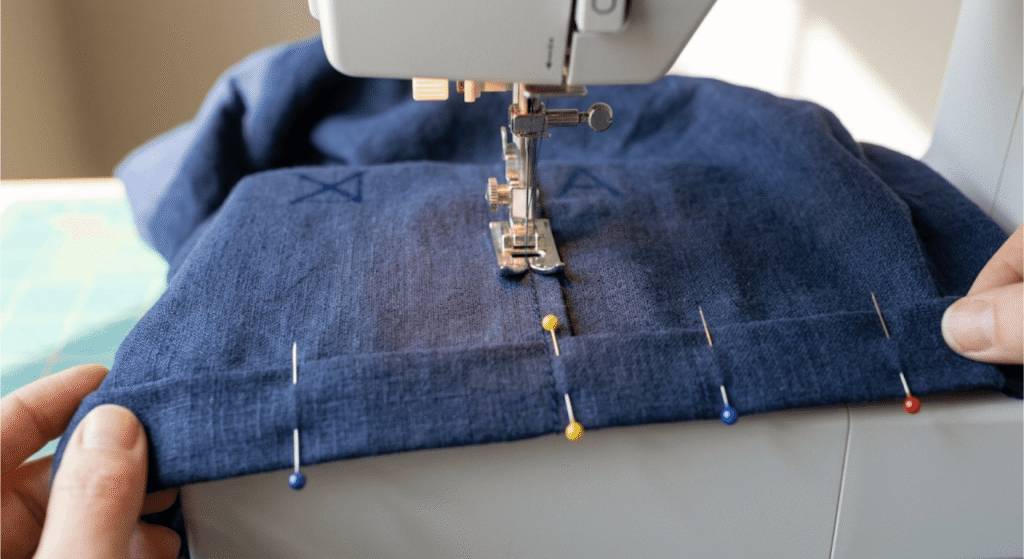
Fold the bottom edge under a half inch, press, fold again, and stitch to match the neckline finish.
Press the bottom raw edge under a half inch, then fold and press it under again so the raw edge is fully enclosed. Stitch close to the fold all the way around. Keep your stitch length slightly longer than usual, about 3.0 millimeters, so the hem has a little give when a wet, wiggly toddler is climbing in and out of it.
Step 5: Can You Adjust This Toddler Beach Cover-Up as Your Child Grows?
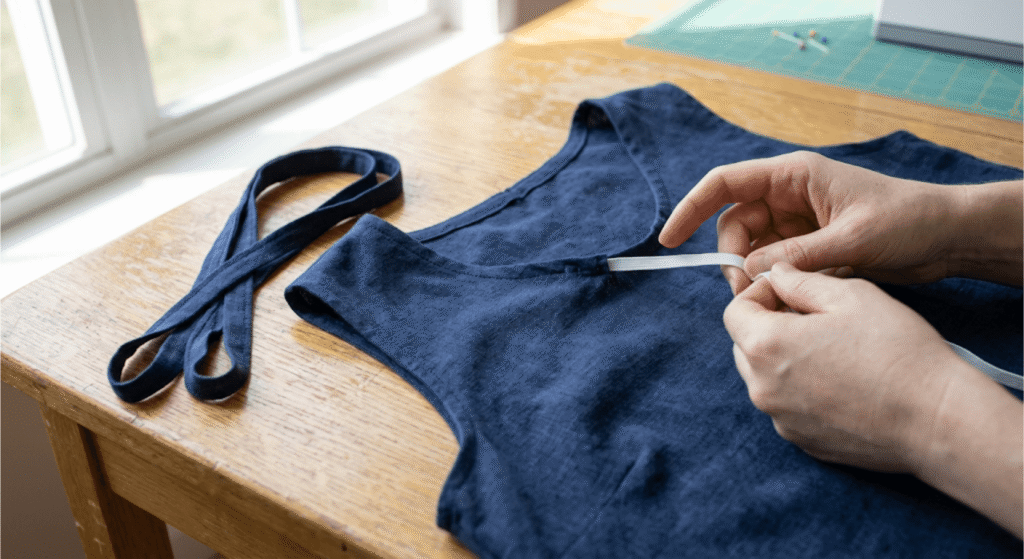
A short length of elastic or a pair of fabric ties at the neckline gives you a little room to grow into the cover-up next summer.
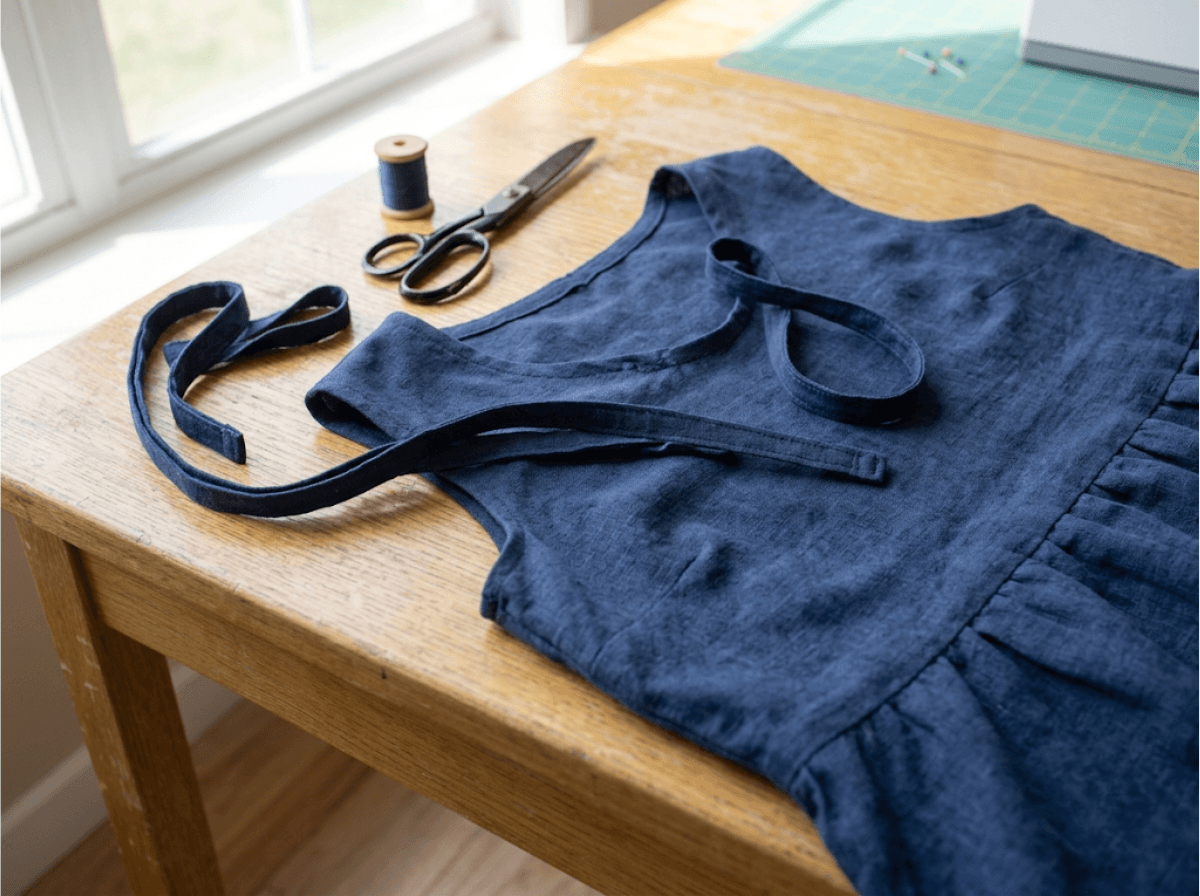
If you want the toddler beach cover-up to sit snugger at the neckline, thread a 24-inch piece of 1/4-inch elastic through the neckline hem before you close the last few stitches, pull it to the length that fits your toddler’s shoulders, and stitch the ends down. If you would rather have an open, layered look, skip the elastic and instead stitch two 18-inch fabric ties to the front neckline edges so the cover-up can be tied loosely at the throat.
Affiliate disclosure: This post may contain affiliate links for products referenced above. If you buy through one, we may earn a small commission at no extra cost to you.
What Should You Sew Next After a Toddler Beach Cover-Up?
Once you can sew a clean, curved neckline and a finished, raw-edge seam, you have the two skills you need to move on to a toddler t-shirt or a simple elastic-waist romper.
Those two skills, a curved hem and a finished raw edge, show up in almost every kids’ garment pattern. If this was your first toddler project, that is worth naming: you did not just finish a cover-up, you picked up the two techniques that make the next project faster.

- 🌿 Premium Quality Blend – Made from a soft and durable cotton-linen mix that combines breathability with strength.
- 🧵 Versatile Usage – Ideal for sewing garments, tablecloths, curtains, pillow covers, tote bags, and other home décor projects.
- 📏 55” Wide Fabric – Sold by the yard and cut in one continuous piece to suit both large and small projects.
- 💨 Lightweight & Breathable – Offers natural airflow, making it perfect for warm-weather clothing and airy interiors.
- 🎨 Easy to Work With – Soft hand feel with enough structure for beginner and professional sewing enthusiasts alike.
Check this video from Sew Simple Home‘s DIY Kids Hooded Swim Towel | For Kids
Frequently Asked Questions
-
Do I need a serger to make a toddler beach cover-up?
No. A regular sewing machine with a zigzag stitch will finish the raw edges just fine on mid-weight cotton or linen blends. A serger will get the job done a few minutes faster if you already own one, but it is not required anywhere in this pattern, including the side seams.
-
What size fabric do I need for a toddler beach cover-up?
One yard of 44-inch-wide fabric covers sizes 2T through 5T with room to spare. Cut the rectangle 20 inches tall for smaller toddlers and 24 inches tall for bigger ones, keeping the same 22-inch fold width for both sizes so the pattern stays this simple across the range.
-
My fabric is fraying badly while I cut it. What did I do wrong?
You probably did not do anything wrong. Loosely woven fabric, like gauze or voile, frays as soon as it is cut. Switch to the French seam method in Step 3, or seal the cut edges with a fray-prevention product before you sew.
-
Can I make this pattern without a curved neckline?
Yes. A straight slit neckline is faster to sew and still works, though it will not lie as flat against a toddler’s shoulders as the curved version does. If you are brand new to sewing curves, cutting a straight slit instead is a completely reasonable place to start, and you can always try the curved neckline on your next cover-up.
-
How do I make this bigger as my toddler grows?
Add 2 inches to the height for each size up, and choose ties instead of elastic at the neckline so you can loosen them season to season. That one substitution turns a single-size pattern into something that can stretch across a couple of summers before you need to cut a new one.
-
Is this pattern safe for a toddler to wear in water?
This cover-up is for after the water, not swimwear itself. Cotton and linen blends hold water and get heavy when wet, so use it over a swimsuit for sun coverage on the walk to and from the water, not while swimming.
-
What is the difference between a beach cover-up and a swim cover-up?
Nothing meaningful. The terms are used interchangeably across most patterns, including this one, so do not worry about which label a source uses. Both describe a lightweight garment worn over swimwear for sun coverage, not a garment built to be worn in the water itself.
Why did you vote that way? Drop your take in the comments.