
Quick Look
Related: 3 Beginner Quilting Patterns for Patchwork Tea Towels
You cut a hundred little squares, sat down at the machine, and watched them refuse to line up. That moment, seam ripper in hand, is when many first quilts stall. The search that brought you here is not really about finding a pattern. It is about not wasting fabric and not quitting. This guide fixes both. You will find where the best free beginner quilting patterns live, what to buy, the one seam that matters more than any other, and a complete nine-patch you can download and finish this weekend.
What makes a quilting pattern truly beginner-friendly?
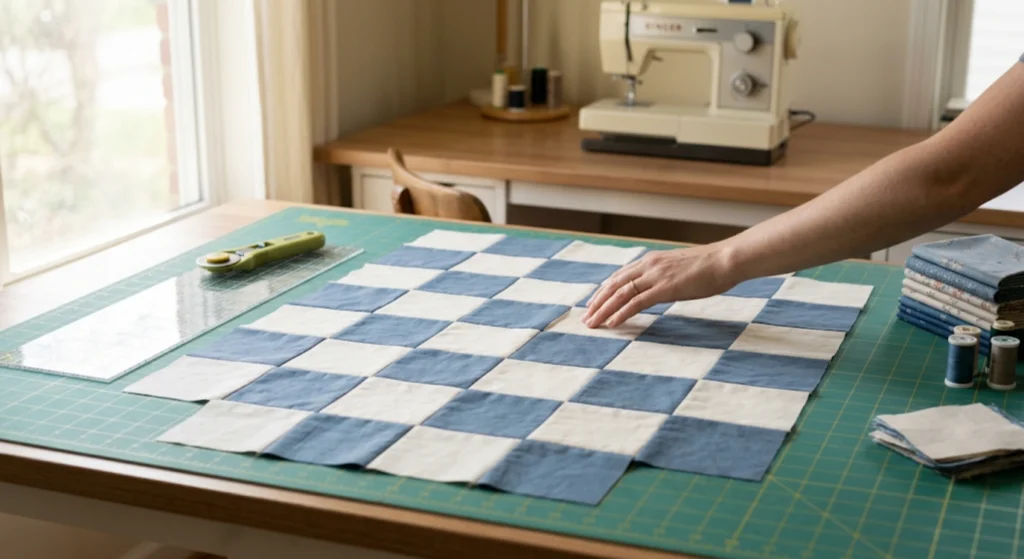
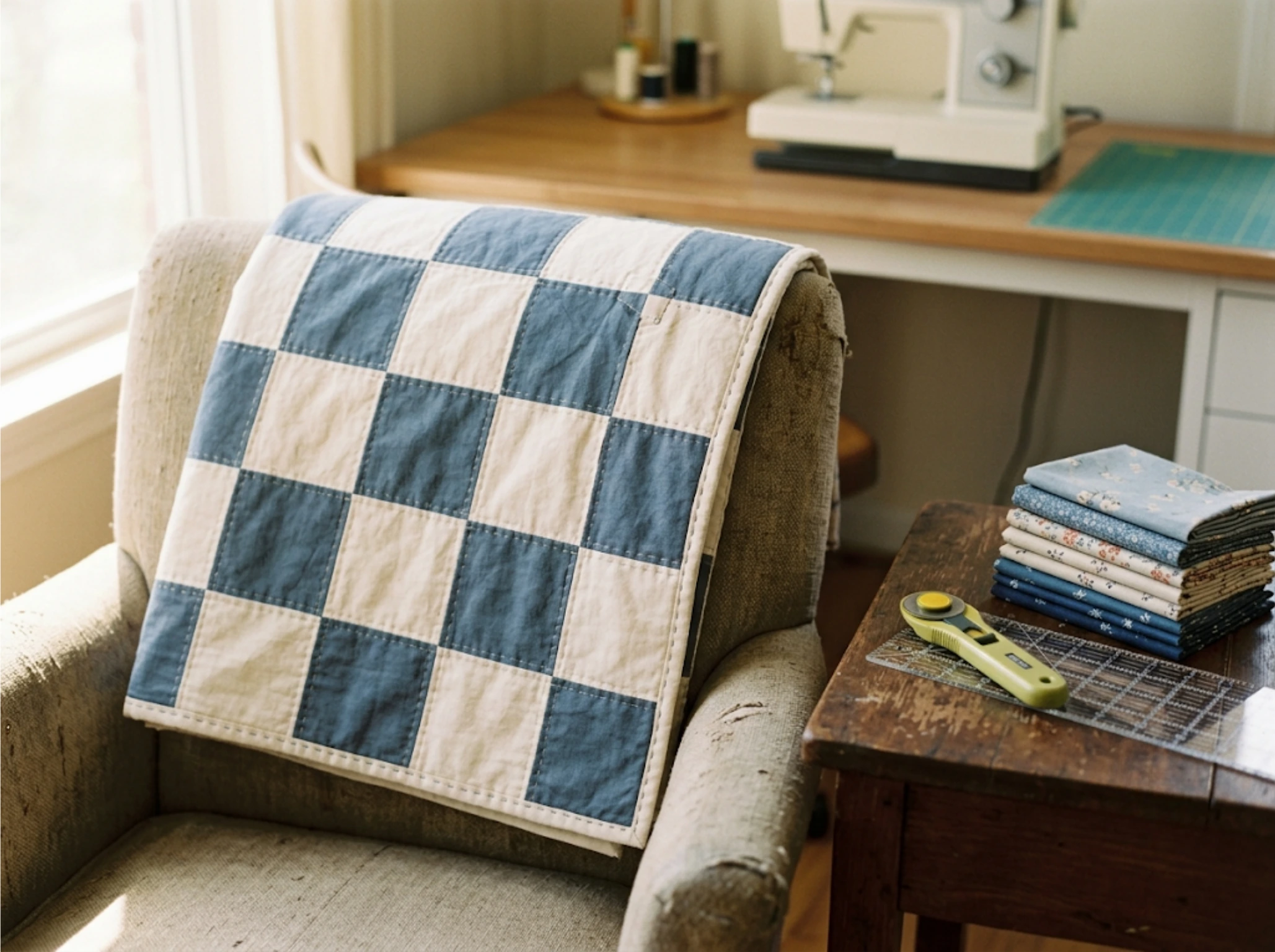
Not every free pattern is a friendly one. The best beginner patterns share a few traits: they use squares instead of triangles, they finish small, and they call for straight-line quilting instead of intricate free-motion designs. They also speak plainly, walking you through each cut and seam instead of assuming you already know the lingo. On PatternReview.com, one maker was reassured that there is no reason to use fancy free-motion motifs on a first quilt. That is the whole idea. A small, square-based quilt gives you the most practice with the fewest ways to fail.
A beginner-friendly pattern teaches you the most skills with the fewest ways to fail.
Where can I find free beginner quilting patterns?
Free patterns are everywhere, which is both good news and a problem. Quilt-shop blogs, fabric-company websites, and independent designers all publish free beginner quilting patterns to build an audience, so quality ranges from excellent to frustrating. Look for three signals before you commit: a clear cutting list with exact measurements, step-by-step diagrams, and a stated skill level. A good free pattern reads like a teacher standing beside you. A bad one skips the hard parts and leaves you guessing at the corners. When you download something new, read the whole thing before you cut a single piece. For tools, a starter kit of a rotary cutter, mat, and clear ruler will carry you through most projects.

- ♡ What You Get - This rotary cutter set includes 1pcs 45mm fabric cutter, 5pcs extra rotary blades, 1pcs A3 fabric cutting mat, 1pcs 6.5 x 12 inch quilting ruler, 1pcs #11 craft knife and 10pcs replacement blades, 20pcs sewing clips.
- ♡ 45mm Rotary Cutter - Ergonomic designed handle with comfort-grip for both sides. The cutter is designed with safety button, when open the safety button, the trigger handle can not be used, even kid can use it safely with parents. The blade can install on both side of the rotary cutter, fabric cutter wheel is perfect for both right-handed & left-handed users.
- ♡ 45mm Rotary Cutter Blades and Carving Knife - The rotary blades are made of high quality SKS-7 steel, they are very sharp&durable and suitable for cutting all kinds of fabrics, paper, leather, vinyl, mesh, ect, it can cut multiple layers of fabric or paper. craft knife is suitable for precision cutting and variety of craft DIY projects, such as carving on wood, foil, cardboard, wallpaper, plastic, cloth, leather.
- ♡ Self Healing Cutting Mat - Durable double-sided cutting mat, the self-healing property help the mat re-heal itself after cutting, grid print on both sides, Imperial and Metric. The craft mat is made of durable 5-Ply PVC materials, accurate cutting, stays flat and don't warp. Cutting Mat size is A3, grid size of print is 16" x 10", thickness is 3 mm. This sewing mat protect your tabletop & blades, the soft compound of the mat does not dull blades.
- ♡ Great Value Fabric Cutting Set - This rotary cutter and mat set is perfect for cutting fabric, cloth, tshirt, quilts, thread, paper and more. It's the ideal tool for quilting, sewing, scrapbooking, card making and other DIY projects. The essential tool for the avid sewer, quilter, craft! Quilting Kit- Ideal for Crafting, Patch working, Crochet, Knitting. it is also a great gift choice for special day.
The internet is full of free patterns; your real job is to spot the well-written ones before you cut.
Sewing.com may earn a commission from qualifying purchases made through links on this page, at no extra cost to you. We only recommend tools we would put on our own cutting table.
What materials do beginners need to start quilting?
Here is the part that scares people off: cost. It should not. You do not need premium designer fabric to learn. As one quilter put it on National Quilters Circle, it makes no sense to use hyper-expensive designer fabric as a learning piece. Your first quilt will collect a few wobbly seams and a ripped stitch or two, and that is exactly what it is for. Precut charm packs or fat quarters keep your cutting simple and your colors coordinated, which removes two early sources of frustration at once. Most good patterns list exactly how much of each fabric to buy, so you are not left guessing at the store. Your basic supply list is short: quilting cotton for the top, backing, and binding; cotton batting; thread and a fresh needle; a rotary cutter, mat, and ruler; pins; an iron; and a seam ripper. That is enough to finish a real quilt from start to end.

- Features: Unique designs pre-cut quilting fabric
- Package: 50 pcs fabric squares
- Material: Our high quality, 100% cotton fabric is soft and breathable
- Size:10" x 10". All fabrics are trimmed by hand, which result in some raw edge and may have 0.5-1cm deviation exist.
- Easy to work with: These quilting squares are ideal for many sewing projects including quilts, cushion covers, costumes, wallets, purses, baby clothes, kids’ bedding, hand puppets, tablecloths and more.
You do not need expensive fabric to learn. You need forgiving fabric.
Sewing.com may earn a commission from qualifying purchases made through links on this page, at no extra cost to you. We only recommend tools we would put on our own cutting table.
How do you sew the quarter-inch seam that makes it all work?
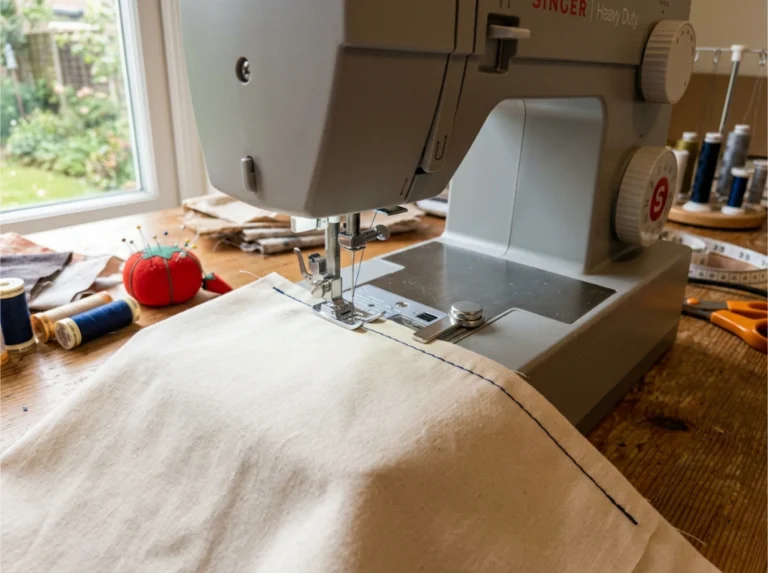
If there is one skill to get right before anything else, it is the quarter-inch seam. Garment sewing forgives a drifting seam. Quilting does not, because the geometry stacks. A tiny error repeats across every block and shows up later as chopped-off points where seams should meet. On PatternReview.com, one maker described cutting hundreds of pieces only to find that once sewn, they were all slightly too different. That is almost always the seam, not the sewist. Here is how to lock it in.
1. Find your machine’s true quarter inch. Place a ruler under the needle, lower the needle onto the quarter-inch line, and note where the fabric edge sits. Mark that spot with a strip of tape as an edge guide.
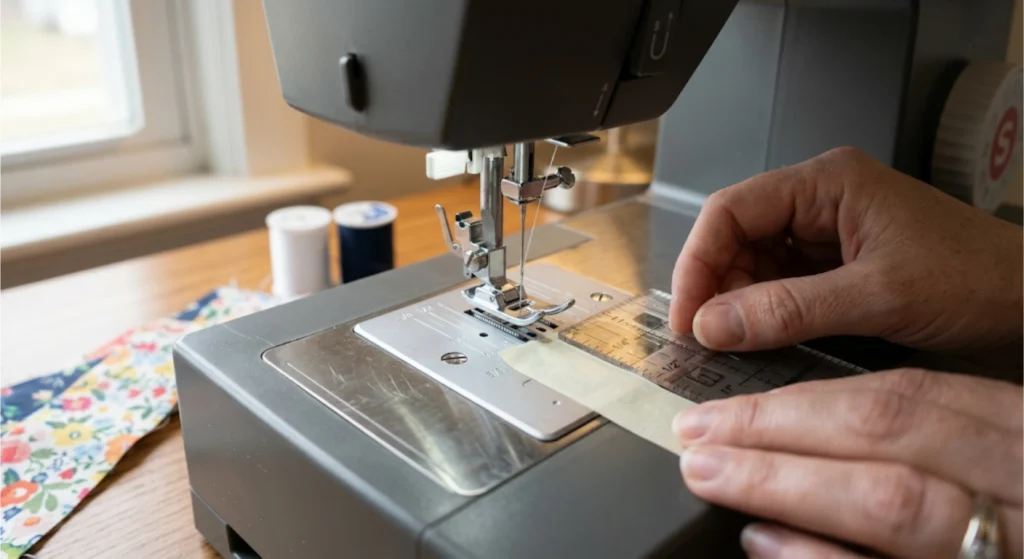
2. Sew a test seam on scrap. Stitch two scraps together, press, and measure the seam allowance. Aim for a scant quarter inch, a thread’s width under, so the fold of the pressed seam does not eat your measurement.
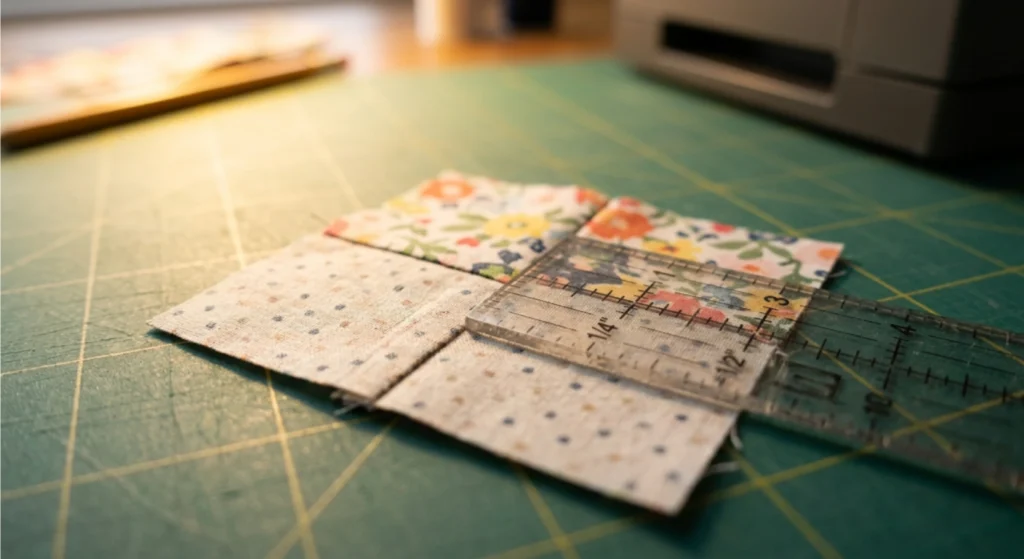
3. Press, do not iron. Set the iron down, hold, and lift. Dragging it sideways stretches the fabric and warps your square before it ever reaches a block.
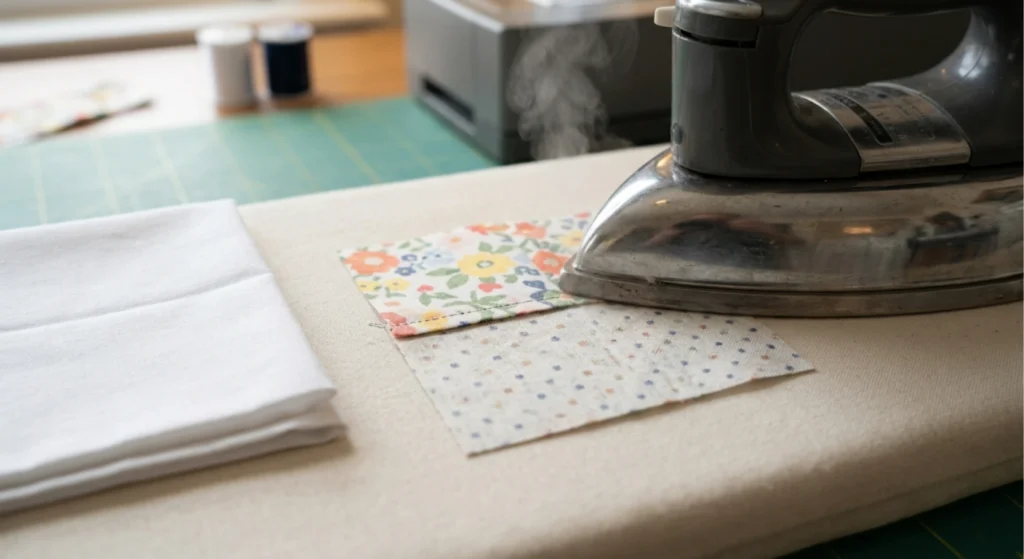
Get the quarter-inch seam right and almost every other beginner mistake becomes forgivable.
How long does it take to learn basic quilting?
Honestly, a small first quilt takes a focused weekend, from cutting to binding. Real comfort with the craft usually arrives after your third or fourth project, once your hands stop thinking about the quarter-inch seam and start doing it on their own. Do not let anyone sell you quick-and-easy on a full quilt, because even a simple one is real, satisfying work. Starting small is the shortcut that actually works. A finished baby or lap quilt teaches you more than a bed quilt you abandon halfway.

- 【UNIVERSAL LOW SHANK FIT】 Engineered to seamlessly fit Brother, Singer, Janome, Kenmore, and all low-shank sewing machines. Upgrade your domestic machine into a high-performance stitching powerhouse instantly without any extra adapters
- 【DUAL-FEED TECH: NO PUCKERING】 Features an integrated secondary set of feed dogs that grips and propels the top fabric layer in perfect unison with the bottom. Say goodbye to frustrating fabric shifting, puckering, and unsightly waves
- 【THE ULTIMATE QUILTING PARTNER】 The artisan's choice for precision quilting, matching plaids, and aligning complex patterns. Provides absolute stitch control across multiple batting layers, thick denim, canvas, upholstery, and leather
- 【PREMIUM 2-PIECE CRAFT KIT】 This professional-grade presser foot set comes with an adjustable quilting guide for perfectly spaced parallel rows. Ideal for seasoned quilters, passionate bag makers, and creative DIY garment designers.
- 【TOOL-FREE EASY INSTALLATION】 Crafted with heavy-duty steel and durable components designed to last. Installs in seconds without complex tools and includes clear, beginner-friendly instructions to get your next project started right away

A finished small quilt teaches more than an ambitious one you never complete.
Sewing.com may earn a commission from qualifying purchases made through links on this page, at no extra cost to you. We only recommend tools we would put on our own cutting table.
What if my first quilt goes wrong?
It will, in small ways, and that is normal. The difference between quilters who continue and quilters who quit is not talent. It is knowing the fix. When points get cut off, your seam allowance drifts, so correct the seam, not the points. When blocks come out in slightly different sizes, pin generously, match the corners first, and ease the extra length evenly rather than trimming. When seams will not lie flat, you are ironing instead of pressing. And when you feel like giving up, remember that on one quilting blog, a maker admitted quilting had stopped being fun under the weight of her own self-criticism, then found her way back to it. Finished beats perfectly. A wonky first quilt still keeps someone warm.
Every quilter has unpicked more than they will admit; the seam ripper is a tool, not a verdict.
Your first quilt starts with one square
Free beginner quilting patterns work best when you let them stay small, forgiving, and finishable. Choose a square-based lap or baby quilt, guard that quarter-inch seam, quilt it with straight lines, and save the fancy techniques for quilt number two. The wonk is not a failure. It is how your hands learn the craft.
Download the free start-to-finish nine-patch pattern
We built a complete pattern you can take from first cut to final stitch: the Fat-Quarter Nine-Patch, a 36 by 45 inch lap or baby quilt. It includes a full supply list, cutting chart, block diagrams, and a troubleshooting page. Enter your email to download the free PDF and start your first quilt this weekend.
[PDF download URL: pending hosted link before publish. Lead magnet file is built and attached to this session.]
3 Stunning Sewing Ideas🦋Easy Patchwork Layout Tutorial from easy sewing.
Frequently Asked Questions
-
Where can I find free beginner quilting patterns?
Start with quilt-shop blogs, fabric-company sites, and independent designer tutorials, which often post free patterns to build an audience. Look for a clear cutting list, diagrams, and a stated skill level. A well-written free pattern walks you through each step instead of assuming you already know the lingo.
-
What is the easiest quilt for an absolute beginner to make?
A nine-patch lap or baby quilt is the classic first project. It uses one square size and only straight seams, so there are very few ways to fail. Starting small gives you a finished object quickly, which builds the confidence you need to tackle a larger quilt next.
-
What supplies do I actually need to start quilting?
You need quilting cotton, thread, a fresh needle, a rotary cutter, a self-healing mat, a clear ruler, pins, an iron, and batting. A seam ripper is essential, too. You do not need premium fabric to learn; forgiving, affordable cotton or precuts are the smarter choice for a first quilt.
-
Should I prewash my fabric before quilting?
It depends on your fabric. If it feels cheap or the color is deep, like reds or indigos, prewash to check for shrinkage and bleeding. Good-quality precuts can usually skip it. Whichever you choose, stay consistent across the whole quilt so every piece shrinks the same amount later.
-
Why do my quilt points keep getting cut off?
Your seam allowance is drifting off a true scant quarter-inch. That small error repeats in every block and appears as chopped points where seams meet. Fix the seam allowance itself rather than the points. Consistent cutting and a consistent quarter-inch seam solve this almost every time.
-
Can I quilt on a regular sewing machine?
Yes. Any machine that sews a straight line can quilt a small project. Use a walking foot if you have one, choose straight-line quilting instead of free-motion, and start in the center, working outward. For a large quilt, roll or fold the bulk to fit it under the machine arm.
-
How long does it take to finish a first quilt?
A small nine-patch lap or baby quilt takes a focused weekend for most beginners, from cutting to binding. Real comfort with the craft usually comes after three or four projects. Do not rush; finishing one small quilt well teaches more than starting a large one you never complete.
Why did you vote that way? Drop your take in the comments.