
Start Here
Related: How to Sew a Drawstring Linen Bag in 8 Steps
What Makes a Tote Bag Sewing Pattern Actually Heavy Duty?
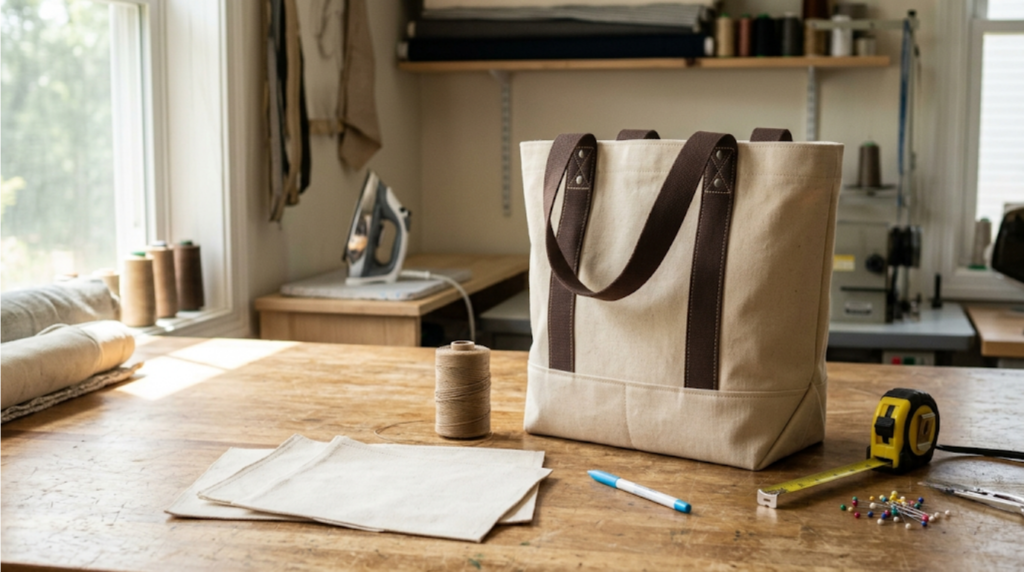
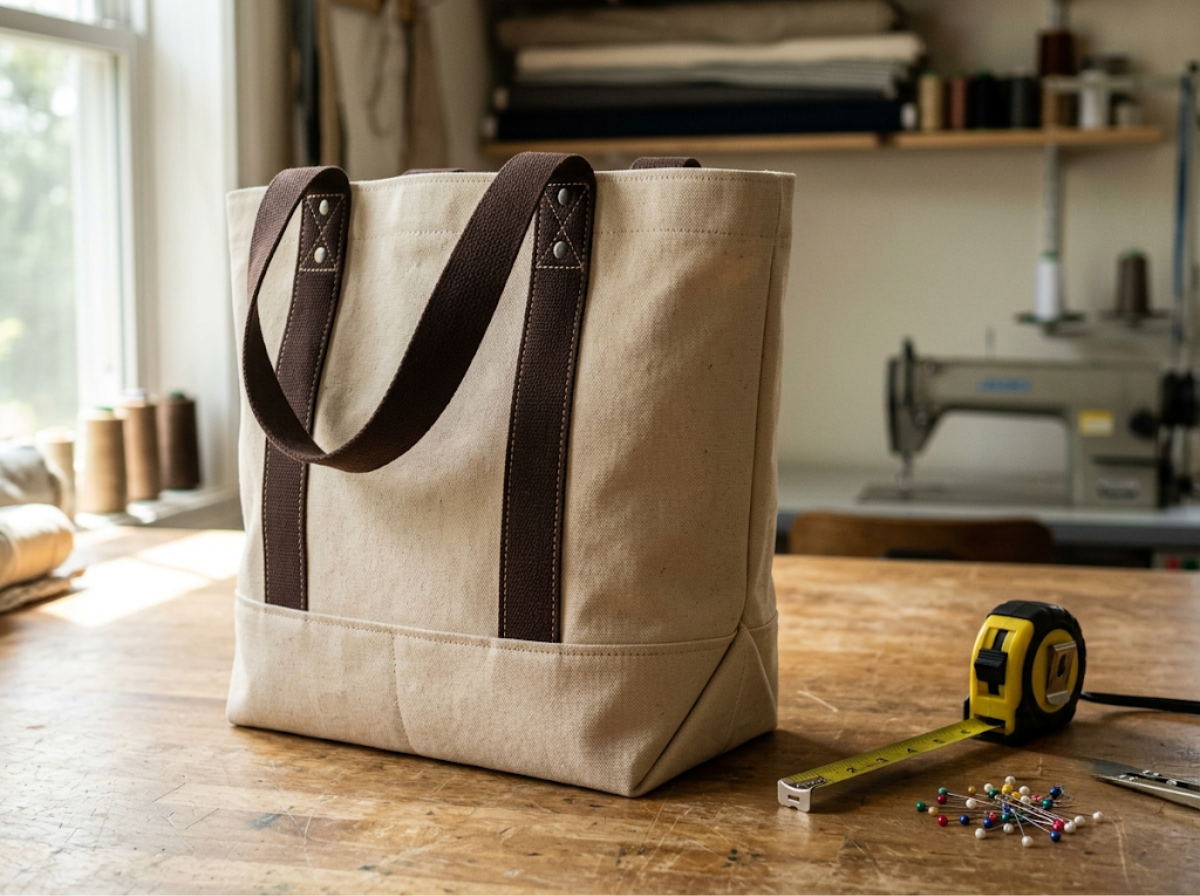
“Heavy duty” gets printed on a lot of tote bag patterns that fall apart after a few grocery trips. A tote bag sewing pattern only earns that label if it holds up at three specific points: the strap attachment, the base seam, and the boxed corners. Everything else on the bag can be sewn quickly without hurting durability. Those three points are where weight actually pulls on the stitching, and they are where most handmade totes fail first. This pattern treats the rest of the construction as a straightforward beginner project and treats those three points as non-negotiable. A bag that fails at the strap almost always fails because a stress point was sewn once instead of reinforced, not because the fabric was wrong.

- Ideal for Sewing, Crafts & Décor: Perfect for apparel, bags, upholstery, furniture accents, seat cushions, and creative DIY projects.
- Premium Cotton Duck Fabric: Crafted from thick, 10 oz cotton duck with a tight weave that offers durability, structure, and a quality feel.
- Washable & Reusable: This fabric is machine washable and reusable, making it an eco-conscious choice for repeated use in every project.
- 5 Yards of Versatile Canvas: Comes in a 5-yard bolt—easy to cut, sew, paint, or dye for custom applications in both home and professional settings.
- Available in a Range of Colors: Choose from a wide selection of rich, vibrant color options to match your design vision—perfect for both bold statements and subtle accents.
What Supplies Do You Need for This Heavy-Duty Tote Bag Sewing Pattern?
This heavy-duty tote bag sewing pattern only needs a handful of supplies. You need one yard of heavyweight cotton canvas or duck cloth in the 10- to 12-ounce range. Lighter canvas looks similar on the bolt but will not hold its shape once the bag is loaded. Fabric mills classify canvas and duck cloth by weight in ounces per square yard, and the widely used numbered duck system confirms that heavier, lower-numbered canvas is the standard choice for bags and other heavy-duty gear (source: Cotton duck, Wikipedia). You also need one yard of medium-weight fusible interfacing, matching heavy-duty polyester thread, and a size 90/14 or 100/16 topstitch needle for your machine. A standard needle skips stitches or breaks once it hits several layers of canvas at once, especially at the corners. Round out your supplies with fabric scissors or a rotary cutter, a ruler, a fabric marking pen, and an iron for pressing every seam as you go. Interfacing is not optional on this tote bag sewing pattern: skip it and even 12-ounce canvas will sag under a real load.

- Woven cotton fusible for light to medium weight fabrics
- Cut to order
- Continuous yardage if multiple quantities are purchased
- Fabric care instructions: Machine Wash Cold/Tumble Dry Low
How Do You Cut and Prep the Fabric for a Heavy-Duty Tote Bag Sewing Pattern?
Wash and dry your canvas before you cut anything. Canvas shrinks more than quilting cotton, and skipping this step is how a tote bag ends up warped after its first wash. Once the fabric is dry and pressed, cut two body panels, one base panel, and two strap pieces according to the measurements in the free printable pattern below. Fuse interfacing to the wrong side of every piece before you sew a single seam. This is the step most beginners rush, and it is also the step that determines whether the finished bag has real structure or just flops over on itself. A few extra minutes at the ironing board here saves a lot of frustration later. Prewashing and interfacing before you cut a single seam is the single biggest predictor of whether this bag holds its shape.

- Universal Use for All Home Sewing Machines: Engineered with a flat shank side for perfect positioning in the needle holder and for smooth, reliable performance, SCHMETZ Topstitch Needles are compatible with all home sewing machine brands, including Brother, Janome, Singer, Baby Lock, and more
- No More Skipped Stitches or Thread Breakage: Crafted for superior precision, these durable topstitch needles prevent skipped stitches and reduce thread shredding or breaking, even when working with delicate, metallic, or heavy duty threads
- Perfect for Embroidery, Quilting and Embellishing : Glides effortlessly through multiple layers, making free-motion quilting, embroidery, and sewing thick heavy materials like denim, canvas, and leather
- Stronger, More Durable, & Break-Resistant: Designed to resist bending and breaking, this high-quality SCHMETZ Topstitch offers long-lasting durability for a wide assortment of fabrics and frequent use on all household sewing machines
- Flawless Stitches on Every Fabric Type: The elongated eye accommodates thick threads with ease, making sewing fast and smooth on everything from fine silks to heavy materials, delivering a polished and professional finish
How Do You Sew a Tote Bag That Won’t Rip at the Seams?
Most seam failures in a home-sewn tote are not really pattern problems; they are machine problems. If stitches are skipping or the thread is breaking while sewing through canvas, re-thread the machine from scratch before troubleshooting anything else.
Step 1: Sew and Reinforce the Straps
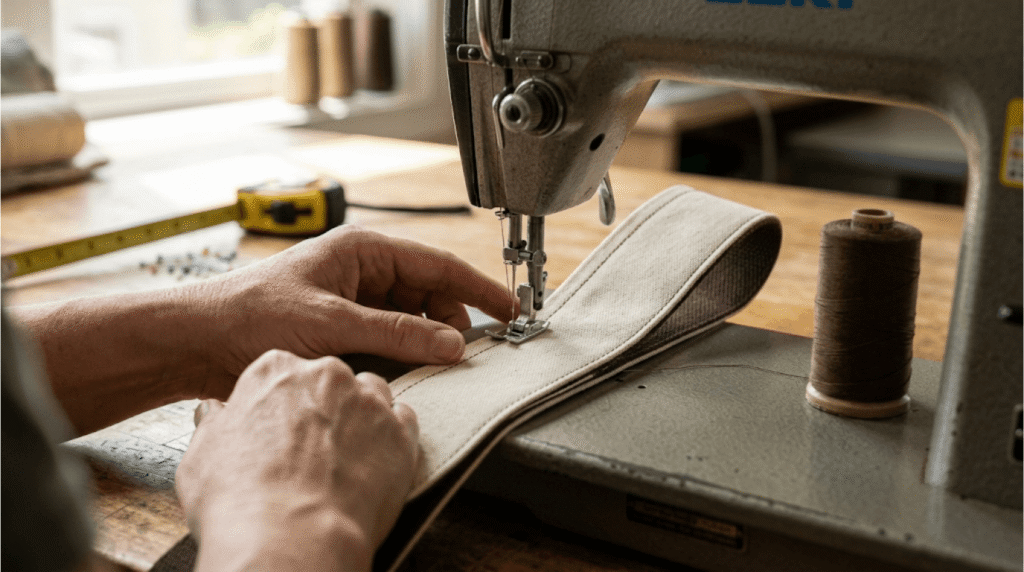
Fold each strap piece in half lengthwise, right sides together, and stitch the long edge with a half-inch seam. Turn the strap right side out, press it flat, and top stitch both long edges. This top stitching is not decorative; it is what keeps the strap from stretching under a full load.
Step 2: Assemble the Body and Base
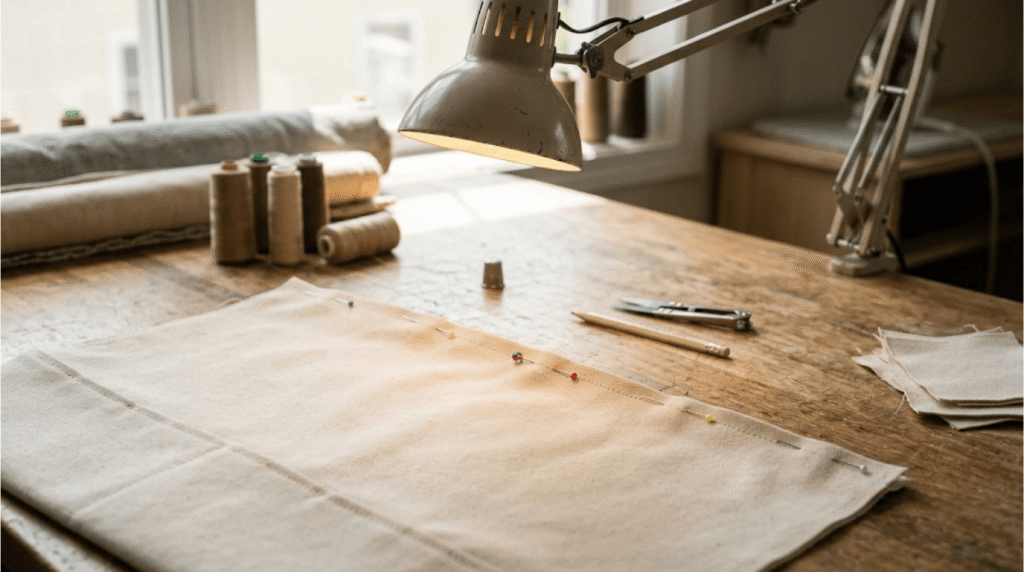
Pin one long edge of the base panel to the bottom edge of the front panel, right sides together, and stitch with a half-inch seam. Repeat on the back panel, then sew both side seams to close up the body and base of this tote bag sewing pattern. A skipped stitch here on this tote bag sewing pattern usually means the needle needs upsizing, not that the pattern is at fault.
How Do You Attach Straps So They Don’t Tear Off?
Step 3: Bar Tack the Strap Ends
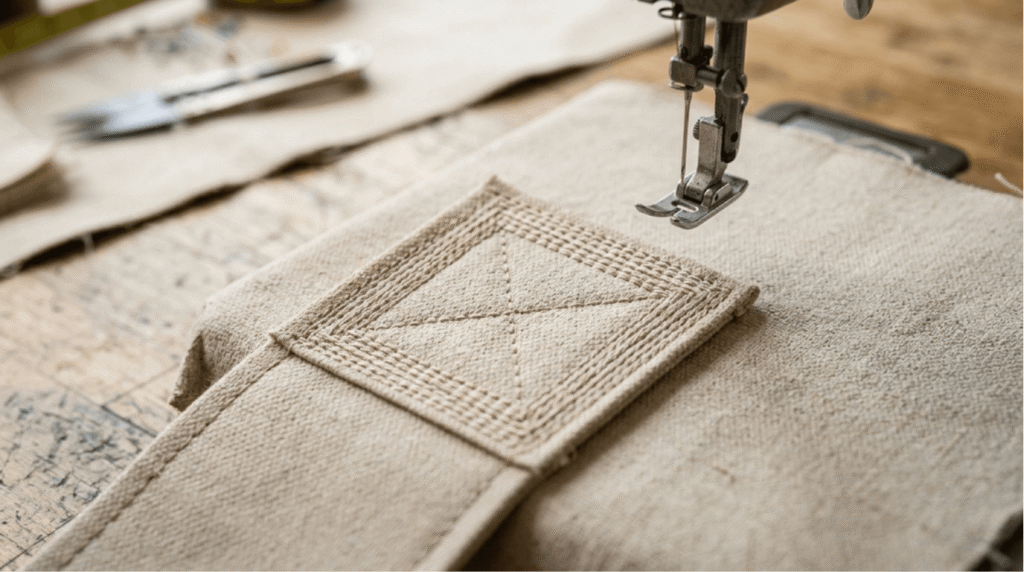
Pin each strap end four inches in from the side edge of the body panel, raw edges even with the top. Stitch the strap in place with a 3/8 inch seam, then sew a one-inch box with an X through the center at each strap end. That box and X is a bar tack, and it is the single most important stitch in the entire bag. It spreads the load across a wider area instead of concentrating all the stress on one line of stitching, which is exactly where a plain tote bag sewing pattern tends to fail first. This one reinforcement is the difference between a tote that lasts one season and one that lasts years.
How Do You Finish and Reinforce the Bottom of the Tote Bag?
Step 4: Box the Corners
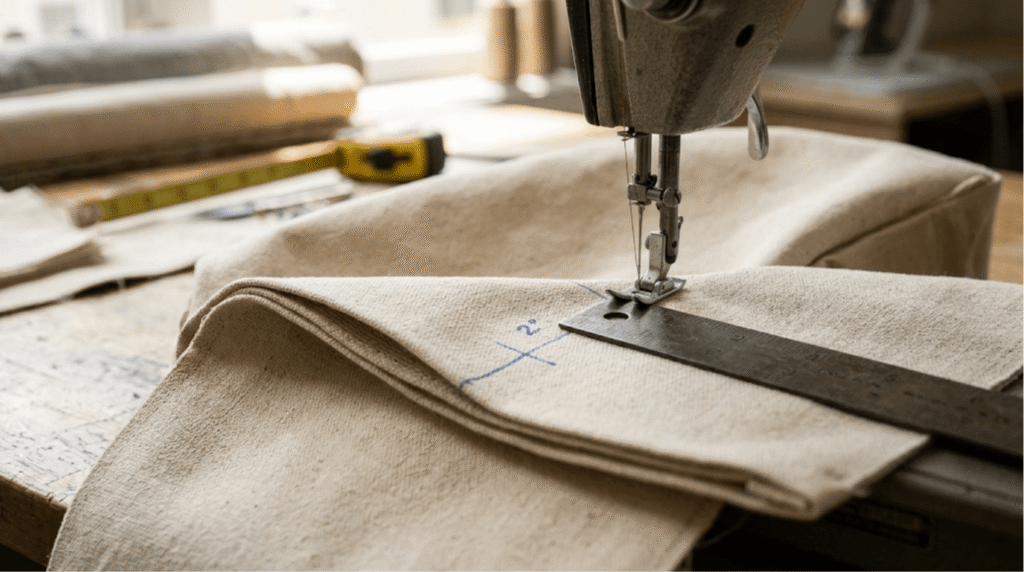
At each bottom corner, match the side seam to the base seam so they form a straight line, creating a small triangle of fabric. Measure two inches from the point and stitch straight across, backstitching at both ends, then trim the extra fabric. This is what gives the bag a flat bottom that stands up on its own instead of a floppy sack shape.
Step 5: Finish the Top Edge
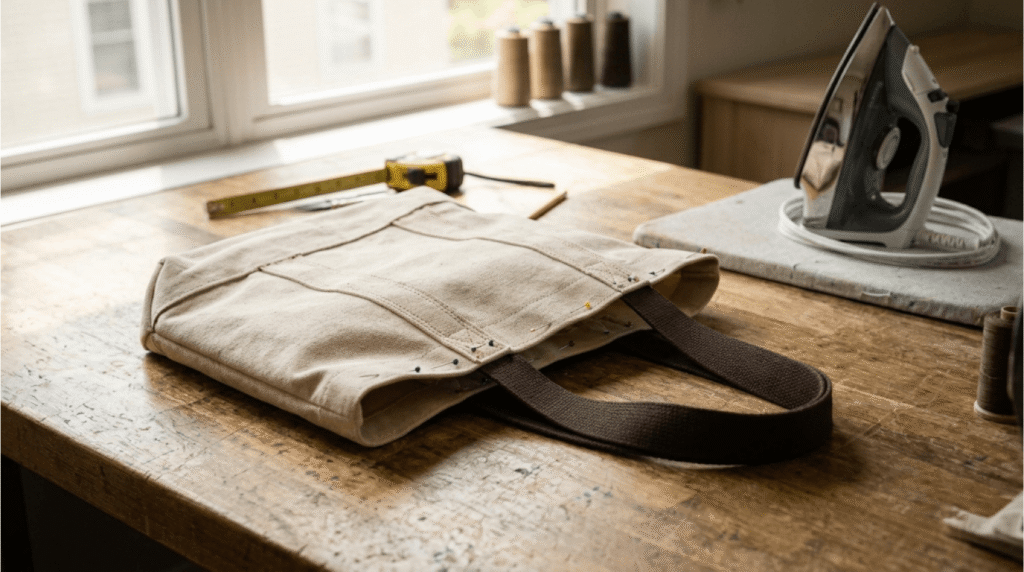
Fold the top raw edge over a quarter inch, press, fold three-quarters of an inch, and press again. Pin all the way around, making sure the strap ends are caught inside the fold, then top stitch close to the inner edge with a second row of stitching just above it for extra strength. Boxed corners are what let this bag stand up on its own instead of collapsing into a floppy sack.
One maker on PatternReview.com noted, “I prefer sturdy handbags rather than floppy,” which is exactly what interfacing and boxed corners are for. Another sewist reviewing a canvas tote pattern on Etsy admitted the trickiest moment was that “sewing and turning the bag inside out can be a bit challenging,” a step this unlined pattern skips entirely.
Ready to Sew Your Own Heavy Duty Tote Bag?
Sewing a tote bag that survives real use does not take advanced skills. It takes the right fabric, the right needle, and reinforcement at the three points that actually carry weight: the straps, the base seam, and the boxed corners. Everything else in this tote bag sewing pattern is beginner-friendly, with straight seams and simple folds. Get the reinforcement right at those three points, and the rest of the bag takes care of itself. Download the full printable pattern below for complete cutting measurements and start-to-finish instructions, then tell us how your bag turned out.
Download the free tote bag sewing PDF below to get the complete cut list and step-by-step instructions in one printable guide.
Frequently Asked Questions
-
What fabric is best for a heavy-duty tote bag?
Cotton canvas or duck cloth in the 10 to 12 ounce range holds up best for a heavy-duty tote. Lighter quilting cotton looks similar on the bolt but will not survive repeated heavy loads without extra interfacing and reinforcement at every stress point. Denim also works well if canvas is not available locally.
-
Do I need interfacing for a heavy-duty tote bag?
Yes, and it is not optional if you want the bag to actually hold its shape. Medium-weight fusible interfacing gives the bag structure without making it stiff or hard to sew through. Skipping interfacing is the most common reason a heavy-duty tote ends up floppy and shapeless after just a few uses.
-
Why do tote bag straps keep ripping off?
Straps fail because the attachment point is not reinforced, not because the strap itself is weak. A bar-tacked box and X stitch at each strap end spreads the load across a wider area instead of concentrating it on one line of stitching.
-
What needle should I use for sewing canvas?
Use a size 90/14 or 100/16 topstitch or denim needle for canvas. A standard needle skips stitches or breaks when it hits multiple layers of canvas, especially at the boxed corners where fabric stacks up thick. Re-thread your machine first if stitches start skipping mid seam.
-
Can a beginner sew a heavy-duty tote bag?
Yes, if the pattern is unlined with no zipper. The construction skills involved are basic straight seams and one boxed corner technique, both easy to learn in an afternoon. Reinforcement steps like bar tacking take a little longer but do not require advanced sewing skills at all.
-
How much weight can a handmade tote bag hold?
A reinforced canvas tote with bar-tacked straps comfortably holds 15 to 20 pounds on a regular basis without seam failure. For heavier or daily loads, swapping to webbing straps instead of fabric straps is worth the small amount of extra sewing time it takes.
-
Is a boxed corner necessary for a tote bag?
It depends on whether the bag needs to stand upright with a flat bottom. Boxed corners create that structure and distribute weight better across the base seam than a simple flat-bottomed bag without them, especially once the bag is fully loaded with groceries or books.
Why did you vote that way? Drop your take in the comments.