
Fast Facts
Feedsack fabric is printed cotton from the 1920s to the 1950s, commodity sacks, now prized by quilters for its cheerful small-scale prints and pastel palette. Identify authentic pieces by chain-stitch holes along the edges, coarse weave texture, and imperfect print registration. Reproduction prints from Moda and Riley Blake cost $10 to $14 per yard. Best beginner patterns include nine-patch and four-patch blocks that showcase the florals defining this tradition.
Feedsack fabric turned commodity packaging into an American quilting tradition that endures almost a century later. From the 1920s through the 1950s, manufacturers printed colorful patterns on cotton sacks used to ship flour, sugar, and animal feed. Homemakers transformed those sacks into clothing, quilts, and household goods. Today, quilters work with authentic vintage pieces and with reproduction prints from Moda and Riley Blake. This guide covers the history, how to identify authentic pieces, where to source materials, and which patterns deliver the best results.
What Is Feedsack Fabric and Why Does It Matter to Quilters?
By the mid-1920s, plain cotton sacking had become a printed textile that changed how rural American women clothed their families and furnished their homes.
Cotton sacks replaced wooden barrels for shipping because they were lighter and cheaper. Manufacturers noticed women were already reusing plain sacking for towels and quilt backings, so they started printing the sacks with attractive patterns. According to Susan Miller’s Vintage Feed Sacks: Fabric from the Farm (Schiffer, 2007), thousands of distinct prints were produced, including florals, novelty prints, and patriotic wartime motifs. The International Quilt Museum holds one of the largest documented collections of Depression-era quilts made from these fabrics.
Women selected their flour and chicken feed based on the print they wanted, and traded sacks with neighbors to collect enough matching fabric for a project. One quilter recalled: “My mother used to make all my dresses from feed sacks back in the late 40’s and early 50’s. She could not afford to buy fabric.” (Quiltingboard)
Some companies printed full quilt-top panels directly onto the sacks. The practice declined in the late 1940s as paper and plastic packaging replaced cotton, but the prints and the scrappy quilting tradition they inspired remain alive today.
How Can You Tell If Feedsack Fabric Is Authentic or a Reproduction?
Three physical tests separate authentic feedsack fabric from modern reproduction: stitch holes along the edges, the weave density and hand of the cotton, and the registration quality of the print.
- Stitch Holes
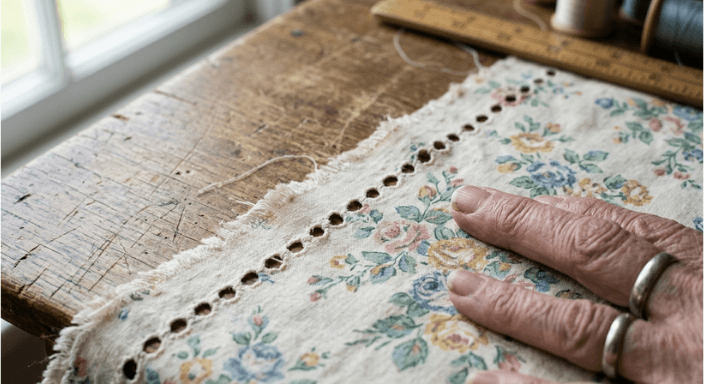
- Authentic feedsack fabric has a row of large, visible holes along the edges where the sack was chain-stitched shut with heavy string. This is the single most reliable indicator.
- Weave and Hand
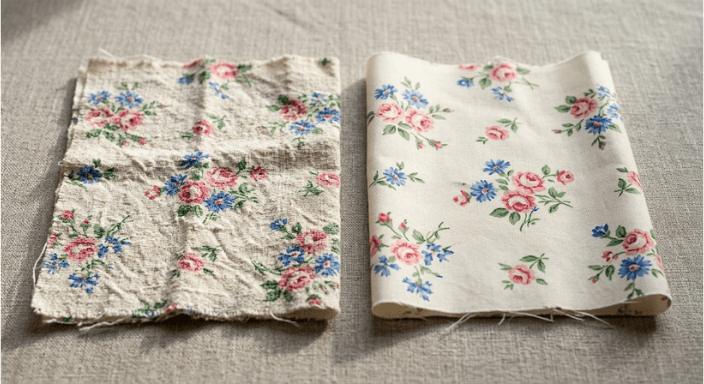
- Flour and sugar sacks used finer, tightly woven cotton. Animal feed sacks used coarser, more open weaves. One collector noted, “usually the new reproduction ‘feed sack’ fabric is not the right texture. They were stitched with string, ergo, large stitch holes.” (Quiltingboard) Reproduction fabric feels like standard modern quilting cotton: smoother and more uniform.
- Print Quality
- Authentic prints show slight color bleed and uneven registration on white or cream grounds. Reproductions are sharper, brighter, and printed on modern base cloth with precise color alignment.
Where Do You Find Feedsack Fabric for Quilting Projects?
Authentic vintage feedsack fabric is a collector’s market with prices starting around $30 per piece, but reproduction prints from Moda Fabrics and Riley Blake deliver the same aesthetic at standard quilting cotton prices.
Your sourcing strategy depends on whether you want the real thing or the look.
For authentic vintage feedsack fabric, try estate sales, antique shops, eBay, and Etsy. Expect $30 to $60 per fat quarter. Fully opened sacks with intact prints can reach $100.
For reproduction feedsack prints, Moda, Riley Blake, and Windham Fabrics all carry 1930s-style collections at $10 to $14 per yard. Pre-cut bundles (jelly rolls, charm packs, fat quarter bundles) offer coordinated variety without a yardage commitment. Our guide to 3-yard quilts covers the basics of working with pre-cut formats.
If you inherited a box of grandmother’s fabric scraps, check the edges for stitch holes before assuming anything. Mixed-era scrap collections are common at estate sales.
Handling Vintage Pieces
Gently hand-wash authentic feedsack fabric in cool water before cutting. Test a small scrap for colorfastness and fiber strength first.
This article contains affiliate links. Sewing.com may earn a commission on qualifying purchases at no additional cost to you. All product recommendations are based on hands-on testing.
Which Quilt Patterns Work Best with Feedsack Fabric?
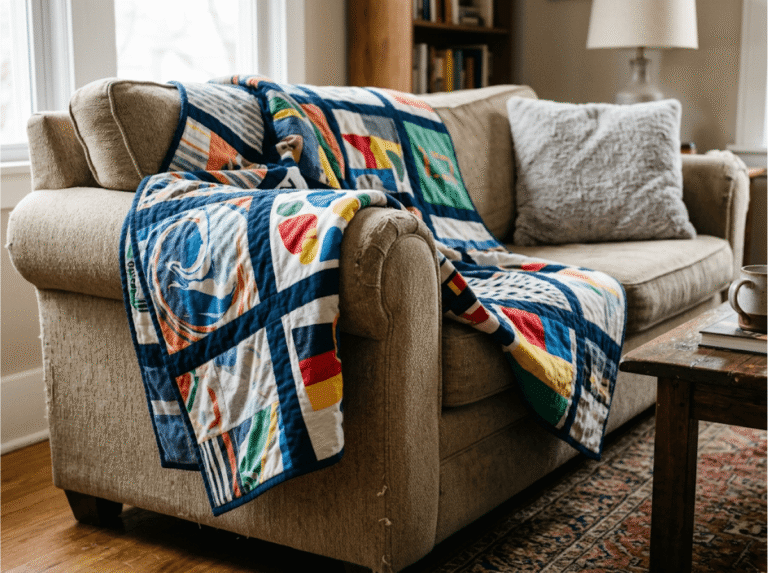
Match the block pattern to the scrap size: small scraps need small-piece blocks like nine-patch, medium pieces suit churn dash or pinwheel, and larger cuts carry star blocks and applique.
The secret to a good feedsack quilt is matching what you have to the pattern that shows it off. One quilter on Quiltingboard put it simply: “I’d do something with good-sized blocks to show off this beautiful fabric!”
Small Scraps (Under 6 Inches)
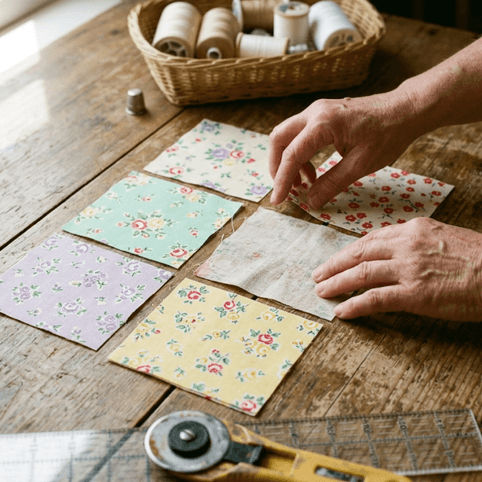
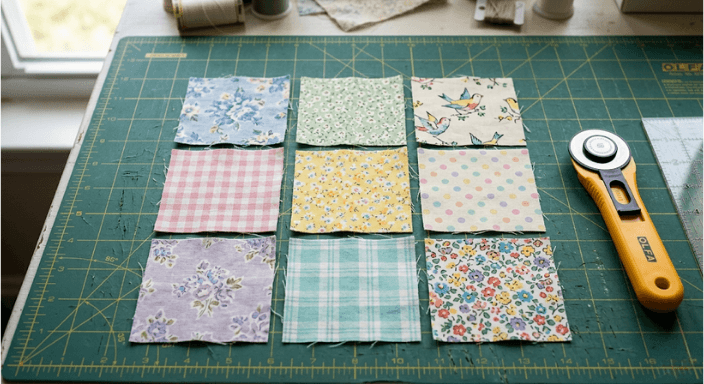
Postage stamp quilts, four-patch blocks, and nine-patch designs maximize small, varied pieces. These create the “controlled scrappy” look that defines this quilting tradition. New to patchwork? Our beginner projects guide covers foundational seam allowance skills.
Medium Pieces (6 to 12 Inches)
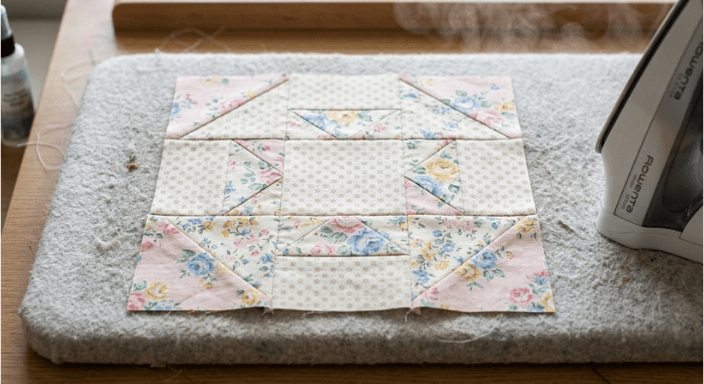
Churn dash, pinwheel, and Dresden plate fan blocks work well at this size. Each block showcases individual prints while maintaining variety across the quilt top.
Larger Pieces (12 Inches or More, or Fat Quarters)
Bear’s paw, star blocks, and applique designs give the fabric room to breathe. These work best with reproduction yardage or well-preserved vintage pieces that can handle larger cuts without wasting precious material.
Beginner Recommendation
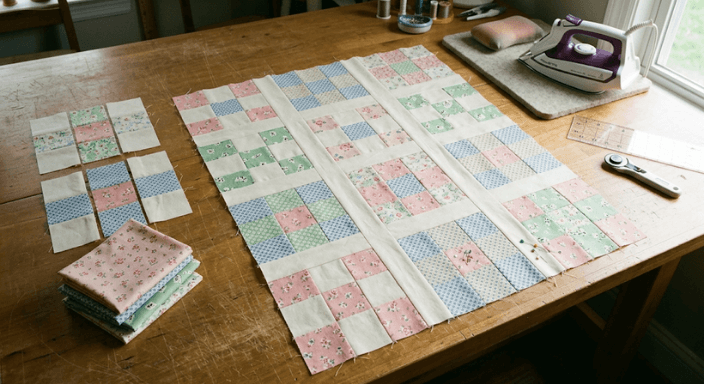
Start with a nine-patch sampler using reproduction feedsack prints. The block is forgiving, the construction requires only straight seams, and the finished quilt delivers the vintage aesthetic. Expect four to six hours for a lap-size quilt top.
How Do You Combine Vintage and Modern Fabrics in One Quilt?
Bridge vintage and modern fabrics by anchoring the quilt with solid white or cream ground fabric, prewashing everything before cutting, and matching the pastel value range of 1930s prints.
Mixing eras in a single quilt is common and practical, especially when working with a limited supply of authentic vintage pieces. The key is consistency in value, not uniformity in age.
Use authentic feedsack as the feature fabric in block centers. Surround it with reproduction prints or coordinating solids. Solid white or unbleached muslin acts as breathing room between busy prints, unifying the design.
Prewash all fabrics before combining them. Different shrinkage rates between old cotton and new quilting cotton cause puckering if fabrics are not prewashed. For vintage pieces, stabilize the grain with light spray starch before cutting. For more on pressing and grain management, see our sewing techniques guide.
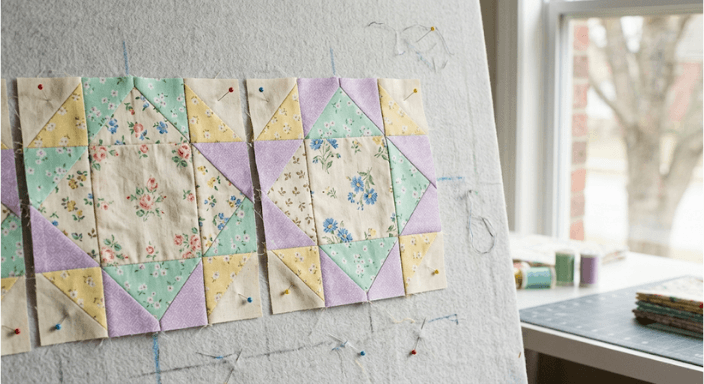
The 1930s palette leans toward pastels on white or cream grounds: mint, lilac, cherry red, sunshine yellow, and sky blue. When selecting modern fabrics to pair with vintage, match these values rather than looking for exact print matches.
Ready to Sew Your First Feedsack Quilt?
Feedsack fabric connects you to a tradition that valued every scrap and every stitch. Whether you are working with authentic vintage pieces or reproduction prints, the approach is the same: choose a pattern that fits your fabric, prewash before you cut, and let the prints do the work.
Start here: Pick a nine-patch design, source a reproduction feedsack bundle or gather scraps from your collection, and sew one block this weekend. Need a refresher on straight seams? Our beginner sewing tips have you covered.
Download our free Feedsack Fabric Pattern Collection Guide for a printable reference covering block selection by scrap size, a sourcing checklist, and step-by-step instructions for a classic feedsack nine-patch quilt.
Frequently Asked Questions
-
Can you wash vintage feedsack fabric in a washing machine?
Hand washes authentic feedsack in cool water with a gentle detergent first. Test a small scrap for colorfastness before submerging the full piece. Fabric that has survived 70 or more years may have weakened fibers that cannot handle machine agitation. Reproduction feedsack prints are standard quilting cotton and tolerate machine washing on a gentle cycle.
-
What fabric can I use instead of authentic feedsack?
Reproduction 1930s prints from Moda, Riley Blake, or Windham Fabrics replicate the color palette and scale of vintage feedsack at standard quilting cotton prices. Look for small-scale florals, cheery pastels on white grounds, and novelty prints. These fabrics sew identically to modern quilting cotton, so no special handling is needed.
-
How do you remove the original label from a feedsack?
Historically, women soaked printed logos in kerosene or rubbed them with unsalted lard, then washed the sack in lye soap. By the mid-1920s, manufacturers began printing labels with easily removable ink and included removal instructions on the sack. Modern quilters working with intact vintage sacks can soak the label area in warm water with a gentle oxygen-based cleaner.
-
What do you do if vintage feedsack fabric tears while sewing?
Stabilize fragile vintage fabric by applying lightweight fusible interfacing to the back before cutting. If a tear happens during piecing, reinforce it with a small patch of matching fabric on the wrong side using a hand whip stitch. For quilts intended for daily use rather than display, back vintage blocks with a modern cotton stabilizer.
-
What is the easiest feedsack quilt for a beginner?
A nine-patch quilt using reproduction feedsack prints is the most forgiving entry project. Cut 3.5-inch squares, arrange in sets of nine, and sew with a quarter-inch seam allowance. The small blocks use scraps efficiently, and the simple grid construction requires only straight seams. Expect four to six hours for a lap-size quilt top.
-
How should you store vintage feedsack fabric?
Store authentic vintage feedsack flat or loosely rolled in acid-free tissue paper, inside a cotton pillowcase or muslin bag. Avoid plastic bins, which trap moisture and accelerate yellowing. Keep fabric away from direct sunlight and in a climate-controlled space. Refold stored fabric every six months to prevent permanent crease lines.
-
How much feedsack fabric do you need for a quilt?
For a lap-size quilt (approximately 50 by 65 inches) using a nine-patch design, plan for roughly 3 to 4 yards of assorted prints plus 1.5 yards of solid background fabric. If using authentic vintage scraps, collect at least 40 to 50 pieces of similar size before starting, so you can plan your color layout before making any cuts.
Why did you vote that way? Drop your take in the comments.