
The Essentials
To sew a drawstring linen bag, pre-wash and cut one fabric rectangle. Sew two side seams, stopping 2 inches from the top to create a casing opening. Press seams open, fold the top edges twice to form a channel, and topstitch. Thread two cords from opposite sides for a balanced, gap-free closure. Total construction time: 45 to 90 minutes, depending on your seam finish. Download the free PDF above to sew along at the machine.
Related: How to Sew a Perfect Linen Tote Bag: 6 Easy Steps for Beginners
Jump to a Section
- What You Need
- Size Guide
- 8 Step-by-Step Instructions
- Seam Finish Guide
- Fraying Prevention
- Troubleshooting
- FAQs
One maker described finishing a drawstring linen bag for the first time and having people ask where she bought it. That outcome does not come from an advanced technique. It comes from a rectangle of fabric, four seams, a pressed casing, and two cords threaded correctly.
This tutorial covers all eight construction steps, the seam finish decision based on your specific fabric, and the fix for every common failure point. The free PDF above holds the full pattern to take to the machine.
What Do You Need to Make a Drawstring Linen Bag?
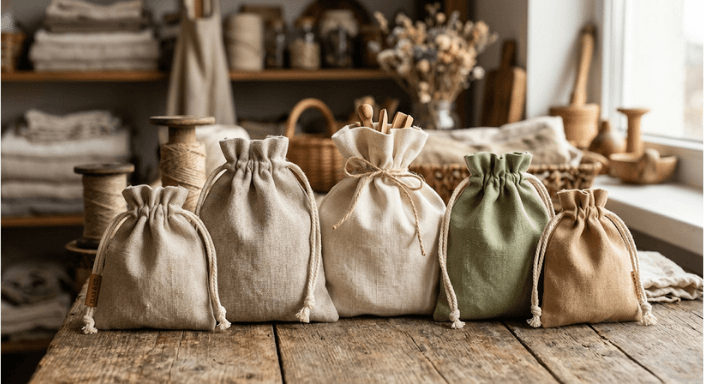
Everything required for a drawstring linen bag fits on one short list. Confirm each item before cutting. A wrong needle size causes most puckered seams on linen. A dull rotary blade frays the cut edge before the first seam is sewn. Both problems are solved at the materials stage, not mid-construction.
| Item | Specification | Note |
| Linen fabric | 0.5 yd (18″ x 44″) | Pre-washed; tight-weave preferred for first projects |
| Drawstring cord | 2 lengths, each = (bag width x 2) + 10″ | Cotton rope, ribbon, or bias tape; 3 to 5mm diameter |
| Thread | 100% polyester or poly-cotton blend | Polyester outlasts all-cotton thread for bags in regular use |
| Needle | 90/14 universal or denim needle | An 80/12 needle causes skipped stitches on medium-weight linen |
| Iron and pressing mat | Required | Linen construction depends on pressed seams at every step |
| Safety pin or bodkin | 1 pin | For threading cord through the finished casing channel |
| Scissors or rotary cutter | Sharp edges only | Dull blades fray the cut edge before the first seam |
Per the Schmetz needle sizing chart, a 90/14 universal needle is the correct starting point for medium-weight linen. Set stitch length to 2.5 to 3mm before cutting the project piece. For fiber-behavior-driven construction standards, the Taunton Press reference by Claire Shaeffer, “Claire Shaeffer’s Fabric Sewing Guide” (Krause Publications, 2008), remains the field standard for linen technique decisions.

- [Large Size]: Each piece measures 78 inches(200cm) x 2 yards(72 inches/182.88cm), 160GSM, meeting your different needs for DIY projects. Note: The fabric is only cut into 2 Yards by 78-Inch(200cm). When you buy more than one, you will get corresponding pieces which is 2 Yards by 78-Inch, not a continuous piece.
- [Color]: 11 Colors for you to choose from. White, Olive Green, Grass Green, Grey, Navy, Linen, Red, Dusty Pink, Sage Green, Dusty Blue, Rust.
- [High Quality Material]: Natural-fiber linen fabric is prized for its durability, breathability, and lived-in look, and linen has a nice temperature control function that can absorb moisture, making it suitable for clothing or bedding sheets, giving a comfortable feeling, safe for those with sensitive skin and babies. Linen also exhibits good resistance to wrinkles, washing, and wear, softer after every wash, ensuring long-lasting use. Easy to care, easy to cut and sew.
- [Multiple Uses]: Wide use DIY fabric, suitable for various handmade craft projects, needlework, embroidery, apparel, aprons, sheets, quilting, tablecloths&napkins, handbags, cushion covers, curtain, sofa covers, etc., giving handicrafts a primitive aesthetic feeling, adding a simple and warm style to indoor space.
- [Easy to care&Customer Service] Machine washable, gentle cycle wash under 60℃ with similar colors. Do not dry clean. Do not use detergent that contains bleach or whitener. Tumble dry at medium heat. Iron on high heat. If you have any questions, please feel free to contact us, our customer service staff will reply you within 24 hours.
What Size Should a Drawstring Linen Bag Be?
All cut dimensions include a 0.75-inch seam allowance on each side and a 2.5-inch casing allowance at the top.
| Use Case | Finished Size | Cut Size | Best For |
| Small gift bag | 6″ x 6″ | 7.5″ x 17″ | Jewelry, tea, small gifts |
| Produce bag | 8″ x 10″ | 9.5″ x 25″ | Farmers’ market, herbs |
| Everyday bag | 12″ x 14″ | 13.5″ x 33″ | Books, gym items, groceries |
| Shoe or laundry bag | 14″ x 18″ | 15.5″ x 41″ | Shoe storage, travel laundry |
Size formula for any custom drawstring linen bag: Cut width equals finished width plus 1.5 inches. Cut length equals (finished height multiplied by 2) plus 5 inches. Cord length equals (finished width multiplied by 2) plus 10 inches, cut twice.
One maker noted that translating a desired finished size into the correct fabric pieces, especially when accounting for seam allowances, is where most beginners lose confidence. The formula above solves it in one calculation before the rotary cutter touches the fabric.
How Do You Sew a Drawstring Linen Bag in 8 Steps?
Read all eight steps before cutting the first piece. Steps 6 and 7 depend on a decision made in Step 4.
Step 1: Pre-wash and press the linen.
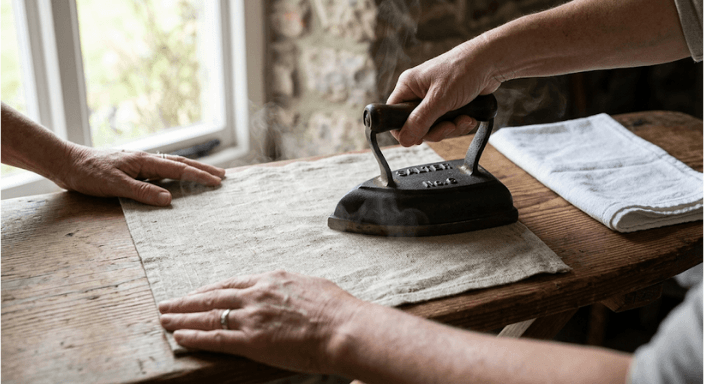
Wash in warm water. Tumble dry on low. Press while slightly damp. Linen shrinks 3 to 5 percent in its first wash cycle. A drawstring linen bag cut without pre-washing will be noticeably smaller after the first use.
Step 2: Cut the fabric rectangle
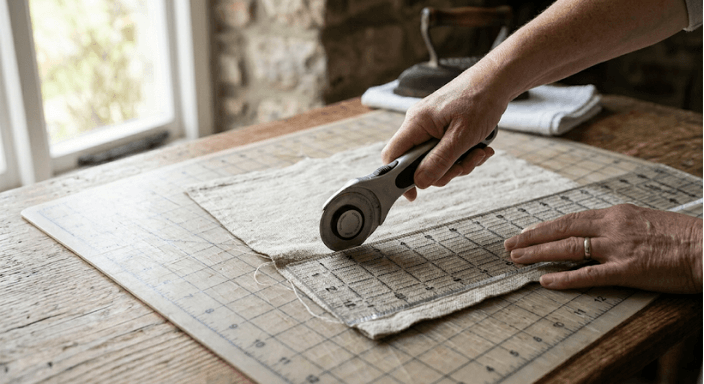
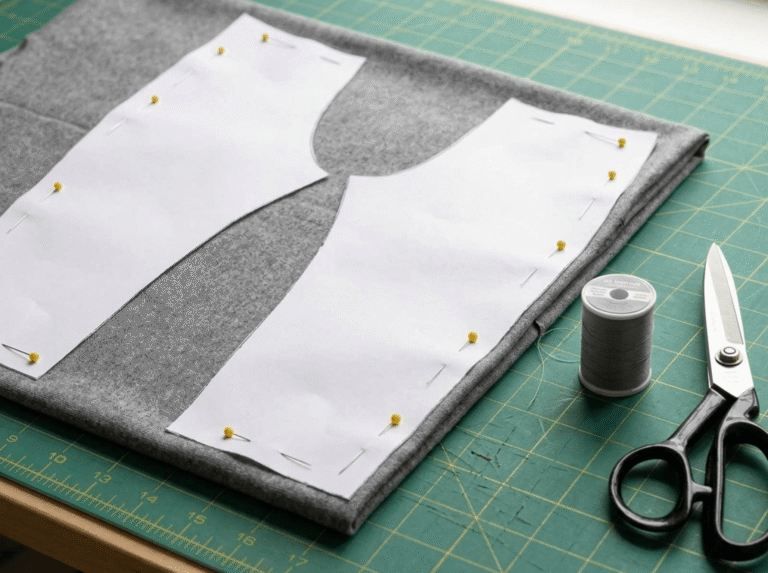
Use the size table above to find your cut dimensions. Cut one rectangle using a rotary cutter and mat. Mark the fabric grain line before cutting. Dull scissors fray the linen edge before the first seam is sewn.
Step 3: Run a test seam on a linen scrap
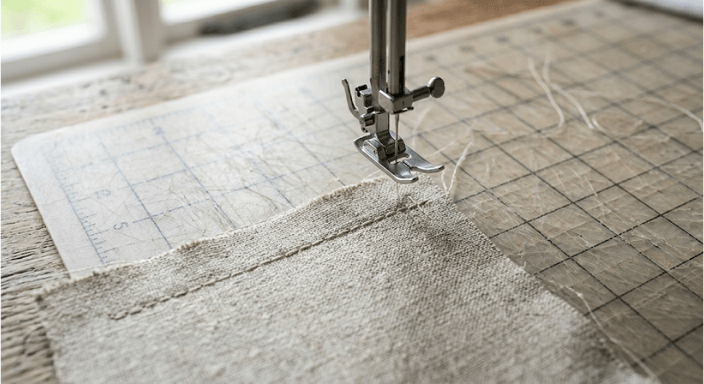
Set stitch length to 2.5 to 3mm. Load a 90/14 needle. Sew a 3-inch test seam on a scrap of the actual project linen. Inspect both sides. Clean stitches on both sides: proceed. Skipped stitches or puckering: re-thread the machine completely from scratch before touching the project piece.
“I spent $50 on fabric, and the whole thing puckered. I don’t even know if it’s the tension, the needle, or if I broke the machine.” — Reddit, r/sewing
The test seam takes five minutes and prevents that outcome entirely.
Step 4: Finish the raw side edges.
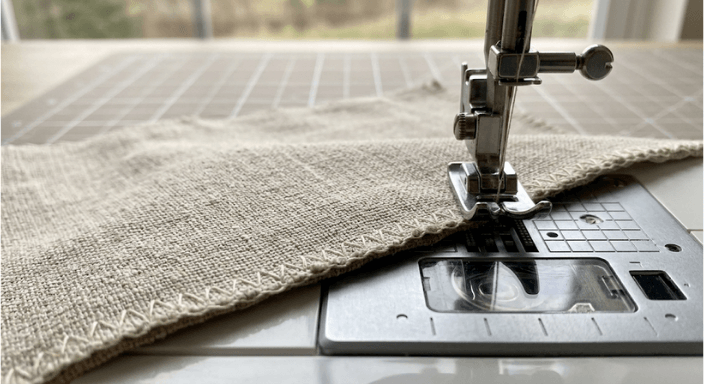
Assess the weave of your linen before choosing a finish. Tight-weave linen (washed linen, linen-cotton blend, suiting linen): zigzag both long edges now, before seaming. Loose-weave linen (gauze, slubby linen, antique linen): skip the zigzag and plan for French seams in Step 5. The full seam finish decision guide is in the section below.
Step 5: Sew the two side seams.
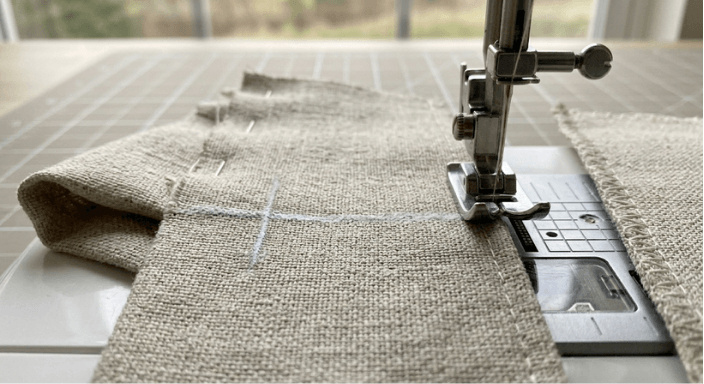
Fold the rectangle in half with right sides together. Short ends meet at the top. Sew each side seam from the bottom fold upward, stopping 2 inches below the top edge. Backstitch at the start and at the stop point on both sides. This 2-inch gap forms the casing opening. Do not sew past it.
Step 6: Press all seams.
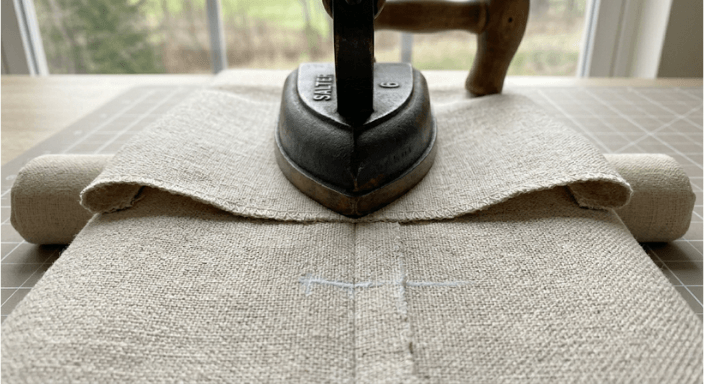
Press the sewn side seams open. Press the unsewn seam allowances above the stop point back on themselves along the seam line. This creates a flat, clean casing opening without cutting or clipping. Do not skip pressing. The casing will not lie flat if this step is deferred.
Step 7: Fold and stitch the casing.
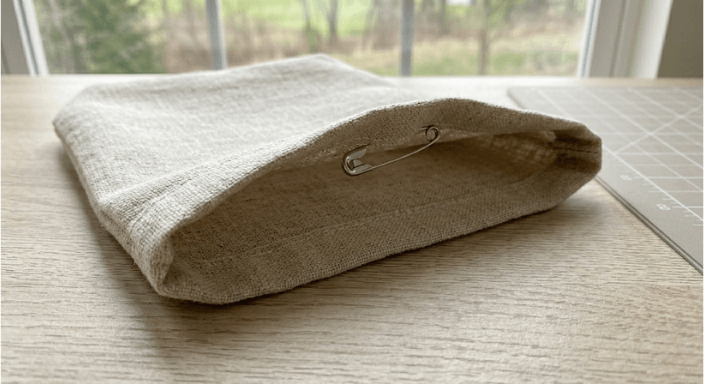
Fold the top raw edge down 0.5 inches and press. Fold 1.5 inches toward the wrong side and press. Before stitching, thread a safety pin through the folded channel. It should move freely. If the pin catches, the fold is too narrow for the cord. Topstitch along the lower edge of the casing. Leave both side seam openings unstitched. Those gaps are where the cords enter.
Step 8: Thread the drawstring cords.
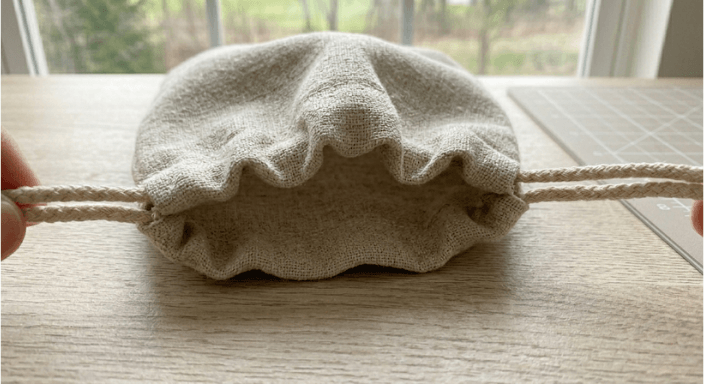
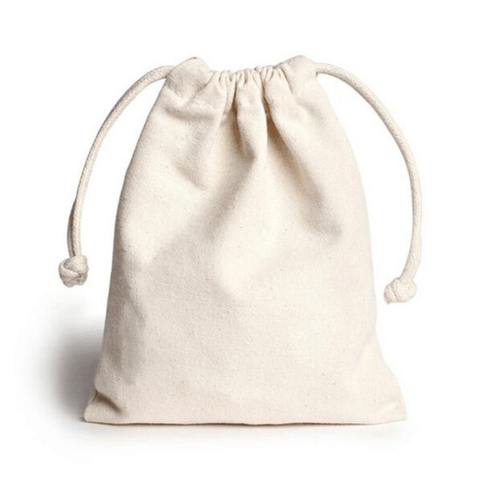
Cut two cords using the formula above. Attach a safety pin to one end of cord 1. Insert the pin into the left-side casing opening. Thread it all the way around the full casing and back out the left side. Knot both ends together. Repeat with cord 2, entering from the right-side opening. Pull both cords to close. The bag closes evenly across the full opening. A single cord pulls one side closed and leaves a gap on the other.
What Is the Best Seam Finish for a Linen Drawstring Bag?
This is the one decision in this project that changes based on your specific fabric. “I really don’t like fraying edges in bags, even if they’re quick drawstring ones,” one maker noted. The choice is not about preference. It is a technical response to how a specific linen weave behaves under repeated washing.
| Seam Finish | Best For | Tools Required | Durability After Washing |
| Zigzag-finished open seam | Tight-weave, washed linen | Sewing machine with zigzag | High for tight weave |
| French seam | Loose-weave, gauze, slubby linen | Sewing machine only | High for any weave type |
| Serged seam | Any linen (with serger) | Serger required | Highest |
| Bound seam with bias tape | Gift-quality or heirloom finish | Bias tape, additional time | Highest professional result |
A tight-weave washed linen with a pressed-open seam and zigzag edge holds through repeated machine washing without issue. Loose-weave linen (gauze, antique linen, slubby open weave) frays structurally under washing stress. For that fabric, the French seam is not a couture preference: it is what keeps the bag intact after the third wash.
If the weave type is unclear, default to the French seam. One extra fold and one extra pass cost ten minutes. A bag that falls apart in the wash costs the full project.

- SEWING MADE SIMPLE: SCHMETZ Universal Needles work with all home sewing machines and handle everything from delicate silks to heavy denim, making them perfect for any quilting, embroidery, craft, or home décor project
- CONVENIENT 1-NEEDLE SOLUTION: These all-purpose 90/14-sized needles handle a wide variety of materials, saving you time and effort in your sewing routine
- VERSATILITY & VALUE: This needle set delivers reliable performance across many fabrics, offering great value for your sewing kit
- READY FOR EVERY CHALLENGE: These needles are built for the long haul, tackling even the toughest sewing projects with ease, and delivering professional-quality results on woven and knit fabric
- SNAG & DAMAGE-RESISTANT: With a slightly rounded point, these needles glide through woven and knit fabrics without snagging, making them perfect for both beginners and complex projects
How Do You Stop a Linen Drawstring Bag from Fraying?
Three steps address the full fray problem. Pre-washing removes loose surface fibers before construction begins. The correct seam finish for the weave type keeps seams intact through washing. Sealing the cord ends prevents a separate fray problem at the closure: touch cotton rope ends briefly to a lighter flame, or tie a firm overhand knot on fabric ribbon before threading it through the casing.
These three actions together take under ten minutes and cover every point where a drawstring linen bag fails in regular use.
How Do You Fix the Most Common Drawstring Linen Bag Problems?
- Puckered seams on linen. Re-thread the machine completely from scratch before adjusting the tension dial. Forty percent of puckering problems on linen are threading errors. Run a test seam on a scrap after re-threading. If puckering continues, switch to a 90/14 needle. An undersized needle is the second most common cause and takes thirty seconds to fix.
- Skipped stitches mid-seam. Check the needle first. Linen is a dense woven fiber, and a dull or undersized needle deflects off the weave instead of piercing it cleanly. Replace the needle and run another test seam. If skipping continues after a new needle is loaded, confirm the bobbin is seated correctly and that the upper thread tension is not set above 4.
- Casing that will not lie flat. The fold was pressed before the side seams were pressed open. Return to Step 6 and press the side seams completely open before folding the casing. Using a seam roll under the fabric at that step produces a sharper result on dense linen.
- Cord bunching or jamming in the casing. The casing fold is too narrow for the cord diameter. Open the casing topstitching with a seam ripper, re-fold to a full 1.5-inch depth, re-press, and topstitch again. Thread a safety pin through the channel before stitching to confirm the cord will clear.
- Uneven closure. This is the single-cord problem. If only one cord was threaded, remove it and re-thread using two cords from opposite sides as described in Step 8. Two cords are not decorative: they are the structural fix for uneven closure on any drawstring linen bag.
Last reviewed: May 2026. Technical references: Schmetz needle sizing chart; Claire Shaeffer, “Claire Shaeffer’s Fabric Sewing Guide” (Krause Publications, 2008). Content reviewed by the Sewing.com Editorial Team.

- Unwaxed Drawcords Made from Cotton & Minimal Polyester: The non-elastic braided cotton cords are more pliable & durable than other draw strings cord, & make great natural drawstrings cording, macrame cord, corset lacing cord, & upholstery cording.
- Natural Cording for Sewing: The unbleached cord makes great round drawstrings replacement for garment, coats, jackets, shirts, skirts, shorts & trunks, waistband soft drawstring for sweatpants & pajamas, pant string, corset cord lacing, & natural hoodie string replacement.
- Cotton Strings: This natural drawstring rope makes sturdy craft cording for drawstring bags, purses, & backpacks, cotton drawstring sewing cord for aprons, hats, shoes, duvets, & plants hanger, cording upholstery trim, & pillows welting cord.
- Easy to Cut, Heat Resistant, Washable & Dryable Solid Cotton Rope for Crafts: The unglazed & colorfast craft cord is ideal cotton piping cord for piping sewing, and cotton rope cord for binding, packaging, crocheting, knitting, tying, wrapping, hanging, & decorating.
- Bulk Braided Cording Drawstring Spool: The 3mm 50-yard-long drawstrings have continuous length. The draw cord is heat fusible, fade-resistant, and fray-resistant, and pair well with fabric, leather, canvas, silk, and felt.
Ready to Sew Your Drawstring Linen Bag?
You have the cut dimensions, the seam finish decision guide, all eight steps, and the troubleshooting fixes. Download the free PDF above and take it to the machine. Run the test seam, confirm the needle, and start cutting.
This is the project that makes the next project easier. Every seam you press, every casing you fold correctly, and every cord you thread from the right opening builds the skill that carries into everything you sew after this.
Download the Free Drawstring Linen Bag PDF Pattern and keep it next to your machine.
Affiliate disclosure: This page may contain affiliate links. Sewing.com may earn a small commission on purchases made through these links at no additional cost to you.
Check this video from Thoughtful Creativity: Easy drawstring bag in 10 minutes! Great for scraps.
Frequently Asked Questions
-
Do I have to pre-wash linen before sewing a drawstring bag?
Yes. Linen shrinks 3 to 5 percent in its first wash cycle. A bag cut without pre-washing will be noticeably smaller after the first use, and seams may pucker where the fabric contracts. Wash in warm water, tumble dry on low, and press while slightly damp before cutting any piece.
-
What can I use instead of a drawstring cord?
Ribbon, cotton rope, bias tape, paracord, or a strip of the same linen cut on the straight grain all work. The cord needs to pass through the casing without catching or bunching. A 3 to 5mm diameter cord fits a casing folded to 1.5 inches deep without jamming.
-
Why does my drawstring get stuck in the casing?
The casing channel is too narrow for the cord, or the topstitching caught the cord itself during stitching. Minimum casing depth is 1.5 inches for a standard 4mm cord. Open the casing seam with a seam ripper, re-thread using a safety pin as a bodkin, and topstitch again with more clearance.
-
Can a total beginner sew a drawstring linen bag as a first project?
Yes, with one material adjustment. Use washed linen or a linen-cotton blend rather than raw linen gauze. Washed linen frays less and presses more easily. The project requires only straight seams and one casing fold. If you can sew a straight line, you can finish this bag.
-
How long does it take to sew a drawstring linen bag?
Between 45 minutes and 90 minutes for most beginners. Tight-weave linen with a zigzag seam finish puts total time closer to 45 minutes. French seams on loose-weave linen take closer to 90. Experienced sewists typically finish in under 30 minutes once the construction sequence is familiar.
-
Can I machine wash a finished linen drawstring bag?
Yes. Pre-washed linen is machine washable on cold or warm. Do not use hot water. Tumble dry on low or line dry. Linen softens and gains drape with each wash cycle. A correctly finished seam holds through repeated washing without fraying or structural failure.
-
Should I use a single drawstring or two cords?
Use two cords entered from opposite sides. A single cord pulls one side closed and leaves a visible gap on the other. Two cords close the full opening evenly. Thread each cord all the way around the casing and back out the same opening, then knot the ends together.
Why did you vote that way? Drop your take in the comments.