
Key Points
A beginner block quilt is a 12-block sampler joined with fabric strips called sashing. The scrappy version uses cotton scraps from your stash. Start with a nine-patch made from nine 3.5-inch squares, a scant quarter-inch seam, and a clean machine. Sashing hides minor errors. Most beginners finish in three to six months.
Related: 16 Best Sewing Projects for Every Skill Level
What Is a Scrappy Block Quilt and Why Start in 2026?
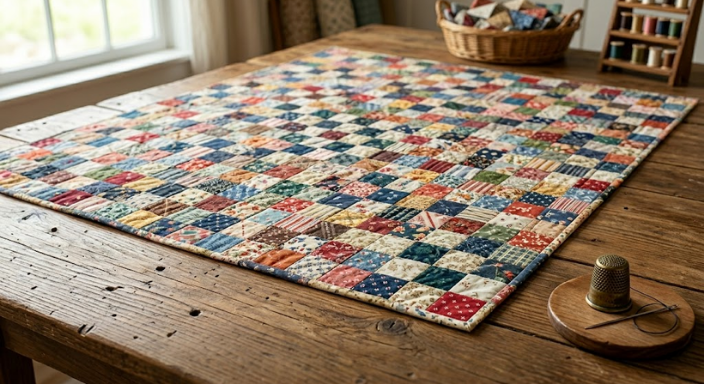
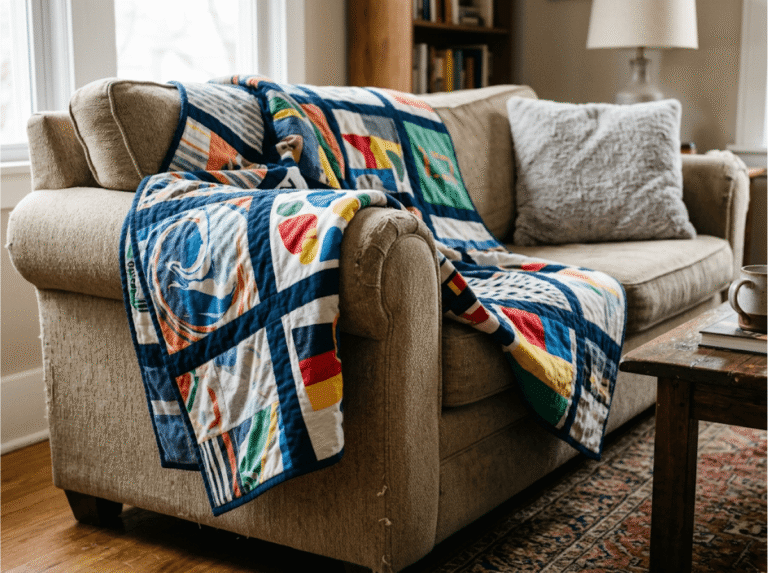
A block quilt is built from individual squares of patchwork, called blocks, joined together with strips of fabric called sashing. A scrappy block quilt does the same thing using mismatched fabrics from your stash instead of a coordinated bundle.
The 2026 sampler trend is a real surge in the quilting community. Free block-of-the-month programs from A Quilting Life, The Polka Dot Chair, and Mystery Block of the Month 2026 release one new pattern on the first Monday of every month. By December, makers have a finished sampler quilt top.
Two reasons beginners love this format. First, you only commit to one block at a time, not a whole quilt. Second, scrappy means imperfect seams blend in. Mismatched fabrics hide what would be obvious on a tightly coordinated quilt.
One quilter noted on A Quilting Life: “This was my first year of quilting in earnest. I did not know it all.”
That admission is the right starting energy for a beginner block quilt.
How Do You Start a Block Quilt If You’ve Never Quilted Before?
If you have never sewn before, slow down. Set up your machine, learn an accurate scant quarter-inch seam, and practice cutting strips before you touch a block quilt project.
If you have basic sewing experience, finish a single nine-patch block tonight. Momentum matters more than checklist completion at your skill stage.
Here’s the split. Some teachers say new quilters should run a setup checklist (machine threaded, foot installed, seam tested) before piecing block one. Others say the first finished block is the only thing that builds confidence to continue.
Both are right for different makers. If your machine has been in a closet for two years, set it up first. If you sewed last week and you know it works, start cutting tonight.
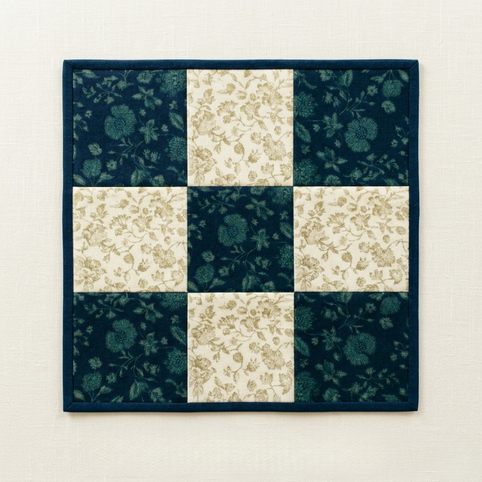
Either way, plan the same first block: a nine-patch made from nine 3.5-inch squares. It teaches cutting, the quarter-inch seam, pressing, and seam matching all in one project. By the time you finish, you have made every core decision a block quilt requires.
Block one is a test of your machine, not your talent.

- SEWING, ARTS AND CRAFTS STAPLE: This Fiskars Rotary Cutter can cut multiple layers of fabric, paper, felt, and vinyl in straight lines or curves; Ideal for doing sewing, arts and crafts for adults
- PRECISION ART SUPPLIES: High-grade, precision-ground, 45mm rotary blade is perfect for projects and fabric that require precise cutting; Pair with Fiskars Self-Healing Cutting Mat to protect your work surfaces.
- LONG LASTING AND RELIABLE: Premium steel blade created for long-lasting sharpness; Fiskars craft supplies and materials are built to last
- COMFORTABLE AND CONVENIENT: Easy-to-use loop handle improves comfort and control; Sliding button extends blade during use, locks it into position and retracts it for safe storage; Blades snap in or out easily for quick replacement
- QUALITY TOOLS FOR SEWING, ARTS AND CRAFTS: From scissors and cutting mats, to rotary and paper cutters, to quilting and scrapbooking supplies, Fiskars crafting tools are designed to help you do what you do best: express yourself
What Tools Does a Beginner Block Quilt Require?
Beginner block quilt supplies break into three categories: cutting, piecing, and pressing.
Cutting. A 45mm rotary cutter, a 24×18-inch self-healing mat, and a 6.5×24-inch acrylic ruler. These three tools are non-negotiable. Cutting with scissors is possible but inaccurate, and inaccurate cuts compound across twelve blocks until your sashing won’t fit. One quilter on Quiltingboard put it bluntly: “The 1/4″ seams were easy enough, but figuring out how to use a ruler and rotary cutter was a massive challenge.”
- Piecing. Your sewing machine, a quarter-inch quilting foot or a strip of painters tape on the throat plate as a seam guide, 50-weight cotton thread (Aurifil or Mettler), and quilting pins.
- Pressing. A small iron and a wooden pressing board, if you have one.
- Fabric. A scrappy block quilt uses what you have. Pull every cotton scrap larger than 4 inches square from your stash. If you don’t have enough, a charm pack (forty 5-inch squares) is the fastest beginner shortcut at $12 to $15.
Affiliate disclosure: Some product links above are affiliate. Sewing.com earns a small commission at no cost to you, and we only recommend tools we have used on real projects.
How Do You Sort Fabric Scraps Before Cutting?
Scrap chaos kills beginner block quilt projects faster than any other failure mode.
Sort by these three categories before you cut anything.
- First, by color value: dark, medium, and light. Hold each scrap at arm’s length and squint. The squint test reveals how a fabric will read in a finished block better than your color instinct does.
- Second, by size: pieces under 5 inches go in one bin, 5 to 10 inches in another, and anything bigger in a third. Block one of the most beginner samplers needs 5-inch squares, so the medium bin is your starting pile.
- Third, by fiber: cotton scraps in the quilt pile, knits, and synthetics out. Mixing fibers in a block quilt creates uneven shrinkage after the first wash. Save knit scraps for a t-shirt quilt project, which uses a different construction method.

- EXTRA LARGE CUTTING SURFACE: Perfectly sized for cutting full widths of fabric, extra-large squares, and long strips with ease
- SELF-HEALING DESIGN: Durable mat with a double-sided, self-healing surface for extended use and precise measurements
- EASY-TO-READ GRIDS: Features measuring grids and 30, 45, and 60-degree bias lines for accurate angle cutting
- PROTECTS WORK SURFACE: Ideal for sewing, quilting, scrapbooking, and gift wrapping while keeping your work area safe
- QUALITY CRAFT TOOLS: Designed to enhance your creativity with reliable and long-lasting materials

What Size Should Your First Block Quilt Be?
A 12-inch finished block is the standard size for a beginner sampler. The 2026 A Quilting Life BOM uses 12-inch blocks. The Mystery Block of the Month 2026 uses 12-inch blocks. The Polka Dot Chair series uses 12-inch blocks.
This isn’t a coincidence. Twelve inches divides evenly into 6, 4, 3, and 2-inch units, which means almost any nine-patch, four-patch, or half-square triangle block fits inside it. A finished 12-block sampler at this size makes a 60×72-inch lap quilt with sashing. That’s a usable size that doesn’t outgrow your skill before you finish.
How Do You Sew Your First Nine-Patch Block?
Skill prerequisite: You can thread a sewing machine, sew a straight line, and operate a rotary cutter. If any of these are unfamiliar, complete a pillowcase first before starting a block quilt.
-
Cut nine 3.5-inch squares from your sorted stash.
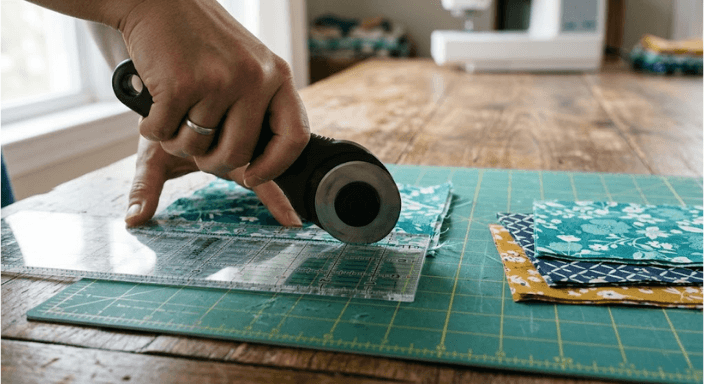
Use five squares of one color value (dark) and four of another (light). Square the fabric edge first, then cut.
-
Lay out the nine squares in a 3×3 grid, alternating dark and light.
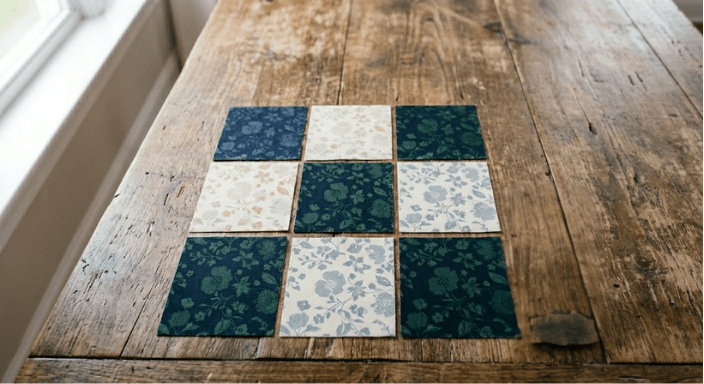
Take a phone photo before sewing. You will need it.
-
Sew the top row.
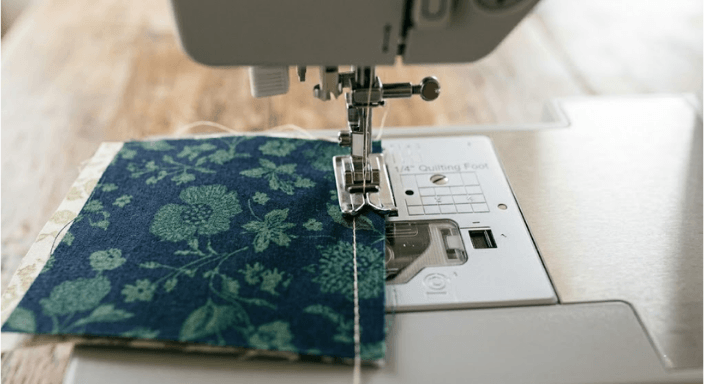
Square 1 to square 2 to square 3, right sides together, scant quarter-inch seam. Press seams toward the dark fabric.
-
Repeat for rows two and three.
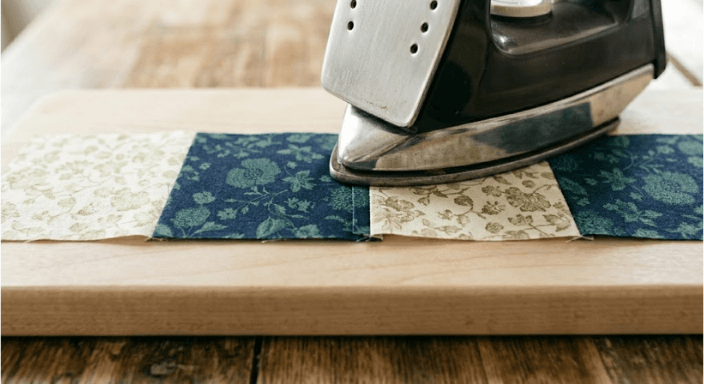
Press all seams in row two opposite from rows one and three. This is called nesting and makes seam matching easier later.
-
Sew the rows together, matching the vertical seams.
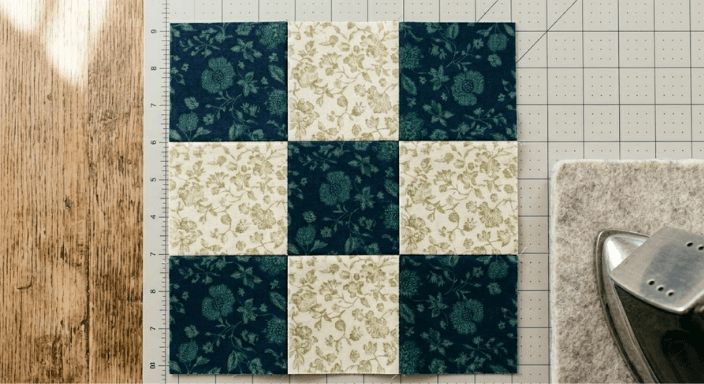
Press the long horizontal seams open for a flatter block.
Fix-it path: If your finished block measures less than 12.5 inches square (unfinished), your seam allowance was too wide. Test by sewing three 1.5-inch strips together. The result should measure exactly 3.5 inches across. If it’s smaller, your scant quarter inch is actually a full quarter inch. Adjust the next block.
That nine-patch is block one. Eleven more like it (with progressively new techniques) makes a finished block quilt by year-end.
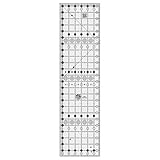
- Made in the USA with high quality acrylic and precision measurements ensuring accuracy for your quilting, sewing, patchwork, and crafting projects.
- Creative Grids exclusive non-slip grip allows you to easily slide the ruler over the fabric until positioned correctly. Then, when slight pressure is applied, the grip holds the ruler in place, eliminating slipping while you cut.
- Easy to read black and white markings printed in 1in grids marked in 1/8in and 1/4in increments are highly visible on most fabric colors.
- Use the black numbers printed on white dots and 1/4in grip side to cut whole inches.
- Use our exclusive Turn-a-Round feature to cut 1/2in increments by following the white numbers on black dots and 1/2in grip sides.
Start Your 2026 Block Quilt This Weekend
Block quilts are forgiving. Scrappy block quilts are even more forgiving. The 2026 sampler trend works for beginners because each block is small, fixable, and finished before the next one starts.
If your first block didn’t square up, sashing fixes it. If your seam allowance drifted, the next block is a fresh start. Quilting is a sequence of small wins, not one perfect garment.
Download Your Free 2026 Beginner Block Quilt Pattern
Get the printable PDF with all twelve blocks, fabric calculations, and a cutting chart. One email, no spam.
Check this 2026 Scrappy Sampler Starts Today video from Jessica Dayon- Quilting and More.
Frequently Asked Questions
-
How long does a beginner block quilt take to finish?
Most beginners finish a 12-block scrappy sampler in three to six months at one block per week. The Block-of-the-Month format spreads it across a full year, which lets you build skills gradually. If you commit to one block per weekend, you can finish a quilt top by summer.
-
What is the difference between a charm pack and a layer cake?
A charm pack contains forty 5-inch fabric squares from one collection. A layer cake contains forty 10-inch squares from the same collection. For a beginner block quilt, a charm pack is cheaper and faster to start with. Layer cakes are cut into more block sizes but cost more.
-
My quilt blocks aren’t squaring up. What did I do wrong?
The seam allowance is the most common cause. Quilting requires a “scant” quarter-inch seam (slightly less than 1/4 inch) to account for the fabric fold. Test your seam first by sewing three 1.5-inch strips and measuring the result. It should equal exactly 3.5 inches across.
-
Can I make a scrappy block quilt with knit fabric scraps?
No. Stick to woven cottons for a beginner block quilt. Knit fabrics stretch under the rotary cutter and presser foot, which makes accurate piecing nearly impossible. Save knit scraps for a t-shirt quilt project, which uses a different construction method with fusible interfacing as a stabilizer.
-
Do I need a special foot for a quarter-inch seam?
Not strictly. A quarter-inch quilting foot helps because it has a built-in edge guide. If your machine doesn’t have one, mark a quarter inch from your needle on the throat plate with painters’ tape. Both methods work for a beginner block quilt with practice.
-
Should I prewash my fabric for a scrappy block quilt?
It depends on the fabric source. If you’re using new yardage from one fabric line, skip prewashing for crisp piecing. If your scraps are mixed sources or mixed colors with bleeding risk (especially reds), prewash everything. For mystery vintage fabric, always test for colorfastness first.
-
How do I match seams between blocks when I sew them together?
Press the seams of adjacent rows in opposite directions before joining them. This technique is called nesting. The seams interlock at the intersection, which holds the match in place. Use a single pin straight through the nested seam, then sew slowly across the join.
Why did you vote that way? Drop your take in the comments.