
Key Insights
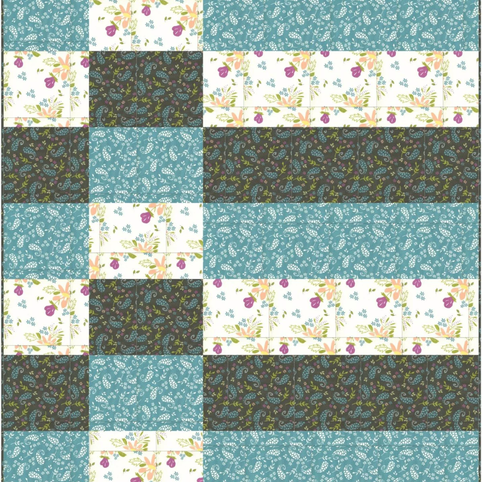
A 3-yard quilt is a lap-size quilt top made from exactly three yards of fabric, usually one yard each of three coordinating prints. The method was developed by Donna Robertson at Fabric Cafe in 2008 and has gone viral on Pinterest in 2025 and 2026. Most finish in a weekend, cost under $75, and work on a standard home sewing machine.
Prerequisite skill check: You should know how to thread your machine, sew a straight 1/4-inch seam, and use a rotary cutter safely before starting. If any of those steps feel shaky, read our beginner sewing machine setup guide first and practice on scrap cotton for 20 minutes before cutting into yardage.
Related: 5 Tips for Choosing the Best Quilting Ruler Set for Beginners
Why Are 3-Yard Quilts Trending on Pinterest in 2026?
Pinterest save data shows the “3-yard quilt” search term climbing steadily through 2025 and into 2026, with quilting creators at Fabric Cafe, SewCanShe, and Missouri Star Quilt Co. pushing new patterns into the feed every week. The trend has a clean economic story behind it.
Wholesale cotton fabric prices have moved up in 2025. Mary Jo Fabrics, a North Carolina quilt shop, reports wholesale cotton increases of around 14% and fleece increases of around 18% tied to tariffs on imported textiles. A blog post from Sherri Quilts A Lot puts the working tariff figure at about 7.7% on unbleached cotton fabric, depending on the country of origin. Quilters feel that in the checkout total, not the per-yard sticker.
That pressure plus the rise of a Pinterest-native “small projects, big finish” aesthetic is why a pattern category built on exactly three yards of fabric is having its moment.
One quilter on the Quilting Board forum put it plainly:
“Done a few of these, they are fast and easy, and if you only use 3 yds. You will have enough for the pattern and binding.” Quilting Board forum
What Exactly Is a 3-Yard Quilt?
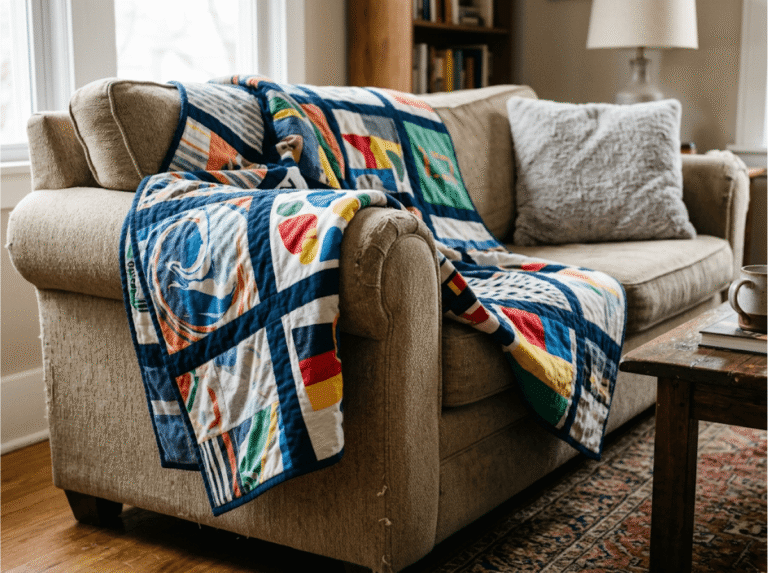
A 3-yard quilt is a finished quilt top built from three yards of fabric. The standard formula is one yard each of three coordinating prints: a focus fabric, a lighter coordinate, and a darker coordinate. That is enough to make a lap-size top, usually landing between 46″x60″ and 54″x65″, depending on the pattern.
The three yards are for the top only. Backing, batting, and binding are separate. Quilt shop blogger Caroline Fairbanks-Critchfield at SewCanShe spells this out clearly on every 3-yard pattern she publishes.
The full materials list for a finished 3-yard quilt:
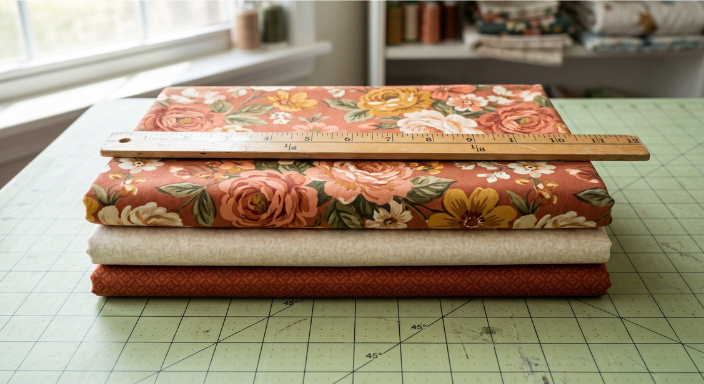
- 3 yards for the top (1 yd focus + 1 yd light coordinate + 1 yd dark coordinate)
- 1.75 yards for backing (or 3 yards for 42″-wide fabric on larger patterns)
- Crib-size batting, roughly 45″x60″
- Binding fabric: about 1/2 yard, or cut from leftover top fabric if the pattern allows
This is the distinction that matters. “3-yard quilt” refers to the top. A complete project needs roughly 5 to 6 yards of fabric once backing and binding are counted.
Who Started the 3-Yard Quilt Trend?
The format was created in 2008 by Donna Robertson at Fabric Cafe, a pattern company in Stockton, California. Robertson founded Fabric Cafe in 2001 with her mother, Fran Morgan. The 3-yard concept started as a merchandising idea, a way to sell three coordinating one-yard cuts as a bundle, and turned into the company’s top-selling product line. By 2019, Fabric Cafe had released over 50 three-yard patterns across 8 books.
The Pinterest surge in 2025 and 2026 is the second wave. The category has been around for more than 15 years. What changed is fabric price pressure, short-form video tutorials, and a wave of free 3-yard patterns from designers like Caroline Fairbanks-Critchfield at SewCanShe.
What Are the Best 3-Yard Quilt Patterns for Beginners?
The top-searched 3-yard patterns on Pinterest and free-pattern sites right now share a shape: they use simple geometry, 42″-wide quilting cotton, and strip or block construction that skips curved piecing.
Strip Happy (rail fence variation)
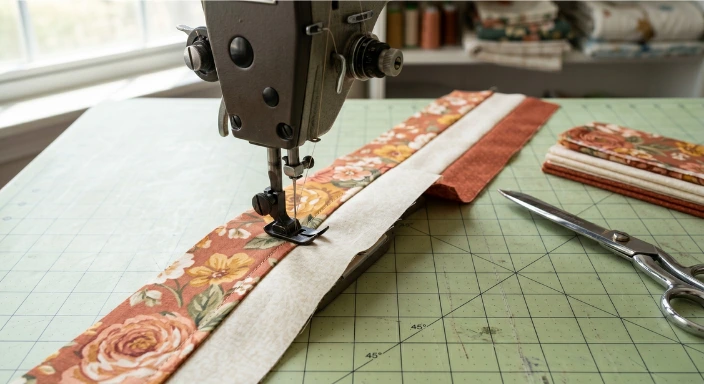
Finished size: 46″x60″. A rail-fence strip pattern from Fabric Cafe, widely recommended in forum threads as “fast and turns out nice.” Uses strip piecing, which is the single most beginner-friendly technique in the category. No half-square triangles, no curves.
The Easiest 3 Yard Quilt Ever (big block pattern)
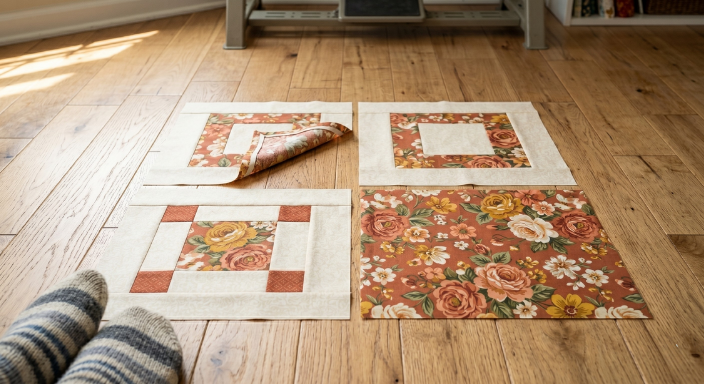
Finished size: 54″x65″. Caroline Fairbanks-Critchfield’s most popular 3-yard pattern at SewCanShe. Uses 11″ finished blocks built from four-patch units and plain squares. Strong choice if you want to showcase a large-scale focus print.
Mosaic Tiles
Finished size: roughly 48″x60″. A single-block repeat design. Good second project after Strip Happy. Uses only squares and rectangles and teaches consistent 1/4-inch seam allowance without punishing minor drift.
Twin Star (Fabric Cafe)
Finished size: 47″x59″. An 8-pointed star pattern requiring half-square triangles. This is a difficult step up; skip it on your first 3-yard quilt and come back once you have a rail fence or big-block finish under your belt.
Chandelier
Finished size: 48″x59″. An 8″ block repeat with a clean modern look. Paid pattern from Fabric Cafe; budget-friendly at under $10.
Curve-inclusive note for quilters using directional prints:
None of these patterns requires directional layout planning, so they work equally well whether you are using printed focus fabric with a clear “up,” a tone-on-tone, or a solid. That matters for accessibility quilters with low vision who sew by touch have repeatedly recommended non-directional focus prints on r/quilting threads because they remove one layer of orientation checking per block.
- Ideal for cutting intricate curves, patterns and applique for quilting projects
- High-grade, precision-ground, stainless-stel 45mm rotary blade stays sharper longer than other rotary blades
- A symmetrical design makes freehand cutting easy for right- and left-handed users
- Sliding button extends blade guard when not in use
- Blades snap in or out easily for quick replacement
How Much Do 3-Yard Quilts Actually Cost?
Here is an honest breakdown using current 2026 fabric prices at mid-tier quilting cotton (not clearance, not high-end designer):
| Material | Typical cost | Notes |
| 3 yards quilting cotton (top) | $30–$42 | $10–14 per yard is realistic for mid-tier cotton in 2026 |
| 1.75 yards backing | $17–$25 | Often on sale, wide backs can reduce piecing |
| Crib batting | $12–$18 | Warm & Natural or Pellon 987F are standard |
| Binding (1/2 yd) | $5–$7 | Or cut from leftover top fabric |
| Thread + notions | $3–$5 | If already stocked, $0 |
| Total | $67–$97 | Before tax |
That lands higher than the “$57–$71” figure you may see on older pattern posts. The 2025 fabric price pressure is real, and any article you read on this topic that still quotes pre-2024 fabric costs is out of date. Shop stash first when you can.
How Do You Cut 3 Yards of Fabric Without Waste?
Here is the step-by-step cutting sequence. Read it once before picking up your rotary cutter.
Step 1: Square the fabric ends
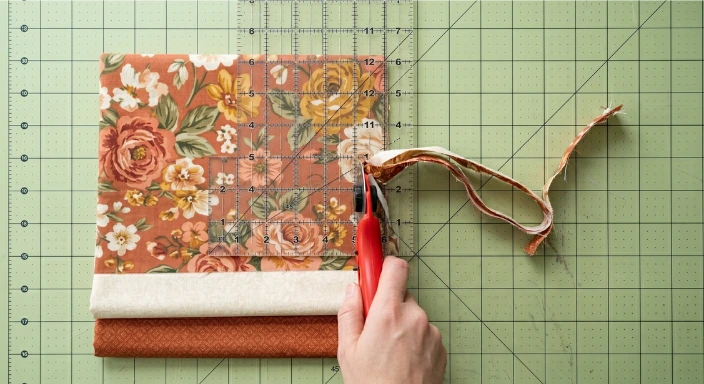
Fold each yard in half lengthwise, selvage to selvage. Lay flat on the cutting mat. Place a ruler perpendicular to the fold and trim the raw end to a clean 90-degree edge. This trim is not optional, as starting from an unsquared edge multiplies the error across every subsequent cut.
Step 2: Cut width-of-fabric strips first
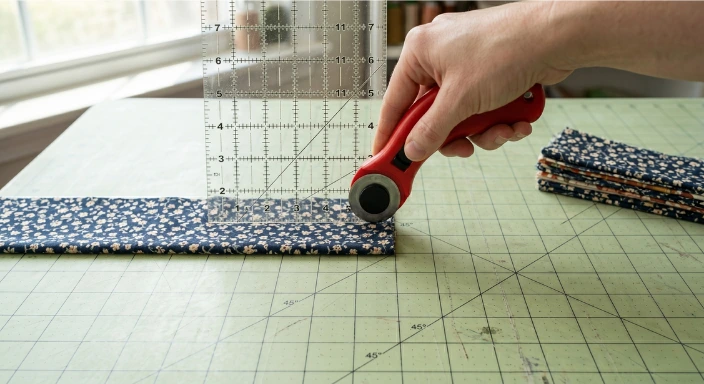
For strip patterns, cut from selvage to selvage at the width your pattern requires (usually 2.5″, 5″, or 10″). Width-of-fabric strips give you 40″–42″ of usable length per strip, which is the full working width of standard quilting cotton.
Step 3: Sub-cut strips into block units
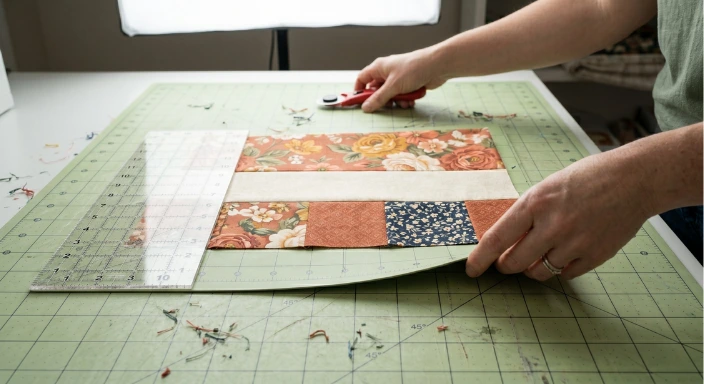
After your strip sets are cut and sewn, sub-cut them into the unit sizes your pattern calls for (typically 5″ or 10″ segments). Turn the cutting mat rather than the fabric when changing direction. Moving the mat keeps your fabric layout square and your cuts parallel.
Step 4: Press seams before the next seam
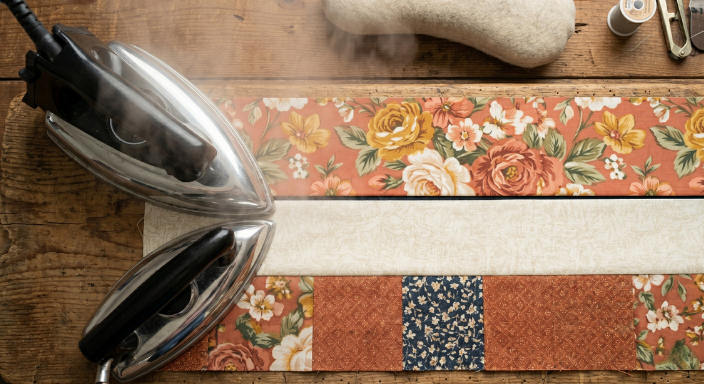
Press every seam before crossing it with the next seam. For 3-yard quilts using cotton only, press seams to the darker side, or press open both work. The rule is that pressing is construction, not cleanup. A pressed seam lies flat and gives you an accurate reference edge for the next piece.
What Techniques Make a 3-Yard Quilt Fast?
Two construction techniques cut assembly time in half and are worth learning before you start.
- Strip piecing: Instead of cutting individual squares and sewing them one pair at a time, sew long strips together first, press the strip set, then sub-cut into the pieced units you need. One strip set can yield 8 to 10 block units in a single pass.
- Chain piecing: Feed pairs of pieces through the sewing machine one after another without cutting the thread between them. You end up with a chain of stitched pairs connected by short threads. Snip them apart at the ironing station. This single habit removes the biggest time-waster in home sewing.
One quilter on the Missouri Star forum reported finishing a full 3-yard top in about two hours using these two methods together:
“With strip piecing and chain piecing, it took 2 hours from cutting to this stage.” Missouri Star Quilt Community forum
Prerequisite skill: Both techniques assume you can maintain a consistent 1/4-inch seam allowance. If yours drifts between 1/4″ and 3/8″, your block units will come out in different sizes, and the quilt top will not square up at the end. Practice on scrap for 10 minutes, measuring the seam allowance every 6 inches, before starting the real project.

- EXTRA LARGE CUTTING SURFACE: Perfectly sized for cutting full widths of fabric, extra-large squares, and long strips with ease
- SELF-HEALING DESIGN: Durable mat with a double-sided, self-healing surface for extended use and precise measurements
- EASY-TO-READ GRIDS: Features measuring grids and 30, 45, and 60-degree bias lines for accurate angle cutting
- PROTECTS WORK SURFACE: Ideal for sewing, quilting, scrapbooking, and gift wrapping while keeping your work area safe
- QUALITY CRAFT TOOLS: Designed to enhance your creativity with reliable and long-lasting materials
What About the Quilting Itself?
Sparse quilting suits 3-yard quilts well. Straight lines spaced 3 to 4 inches apart, sewn with a walking foot attachment on a domestic machine, secure the layers and keep the piecing visible. Dense quilting is unnecessary at this scale and will stiffen a lap quilt meant to drape.
Curve-inclusive sewing tip: If you have wrist mobility limits or shoulder restrictions that make rotating a large quilt under the needle uncomfortable, quilt in sections using the quilt-as-you-go method before joining. This breaks the bulk into manageable lap-sized portions that don’t fight your body.
Walking foot straight-line quilting is the standard recommendation across all major quilting educators for beginners. Free-motion quilting is a separate skill with its own learning curve; it is not required for a first 3-yard quilt and actively discouraged on a first project.
Split on 3-Yard Quilts
Not every quilter thinks the format is a net positive for the craft. The debate comes down to whether simplicity is accessibility or whether it flattens the skill ceiling.
- Position A (pro): The 3-yard format lowers the financial barrier to quilting, produces finished projects instead of abandoned ones, and uses fabric efficiently in a market where cotton prices are rising. One Quilting Board forum member wrote that the patterns are “perfect for using up scraps and short yardage” and ideal for donation quilts to organizations like Project Linus.
- Position B (skeptical): Some experienced quilters find the patterns structurally thin. A comment on Connecting Threads’ review thread noted that while the format is simple and the sizing guidance is useful, the fabric choices featured in sample patterns sometimes “did not do the pattern justice.”
How to reconcile: Use 3-yard patterns as your first two or three quilts to build completion momentum. If you find yourself wanting more design depth, that is the signal to move into traditional block patterns with larger yardage requirements. The format is an entry point, not a plateau.
What Mistake Kills Most First Quilts?
Perfectionism at the block stage. Points that don’t match exactly, seams that drift a thread away from 1/4 inch, a binding corner that goes slightly wonky, none of these kill a quilt. Abandoning the project at block 6 of 12 does.
Donna Robertson at Fabric Cafe designed her binding method specifically to prioritize finishing over traditional execution. Her original 3-yard patterns use a single-fold economy binding cut at 1 1/4″ rather than the traditional 2 1/4″ double-fold. That choice lets the full 3 yards go into the quilt top instead of the binding. If you learn her method, you will finish more quilts than if you try to execute a classical double-fold on your first five projects.
Fix-it path if your points don’t match: Measure your seam allowance with a ruler on a finished block. If you are running at 5/16″ instead of a scant 1/4″, your blocks are coming out about 3% undersized. Shift your needle position one click to the right or adjust your seam guide. The next block will come out correctly. No quilt needs to be scrapped over a 1/16″ seam drift.
3-Yard Quilt Shopping List (2026 Prices)
The core toolkit for any 3-yard quilt project:
Cutting tools:
- Rotary cutter, 45mm or 60mm (45mm is easier for first-time users)
- Self-healing cutting mat, minimum 24″x36″
- Clear ruler, 6″x24″ with non-slip backing
Sewing tools:
- Sewing machine with a 1/4″ foot attachment (any domestic machine works)
- Walking foot attachment for the quilting stage
- Cotton thread in a neutral color (50-weight is standard)
- Universal 80/12 needles, fresh pack
Finishing tools:
- Iron and pressing surface
- Small pair of thread snips
- Safety pins or basting spray for layering
Budget tier: A brand-new quilter can get the full cutting toolkit for under $100 at a big-box craft retailer. Mid-range tools (Olfa, Creative Grids, Fiskars) run $150–$200 for the full kit, but last 10+ years. Heritage tier (June Tailor, Quilter’s Select) runs $250+ and is unnecessary for a first project.
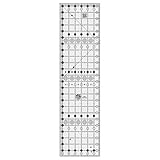
- Made in the USA with high quality acrylic and precision measurements ensuring accuracy for your quilting, sewing, patchwork, and crafting projects.
- Creative Grids exclusive non-slip grip allows you to easily slide the ruler over the fabric until positioned correctly. Then, when slight pressure is applied, the grip holds the ruler in place, eliminating slipping while you cut.
- Easy to read black and white markings printed in 1in grids marked in 1/8in and 1/4in increments are highly visible on most fabric colors.
- Use the black numbers printed on white dots and 1/4in grip side to cut whole inches.
- Use our exclusive Turn-a-Round feature to cut 1/2in increments by following the white numbers on black dots and 1/2in grip sides.
Sewing.com uses affiliate links on individual product recommendations. All tools listed in this shopping list have been tested by our quilting contributors on actual 3-yard quilt projects. See our affiliate disclosure at the bottom of this page.
Your First 3-Yard Quilt: Weekend Plan
Saturday morning (2 hours): Cut all strips. Press each piece before cutting. Stack by pattern piece.
Saturday afternoon (2 hours): Strip-piece and sub-cut units. Chain-piece block pairs. Press as you go.
Saturday evening (1 hour): Assemble the quilt top. Press the finished top flat.
Sunday morning (2 hours): Layer backing, batting, and top. Baste with safety pins or basting spray. Set up your walking foot.
Sunday afternoon (2 hours): Quilt in straight lines spaced 3–4 inches apart. Start from the center and work outward to prevent fabric bunching.
Sunday evening (1 hour): Cut binding strips, attach, fold, and hand-stitch or machine-stitch to finish.
Total active time: roughly 10 hours across two days. First quilts often run longer. Plan for 12 to 14 hours and protect yourself from the Sunday-night rush by starting Friday if you can.
Ready to Start Your First 3-Yard Quilt?
Pick one pattern from the five above. Buy three 1-yard cuts of coordinating fabric this weekend. Set aside Saturday and Sunday. Read the cutting sequence once before picking up your rotary cutter. Tag your finished quilt #sewingcom and share your result in the comments.
The goal is not a perfect quilt. The goal is a finished quilt. Start there. Get better on quilt two.
Check out Quilts You Can Finish in a Weekend! | 8 NEW Weekend 3-Yard Quilts from Fabric Cafe
Frequently Asked Questions
-
How many yards of fabric do I really need for a 3-yard quilt?
You need 3 yards for the top, 1.75 yards for backing, and about 1/2 yard for binding, unless you use Donna Robertson’s economy binding method, which pulls binding from leftover fabric. Plan for roughly 5.25 yards total, including backing and binding, to complete a lap-size quilt from start to finish.
-
Can I make a 3-yard quilt larger than lap-size?
Yes, but not without adding fabric. Fabric Cafe’s pattern books include enlarging instructions that require 6 yards for twin size and 12 yards for queen or king size. Simply doubling the yardage does not double the finished size; the math is pattern-specific. Check your specific pattern’s enlarging chart before buying extra fabric.
-
Do I need to pre-wash fabric for a 3-yard quilt?
Most quilting cotton from reputable brands like Moda, Riley Blake, or Robert Kaufman is colorfast and does not require pre-washing in 2026. If you are using hand-dyed, batik, or deep-red or navy fabrics, pre-wash to prevent bleeding. A color-catcher sheet in the first wash of the finished quilt is cheap insurance.
-
What is the best sewing machine for a first 3-yard quilt?
Any domestic sewing machine with a 1/4″ piecing foot and a walking foot attachment will handle a 3-yard quilt. You do not need a long-arm, a mid-arm, or a specialty quilting machine. A $200 Brother or Singer basic machine is enough. Upgrading matters later, not now.
-
Why do my quilt blocks keep coming out in different sizes?
Nine times out of ten, this is seam allowance drift. Your 1/4″ seam is running wider or narrower than advertised. Check your needle position, your guide, and your presser foot. Measure a finished block with a ruler. If it is off by more than 1/8″, adjust and re-sew. Consistent seam allowance is the single highest-impact skill in piecing.
-
Is a 3-yard quilt too simple to count as real quilting?
Real quilting is a finished quilt, whether it uses three yards or thirty. Some experienced quilters find the patterns thin in design complexity and prefer traditional blocks. That preference is legitimate, but does not invalidate the format. Use 3-yard patterns for fast wins and donation quilts; use traditional patterns when you want design depth.
-
What is the difference between a 3-yard quilt and a pre-cut quilt?
A 3-yard quilt uses three 1-yard cuts of fabric, cut by you from yardage. A pre-cut quilt uses pre-packaged cuts like jelly rolls (2.5″ strips), charm packs (5″ squares), or layer cakes (10″ squares). Many 3-yard patterns can be adapted to use a layer cake plus 1.5 yards of background fabric, which is useful if you already have pre-cuts in your stash.
Why did you vote that way? Drop your take in the comments.