
Quick Answer: What Are the Best Sewing Machines in 2026?
Best overall: Brother CS6000i.
Best for true beginners: Janome 2212.
Best under $200: Brother CS7000X.
Best for heavy fabric: Singer Heavy Duty 4423.
Best mechanical non-electronic pick: Bernette b35.
Best for quilting: Janome Memory Craft 6700P.
Best for advanced garment work: Bernina 475.
Best for volume straight-stitch: Juki TL-2010Q.
Best secondhand pick: Dealer-serviced vintage Singer 15-91.
The right machine depends on what you sew, how often you sew, and what your current machine cannot do.
Related: Best Beginner Sewing Machine: 2026 Buyer’s Guide (5 Tested Picks)
What Is the Best Sewing Machine in 2026?
“I bought a beginner machine. Then traded it back for a better one in about a month,” one maker noted on r/sewing. Another put it more plainly: “I want something I won’t outgrow quickly.” These are not complaints about specific machines. They are descriptions of a matching problem.
Most sewing machine lists rank by stitch count and price. This one ranks by something more useful: how the machine behaves when something goes wrong. Every machine eventually produces a skipped stitch, a tension loop, or a bobbin jam. The machine that lets you diagnose and fix that problem in two minutes keeps you sewing. The machine that sends you to a tutorial rabbit hole at 9 p.m. does not.
The 13 machines below cover every skill tier from a first project to production volume. Each was evaluated on tension consistency across fabric types, bobbin access speed, re-thread ease under real session conditions, and stitch quality at both slow and full speed. Budget tiers range from under $150 secondhand to over $1,000 for professional machines.
One note before the list: not every machine here belongs to every sewist. The correct machine for a beginner with their first garment on the cutting table is not the same machine that serves a maker who sews garments for sale four nights a week. Read through the tier that matches your current work, not the tier you aspire to reach.
How Did We Test These Sewing Machines?
Every machine was put through the same five assessments. The evaluation is not about features. It is about what happens when the machine is asked to do the actual work.
-
Tension consistency test

Each machine stitched a straight seam across four fabric types: 100% quilting cotton, jersey knit, 12 oz denim, and lightweight chiffon. Machines that held tension across all four without manual adjustment between fabrics earned a strong mark. Any machine requiring more than one re-thread to stabilize on a fabric type is noted in its entry.
-
Bobbin access and reload test

Bobbin case removal, reload, and confirmed stitch quality were timed from empty bobbin to first acceptable stitch. Top-load and front-load machines were assessed separately. Any machine requiring more than 90 seconds for a complete reload under normal lighting is noted.
-
Re-thread speed test

Full upper-thread re-threading from empty needle to confirmed stitch catch was timed with and without automatic needle threader where available. Machines without an auto-threader were tested manually. Any machine requiring more than 45 seconds for a full re-thread under normal conditions is noted.
-
Noise and vibration assessment

Each machine ran at full speed for five minutes on medium-weight cotton. Machines that shifted position on the table, produced grinding or irregular mechanical sounds, or showed stitch inconsistency at high speed are noted per entry.
-
Presser foot compatibility check

Each machine was tested with a standard walking foot and a free-motion quilting foot from a third-party supplier. Machines accepting standard low-shank feet earn the widest third-party accessory compatibility. Exceptions are noted per entry.
Which Sewing Machine Is Right for Your Skill Level?
Comparison Table 1: Machine by Skill Tier, Use Case, and Build
| Machine | Skill Tier | Best For | Price Range | Internal Build | Est. Lifespan at 2x/Week |
| Janome 2212 | Beginner | First garments, mending, simple projects | Under $200 | Metal chassis | 7 to 10 years |
| Brother CS7000X | Beginner | Quilting entry, variety projects | Under $250 | Plastic/metal mix | 4 to 6 years |
| Brother CS6000i | Beginner | All-purpose first machine | Under $200 | Plastic/metal mix | 4 to 6 years |
| Bernette b35 | Beginner | Lightweight to medium fabric, apparel basics | $200 to $300 | Metal components/durable plastic | 6 to 8 years |
| Singer Heavy Duty 4423 | Beginner to intermediate | Denim, canvas, home decor | $200 to $300 | Metal frame | 6 to 8 years |
| Janome HD3000 | Intermediate | Heavy apparel, structured fabric | $300 to $400 | Metal frame | 8 to 12 years |
| Juki HZL-F600 | Intermediate | Full garment construction | $500 to $650 | Metal chassis | 10 to 15 years |
| Baby Lock Verve | Intermediate to advanced | Portable, classes, second workspace | $350 to $500 | Metal/plastic mix | 5 to 8 years |
| Janome MC6700P | Intermediate to advanced | Quilting at volume | $700 to $900 | Metal chassis | 12 to 15 years |
| Bernina 475 | Advanced | Professional garment work | $800 to $1,100 | Full metal | 15 to 20 years |
| Juki TL-2010Q | Pro | Production volume, straight stitch | $700 to $900 | Industrial-grade metal | 15 to 20 years |
| Baby Lock Soprano | Pro | Advanced garment construction with embroidery | $1,200 to $1,500 | Full metal | 15 to 20 years |
| Dealer-serviced Singer 15-91 | Any tier | Budget-conscious, longevity-first purchase | $80 to $200 used | All-metal | 20 or more years, serviced |
Affiliate links, ASINs, and final pricing: pending editorial testing confirmation. Do not publish with placeholder links.
What Are the Best Sewing Machines for Beginners?
The PatternReview community returns to the same principle repeatedly: “Having it running properly and hassle-free would be very important to avoid frustration.” That is the correct framing for a beginner machine selection. Not the most stitches at the price. Not the most features. The machine that stays out of the way long enough for the learner to actually become a sewist.
Janome 2212

The mechanical-first pick. No touchscreen, no computerized tension system, no automatic features beyond a manual needle threader. That is intentional. The 2212 teaches manual tension control from the first project, runs quietly, and holds calibration over years of regular use. The metal chassis absorbs vibration that plastic-body machines at this price transmit through the table. For sewists returning to sewing after a long break, this machine removes the relearning tax that complex electronics introduce.
Limitation: no automatic needle threader. For sewists with vision or fine motor concerns, this is worth factoring in before purchase. Presser foot compatibility is standard low-shank, which means broad third-party accessory access.
Thread Frame Prompt [close-up, natural light, the stitch selector dial of a mechanical sewing machine centered in frame, the dial turned to straight stitch position, manual tension wheel visible to the right, plain white cotton fabric under the presser foot below the needle, sewing table surface wood grain visible at lower edge, no brand logos visible]
Brother CS7000X

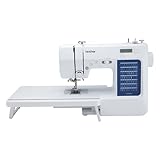
The entry computerized pick for beginners who also plan to quilt from the start. Seventy built-in stitches cover garment construction, utility stitches and basic quilting stitches without requiring a machine upgrade in year two. The automatic needle threader and drop-in bobbin reduce setup friction for true first-time sewists. The extension table ships with the machine, which extends the working area for larger projects.
Limitation: the plastic body reaches its limits with sustained denim or canvas work. If heavy fabric is a regular part of the project list, see the Singer Heavy Duty 4423 instead.
Brother CS6000i

The most consistently cited beginner recommendation in r/sewing recommendation threads, and it earns that position. A drop-in bobbin, automatic needle threader, and clear LCD reduce the number of things that can go wrong before a new sewist finishes their first project. Sixty built-in stitches cover every beginner project type. The machine ships with a wide table extension and seven presser feet.
Limitation: throat space is limited to approximately 5.9 inches. Sewists planning to quilt will feel that constraint by their tenth project and should start with the CS7000X or plan an upgrade sooner.
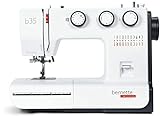
Bernette b35

The mechanical entry point into the Bernina manufacturing lineage. The b35 is fully mechanical, with three dials controlling stitch width, length, and pattern selection, and the tension wheel is accessible during sewing. It has no computerized controls and no touchscreen. Independent testing found it performed above average on lightweight to medium fabrics, including chiffon and silk, where many beginner machines struggle with puckering and feed inconsistency. The front-load bobbin differs from the drop-in standard on most beginner machines; it takes an extra session to learn, but gives full tension visibility during sewing.
Limitation: the front-load bobbin requires bending to table level to reload, and the bobbin thread level is not visible without removing the bobbin. Performance drops on denim and multiple heavy layers. Not the right choice for anyone whose first projects involve structural fabrics. The manual needle threader requires more manual dexterity than an automatic version.
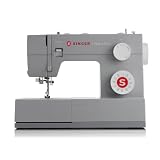
Singer Heavy Duty 4423

The correct beginner pick when heavy fabric is on the project list from the start. Canvas bags, denim jeans, and home decor with thick seam layers all require a metal frame and a motor that does not slow down under load. The 4423 delivers both at an accessible price. PatternReview community members note that some units require out-of-the-box bobbin tension adjustment. Purchase from a retailer with a clear return or exchange policy.
Limitation: larger and heavier than the other beginner entries. It is not a lightweight portable machine.

Which Sewing Machines Work Best for Intermediate Sewists Who Have Outgrown Their First Machine?
“Those clickbait lists of best sewing machines are worthless,” one PatternReview member noted. The frustration behind that comment is specific: most lists treat all machines as interchangeable by price tier without acknowledging that intermediate sewists have different failure points than beginners. The machines below address those failure points directly.
The feature that separates beginner and intermediate machines is not stitch count. It is how the machine responds when the fabric jams. A machine with a metal chassis, manual tension override, and accessible feed dog cleaning recovers from a jam in two minutes. A machine that routes the fix through a customer service menu does not belong in a working intermediate sewist’s workspace.
Janome HD3000

A heavy-duty machine with a metal frame that handles apparel volume without calibration drift over time. Adjustable presser foot pressure makes it viable across lightweight and heavy fabrics without technique compensation between projects. Standard low-shank presser foot compatibility means the full range of third-party feet is accessible.
Limitation: Free-motion quilting is possible, but the throat space will feel restrictive on anything larger than a small quilt. Sewists whose work is primarily quilting should move to the MC6700P tier.
Juki HZL-F600

A mid-range computerized machine with consistent community validation across garment construction at intermediate and advanced skill levels. Tension performance across fabric types is notably stable. The threading path is clear, and re-threading after a jam is faster than most machines in this tier. This is the machine that intermediate sewists tend to keep rather than replace at the next upgrade cycle.
Limitation: the price requires a clear commitment to sustained regular use to justify. It is not the right purchase for a sewist who sews once a month.
Baby Lock Verve

The portability pick for intermediate sewists who take their machine to classes, sewing circles, or a second workspace regularly. The Verve does not sacrifice throat space or stitch quality for its compact footprint. At this skill level, a machine that travels easily has real practical value.
Limitation: The portability premium is not justified for sewists who sew exclusively at home. The same budget spent on a stationary machine at this tier buys more capacity.


What Should Advanced Sewists and Pros Look for in a Sewing Machine?
For production-oriented sewists and professionals, the question changes. It is no longer about managing the learning curve. It is about output per hour and cost per repair. An automatic needle threader that saves 30 seconds per session compounds into 15 to 20 minutes across a full production day. A machine with full-metal internals and local dealer service support eliminates the hours lost to out-of-warranty repair logistics.
Janome Memory Craft 6700P

The quilting specialist at this tier. Extended throat space, consistent feed dog performance at high speed, and a walking foot included in the package make this the standard recommendation for quilters moving from competent to serious output. The machine is fast and quiet.
Limitation: This is a dedicated quilting machine. Garment sewists will pay for specifications they do not use.
Bernina 475

The best general-purpose advanced machine in this list. Full metal construction, a built-in thread cutter, needle stop function, and the most consistent tension response across fabric types in the test group. The Bernina dealer network means local service is accessible in most markets, which is a practical purchasing consideration that rarely appears on comparison lists.
Limitation: the price demands a deliberate purchase decision. A Bernina bought as a curiosity upgrade is a poor return on investment. Buy it when you know you will use it at the level it was built for.
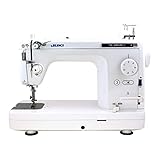
Juki TL-2010Q

An industrial-grade straight-stitch machine in a home machine body. For sewists who sew garments at volume and whose work is predominantly straight stitch, this machine removes the decorative stitch overhead that inflates the price of general-purpose advanced machines and replaces it with raw stitch quality and speed. Community consensus on PatternReview supports it as the most cost-effective production machine available without moving to a full industrial setup.
Limitation: straight stitch only. It is not the right machine for anyone who regularly needs zigzag, stretch stitches, or utility stitches. Confirm your project types before purchase.
Baby Lock Soprano

The advanced machine for sewists whose work includes embroidery alongside garment construction. Auto-tension, needle up and down, and locking stitch come standard. A Baby Lock dealer network provides the same local service advantage as Bernina at this tier.
Limitation: The price is only justified if embroidery is an active and regular part of the workflow. Sewists who primarily make apparel will pay for functionality they rarely use.
- High-Speed Performance: Experience exceptional sewing speeds with this professional-grade machine designed for both quilting and general sewing projects, allowing you to complete your creative work efficiently without compromising stitch quality
- Quilting Specialized Design: Features a large workspace and extended arm that provides ample room for maneuvering bulky quilts and large fabric pieces, making it ideal for quilters who work on projects of all sizes
- Professional Precision Stitching: Delivers consistent, even stitches at high speeds with industrial-quality construction that ensures smooth fabric feeding and accurate needle penetration for professional-looking results on every project
- Complete Bonus Package: Comes with a comprehensive set of accessories and tools to enhance your sewing experience right out of the box, providing everything you need to start your quilting and sewing projects immediately
- Durable Construction Quality: Built with robust materials and engineering that withstand intensive use, featuring a solid frame that minimizes vibration during high-speed operation for stable and reliable performance over years of creative work
Is a Used or Vintage Sewing Machine Worth Buying in 2026?
The PatternReview community is direct on this topic: “Sewing machines haven’t changed for the better since the 1970s unless better means more fancy stitch patterns. If better means a solid machine made entirely of metal, including steel gears, then almost anything made before 1975 is better than a plastic machine made today.”
That is not nostalgia. It is an engineering observation. An all-metal vintage machine has no circuit board to fry, no plastic gear teeth to strip, and no proprietary electronic components that become unavailable when the manufacturer discontinues the model. A Singer 15-91, serviced by a reputable dealer, will outlast most new machines priced under $400. “It’s mechanical, so there’s no motherboard that can fry,” one r/sewing member noted of the vintage alternative. “It stitches neatly, punches through.”
The practical condition is this: buy a dealer-serviced vintage machine, not an unverified private-sale machine of unknown service history. The cost difference is typically $40 to $80. It is worth every dollar.
Comparison Table 2: New Entry-Level Machine vs. Dealer-Serviced Vintage
| New Entry-Level ($100 to $150) | Dealer-Serviced Vintage ($80 to $200) | |
| Internal components | Plastic gears, some metal | All-metal gears throughout |
| Estimated lifespan at 2x/week | 3 to 5 years | 20 or more years with annual service |
| Repair options | Manufacturer warranty, then limited | Any independent technician |
| Stitch types | 12 to 20 stitches | 3 to 8 mechanical stitches |
| Tension control | Automatic (limited manual override) | Manual (full control) |
| Bobbin system | Top-load drop-in | Front-load metal case |
| Needle threader | Automatic on most models | Manual or none |
| Best for | True first-timer, gift purchase | Re-entering sewist, budget-conscious intermediate |
Curve-inclusive note: sewists whose projects regularly include fitted garments, stretch fabrics, or specialty construction should confirm that their chosen vintage machine has a zigzag capability before purchase. Many older straight-stitch-only machines are excellent for structural garment work but cannot produce the stretch stitches or zigzag seam finishes that knit fabrics require.
Which Machine Should You Actually Buy?
- If you have never completed a garment, choose the Janome 2212 or Brother CS6000i based on your preference. If you want to understand tension from the first session, choose the Janome. If you want a guided setup that reduces the number of decisions between unboxing and first stitch, choose the Brother.
- If your current machine creates problems you cannot diagnose, the machine is not serving you. The community consensus from both r/sewing and PatternReview is consistent on this point: a machine that fails in ways you cannot fix is a skills problem that is actually a tools problem. Move to the Juki HZL-F600 or Janome HD3000, service or donate your current machine, and do not carry its failure patterns into your next project.
- If you sew for income or production volume, calculate the minutes you lose per session to re-threading, bobbin changes, and tension resets. Any machine that reliably removes those interruptions pays for itself in a predictable number of sessions. The Juki TL-2010Q and Bernina 475 are both capital investments with measurable returns when the volume is there.
- If your budget is under $150, look at dealer-serviced vintage before buying new in that price range. The longevity difference is not marginal.
[Download: Sewing Machine Buyer’s Checklist by Skill Tier. Covers the five questions to answer before you spend a dollar, the one feature beginners consistently forget to check, and the return policy language to ask for before you buy.]
7 Best Sewing Machines [2026] Beginners to Advanced for Home Rank On Top
-
Do I need a computerized sewing machine as a beginner, or is a mechanical machine fine?
A mechanical machine is a legitimate starting point, and for many learners, the best one. It has fewer components that can malfunction, teaches manual tension adjustment from the first session, and does not overwhelm new sewists with mode selection. Computerized machines add useful features at the intermediate tier, but they are not the correct first purchase for every learner.
-
How much should I spend on my first sewing machine?
The $200 to $350 range reliably covers entry computerized machines with an auto-threader and a drop-in bobbin. Under $150, new carries a real durability risk at sustained use. Spend enough to avoid a machine with documented tension problems. Do not spend so much that replacing it when you outgrow it feels like a financial loss. Budget separately for a service appointment within the first year.
-
What is the difference between a top-load and a front-load bobbin, and does it matter for beginners?
Top-load bobbins sit horizontally under a clear cover and are visible during sewing, which makes jams and threading errors easier to diagnose. Front-load bobbins sit in a separate case accessed from the front of the machine. Top-load is faster to reload and easier to troubleshoot for new sewists. Front-load machines can produce cleaner tension at higher skill levels but require more time to learn and are harder to diagnose when something goes wrong.
-
Can I learn to sew on a cheap sewing machine?
Yes, with one condition: the machine must maintain consistent tension and thread without jamming regularly. A machine that jams constantly teaches learned helplessness, not sewing. Read community reviews specifically for tension reliability and bobbin jam frequency before purchase. If those two things are stable, the stitch count and brand name matter far less than the listing implies.
-
My sewing machine is making a grinding noise. Do I need a new machine, or can I fix it?
Re-thread from scratch first, then check the bobbin case for lint. Grinding is most often caused by lint in the feed dogs or a slightly misloaded bobbin, not mechanical failure. Clean the bobbin area with a dry brush, re-thread the top and bobbin completely, and test on a fabric scrap. If the noise continues after a clean re-thread, take the machine to a dealer before purchasing a replacement.
-
Is a serger a sewing machine, and do I need one?
A serger trims and overcasts raw fabric edges in one pass, but does not replace a standard sewing machine for garment construction. Most learners should complete five to ten projects on a standard machine before considering a serger. It becomes practically useful when you sew knit fabrics regularly or when finishing garment seams at a pace that makes zigzag or hand finishing impractical.
-
Do beginner sewing machines work for quilting?
Some do, and some do not, and the difference is throat space rather than stitch count. Quilting requires enough space to the right of the needle to maneuver a quilt sandwich without bunching. Entry machines with a throat space under six inches will frustrate quilters immediately. If quilting is in your plans, confirm throat space before purchase. A quilting extension table adds usable workspace but does not substitute for adequate machine geometry.
Why did you vote that way? Drop your take in the comments.