At a Glance: Hand and Yarn Classes 101
- Beginner Hand and Yarn Classes teach foundational stitches in 1 to 2 hours and assume zero experience.
- Bring light-colored, medium-weight yarn and a size H/I crochet hook or size 8 knitting needles, or confirm if materials are included.
- Classes cost anywhere from free (libraries) to $50 per session (yarn shops), with private lessons ranging $15 to $45 per hour.
Want a relaxing hobby that produces something useful? Knitting and crocheting check all the boxes. However, starting a project may feel overwhelming when you’re not sure which supplies to choose or how to learn the basic techniques. A hand and yarn class can show you how to use the essential tools and make your first stitches. After a few lessons or so, you can start practicing on your own.
In this guide, we’ll cover:
- What you’ll learn in your first class
- What supplies to bring
- Where to find workshops near you
- How much hand and yarn classes cost
- What to expect if you are left-handed or a complete beginner
- What the class experience actually looks like
What Will I Learn in My First Hand and Yarn Class?
Beginner hand and yarn workshops focus on building muscle memory rather than finishing a project. Instructors will typically walk you through the foundational techniques step by step. Here’s what a first session covers:
- Crochet track: slip knot, chain stitch, single crochet
- Knitting track: casting on, knit stitch, binding off
- Session length: typically 1 to 2 hours
What Should I Bring to a Hand and Yarn Class?
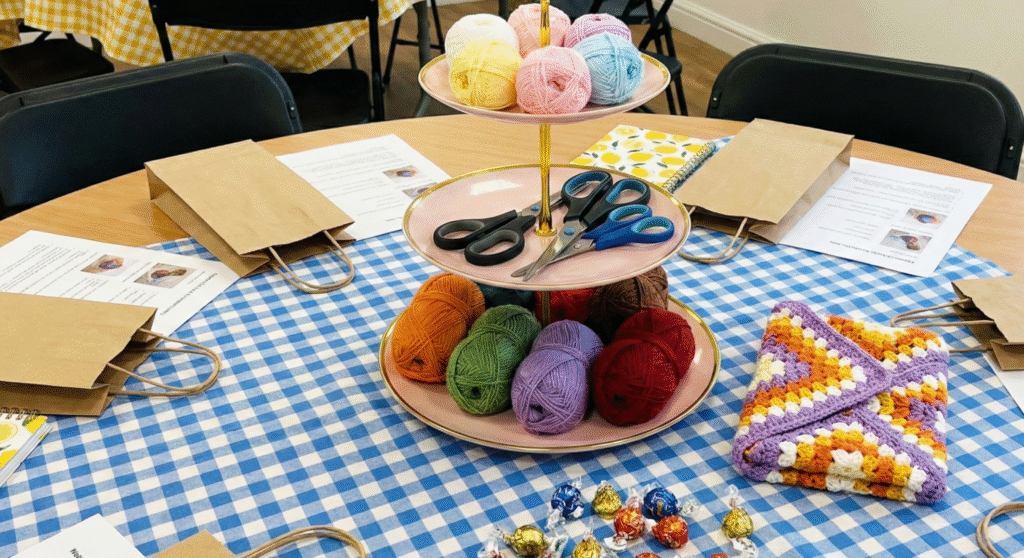
Many beginner classes provide the materials for you, but confirm this with your instructor beforehand. If you need to bring your own supplies, here’s what works best for first-timers:
- Yarn: light-colored, medium-weight (worsted or DK) in acrylic or wool, which holds its shape and shows stitches clearly
- Crochet hook: size H or I (5 to 5.5mm), large enough to grip comfortably
- Knitting needles: size 8 (5mm), a standard beginner size that pairs well with medium-weight yarn
- Optional: small scissors, tapestry needle for weaving in ends
Pro tip: Avoid dark colors and novelty yarns with heavy texture as they make it harder to see your stitches and spot mistakes.
Where Can I Find Hand and Yarn Classes Near Me?
Hand and yarn classes are available in more places than most beginners realize. Depending on your area and budget, here are the most common options to explore:
- Local yarn shops: They often host beginner workshops and open stitch nights.
- Craft stores: Joann, Hobby Lobby, and Michaels offer scheduled classes for beginners.
- Community centers and libraries: These places provide affordable or free sessions, especially for kids and seniors.
- Online directories: Yelp, CourseHorse, Superprof, and Facebook groups list local instructors and craft fairs in your area.
- Guilds and clubs: The Crochet Guild of America and The Knitting Guild Association have local chapters that host beginner knitting/crochet workshops.
Quick search tip: Google “[your city] + knitting class” or “[your city] + crochet class” to see what’s available near you.
How Much Do Hand and Yarn Classes Cost?
Pricing varies depending on the class format and whether materials are included. Here’s a general breakdown of what to expect:
- Group classes at yarn shops: $25 to $50 per session (1.5 to 2 hours)
- Multi-week beginner series: $75 to $100 for 4 sessions
- Private lessons: $15 to $45 per hour
- Community centers and libraries: often free or under $20
How Long Does It Take to Learn Knitting or Crochet?
The timeline depends on how often you practice, but most beginners see progress after a few sessions. Here’s a general learning curve for knitting or crochet newbies:
- First session (1 to 2 hours): slip knot, chain stitch, basic stitches.
- 4 to 10 hours of practice: foundational stitches
- Around 20 hours: simple projects like dishcloths, scarves, and basic hats.
- A few months: intermediate skills like reading patterns and colorwork.
Note: Getting instructor feedback fast-tracks this timeline compared to self-teaching.
What If I’m Left-Handed or Have No Experience?
Beginner hand and yarn classes are built for absolute newcomers. Instructors see the same questions and hiccups every session, so you don’t have to worry about making mistakes. Here’s what to know:
- Left-handed: Most teachers know mirrored techniques and can show you the motion from your perspective.
- Zero craft experience: Instructors assume you’re brand new to knitting or crochet. If you make errors, they’ll show you the correct methods and teach you how to fix them.
- Common struggles for lefties: Left-handed learners sometimes need extra time with tension control and counting stitches. Don’t worry, instructors often provide left-handed visuals or hands-on guidance.
What Does a Hand and Yarn Class Actually Look Like?
Knowing what happens during the session helps ease first-timer nerves. Here’s what most beginner hand and yarn classes look like:
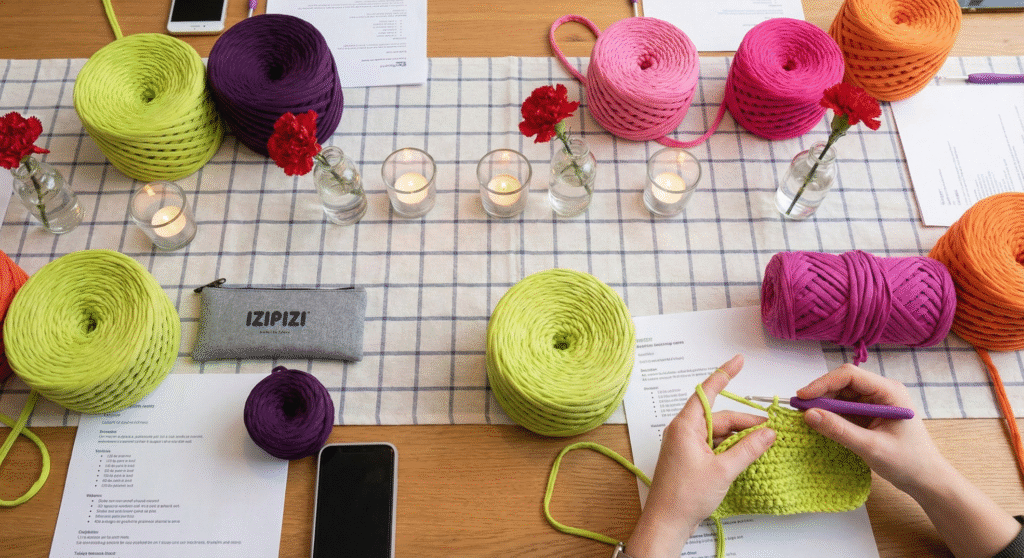
- Class size: typically 4 to 10 students.
- Pacing: slow and repetitive on purpose so you can build muscle memory.
- Vibe: relaxed and social, with plenty of time for asking questions.
- Instructor role: demonstrating techniques, circling the room, and correcting form one-on-one as needed.
- Breaks: most sessions include a short pause, especially when classes run over 90 minutes.
Ready to Get Started?
Hand and yarn classes speed up your progress by giving you real-time correction and teaching you stable techniques from the start. Check your nearest yarn store’s workshop schedule or google “crochet classes near me” today. One session is all it takes to find out if this craft is for you.
FAQs
Do I need any experience before taking a Hand and Yarn Class?
No. Beginner classes assume you have never held a hook or needle. Instructors start from the very basics.
What if I’m left-handed?
Most instructors are experienced with left-handed students and can teach mirrored techniques comfortably.
Should I learn knitting or crochet first?
Either works. Crochet is often considered easier to pick up because it uses one hook instead of two needles. Choose based on what projects interest you most.