
Key Facts
Related: Toddler Clothing Sewing Patterns You Can Download Today
What Makes Simple Linen Shorts a Good First Project?
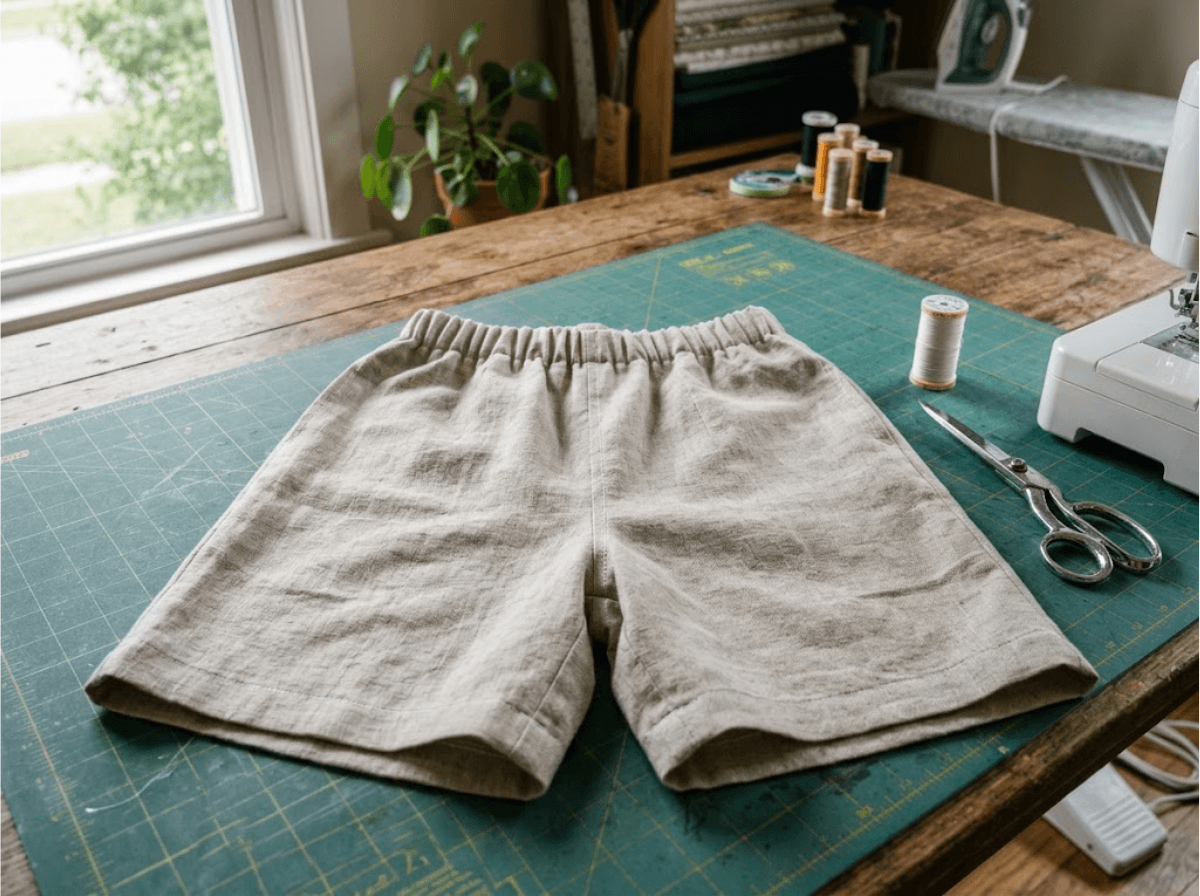
Simple linen shorts are two pattern pieces, one elastic waistband, and two seams. That’s it. No zipper, no darts, no fitted waist to argue with.
Simple linen shorts work as a first project because two pattern pieces and one elastic casing teach a beginner exactly two transferable skills: a straight seam and an elastic waistband. If this is your first time picking up a pattern, start here rather than with our full beginner sewing projects roundup, and come back to that list once these are done.
Linen is a good fabric for this specifically because it doesn’t slip and slide under your presser foot the way slippery synthetics do. It holds a crease when you press it, which matters more than you’d think when you’re new to sewing and pressing feels like an extra step you can skip. It isn’t. The sewing tutorial site Made Everyday calls shorts “the perfect project for a beginner to tackle,” and that’s exactly the role simple linen shorts play here: a fast, forgiving first win.

- This package contains 1-1/4yd of 1in polyester and rubber elastic
- Care: machine wash and dry
- Made in China
What Do You Need to Sew Simple Linen Shorts?
You need less than a yard of 44-inch linen, 1-inch elastic, and a basic home sewing machine, no serger required. For most kids’ sizes under a size 6, that yardage is plenty. Buy a little extra anyway. Linen shrinks more than cotton on its first wash, and you don’t want to run short after you’ve already cut.
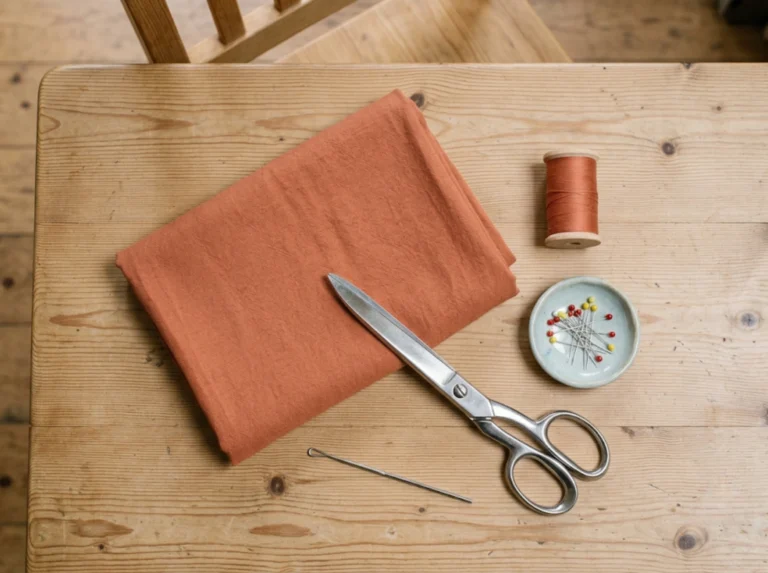
You’ll also need a thread that matches your fabric. If you’re new to working with this fiber, our working with linen guide covers the fabric’s quirks in more depth. If you don’t own a serger, a french seam or a tight zigzag stitch does the same job of enclosing the raw edge, just with a few extra minutes at the machine instead of a few hundred dollars of equipment.
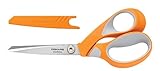
- Ideal for cutting in tight spaces and detailed cuts through fabrics like silk, oil cloth, light leather, polyester, Cotton, Crepe, felt and much more
- RazorEdge shears feature ultra-sharp, premium-grade stainless-steel blades with a precisely honed edge that glides through fabric for clean cuts all the way to the tip
- Advanced pivot design delivers our smoothest cutting action ever
- Softgrip touch points enhance comfort and control
How Do You Cut Simple Linen Shorts Without Fraying?
Linen frays because of its loose weave, not because of anything you did wrong, so finish every raw edge before you sew a single seam.
Pre-wash and dry your linen before you cut anything. Skip this step and your finished shorts will shrink the first time they go through the wash, sometimes enough to matter on a kids’ garment.
Cut your two pattern pieces (front and back) with a rotary cutter or sharp shears, mirrored so you end up with a left and right side. Linen frays fast once it’s cut. One PatternReview.com sewist described the problem directly: “I have noticed that whenever I work with linen, especially handkerchief linen, I have a lot of problems with fraying. This can cause various problems, especially with getting hems even as I lose my straight line.” That’s not a sign you did something wrong. It’s how linen behaves, and it’s why the next step matters before you sew a single seam.
How Do You Sew Simple Linen Shorts Step by Step?
The full build is six steps: finish the edges, sew the crotch, sew the inseam, build the casing, thread the elastic, and hem the legs.
Step 1: Finish every raw edge.
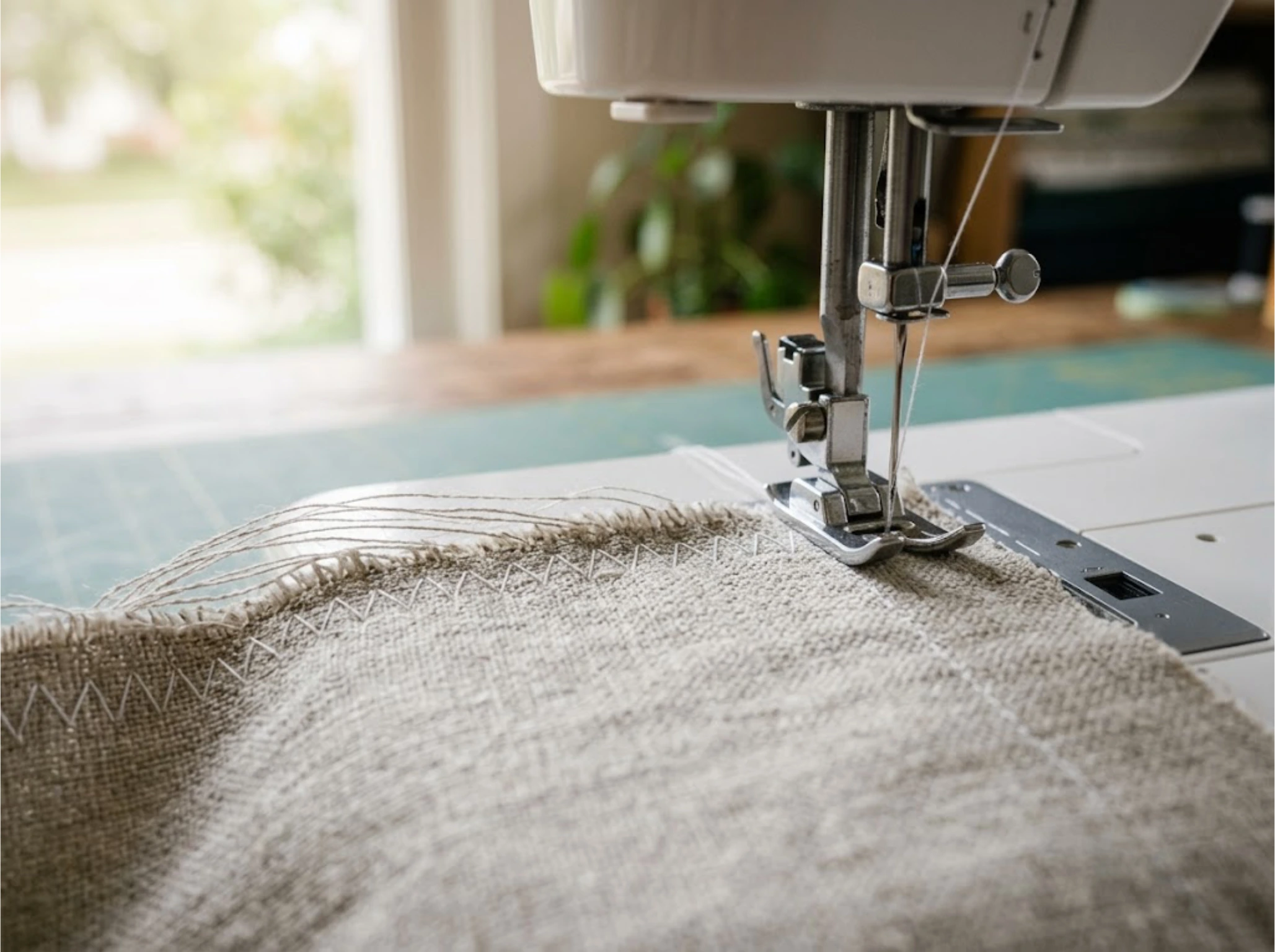
Before you sew anything, run a zigzag stitch or serger along every cut edge of both pattern pieces. This stops the fraying before it spreads into your seam allowance and pulls your hemline crooked later.
Step 2: Sew the crotch seams.
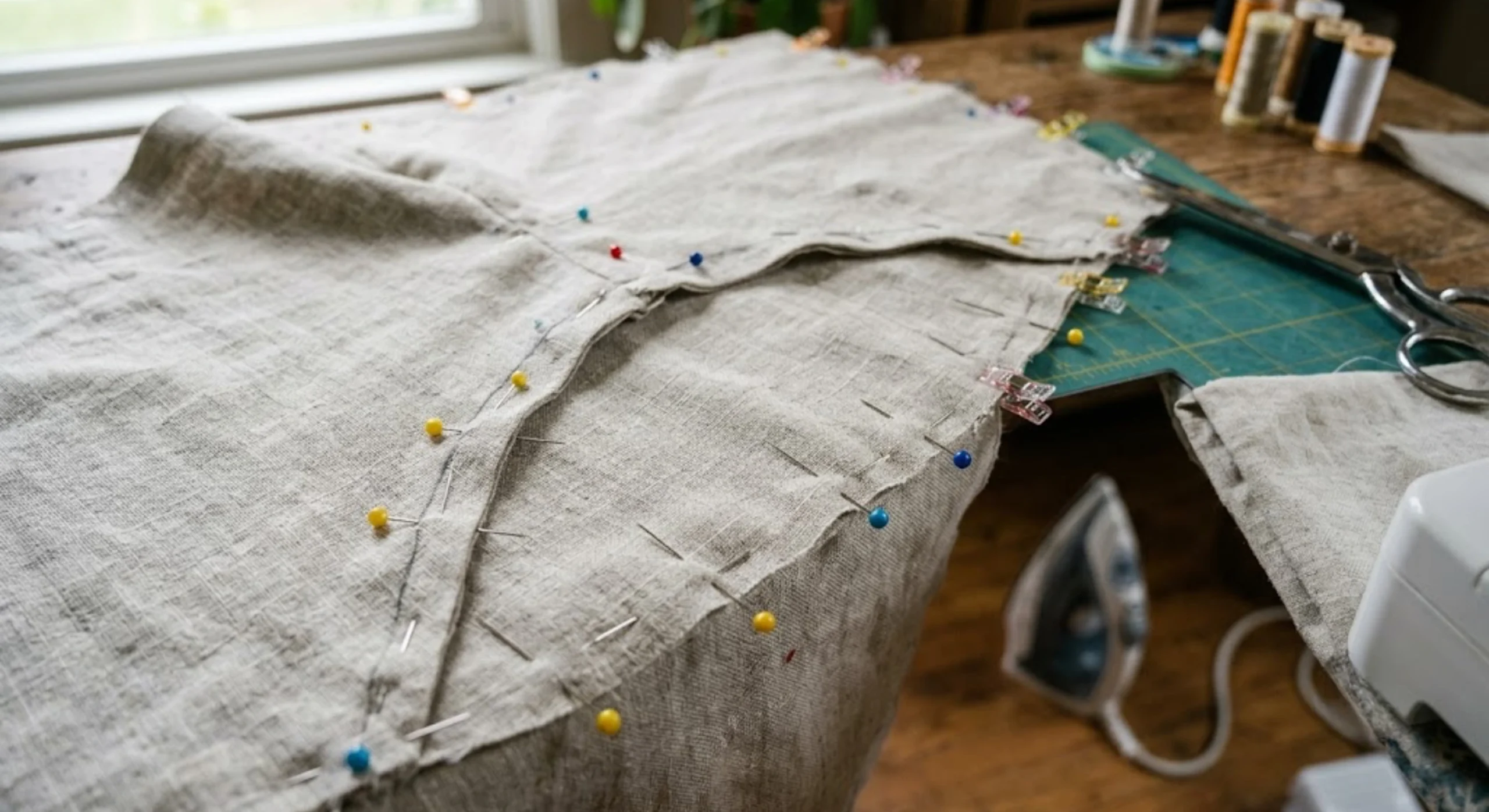
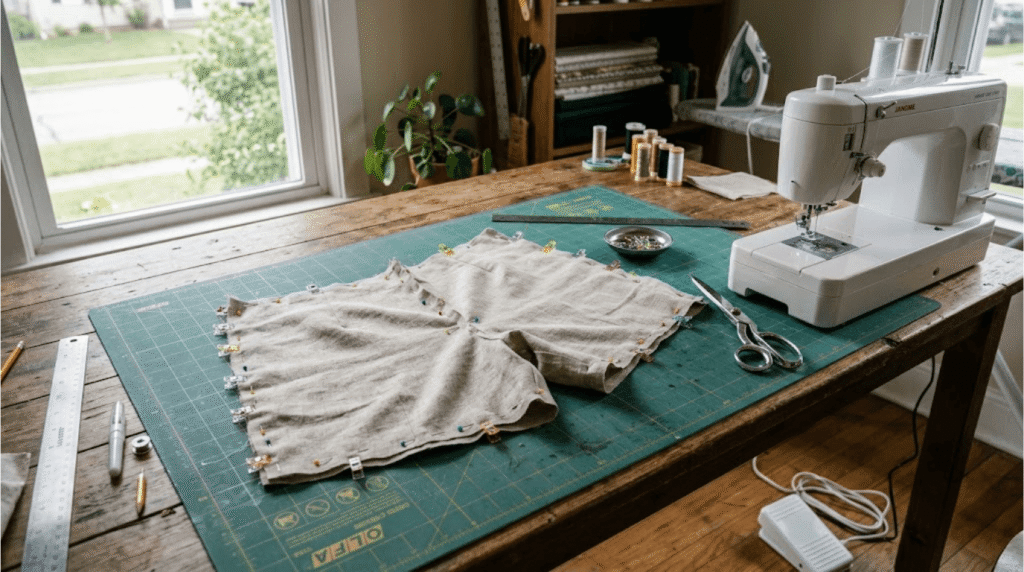
With right sides together, pin and sew the front pieces along the curved crotch seam. Repeat for the back pieces. Press each seam open before moving to the next step.
Step 3: Sew the inseam.
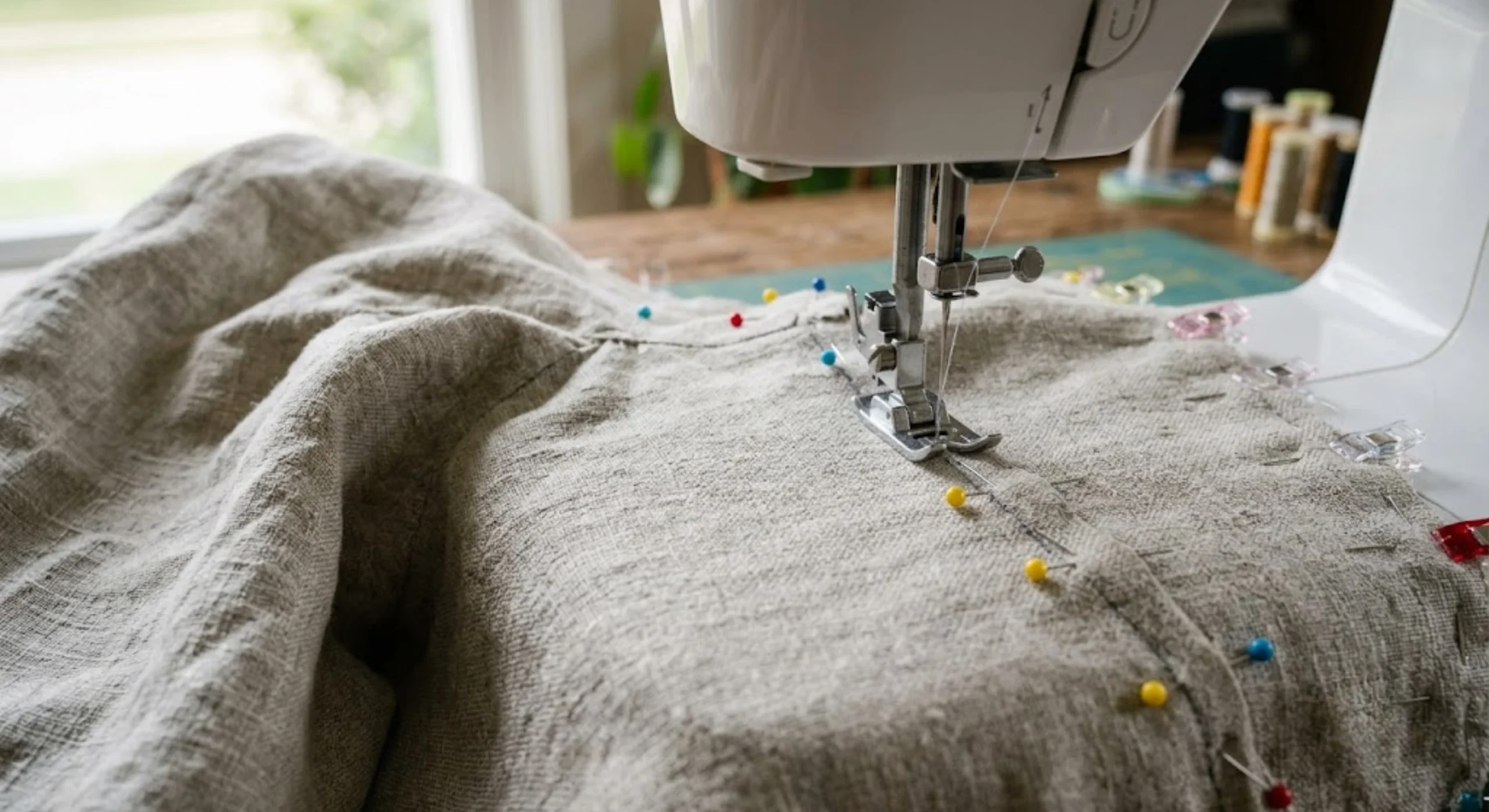
Open the front and back pieces so the crotch seams line up, right sides together. Sew from one leg opening, through the crotch, to the other leg opening in one continuous seam. Press the seam to one side.
Step 4: Build the elastic casing.
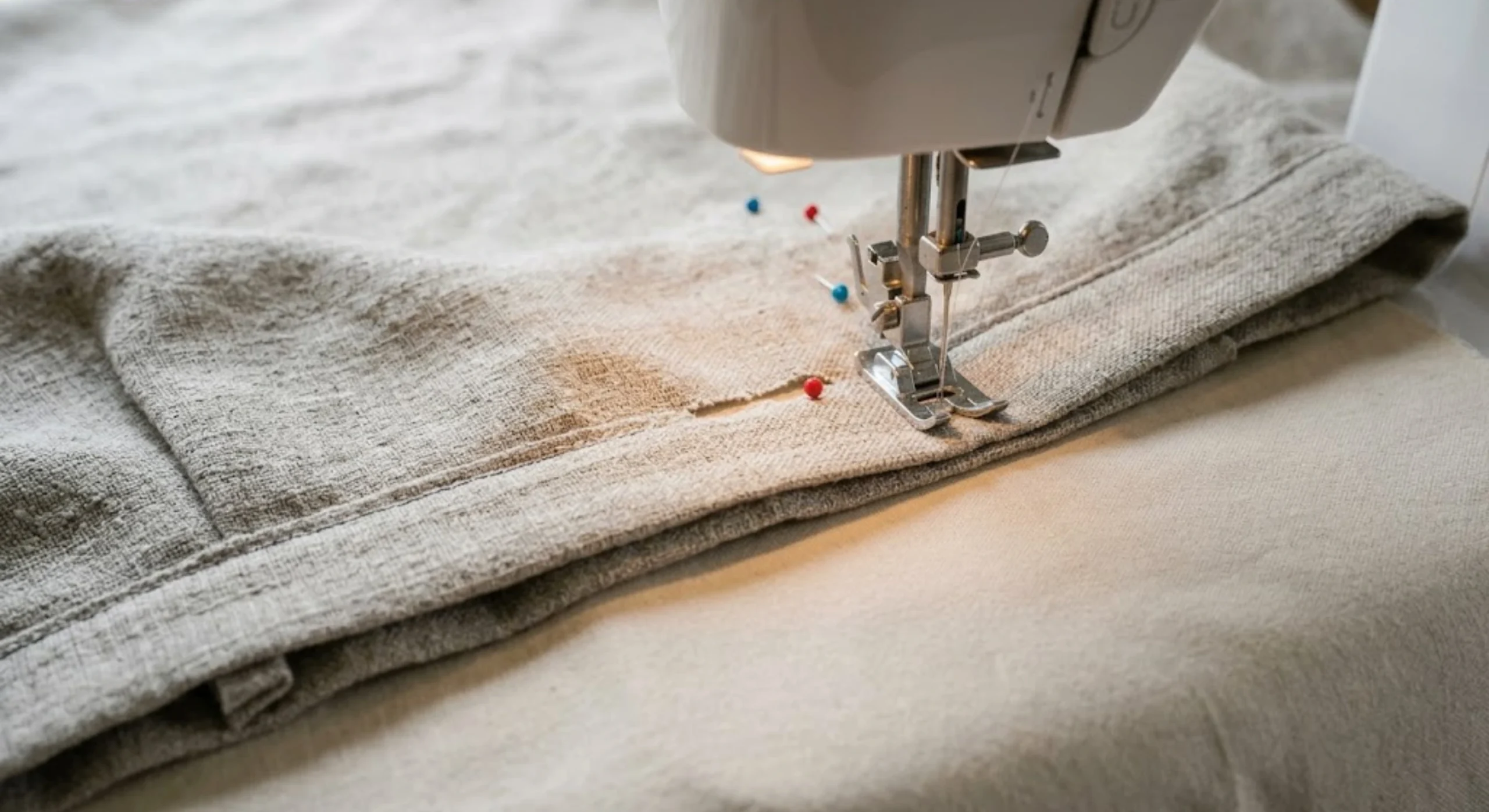
Fold the top edge of the shorts a quarter inch toward the inside and press. Fold again, one to one and a half inches down, and press. Stitch along the lower fold, leaving a two-inch gap to thread the elastic through.
Step 5: Thread and secure the elastic.
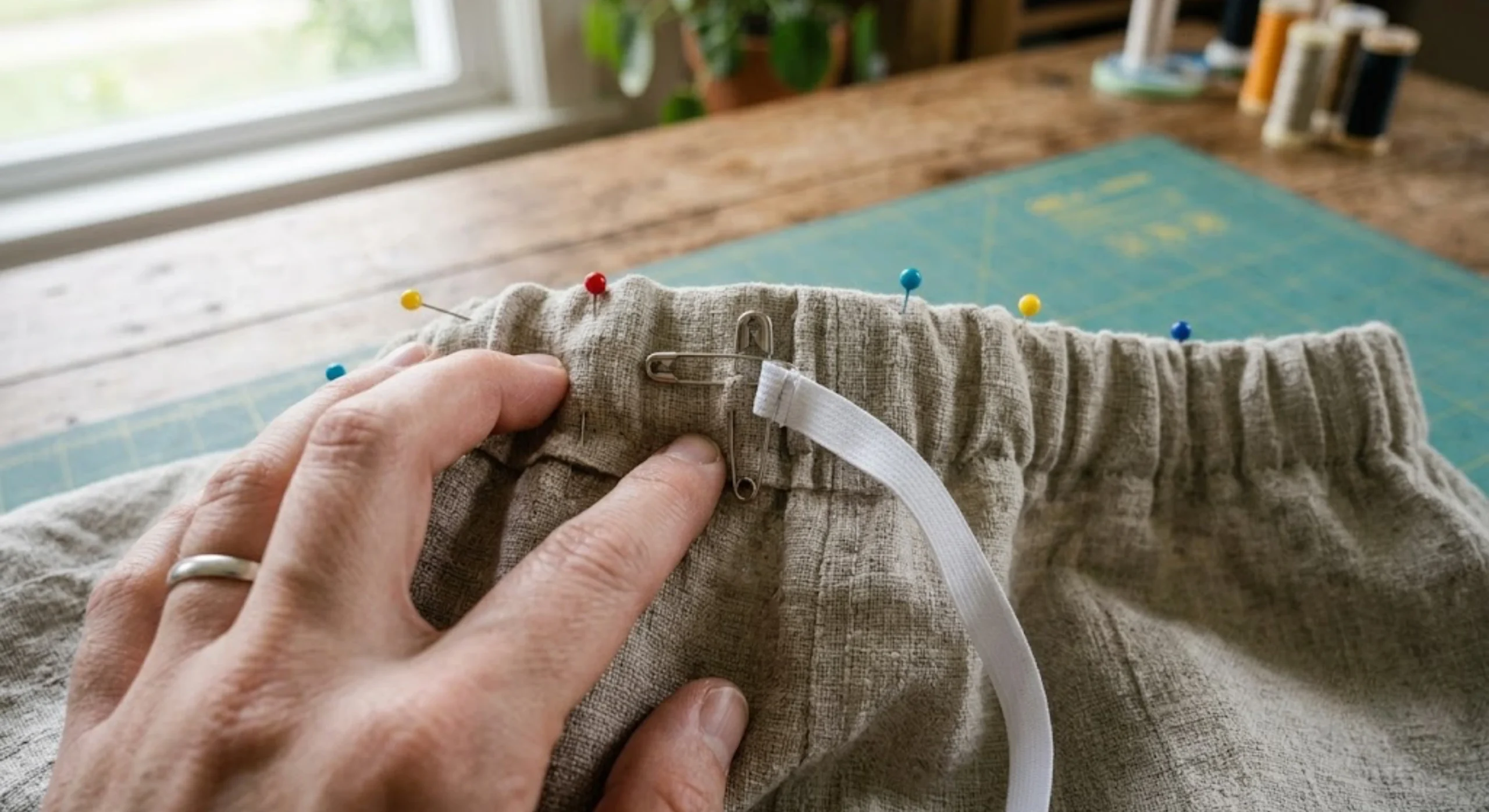
Attach a safety pin to one end of your elastic and feed it through the casing. Overlap the ends by an inch, stitch them together securely, and let the elastic pull back inside the casing.
Step 6: Close the gap and hem.
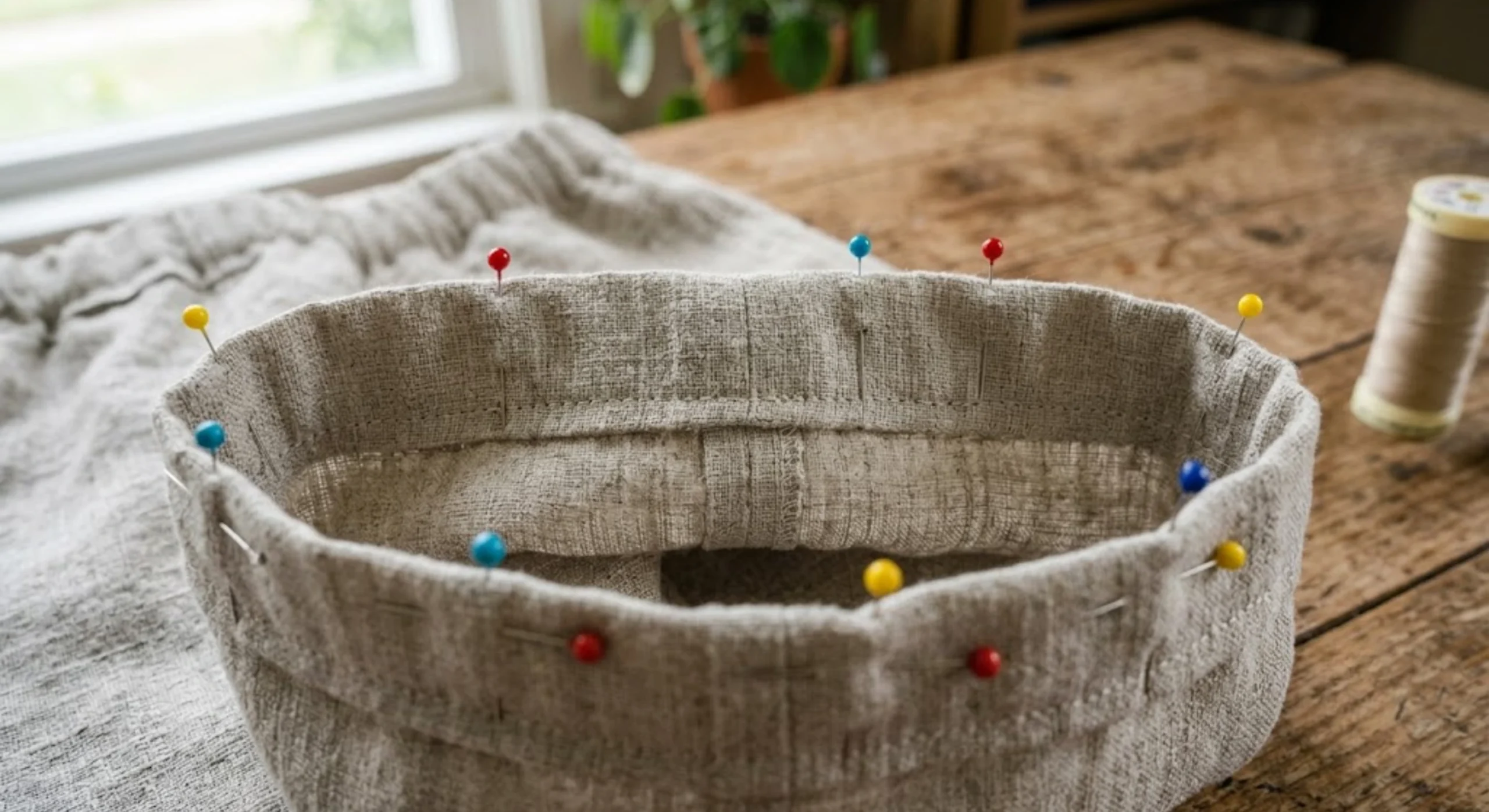
Stitch the small gap in the waistband closed. Then fold the bottom of each leg a quarter inch toward the inside twice, press, and stitch down the second fold.
How Do You Keep Kids’ Linen Shorts From Fraying After Washing?
If you own a serger, finish every edge before construction; if you don’t, a french seam encloses the raw edge just as well. That’s the whole decision tree.
If you’ve already sewn a pair and the seams are fraying now, don’t scrap them. Run a zigzag stitch a quarter inch inside the existing seam line to catch the loose threads, then trim close to the new stitching. Our seam finishing without a serger guide walks through the full repair if you want more detail than fits here.

- Ideal for cutting a zigzag pattern along a fabric edge to limit the length of frayed threads, preventing unraveling and keeping projects crisp and clean
- Extended lower blade helps lift fabric for precise cuts
- High-grade, precision-ground, stainless-steel blades offer a lasting sharp edge that cuts all the way to the tip
- Length: 8 inch
- Lifetime warranty
Sew a Pair That Actually Survives Summer
Simple linen shorts teach you one thing well: a straight seam and an elastic casing, done right, on a fabric that’s genuinely a little harder to control than cotton. That’s a real first win, not a padded one. Once you’ve made a pair, our kids’ clothing patterns hub has the next project waiting.
Download the Full Pattern and Instruction Sheet Grab the printable step-by-step guide with the full-size pattern pieces, cutting layout, and every step in this tutorial in one downloadable sheet you can keep at your machine.
Check this video from Kenjah Crafts.
Frequently Asked Questions
-
What size elastic works best for kids’ shorts?
Use 1-inch wide elastic for most kids’ sizes; it holds the waistband shape without digging in. Cut the elastic 2 to 3 inches shorter than the child’s waist measurement so it stays snug. Test the fit before sewing the elastic ends together.
-
Can I use cotton instead of linen for this pattern?
Yes. Cotton poplin works with the same pattern and steps, and it frays less than linen, making it a good substitute for a first-time sewist. Linen breathes better in hot weather, so it depends on your priority: ease of sewing or summer comfort.
-
Do I need a serger to sew linen shorts?
No. A french seam or a zigzag stitch along raw edges finishes linen just as well as a serger for a kids’ garment. It takes a little more time by hand at the machine, but no extra equipment purchase is required.
-
How much fabric do I need for kids’ linen shorts?
Yardage depends on size, but most kids’ shorts under size 6 need less than a yard of 44-inch-wide linen. Always buy a little extra to allow for pre-wash shrinkage, since linen shrinks more than cotton in the first wash.
-
Why is my linen fraying so much while I sew?
Linen frays because of its loose weave, not because of a mistake you made. Finish every raw edge with a zigzag stitch or serger immediately after cutting, before you start construction, to stop fraying before it spreads into your seam allowance.
-
What age is this shorts pattern appropriate for?
This simple elastic-waist pattern works for toddler through early elementary sizes, since the two-piece construction and elastic casing scale easily across sizes. It is not fitted, so it also suits kids between sizes or growth spurts.
-
Is this really a good pattern for a total beginner?
Yes. It teaches one core skill set, straight seams and an elastic casing, without darts, zippers, or fitted shaping. Most beginners finish a pair in under two hours, making it a realistic first garment rather than an aspirational one.
Why did you vote that way? Drop your take in the comments.