Fast Facts
A wardrobe capsule plan for 2026 covers 10 to 14 sewn pieces across four categories: tops, bottoms, a transitional layer, and one occasion item. Beginners should start with one flat-seam, elastic-waist garment in Month 1 before adding fitted bodice work in Month 3. Budget $15 to $25 per yard for mid-range fabric and 2 to 4 yards per piece. Most sewists complete a functional capsule in 10 to 12 months, with one to two projects per month.
Table of Contents
- What Does a Wardrobe Capsule Plan Actually Include?
- How Many Pieces Does a First-Year Wardrobe Capsule Plan Actually Need?
- Which Patterns Should You Sew in Month 1, Month 3, and Month 6?
- Which Fabrics Work Best for a Handmade Wardrobe Capsule Plan?
- What Does a Handmade Wardrobe Actually Cost?
- What Sewing Skills Do You Need Before Starting This Plan?
- What Do You Do When a Garment Does Not Fit?
- How Do You Build a Monthly Completion Rhythm That Actually Holds?
- FAQs
The goal was simple: sew a complete wardrobe by December. By April, the fabric is still in the bag.
The problem is not motivation. It is not a skill. It is the absence of a sequenced plan. A wardrobe capsule plan is not a pattern wish list, a fabric haul, or a mood board. It is a construction schedule, a fabric budget, and a skill sequence built together before the first cut.
One maker described the aspiration directly: “My clothes look store-bought, and people actually ask where I got them. That is the ultimate compliment.” (PatternReview.com)
That result is achievable. This is the framework.
What Does a Wardrobe Capsule Plan Actually Include?

A wardrobe capsule plan starts with a style audit, not a shopping cart.
Before any pattern enters the plan, define your wardrobe in three adjectives. Relaxed, structured, layered. Classic, minimal, warm. Whatever three words describe the clothes you actually reach for on a regular Tuesday. Every pattern proposed for the plan gets tested against those three words before purchase. If a pattern fails the test, it comes off the list.
The second gate is a color palette constraint. Every piece in the plan must coordinate with at least two others before any fabric is purchased. Single-project fabric buys that do not connect to the rest of the wardrobe produce a closet of beautiful orphans that never get worn together.
A functional wardrobe capsule plan for 2026 covers four categories:
- Tops (3 pieces)
- Bottoms (3 pieces)
- Transitional layers (2 pieces)
- One dress, jumpsuit, or occasion item (1 to 2 pieces)
That puts the target between 10 and 14 pieces total. Set a one-week time limit on the audit. Planning without a deadline becomes the project.
How Many Pieces Does a First-Year Wardrobe Capsule Plan Actually Need?
Ten pieces. Not twenty-six.
Most sewists at beginner to intermediate level complete 8 to 14 garments per year when working consistently at one to two projects per month. A 26-pattern wardrobe capsule plan set in January produces guilt by June, not garments.
The most functional first-year plan looks like this: three coordinating tops, three bottoms that work across all three tops, two layering pieces, one dress or jumpsuit, and one occasion item. Ten pieces that all coordinate constitute a wardrobe. Twenty pieces that do not coordinate do not.
Set a number you can exceed. A plan you beat feels different from a plan you abandon.
Which Patterns Should You Sew in Month 1, Month 3, and Month 6?
The sequencing of which piece you make first determines whether your wardrobe capsule plan survives February.
Months 1 and 2: The Guaranteed Finish
Choose the simplest pattern in the plan. Not the one you most want to wear. The one that can be finished in a weekend with no new skills required.
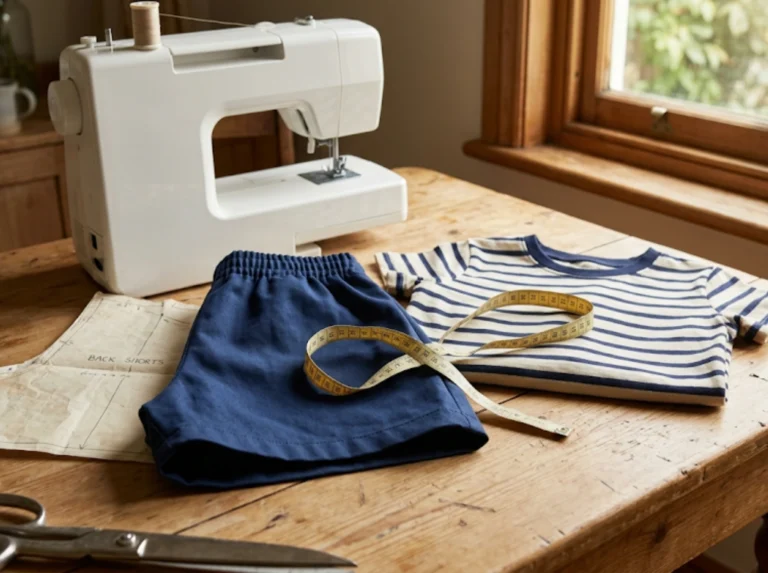
Construction profile: flat seams, elastic waist or drawstring closure, no zipper, no set-in sleeve. An elastic-waist skirt, wide-leg pull-on pants, or boxy tee fits this profile. Pattern ranges such as Tilly and the Buttons beginner titles and Simplicity’s Learn to Sew line are well-documented starting points at this stage.
This project is not for the wardrobe. It is for the sewist. The win is the finish.
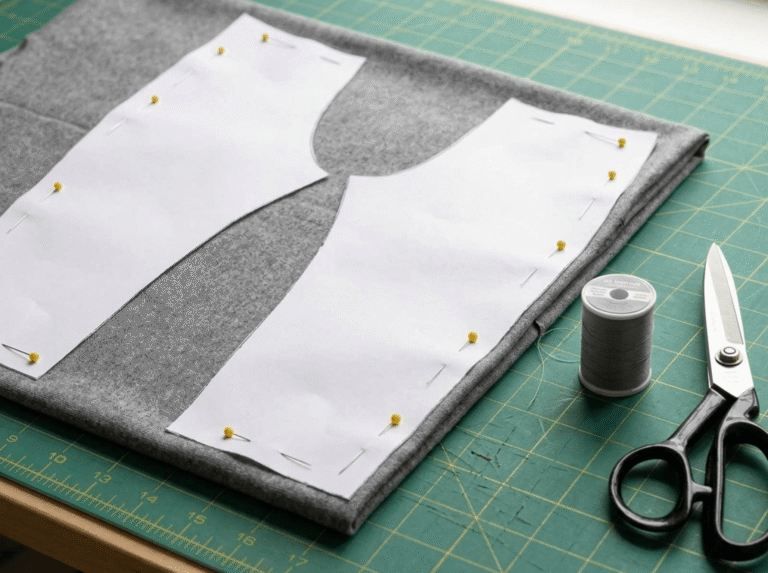
Step 1: Cut and Mark Before Sitting at the Machine

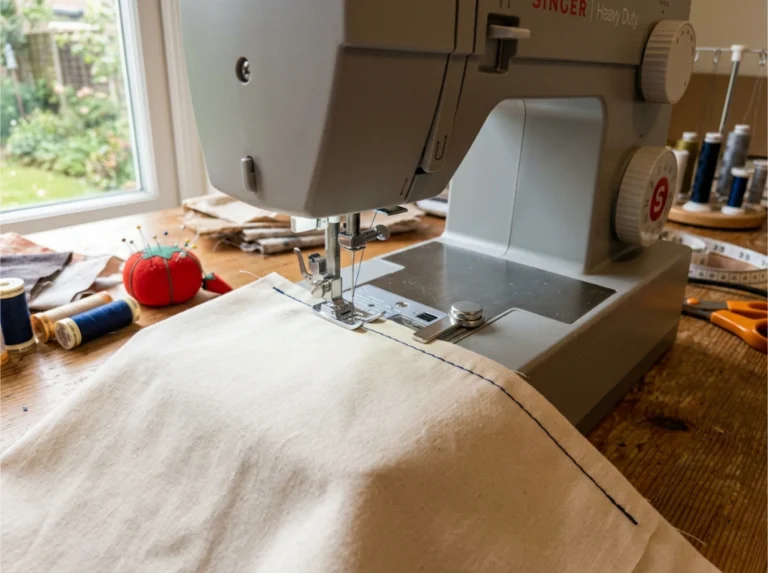
Cut all pattern pieces and transfer all markings before sitting at the machine. Prep interruptions during construction are the most common source of avoidable sewing errors.
Step 2: Sew Each Seam Directionally
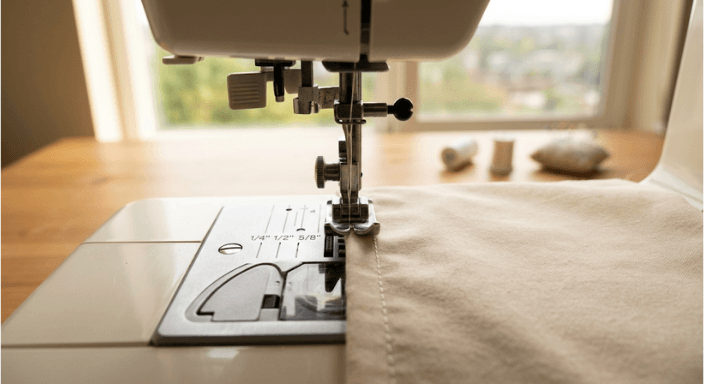
Sew each main seam directionally, working with the grain rather than against it, to prevent bias distortion in lightweight fabrics.
Months 3 to 5: First Fitted Piece
Add one bodice-fitted item after two completions are confirmed. A-line dresses, button-front shirts with band collars, and relaxed blazer shells are appropriate at this stage.
For any bodice-fitted piece: select the pattern size by your high bust measurement, not your full bust measurement. If the difference between the two is more than 1.5 inches, a full bust adjustment is needed before cutting the final fabric. This applies to every cup size and regardless of the number on the envelope.
Step 3: Make a Muslin Before Cutting Final Fabric
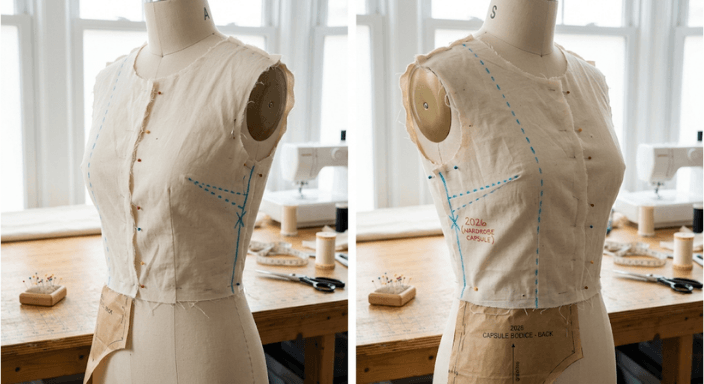
Make a muslin in an inexpensive woven fabric before cutting into the final material for any bodice-fitted piece. Mark all fitting corrections in a contrasting color before transferring adjustments to the pattern. Never correct the pattern directly from a pinned fit.
Month 6 Onward: Earned Complexity
One structurally complex piece per month earns its slot after completions are banked. Set-in sleeves, welt pockets, and tailored collars belong in this phase. They do not belong in Month 1.
No products found.
Which Fabrics Work Best for a Handmade Wardrobe Capsule Plan?
Fabric selection is not an aesthetic decision. It is a construction decision. The fiber content and weave structure of each piece determine which seam finish to use, how much pressing is required, and how much fit tolerance the fabric will absorb before the garment reads as poorly made. Choosing the wrong fabric for your current skill level is one of the fastest ways to stall a wardrobe capsule plan before March.
- Cotton Wovens
Cotton is the most forgiving entry point in a wardrobe capsule plan. It is dimensionally stable, presses flat without special equipment, and holds seam allowances without distortion. Quilting cotton is too stiff for most garments, but shirting cotton, chambray, and lightweight canvas are well-suited to the apparel categories in this plan.
Best for: Month 1 and 2 projects, structured tops, and bottoms.
Price range: $8 to $18 per yard.
Care note: Pre-wash and machine dry before cutting to account for shrinkage. Cotton can lose 3 to 5 percent of its length in the first wash. - Ponte
Ponte is a double-knit with minimal stretch that is widely regarded as the most beginner-friendly fabric in a wardrobe capsule plan. It does not fray, holds its shape through multiple wears, and masks small fit errors more effectively than a rigid woven. It is also one of the few fabrics that works equally well for pull-on pants, straight skirts, and structured tops, making it a reliable choice across multiple capsule categories.
Best for: Bottoms and basic tops, Month 2 onward.
Price range: $10 to $18 per yard.
Care note: Hand wash or cold machine wash to prevent pilling. Avoid high heat in the dryer. - Linen
Linen is appropriate starting in Month 3, not Month 1. It frays aggressively at cut edges and requires proper seam finishing before the garment holds up to wear. It also demands pressing at every construction stage, and curved seams in linen will pucker permanently without a tailor’s ham. The payoff is substantial: linen drapes beautifully, breathes well in warm weather, and produces garments that look far more expensive than the per-yard price suggests.
Best for: Tops, dresses, and wide-leg pants once seam finishing and pressing habits are established.
Price range: $12 to $22 per yard.
Care note: Pre-wash in warm water and tumble dry to pre-shrink fully before cutting. Linen can shrink up to 10 percent in the first wash. - Woven Crepe and Suiting
Woven crepe and suiting fabrics belong in the Month 6 phase of a wardrobe capsule plan. They require directional cutting, careful pressing with a pressing cloth to prevent shine, and precise seam work because their structure does not hide construction errors. A jacket or tailored trousers sewn in suiting and properly finished is the kind of piece that makes a capsule wardrobe feel cohesive and purposeful rather than assembled.
Best for: Blazer shells, tailored trousers, and structured occasion pieces.
Price range: $20 to $35 per yard.
Care note: Press with a pressing cloth on medium-high heat. Always test on a swatch before pressing the garment piece. A shine mark on suiting is permanent.
What Does a Handmade Wardrobe Actually Cost?
A ten-piece wardrobe capsule plan in mid-range fabric costs $450 to $900 in fabric alone before patterns, notions, or tools. That number surprises sewists who have been doing the math with $5-per-yard clearance fabric in their heads.
Budget framework by category:
- Everyday basics (cotton, ponte): $10 to $18 per yard
- Linen and mid-range wovens: $12 to $22 per yard
- Statement fabrics (suiting, crepe): $20 to $35 per yard
- Lining and interfacing: $3 to $7 per yard
Yardage by piece type: roughly 2 yards for tops, 2.5 for bottoms, 3 to 4 for dresses and layers. Multiply planned pieces by estimated yardage before opening any fabric site. The budget is a planning constraint, not a starting point for negotiation.
One calculation worth running before any premium fabric purchase: a $30-per-yard fabric in a garment worn 50 times costs $0.60 per wear. The same fabric in a garment worn twice costs $15 per wear. The wardrobe capsule plan framework forces this math before the cut, not after the regret.
This article contains affiliate links. Purchases made through these links may earn a small commission at no additional cost to you. Sewing.com recommends only products that have been tested by our editorial team.
What Sewing Skills Do You Need Before Starting This Plan?
Four skills are required before the first project in any wardrobe capsule plan.
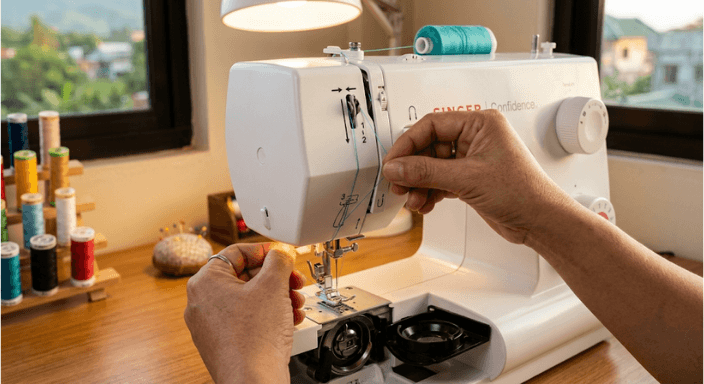
Step 4: Thread the Machine From Scratch
Thread the machine from scratch without a guide. This is the non-negotiable floor. Re-threading from scratch is also the first diagnostic step for every stitch problem that surfaces during the year.
Step 5: Diagnose Tension Before Sewing Any Project Piece
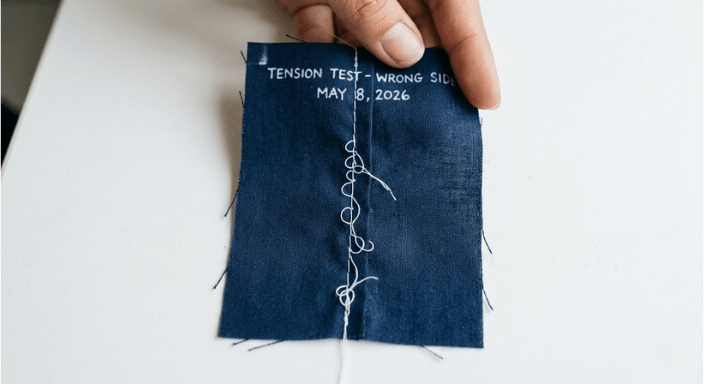
Sew a straight seam within 2mm of the intended line, press a seam flat using the right tool for the fabric weight, and diagnose a tension problem before any final fabric is cut. Loops on the underside of the fabric point to a top-tension or bobbin issue. Loops on the top surface point to top tension too tight.
Zipper installation, facing construction, and dart-making are Month 1 learning outcomes within the plan. There are no entry requirements before it begins.
“Maybe I’m just not talented.” (Reddit, r/sewing)
That is the most common thought at the seam ripper moment. In most cases, it is a machine problem misidentified as a skill problem. Re-thread from scratch before concluding anything else. That single step resolves roughly 40 percent of reported stitch problems.
What Do You Do When a Garment Does Not Fit?
Fit problems in a wardrobe capsule plan fall into four categories. Each has a specific diagnostic step and a targeted fix that does not require starting the project from scratch.
- Pulling at the chest: The pattern was sized by full bust rather than high bust. The fix is a full bust adjustment before re-cutting. Select size by high bust measurement and add cup-size volume at the bust curve only. This adjustment applies regardless of the number on the pattern envelope and regardless of the body type or size range involved.
- Gaping at the back neckline: This typically indicates a swayback adjustment is needed. The fix is a horizontal tuck across the back bodice at the waist, usually 0.5 to 1 inch deep. Mark the correction on the pattern before cutting the next version so the fix carries forward.
- Pulling across the hips: Check the side seam angle first. If the seam pulls toward the front, the fix is adding width at the front hip only, not at both seams equally. Sizing up the entire pattern to address a hip-to-waist differential will introduce excess fabric elsewhere and create a new set of problems.
- Sleeves too tight at the bicep: Add width at the underarm point of the sleeve cap and taper back to the original cutting line by the elbow. This is a width correction, not a length correction. Adding sleeve length when the problem is circumference will not resolve the restriction.
Each of these fixes costs one muslin and one re-cut. Neither costs a ruined yard of final fabric. Making a muslin before cutting into any statement piece is not caution for its own sake. It is the most direct path through a wardrobe capsule plan because it removes fit failure as a source of wasted material and abandoned projects.
How Do You Build a Monthly Completion Rhythm That Actually Holds?
One guaranteed finish per month, minimum. One stretch project per month, optional.
The guaranteed finish is non-negotiable. It is chosen at the start of each month based on available hours, not ambition. The stretch project is abandoned without penalty if life intervenes. Protecting the guaranteed finish is a habit. Everything else is a bonus.
Time reality for planning: a beginner garment takes 4 to 8 hours of active construction. A complex fitted piece takes 12 to 20 hours. Map monthly projects against actual available hours in that specific month before committing to the plan.
The wear-test gate: a finished garment does not count toward the wardrobe capsule plan until it has been worn outside the house at least once. This is diagnostic, not punitive. A garment you will not wear has a fit or design problem that is less expensive to identify now than to accept permanently.
Download the free 2026 Wardrobe Sewing Planner below. It includes a pattern tracker with skill-level tags, a fabric budget calculator by garment category, and a monthly completion checklist for the full year.


Your Wardrobe Capsule Plan Starts With One Finish, Not Ten
Do the style audit before touching a pattern. Sequence the first two months around guaranteed finishes, not aspirational ones. Escalate complexity only after completions are confirmed.
The plan is not the hard part. The third Tuesday in February, when the fabric is on the table and the motivation is not, is the hard part. A sequenced wardrobe capsule plan exists for that Tuesday. It removes the decision. You already know what you are making, what skills it requires, and how long it will take.
Start with one finish. The wardrobe follows.
[Download the free 2026 Wardrobe Sewing Planner] (pattern tracker, fabric budget worksheet, monthly checklist included)
Building a quilt project alongside the wardrobe this year? Grab the Jelly Roll Quilt guide here.
Frequently Asked Questions
-
How many pieces do you actually need for a handmade capsule wardrobe?
A ten to fourteen-piece wardrobe capsule plan is the most functional range for a first year. That typically means three tops, three bottoms, two layering pieces, one dress or jumpsuit, and one occasion item. Fewer than ten leaves have coverage gaps. More than fourteen strains, a realistic annual completion schedule for most sewists at one to two projects per month.
-
What are the best beginner sewing patterns for building a capsule wardrobe?
Start with patterns that use flat seams and elastic or drawstring closures. Elastic-waist skirts, wide-leg pull-on pants, and boxy tops from Tilly and the Buttons or Simplicity’s beginner range are well-documented starting points. Choose the pattern that can be finished in a weekend without new skills, not the one you most want to wear.
-
How much should I budget for fabric to sew a complete wardrobe?
A ten-piece wardrobe capsule plan in mid-range fabric costs $450 to $900 in fabric before patterns and notions. Budget $10 to $18 per yard for everyday fabrics and $20 to $35 for statement pieces. Calculate yardage per piece, roughly 2 yards for tops and 3 for dresses, and multiply by planned pieces before browsing any fabric retailer.
-
How long does it realistically take to sew a complete wardrobe?
Most sewists at beginner to intermediate level finish 8 to 14 garments per year, with one to two projects per month. A beginner garment requires 4 to 8 hours of active construction; a fitted piece takes 12 to 20. A ten-piece wardrobe capsule plan at that pace takes 10 to 12 months. Plan the year, not the weekend.
-
What sewing skills do I need before starting a wardrobe capsule plan?
Four skills are required: thread the machine from scratch, sew a straight seam within 2mm, press a seam flat, and identify a tension problem by where loops appear. Zipper installation, facing construction, and dart-making are Month 1 learning outcomes within the plan, not entry requirements before it begins.
-
What if I fall behind my wardrobe sewing plan by mid-year?
Drop the stretch projects and protect the guaranteed finishes. One completed garment per month keeps the wardrobe capsule plan viable, and two consecutive months of zero completions typically end the plan. Audit the cause: projects too complex, hours too few, or motivation too low. The fix for the first two is re-sequencing to a simpler project; the fix for the third is a faster win.
-
Can I include ready-to-wear pieces in a handmade capsule wardrobe?
Yes. A functional wardrobe capsule plan does not require every piece to be handmade. RTW basics, altered thrift finds, and sewn pieces can coexist in the same capsule as long as they coordinate within the defined color palette. The goal is a wardrobe you actually wear, not a proof-of-skill inventory.
Why did you vote that way? Drop your take in the comments.