
Quick Summary: Walking Foot Attachment for Quilting Thick Layers
- A walking foot attachment for quilting thick layers helps feed multiple layers of fabric evenly through your sewing machine.
- It uses a dual feed system that moves the top fabric at the same rate as the bottom layer.
- This prevents shifting, puckering, and uneven stitch lines when quilting bulky projects.
- A walking foot for thick fabric quilting works especially well with heavy batting and large quilts.
- It’s often considered the best sewing machine foot for quilting thick batting because it stabilizes multiple layers.
- Learning how to quilt thick layers with a walking foot improves stitch quality and makes quilting more manageable.
- Both beginner and experienced quilters benefit from using a walking foot when working with bulky quilt sandwiches.
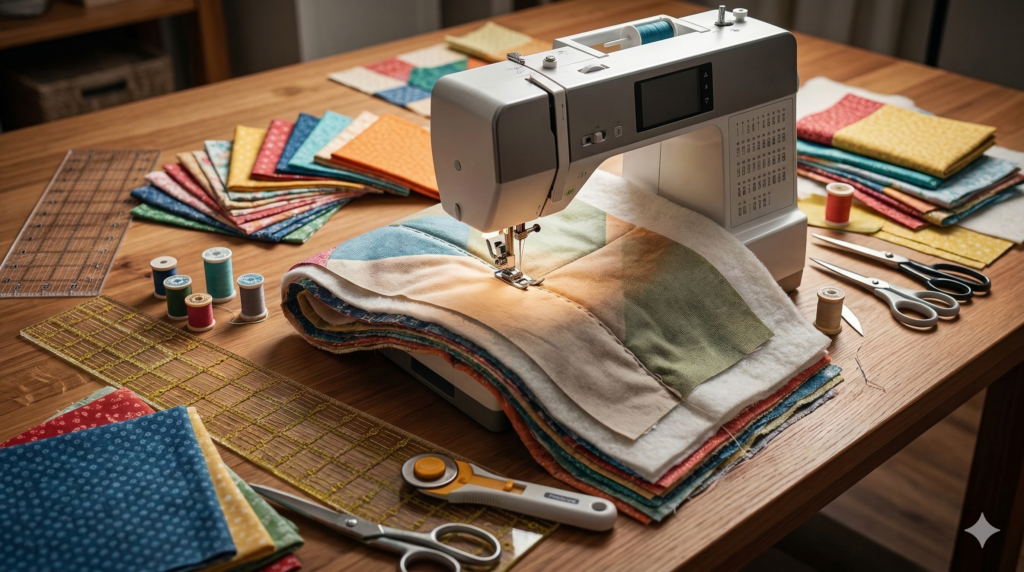
Quilting thick layers can quickly become frustrating if the fabric doesn’t feed evenly through the sewing machine. When you’re working with quilt tops, batting, and backing fabric, the layers often shift during stitching. This can cause puckering, uneven seams, and crooked quilting lines.
Many quilters struggle with bulky quilt sandwiches, especially when using thick batting or multiple fabric layers. Standard presser feet sometimes can’t move these layers smoothly. The top layer may lag while the bottom fabric feeds faster through the machine.
That’s where a walking foot attachment for quilting thick layers makes a huge difference. This specialized foot helps feed all quilt layers evenly, reducing shifting and improving stitch quality. A walking foot for thick fabric quilting gives you better control, cleaner lines, and a smoother quilting experience even when working with bulky materials.
What Is a Walking Foot Attachment?
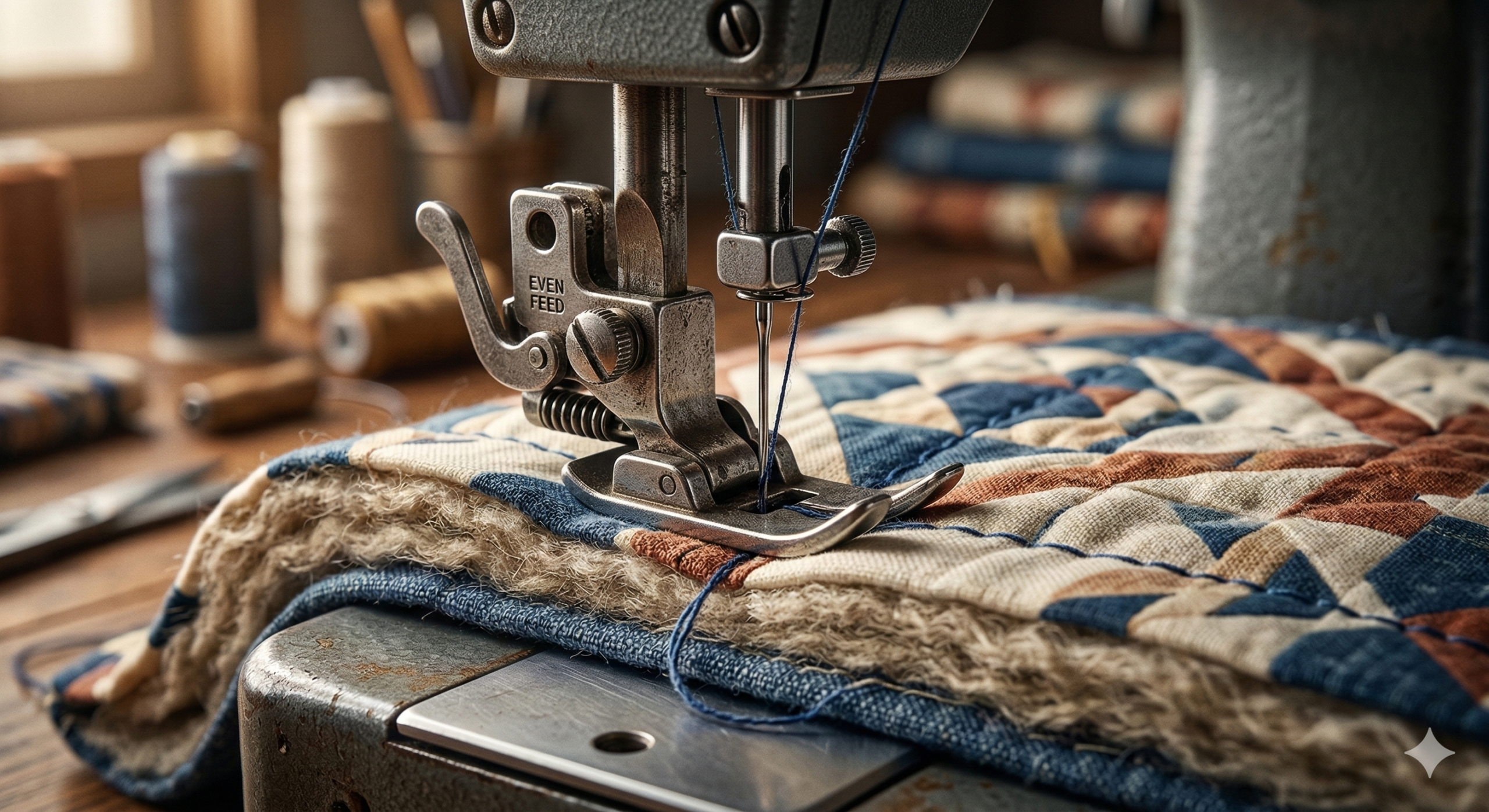
A walking foot is a sewing machine attachment designed to move multiple layers of fabric through the machine evenly. Unlike a regular presser foot, it has its own feed mechanism.
Most sewing machines have feed dogs underneath the fabric. These feed dogs move the fabric forward as you sew. However, they only grip the bottom layer. The top fabric layer can lag behind, especially when the project includes thick batting.
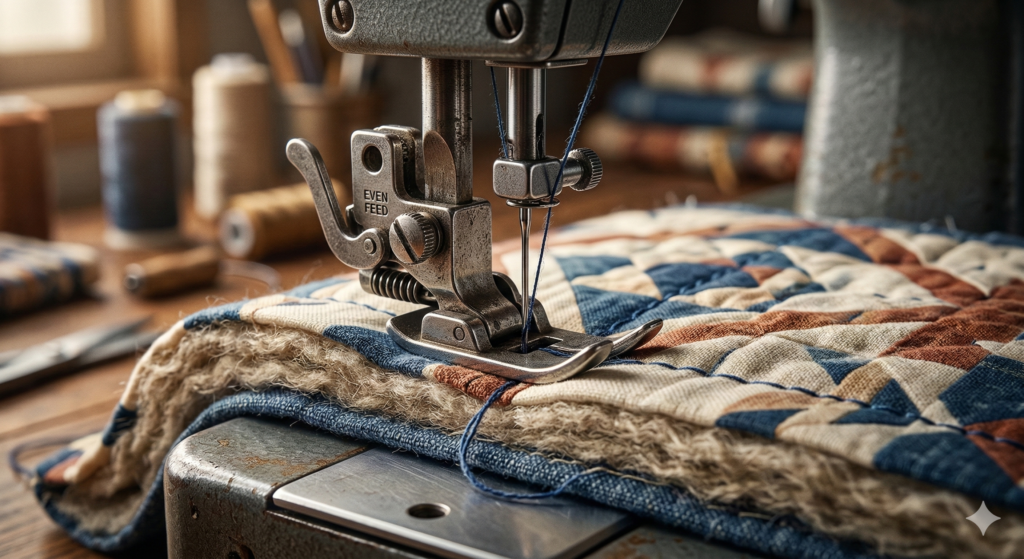
A walking foot solves this issue with a dual feed system. It includes small feed teeth that move the top layer of fabric in sync with the machine’s lower feed dogs. This creates even movement for all layers of the quilt sandwich.
The walking foot also attaches to the sewing machine needle bar. As the needle moves up and down, the walking foot gently steps forward with the fabric. This coordinated movement keeps thick quilt layers aligned.
Because of this design, a walking foot attachment works extremely well for quilting projects, layered fabrics, and bulky materials.
Why Quilting Thick Layers Is Challenging
Quilting thick layers isn’t just about sewing through fabric. You’re stitching through a combination of quilt top fabric, batting, and backing fabric. These layers behave differently as they move through the machine.
One common issue is fabric shifting. The bottom layer moves with the feed dogs while the top layer drags slightly behind. This creates uneven seams or distorted quilting patterns.
Batting thickness adds another challenge. Thick batting increases friction between layers. This can cause bunching or puckering, especially when quilting large sections.
Uneven feeding is another problem. When the fabric layers don’t move together, the stitching line may become wavy or inconsistent.
Skipped stitches can also occur when the machine struggles to penetrate thick areas of the quilt.
A walking foot for thick fabric quilting addresses these problems by keeping all layers moving together at the same pace.
Benefits of Using a Walking Foot for Thick Quilts
Using a walking foot dramatically improves quilting results when working with thick layers.
Even Fabric Feeding
The biggest benefit is consistent fabric movement. The walking foot grips the top layer while the feed dogs move the bottom layer. This prevents fabric from shifting out of alignment.
Smoother Stitch Lines
When fabric feeds evenly, stitch lines stay straight and consistent. This is especially helpful for straight-line quilting patterns.
Reduced Puckering
Puckering often occurs when one fabric layer moves faster than another. A walking foot keeps layers aligned and reduces tension differences between them.
Better Stitch Consistency
A walking foot helps maintain even stitch spacing, even when quilting across seams or bulky batting areas.
Because of these advantages, many quilters consider it the best sewing machine foot for quilting thick batting and heavy quilt sandwiches.
How to Quilt Thick Layers with a Walking Foot
Learning how to quilt thick layers with a walking foot isn’t complicated, but proper setup makes a big difference.
1. Prepare Your Quilt Sandwich
Start by layering your quilt top, batting, and backing fabric.
Smooth all layers carefully and remove wrinkles. Use quilting pins, spray adhesive, or basting stitches to hold everything together.
Good basting prevents shifting during quilting.
2. Attach the Walking Foot
Remove your standard presser foot.
Install the walking foot according to your sewing machine’s instructions. Make sure the foot arm sits above the needle clamp screw so it moves with the needle.
Secure the foot tightly before sewing.

- 【Perfect for Quilting & Thick Fabrics】 – This walking foot for Brother sewing machine ensures smooth, even fabric feeding, preventing layers from shifting—ideal for quilting, denim, leather, and multiple fabric layers
- 【Universal Compatibility】 – Designed for Brother sewing machines, this walking foot also works with select Singer, Janome, and other low-shank machines, making it a versatile sewing machine accessory
- 【1/4-Inch Guide & Free Motion Quilting】 – Features a 1/4-inch quilting guide for precise stitching and allows free-motion quilting, giving you professional results on garments, home decor, and craft projects
- 【Durable & Non-Slip Presser Foot】 – The heavy-duty presser foot provides superior grip, reducing fabric slippage while sewing thick materials like upholstery, canvas, or layered quilting projects
- 【Essential for DIY & Professionals】 – Whether you're a quilter, tailor, or DIY sewing enthusiast, this walking foot enhances stitch quality, making it a must-have sewing machine attachment for smooth, professional finishes
(As an Amazon Associate, we earn from qualifying purchases.)
3. Choose the Right Needle
Use a quilting needle or a size 90/14 needle for thicker projects. A stronger needle penetrates bulky layers more easily.

- SEWING MADE SIMPLE: SCHMETZ Universal Needles work with all home sewing machines and handle everything from delicate silks to heavy denim, making them perfect for any quilting, embroidery, craft, or home décor project
- CONVENIENT 1-NEEDLE SOLUTION: These all-purpose 80/12-sized needles handle a wide variety of materials, saving you time and effort in your sewing routine
- VERSATILITY & VALUE: This needle set delivers reliable performance across many fabrics, offering great value for your sewing kit
- READY FOR EVERY CHALLENGE: These needles are built for the long haul, tackling even the toughest sewing projects with ease, and delivering professional-quality results on woven and knit fabric
- SNAG & DAMAGE-RESISTANT: With a slightly rounded point, these needles glide through woven and knit fabrics without snagging, making them perfect for both beginners and complex projects
(As an Amazon Associate, we earn from qualifying purchases.)
4. Adjust Stitch Length
Increase the stitch length slightly. A length of 3.0 to 3.5 works well for most quilt projects.
Longer stitches help the machine move thick layers smoothly.
5. Start Quilting
Begin quilting from the center of the quilt and work outward.
This prevents fabric buildup in the middle of the quilt.
6. Guide the Quilt Gently
Support the quilt with your hands, but don’t pull it through the machine.
Let the walking foot and feed dogs do the work.
7. Quilt in Sections
Large quilts can feel heavy. Roll or fold sections of the quilt to keep the area around the needle manageable.
This helps maintain smooth feeding during stitching.
Tips for Better Results When Quilting Thick Layers
Even with the right tools, technique matters when quilting thick projects.
Use the Correct Needle
A quilting needle or universal needle size 90/14 works well for thick quilt layers.
Change the needle regularly to prevent skipped stitches.
Adjust Thread Tension
Test tension on a scrap quilt sandwich first. Balanced tension prevents loops or puckering.
Choose Quality Batting
Some batting materials are easier to quilt than others. Cotton or cotton-blend batting often feeds more smoothly than very fluffy polyester batting.

- 【Exquisite Quilt Cotton Balls】- Crafted from 100% cotton batting, our quilt cotton balls offer a natural softness and warmth that enhances the comfort of your quilts. The cotton is fluffy and resistant to tearing, making it ideal for quilting projects.
- 【Washing Instructions】- Avoid pre-washing the batting before quilting. After finishing your quilt, wash it in a large washing machine with cold water and a small amount of liquid soap. Tumble dry on low heat and then place the quilt in the sun to dry thoroughly. Initially, the batting may appear thin and less soft due to compression packaging. You can quilt at this stage or pat the batting to restore its fluffy and soft appearance.
- 【Dimensions】- Our cotton batting is available in multiple sizes: 47×59 inches, 59x79 inches, 71x79 inches, and 79x91 inches. These large sizes are perfect for crafting quilts, pot holders, wearable art, and other projects.
- 【High-quality Cotton Batting for Quilts】- Our dense cotton pads do not require disassembly and can be washed after quilting. This ensures that your bedding products have evenly distributed cotton, providing superior comfort and durability.
- 【Ease of Use】 - Our cotton batting is designed for easy cutting and layering. The flat and even texture allows you to cut it to your desired size without worrying about uneven tearing or poor distribution.
(As an Amazon Associate, we earn from qualifying purchases.)
Slow Your Sewing Speed
Thick quilts require slower stitching speeds. This gives the walking foot time to feed layers evenly.
Support the Quilt
Place the quilt on a table or sewing extension surface. Supporting the quilt reduces drag and improves stitch control.
Common Mistakes to Avoid
Avoiding a few common mistakes can improve your quilting results.
Pulling the Quilt While Sewing
Pulling the quilt can cause uneven stitches or even damage the needle.
Let the walking foot move the fabric naturally.
Incorrect Foot Installation
If the walking foot arm isn’t positioned correctly on the needle clamp, the feeding motion won’t work properly.
Always double check installation.
Using Very Short Stitches
Short stitches can cause fabric bunching when quilting thick layers.
Use a slightly longer stitch length.
Skipping Test Stitches
Always test your machine settings on scrap fabric before quilting your actual project.
This helps you adjust tension and stitch length.
When Should You Use a Walking Foot Instead of Other Feet?
Different sewing machine feet serve different quilting purposes.
Walking Foot vs Free Motion Foot
A free motion quilting foot allows you to move the quilt freely in any direction.
This technique is great for decorative quilting designs. However, it requires practice and control.
A walking foot attachment for quilting thick layers is better for straight-line quilting and evenly spaced patterns.
Walking Foot vs Standard Presser Foot
A standard presser foot works well for simple sewing tasks but struggles with multiple quilt layers.
When quilting thick batting or bulky seams, a walking foot provides better fabric control.
For projects with thick batting or large quilt sandwiches, the walking foot is often the more reliable choice.
Final Thoughts
Quilting thick layers becomes much easier when you use the right tools. A walking foot attachment for quilting thick layers helps keep fabric layers aligned while feeding them smoothly through the sewing machine.
By using a walking foot, quilters can reduce puckering, maintain even stitch lines, and handle bulky quilt sandwiches with greater confidence.
It’s especially useful when working with thick batting or large quilts that would otherwise shift during stitching.
Once you learn how to quilt thick layers with a walking foot, the quilting process becomes more predictable and enjoyable. With proper setup, careful guidance, and a little practice, even bulky quilts can produce beautiful, professional-looking results.
FAQs: Walking Foot Attachment for Quilting Thick Layers
Do all sewing machines support walking feet?
Most domestic sewing machines support walking feet, but you should check compatibility with your specific model.
Can beginners use a walking foot?
Yes, beginners can easily use a walking foot because it simplifies fabric feeding and reduces quilting mistakes.
Is a walking foot necessary for thick quilts?
It’s not mandatory, but a walking foot makes quilting thick layers much easier and more consistent.
What stitch length works best for thick quilting?
A stitch length between 3.0 and 3.5 usually works well for quilting thick layers.
Can you quilt straight lines with a walking foot?
Yes, walking feet are excellent for straight-line quilting patterns.
What needle works best for thick quilt layers?
A quilting needle or size 90/14 needle works well for thick quilt layers.
Is a walking foot better than free motion quilting?
Neither is better overall, but a walking foot is easier for straight-line quilting and thick quilt sandwiches.