
Not affiliated with or endorsed by Madewell. “Inspired by” refers to silhouette and styling only.
Quick Look
This guide shows how to sew a Madewell-inspired denim jacket using a boxy, oversized silhouette, flat-felled seams, and classic topstitching. It covers fabric selection, machine setup for heavy denim, fit adjustments by high bust measurement, and step-by-step construction. A free downloadable pattern and printable instructions are included for sewers ready to build their own designer-look jacket.
Related: Visible Mending: A Beginner’s 5-Step Guide to Creative Repair
What Makes a Denim Jacket “Madewell-Inspired”?
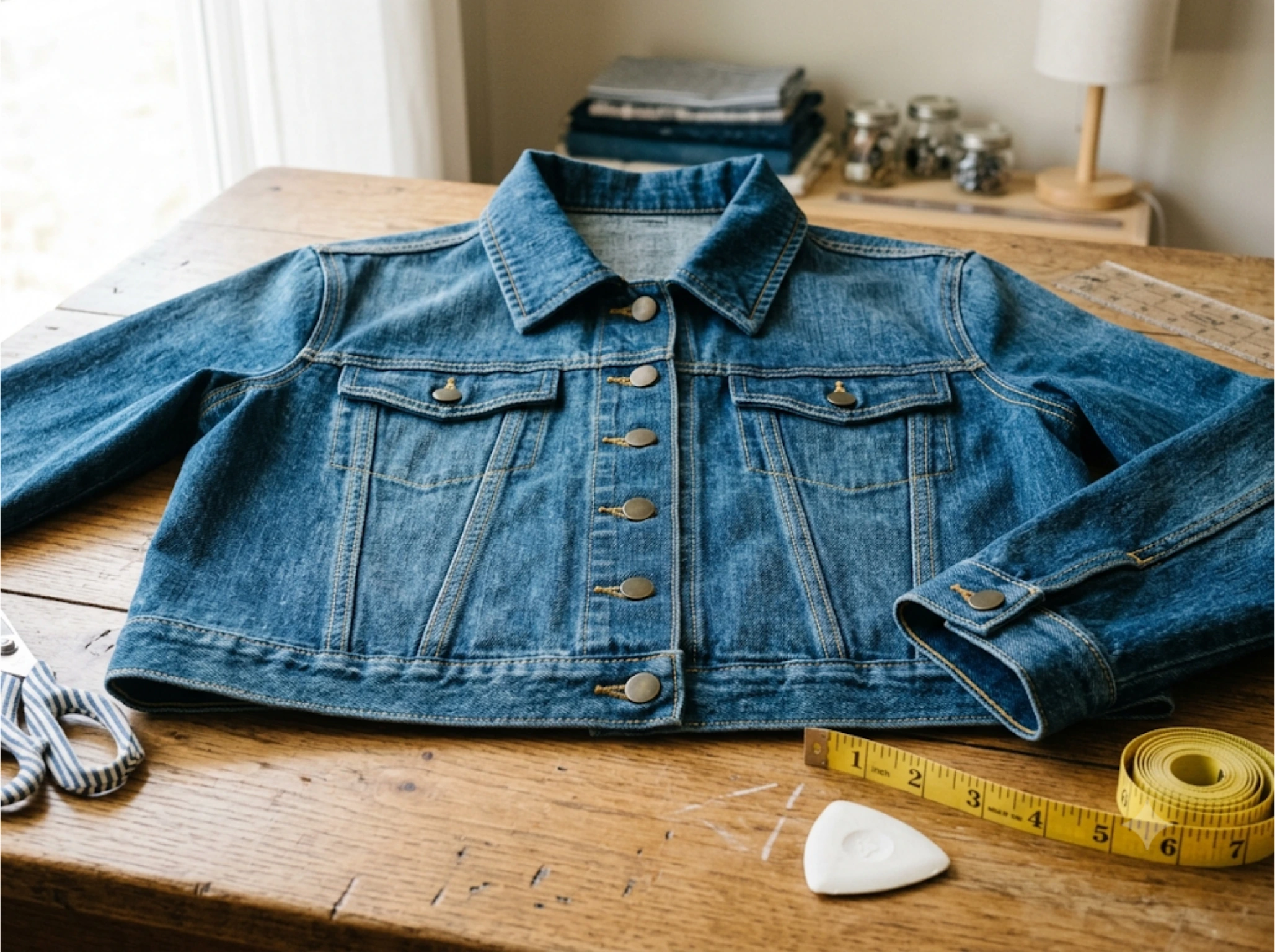
A Madewell-inspired denim jacket is built around three things: a boxy, slightly oversized body, a classic collar and button placket, and clean, visible topstitching. It is not a fitted jean jacket. The ease is the point, and that ease is also what makes this a forgiving first jacket project.
Before you cut fabric, finish one prior woven project with topstitching, like a chore coat, tote bag, or button-front top. This jacket assumes you already know how to sew a straight seam under pressure and handle a bulky seam allowance. If you have not done that yet, start there and come back.
That prerequisite is not gatekeeping. It is the difference between a jacket you finish in a weekend and a jacket that stalls halfway through the collar because the seam allowance is thicker than anything you have handled before. A first woven project with topstitching teaches your hands what a bulky seam feels like under the presser foot, and that muscle memory is what this pattern builds on.
What Fabric and Notions Do You Need for This Jacket?
Choose a mid-weight to heavy rigid or stretch-blend denim, somewhere between 9 and 12 ounces. Anything lighter will not hold the boxy shape or the crisp topstitched edge this style depends on.
You will also need:
- Fusible interfacing for the collar, cuffs, and button placket
- Seven to nine 1/2 inch buttons
- A denim or topstitch needle, size 90/14 to 100/16
- Topstitch-weight thread for the needle, regular weight thread for the bobbin
- A walking foot (optional, but useful on multi-layer areas)

- Universal Use for All Home Sewing Machines: Engineered with a flat shank side for perfect positioning in the needle holder and for smooth, reliable performance, SCHMETZ Topstitch Needles are compatible with all home sewing machine brands, including Brother, Janome, Singer, Baby Lock, and more
- No More Skipped Stitches or Thread Breakage: Crafted for superior precision, these durable topstitch needles prevent skipped stitches and reduce thread shredding or breaking, even when working with delicate, metallic, or heavy duty threads
- Perfect for Embroidery, Quilting and Embellishing : Glides effortlessly through multiple layers, making free-motion quilting, embroidery, and sewing thick heavy materials like denim, canvas, and leather
- Stronger, More Durable, & Break-Resistant: Designed to resist bending and breaking, this high-quality SCHMETZ Topstitch offers long-lasting durability for a wide assortment of fabrics and frequent use on all household sewing machines
- Flawless Stitches on Every Fabric Type: The elongated eye accommodates thick threads with ease, making sewing fast and smooth on everything from fine silks to heavy materials, delivering a polished and professional finish
How Do You Get Your Machine Ready for Heavy Denim?
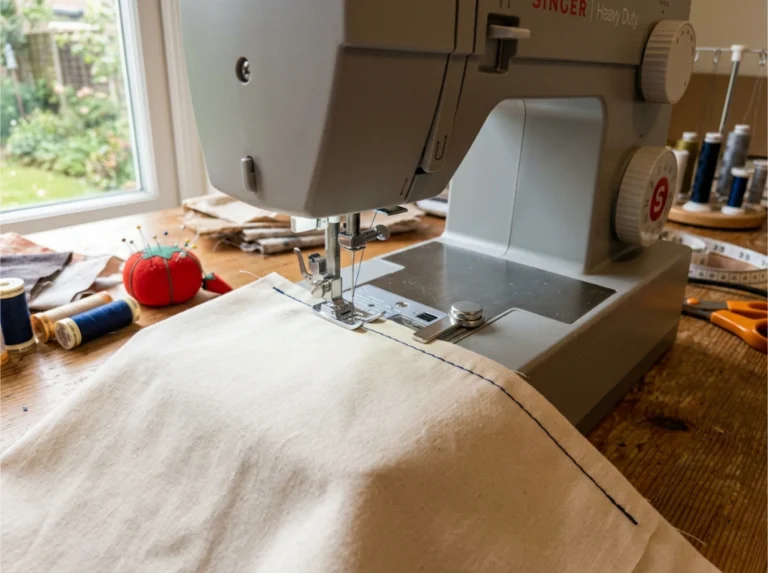
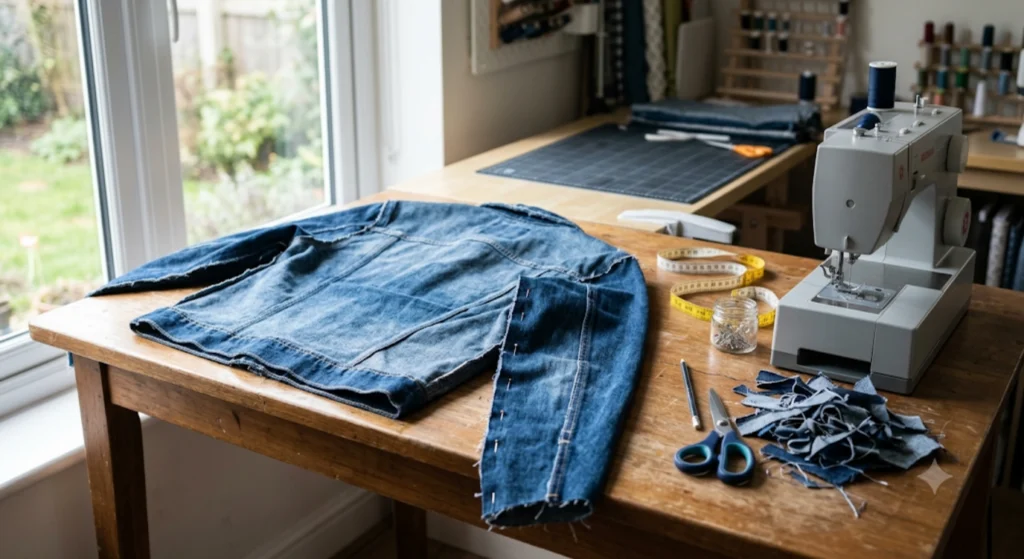
Most topstitching failures on denim are machine problems, not skill problems. Before you sew a single seam on your actual jacket pieces, re-thread your machine from scratch, install a fresh topstitch needle, and test your stitch on a scrap of doubled denim, the same thickness you will hit at the collar and cuffs.
One sewist described the exact failure point in a machine mechanics newsletter thread. “I have certainly wrangled with the thread knot sitting on the bottom of the fabric when sewing denim and using topstitching thread.” The fix turned out to be simple. Tighten the upper thread tension slightly and confirm the fix on a scrap before you move back to your real fabric. This one adjustment resolves most of the thread knotting sewers hit on their first heavy denim seam.
If your stitches skip or your thread knots on the underside, do not push through on your project pieces. Re-thread first. A dull or too-small needle deflects in thick layers, and that deflection causes both problems.

- Pellon Shape-Flex Interfacing 20'' x 10 yd Bolt. SF101 Shape-Flex Fusible Interfacing is suitable for oxford cloth chambray gingham madras tattersall pincord flannel and polyester/cotton blends. This all-purpose woven fusible interfacing provides support to collars cuffs yokes pockets facings and other detail areas of a garment. It can also add body and permanent stability when used as a backing for needlework and punch embroidery.
- 100% Cotton
- Washing Instructions: Machine Wash Gentle/Tumble Dry Low
How Do You Choose Your Size for a Boxy, Oversized Fit?
Oversized does not mean one size fits every body. Select your pattern size using your high bust measurement, not your full bust. This is the single biggest fit mistake sewers make on loose-fit jackets, because they assume the extra ease will absorb any sizing gap. It will not, especially across the button band.
Before your final topstitching pass, button the jacket and check the front placket. It should lie flat with no horizontal pull lines. If you see pulling or gapping, size up one and recheck before you commit to permanent stitching.
This step matters for every body type. A boxy silhouette changes the amount of ease you need, not whether fit adjustments matter at all.

- Universal Use for All Home Sewing Machines: Engineered with a flat shank side for perfect positioning in the needle holder and for smooth, reliable performance, SCHMETZ Topstitch Needles are compatible with all home sewing machine brands, including Brother, Janome, Singer, Baby Lock, and more
- No More Skipped Stitches or Thread Breakage: Crafted for superior precision, these durable topstitch needles prevent skipped stitches and reduce thread shredding or breaking, even when working with delicate, metallic, or heavy duty threads
- Perfect for Embroidery, Quilting and Embellishing : Glides effortlessly through multiple layers, making free-motion quilting, embroidery, and sewing thick heavy materials like denim, canvas, and leather
- Stronger, More Durable, & Break-Resistant: Designed to resist bending and breaking, this high-quality SCHMETZ Topstitch offers long-lasting durability for a wide assortment of fabrics and frequent use on all household sewing machines
- Flawless Stitches on Every Fabric Type: The elongated eye accommodates thick threads with ease, making sewing fast and smooth on everything from fine silks to heavy materials, delivering a polished and professional finish
How Do You Sew the Jacket, Step by Step?
Work through these seven steps in order. Skipping ahead is the fastest way to end up hand-sewing a collar you already machine-stitched shut.
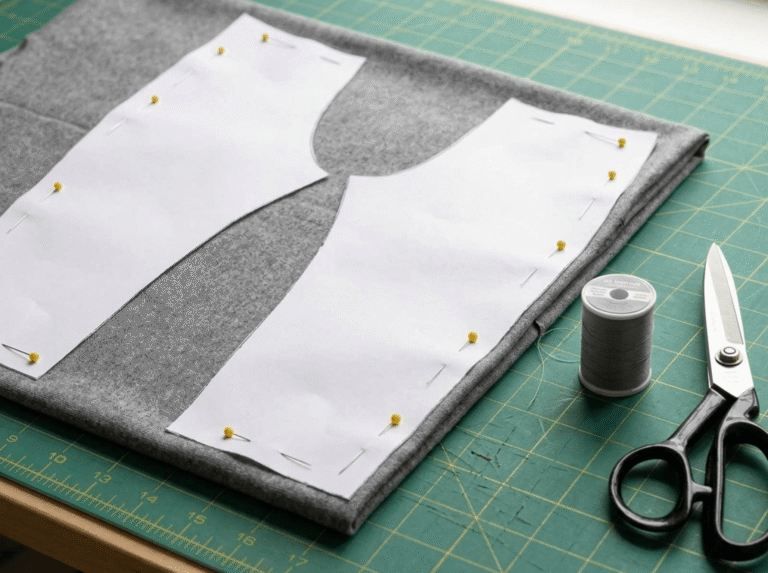
Prep and interface. Cut all pieces, then apply fusible interfacing to the collar, cuffs, and button placket facing before you sew a single seam.
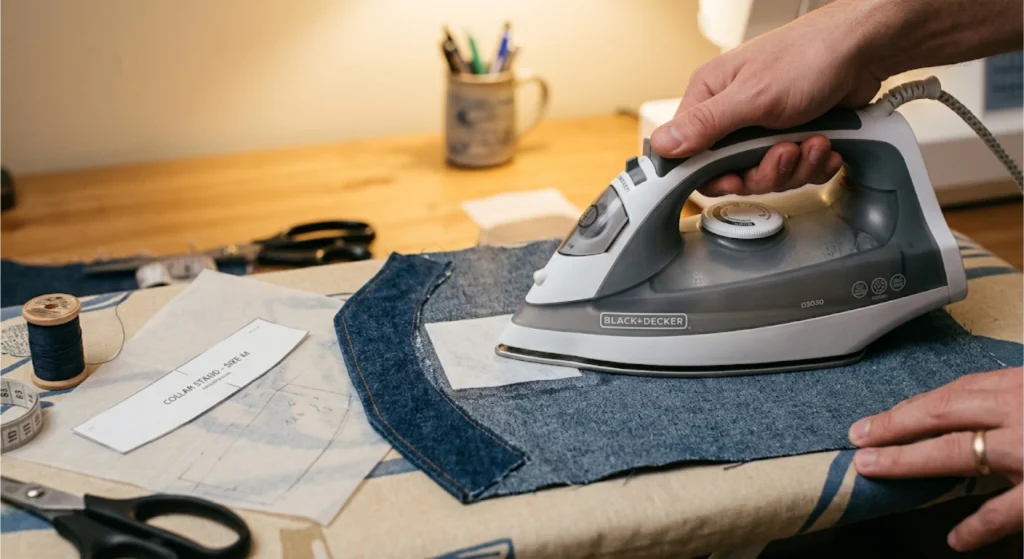
Construct the yoke and shoulder seams. Sew the back yoke to the back panel, then join the shoulder seams. Press every seam open before you cross it with another seam.
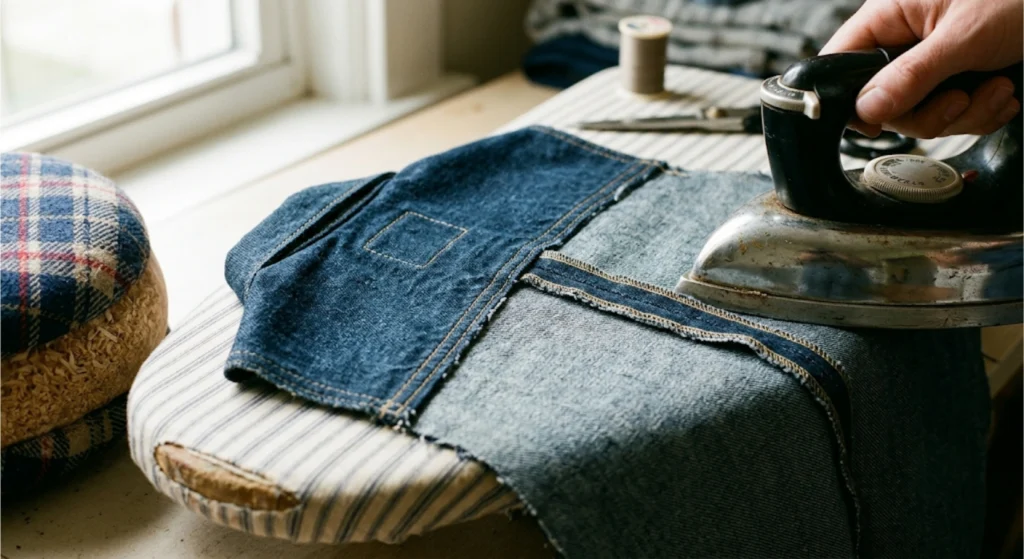
Sew the side seams. For an everyday jacket built on a weekend timeline, a lapped seam finish gives a clean flat-felled look without the extra folding step. For a jacket meant to last years of hard wear, take the extra time for a true flat-felled seam. One PatternReview.com sewist ran into the tradeoff directly: “I had a bit of trouble with the flat felled seams. It was bulky, and was not beautiful in a couple of spots where I think the fabric stretched out a bit.” Choose your method based on how the jacket will actually be worn, not on which one sounds more advanced.
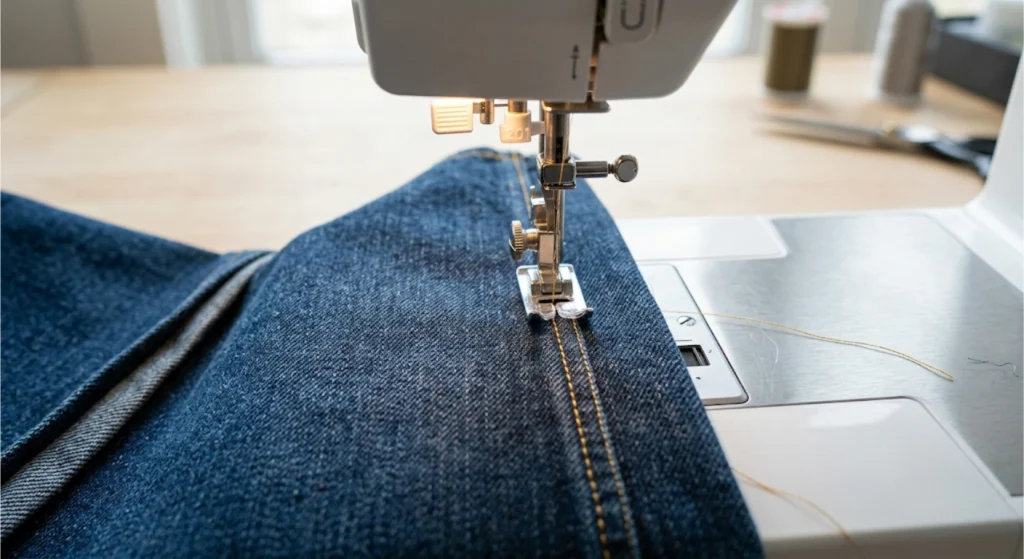
Set the collar. Attach the interfaced collar, understitch the facing before turning, and press flat. Understitching here is what keeps the collar from rolling to the outside after a few wears.
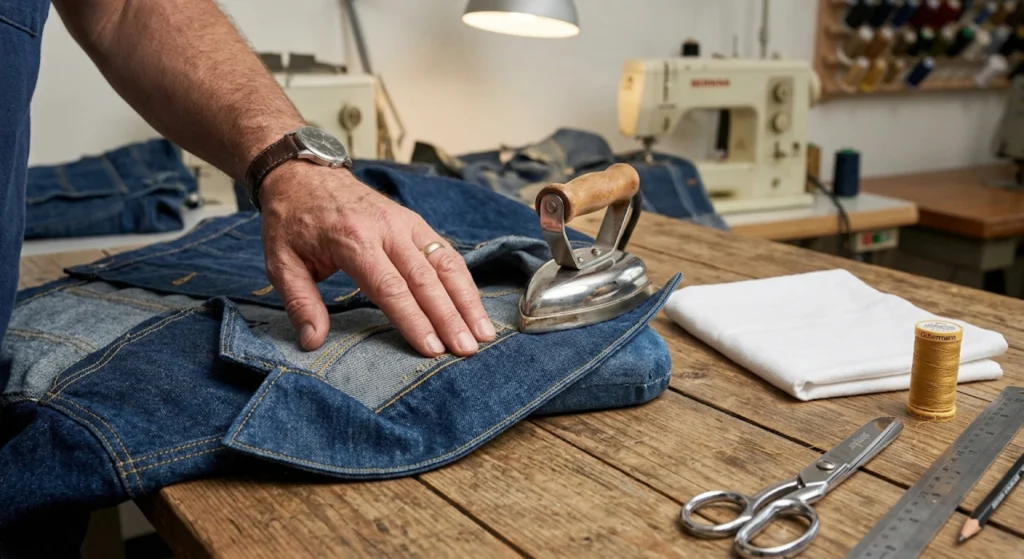
Attach sleeves and stitch side seams. Set sleeves flat before closing the side and underarm seams in one continuous pass.
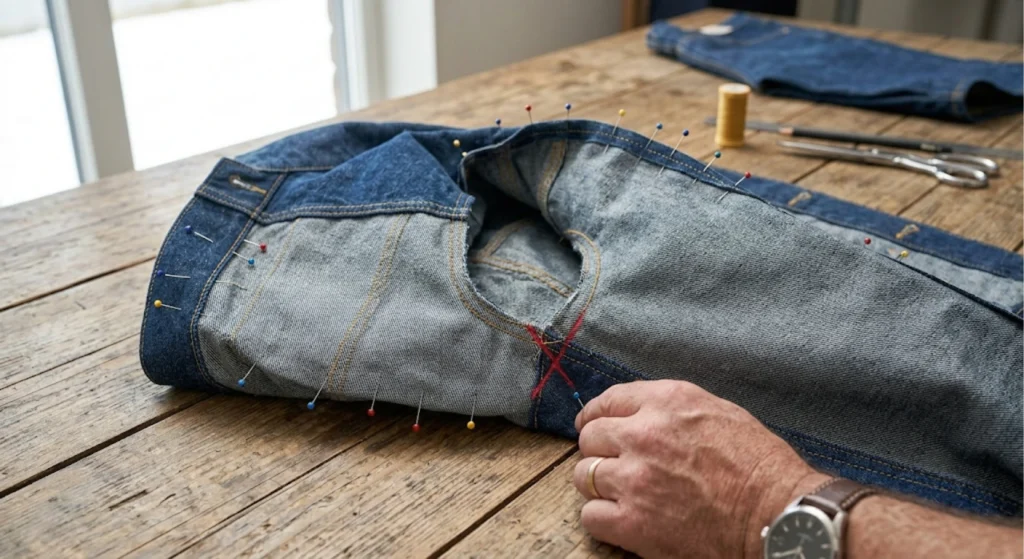
Finish cuffs and hem. Interface and attach the cuffs, then hem the jacket body with a double topstitched edge to match the rest of the garment.
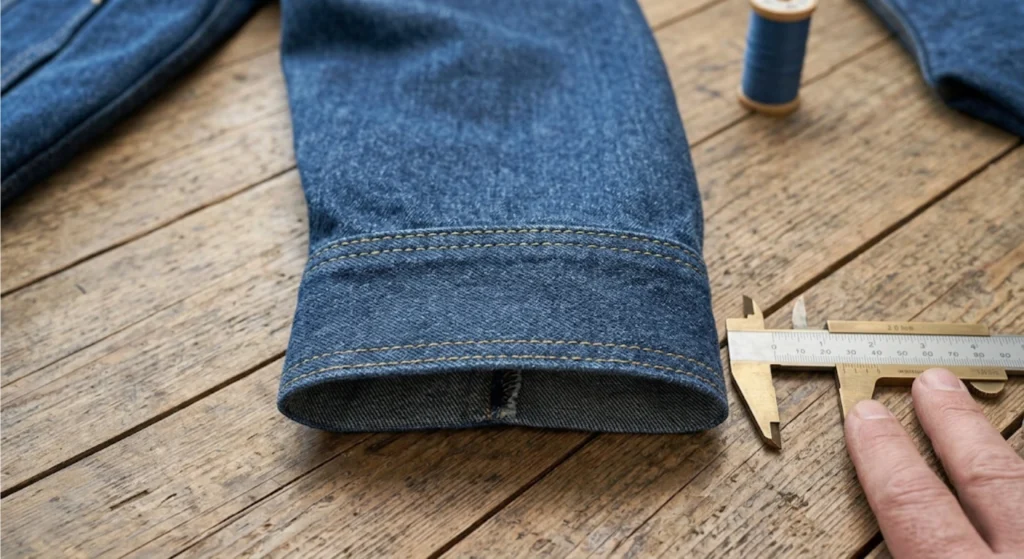
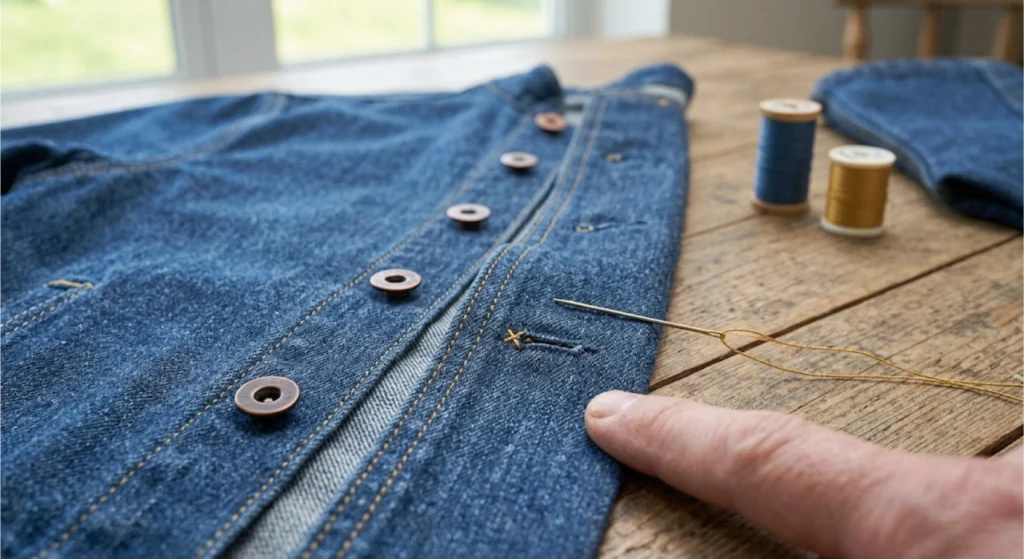
Topstitch and add the button placket. Topstitch all visible seams last, once construction is complete, using your tested needle and thread combination. Mark and sew buttonholes, then attach buttons.
What Common Mistakes Ruin a Homemade Denim Jacket?
The most common failure points on a Madewell-inspired denim jacket are avoidable with the right prep. Skipped stitches almost always trace back to the wrong needle, not the sewer’s skill. Bobbin-side puckering usually means topstitch-weight thread was loaded into the bobbin instead of the needle. And skipping the button band fit check before final topstitching is the single most common reason a finished jacket does not sit right on the body.
One maker noted that thicker topstitching thread simply will not run smoothly through most home bobbin cases, and that switching to regular thread in the bobbin solved a problem that tension adjustments alone could not fix. Test your thread combination on scrap before you commit to your collar or cuffs, not after.

- 100% Long Staple Polyester
- For Decorative Sewing and Buttonholes
- Heavy Duty Polyester Topstitching Thread, Strong with a high luster
Where Can You Download This Madewell-Inspired Denim Jacket Pattern?
You now have the fabric list, the machine setup steps, the sizing check, and the full construction sequence for a jacket that looks intentional, not homemade. Nothing here requires couture training, just a fresh needle, a scrap test, and a size chosen from your own measurements instead of the pattern envelope’s guess.
The download below walks the same sequence with full-size pattern pieces, a cutting layout, and a page for tracking your own fit notes as you sew.
Get the free guide: Download the Full Guide PDF
Frequently Asked Questions
-
Can a beginner sew a denim jacket?
Not as a true first project. Denim topstitching and flat-felled seams need prior experience with a woven garment. If you have finished at least one button-front top or tote bag with topstitching, you have the base skills. Start there first if you have not.
-
What fabric can I use instead of real denim?
Bull denim, twill, or a mid-weight cotton canvas all work well. Look for something in the 9 to 12 ounce range. Avoid anything under 8 ounces, since lighter wovens will not hold the structured, boxy shape or the crisp topstitching detail this style depends on.
-
What needle and thread do I need for denim topstitching?
Use a topstitch needle sized 90/14 to 100/16, paired with topstitch-weight thread on top and regular thread in the bobbin. This combination handles doubled seams without skipped stitches or thread breaks on most home machines. Test the pairing on a scrap before you sew your collar or cuffs.
-
Why does my machine skip stitches on thick denim seams?
It is usually the needle, not your skill. A worn or too-small needle deflects on thick layers and misses the stitch entirely. Swap in a fresh topstitch or denim needle, re-thread the machine from scratch, and test on a scrap before returning to your project pieces.
-
How do I size a boxy denim jacket if I am full-busted?
Select your pattern size by your high bust measurement, not your full bust. Boxy ease does not remove bust-shaping needs entirely. Check the button band before your final topstitching pass, and size up one if it gaps or pulls when buttoned.
-
How long does it take to sew a denim jacket from start to finish?
It depends on your finishing choice. An efficiency build with lapped seams takes a weekend for most intermediate sewers, spread across a few evenings. A fully flat-felled version with pressed-open seams at every stage and hand-finished details can take twice that long to complete.
-
Do I need a walking foot to sew denim?
Not required, but it helps. A regular presser foot can sew denim fine on most machines once the tension is dialed in. A walking foot earns its keep on multi-layer areas like cuffs and collar points, where fabric layers tend to shift and stitch unevenly.
Why did you vote that way? Drop your take in the comments.