
Summary Box
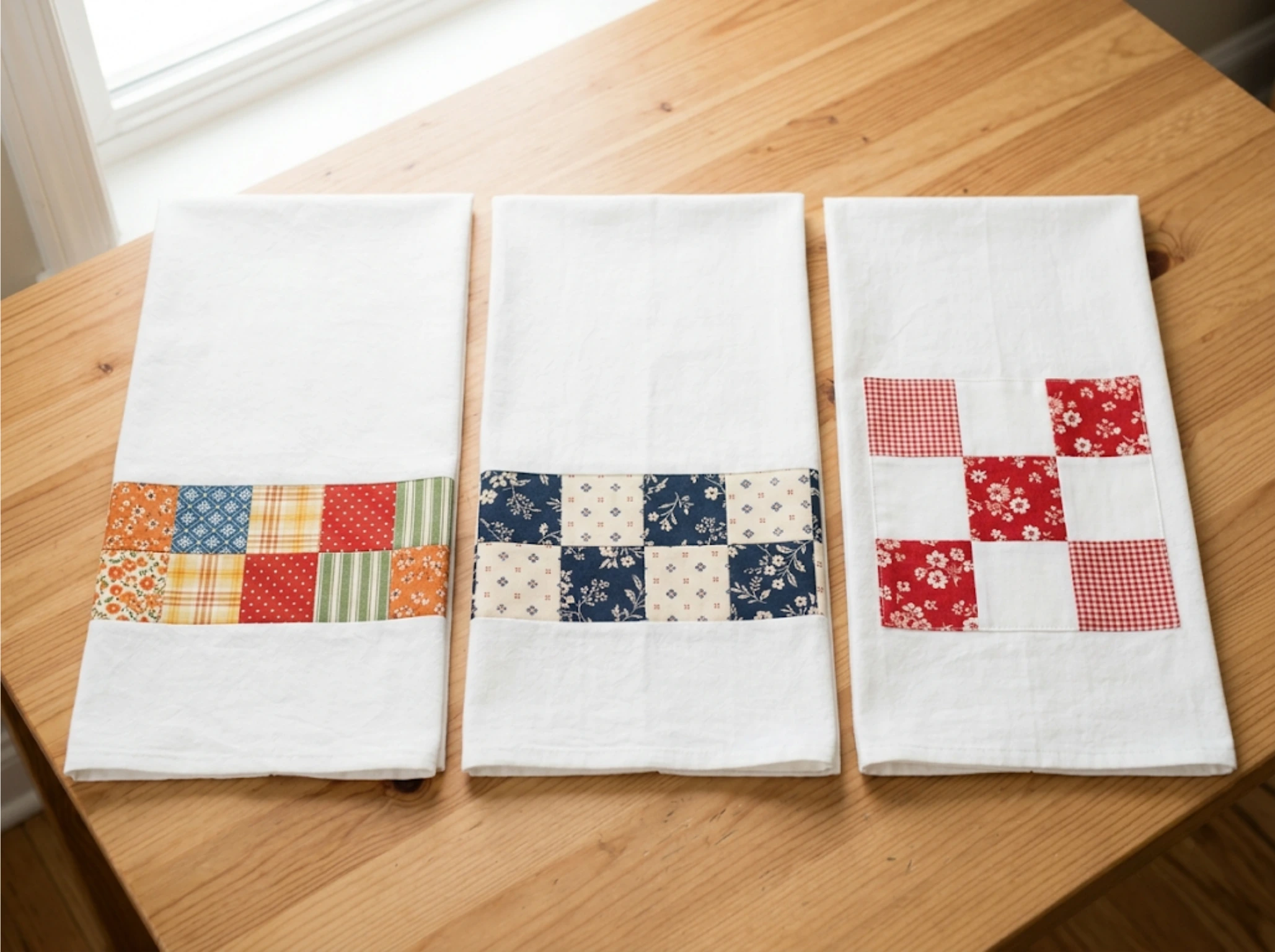
Patchwork tea towels are the ideal first quilting project because they teach accurate cutting, a consistent quarter-inch seam allowance, and correct pressing across just 10 to 15 squares. This guide covers three beginner patterns ordered by complexity: strip, checker, and nine-patch, with specific measurements and fix-it notes for each.
Related: Beginner Block Quilt: 2026 Scrappy Sampler Starter Guide
Patchwork tea towels are among the best first quilting projects a beginner can make: small, functional, and finished in one session. This article covers three beginner quilting patterns for patchwork tea towels: the simple strip, the two-color checker, and the nine-patch block.
Why are Patchwork Tea Towels Better than Starting with a Full Quilt?
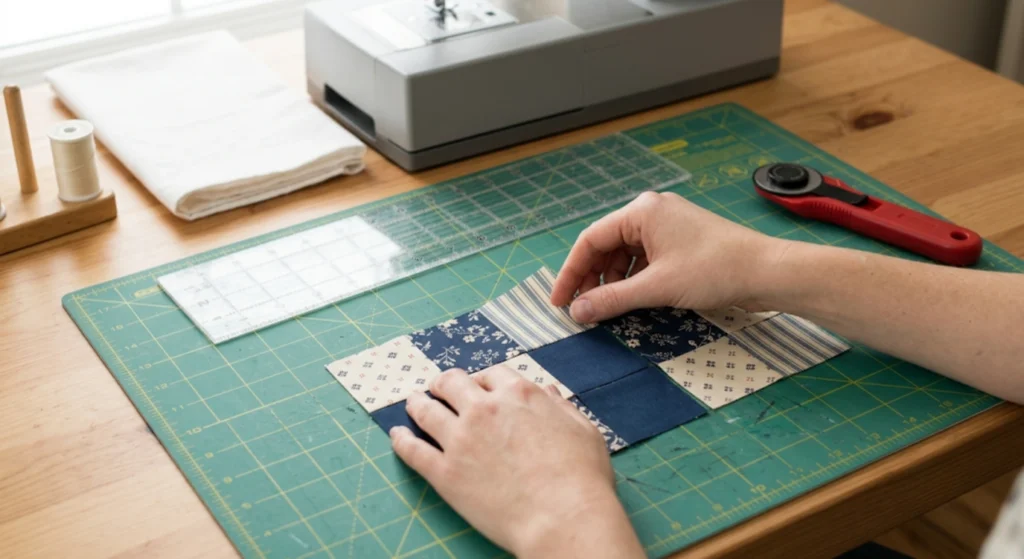
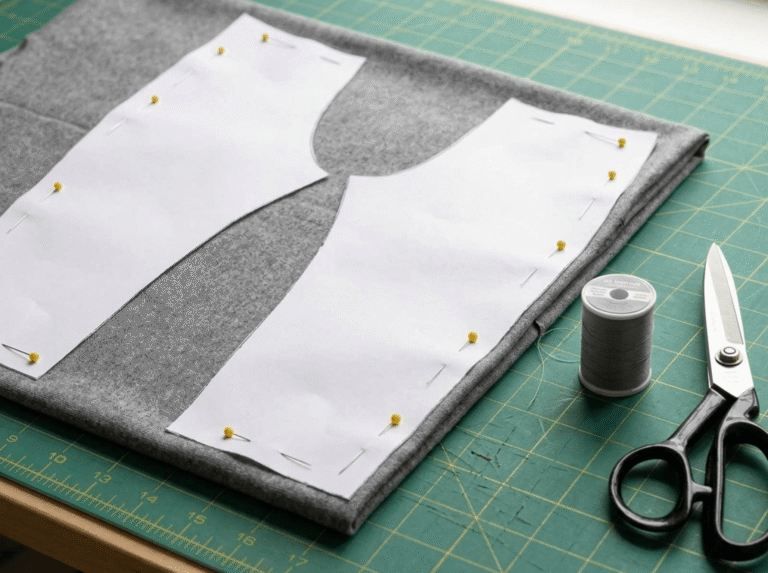
A full quilt asks you to cut, piece, press, and match seams across hundreds of squares. A patchwork tea towel asks the same across ten to fifteen. The skills are identical. The stakes are not: when a seam drifts on a tea towel, it costs one strip; when it drifts on a quilt top, it costs an afternoon of seam-ripping.
Three skills appear in every quilting project: accurate cutting, a consistent quarter-inch seam allowance, and pressing before you cross one seam with another. All three are built into the simplest patchwork tea towel pattern. By the time your first towel is finished, those three skills are habits.
Quilting community discussions on PatternReview.com and Reddit consistently describe small patchwork projects as the clearest path into the craft because they use the same techniques as larger quilts while allowing you to see results quickly.
Fix-it note: if your finished strip looks wavy or puckered, the pressing step was skipped. Re-press the strip flat before attaching it to the towel base.
What Fabric, Tools, and Setup Do You Need Before Cutting the First Square?
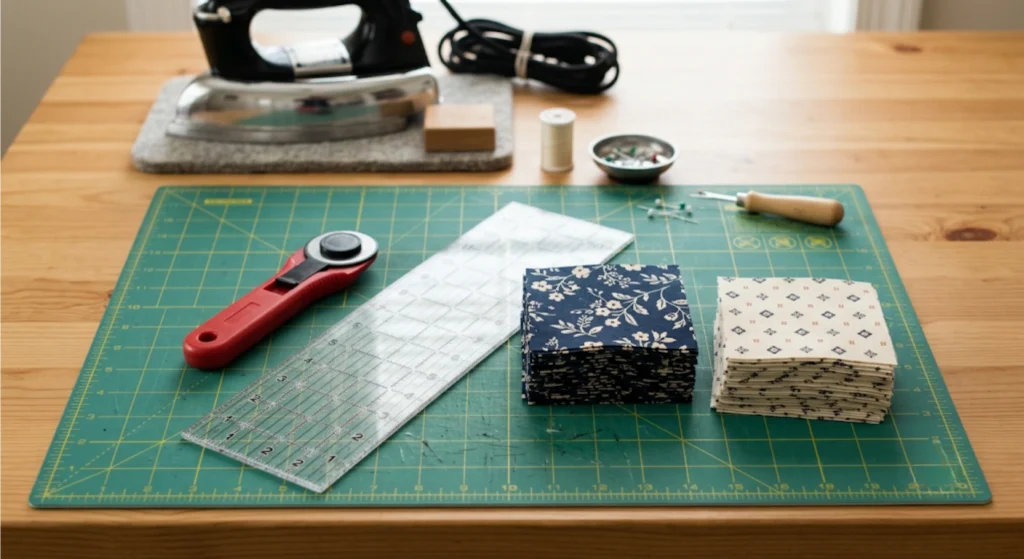
Setting up the right tools before cutting a single piece of fabric removes the most common beginner errors before they start.
Fabric: Use 100% quilting cotton or a cotton-linen blend for the patchwork strip. Always pre-wash before cutting. Quilting cotton can shrink several inches per yard in the first wash, and a strip that shrinks after finishing will pull away from the base. A pre-hemmed flour sack towel is the best base: the hem is finished and you sew only the strip.
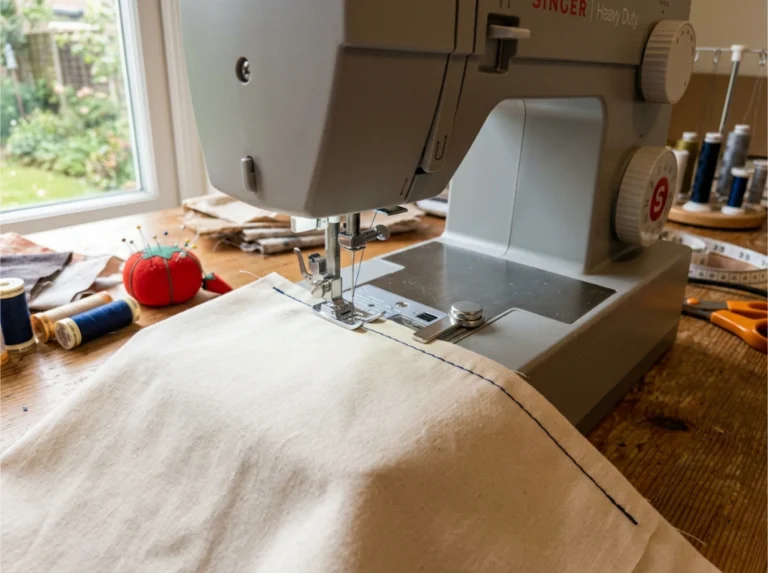
Tools: a rotary cutter, self-healing cutting mat, acrylic ruler, quarter-inch presser foot, iron, and pressing mat. The quarter-inch presser foot eliminates the most common error in patchwork tea towels: a drifting seam allowance. Install it before sewing a single seam. Pressing tools are not optional. Use a neutral 50-weight cotton thread for piecing.

- Provides Ease-of-Use for Tasks that Could be Extremely Tedious if Done by Hand
- High Quality Premium Sewing Feet
- Fits All Low Shank Snap-On Singer* (Some Singers Require Low Shank Adaptor), Brother, Babylock, Euro-Pro, Janome, Kenmore, White, Juki, New Home, Simplicity, Necchi and Elna Sewing Machines
- Makes a Perfect 1/4" Seam
What Are the Three Beginner Quilting Patterns for Patchwork Tea Towels, and Which Should You Try First?
The three patterns below are ordered by complexity. Complete Pattern 1 before moving to Pattern 2.
Pattern 1: The Simple Strip
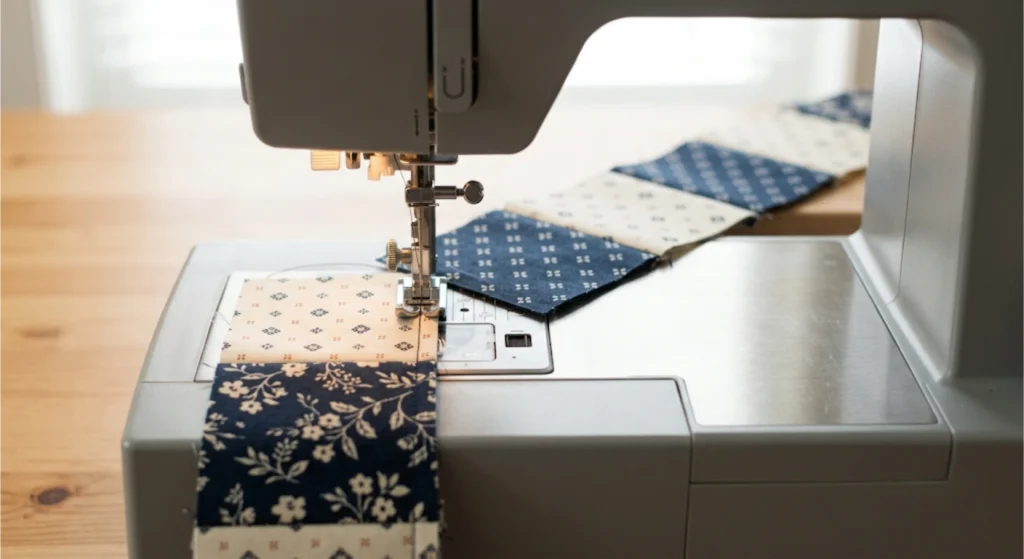
The simple strip teaches the single most important skill in patchwork: a consistent quarter-inch seam allowance.
Cut 10 to 15 squares of 2.5 inches. Sew them end to end with a quarter-inch seam allowance, pressing each seam to one side before adding the next square. Press the completed strip flat. It should lie without any curve or wave.
Fix-it note: three correctly joined 2.5-inch squares with quarter-inch seams measure 6.5 inches across. If yours is off, compare seams until you find the one that drifted. Seam-rip and resew it before continuing.
Pattern 2: The Two-Color Checker
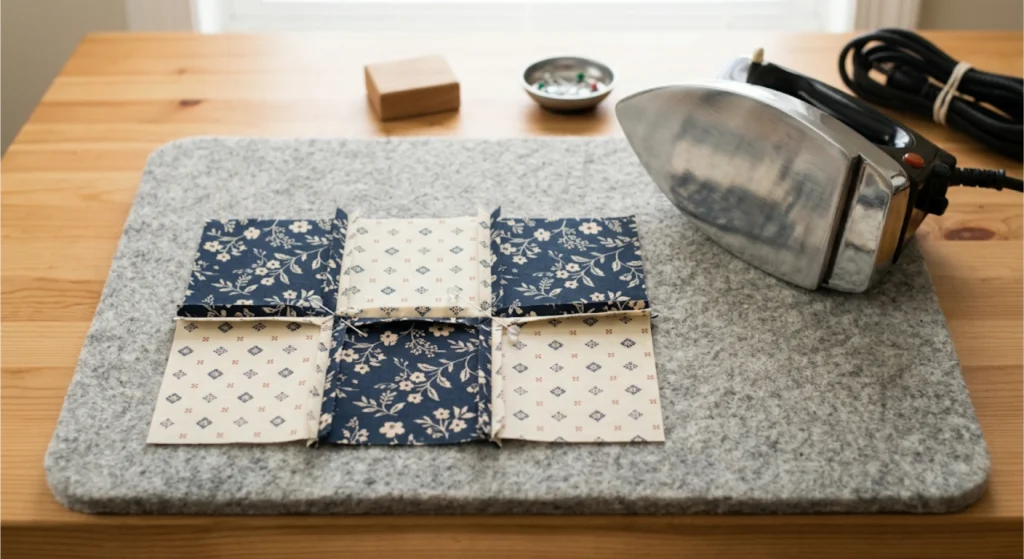
The two-color checker adds one new skill: nesting seams so corners meet at a clean intersection point.
Cut equal numbers of 2.5-inch squares in two contrasting colors. Sew two rows in a checkerboard arrangement. Press seams to the right on the first row and to the left on the second. This nesting technique makes corners meet at intersection points rather than sliding past each other.
Experienced quilters on Reddit describe nesting this way: press one strip right and the other left, and the seams fit together automatically at every intersection.
Pin at each intersection before sewing the rows together.
Fix-it note: if corners are off by more than 1/8 inch, check that seams were pressed in opposite directions. Re-press, re-pin, and resew that intersection only.
Pattern 3: The Nine-Patch Block
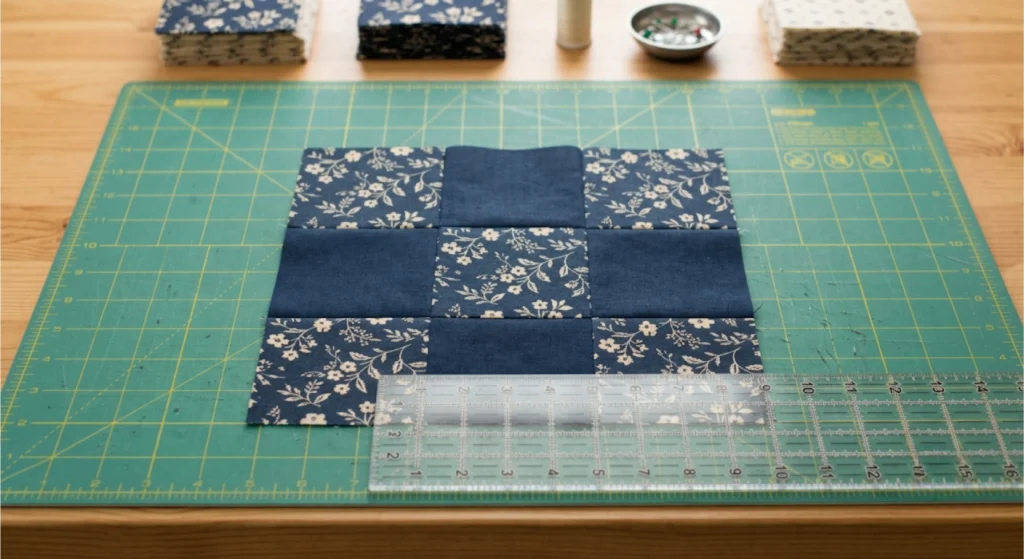
The nine-patch block introduces the most teachable intersection in beginner quilting: the center point where four squares meet.
Cut nine squares of 2.5 inches and arrange them in a 3×3 grid. Sew three rows of three, pressing seams in alternating directions. Join the rows, pinning at every intersection. Getting that center point to meet cleanly is the same skill used in every future quilt block at any size.
Fix-it note: if the center intersection is off, nest the seams more firmly and place one pin directly through the intersection point before sewing.
How Do You Attach a Patchwork Strip to a Flour Sack Towel Without Raw Edges?
Once your patchwork strip is pressed flat, attaching it to the flour sack towel base takes four steps.
- Step 1: Fold the two long raw edges of the strip under 1/4 inch and press flat.
- Step 2: Place the strip on the towel with its bottom edge at 7 inches from the bottom raw edge. Pin along all four sides.
- Step 3: Top-stitch around the full perimeter using a scant quarter-inch seam allowance. Catch the folded edge with each pass. Sew all four sides, including the short ends.
- Step 4: Press the finished attachment flat.
Top-stitching all four sides of the patchwork strip, not just the top and bottom, is what holds the attachment through repeated washing.
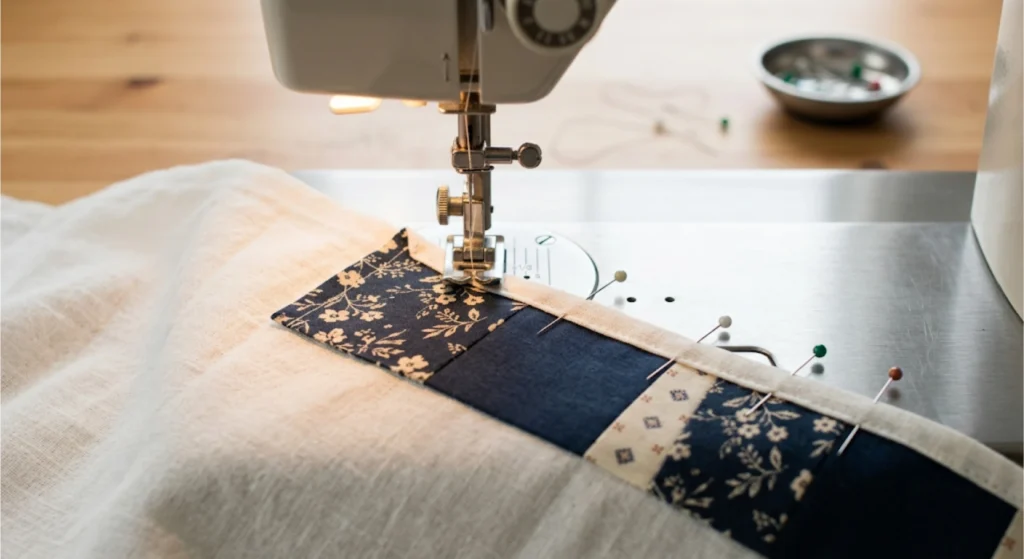
Fix-it note: If the strip lifts at a corner after the first wash, the top-stitch missed the folded edge there. Resew that corner only.
This attachment sequence works regardless of whether you are sewing at a standard table, a lowered adaptive setup, or a standing surface.
What Is the Single Pressing Mistake That Ruins Patchwork Tea Towel Seams?
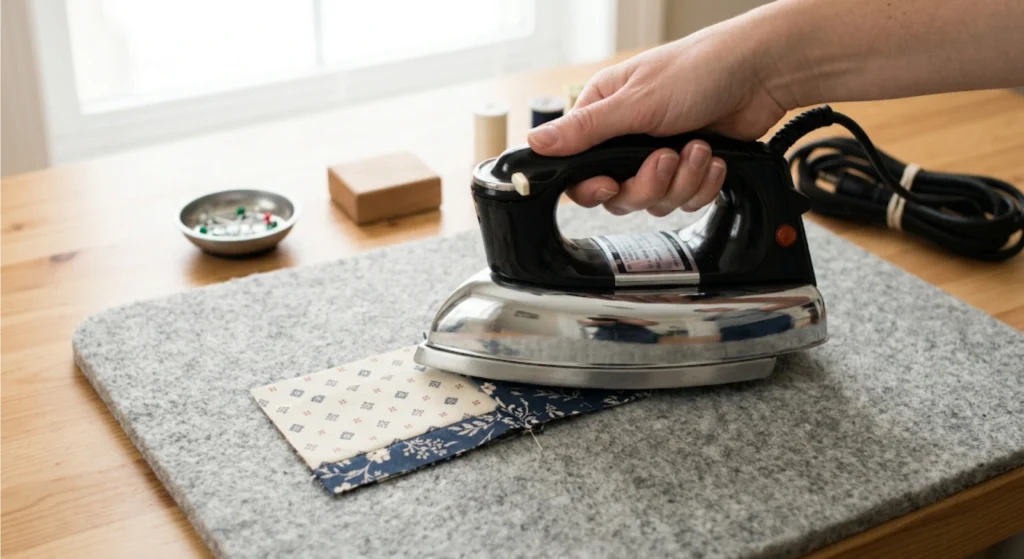
The mistake is ironing instead of pressing.
Ironing slides the iron across the fabric, dragging bias-cut edges out of shape. A strip that has been ironed will curve along its long edge and cannot be sewn flat. Pressing means lifting the iron and placing it down without sliding. That single change in motion is the difference between a flat strip and a curved one.
Press after every seam, before sewing the next one. This rule applies whether you are making patchwork tea towels or a king-size quilt.
PatternReview.com discussions document this consistently: unpressed seams create bulk and misaligned intersections that compound with every row added. Use a pressing cloth on printed cotton to protect the surface. If the strip has a slight curve after pressing, dampen it, lay it flat on the mat, and press back into shape.

- Includes a 24" x 36" self-healing cutting mat with grid lines and a 45mm titanium coated rotary cutter (product 2) for precise cutting through multiple layers.
- The cutting mat (product 1) features grids and bias lines for easy measurements and angle cutting for sewing, quilting and other fabric projects.
- The rotary cutter (product 2) has a titanium coated blade that is 3 times harder than steel for durability and long-lasting sharpness.
- Both the cutting mat (product 1) and rotary cutter (product 2) have ergonomic designs and comfortable handles for convenient use.
- The rotary cutter safety locks when not in use and conveniently retracts the blade.

Your First Patchwork Tea Towel Will Not Be Perfect. Start Anyway.
Two things will go wrong on your first patchwork tea towel: a seam allowance will drift, and a corner will not meet exactly. Both are useful. They show you what to fix on the second towel, which takes half the time because you already know the problem.
The skills in these three beginner quilting patterns for patchwork tea towels are the same in every quilt ever made: cut accurately, hold the quarter-inch seam, and press before the next seam. A patchwork tea towel teaches all three in under two hours.
Download the free step-by-step guide for all three patterns with cut dimensions, pressing sequence, and seam allowance reminders.

- Natural White Cotton Mako 50wt thread from Aurifil
- Includes 1 large 50 Weight spool
- 100% Cotton; premium quilt shop quality thread
Check this video out from Blue Rooster Farm.
Frequently Asked Questions
-
What size squares should a beginner cut for patchwork tea towels?
Start with 2.5-inch squares. This size is large enough to handle without distorting and small enough that ten to fifteen squares form a strip that fits a standard flour sack towel. Cutting errors are easier to spot at this size before they compound across the full strip.
-
How long does it take to make a patchwork tea towel as a beginner?
Most beginners finish the simple strip pattern in under two hours, including cutting, sewing, pressing, and attaching. The checker and nine-patch patterns typically add 30 to 45 minutes each because seam-nesting and intersection-matching take longer to learn than straight strip piecing.
-
Why do my patchwork corners not line up even when I measure carefully?
The most common cause is an inconsistent seam allowance, not inaccurate cutting. Being off by even 1/8 inch per seam adds up across a strip. Install a quarter-inch presser foot and test your seam allowance on scrap fabric before starting the actual project.
-
What thread weight should I use for patchwork tea towels?
Use a neutral 50-weight cotton thread for piecing. It is fine enough to nest in seam allowances without adding bulk, and strong enough to hold through machine washing. Heavier thread creates seam bulk that makes nesting corners harder and increases the chance of intersections not meeting cleanly.
-
What is the difference between pressing and ironing in quilting?
Pressing means lifting the iron and placing it down without sliding. Ironing slides the iron across the fabric, which stretches bias-cut edges and distorts patchwork blocks. Use a pressing motion after every seam in patchwork tea towel construction, not an ironing motion.
-
Can I use fabric from an old shirt or bedsheet instead of quilting cotton?
Quilting cotton is strongly preferred for beginners because it is woven consistently and holds a pressed edge well. Repurposed fabric varies in weave, stretch, and shrinkage, and those variations compound beginner seam allowance errors. Once you have completed two or three patchwork tea towels in quilting cotton, repurposed fabric becomes a reasonable option.
-
Which patchwork pattern should a complete beginner try first?
Start with the simple strip: ten to fifteen squares of equal size sewn end to end. It teaches the two skills every other patchwork pattern needs: a consistent seam allowance and pressing before joining strips. Once one strip is completed flat, the checker and nine-patch patterns follow naturally.
Why did you vote that way? Drop your take in the comments.