
Quick Answer
A Spring Sewing Project Month Challenge is a 4-week framework where you commit to finishing 2 to 4 spring garments instead of starting and abandoning more. Most sewists realistically complete two to four projects, depending on weekly hours. Success depends on machine prep, pre-washing fabric, and choosing projects no more than one skill level above your current ability.
Skill Outcome: After completing this challenge, you will have 2 to 4 finished spring garments or home projects and a repeatable monthly planning system you can use all year long.
You have got fabric in the stash. You have a machine that mostly works. You have saved seventeen tutorials and started, then abandoned, at least three projects in the last season. Sound familiar? The sewing community has been tackling this exact problem with a deceptively simple solution: the Spring Sewing Project Month Challenge. One month. A small stack of intentional projects. A structure that makes finishing more likely than failing.
This is not a challenge that demands you sew every single day or complete a garment per week. It is a framework designed to get you from “I have fabric and ideas” to “I made things I am actually wearing.” Here is how to run your own version of it, regardless of skill level.
The cycle this challenge interrupts is real. One sewing blogger writing on Buried Diamond described how her pile of WIPs grew because adding a new project to the pile felt easier than finishing the old one. (Source: Buried Diamond blog.) That is the loop of a structured month break.
Before You Start: Set Up for a Successful Challenge Month
Before you commit to a project list, spend 20 minutes on your machine. Nothing derails a sewing challenge faster than discovering your tension is off on day three when you are mid-seam on a garment you have already cut.
The Quick Machine Readiness Check
- Re-thread from scratch. Top thread first, then remove and re-seat the bobbin. This single step clears 40% of stitch problems before they start.
- Change your needle. If you do not remember the last time you changed it, change it now. A dull needle causes skipped stitches that look like tension problems, and it is a $2 fix instead of a $200 service call.
- Clean the bobbin case and feed dogs. Lint in the bobbin area causes timing and tension issues. Use a small brush (never canned air) to clear it out.
- Test on a fabric scrap that matches your first project. Sew a 4-inch seam. If the stitch looks clean, you are ready. If it does not, troubleshoot now, not after you have cut into your spring linen.
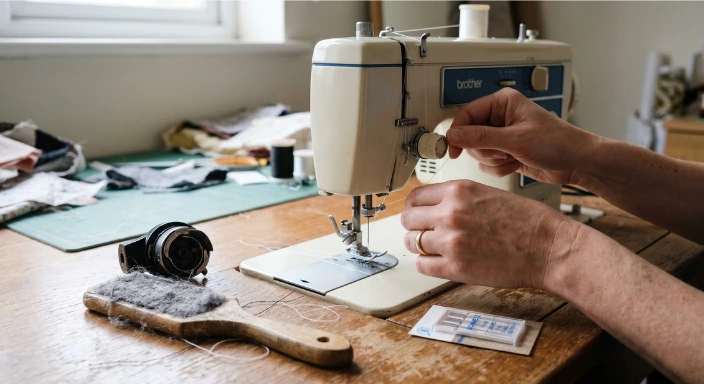
If your machine has not been serviced in more than two years and you are sewing multiple projects this month, a $60 to $80 tune-up is worth it. Check our [beginner sewing machine buying guide] if a service is not an option and it is time to upgrade.
Set a Realistic Challenge Goal
Two projects are a challenge. Four is ambitious. Six is the path to burnout and a pile of half-cut fabric. Be honest about your realistic available time this month, not your aspirational time. A sewist who finishes two projects has succeeded. One who abandoned six has not.
What Is a Spring Sewing Project Month Challenge?
A Spring Sewing Project Month Challenge is a personal or community-organized event where sewists commit to completing a set number of projects during the spring season, typically April or May. The format was popularized on YouTube and in sewing communities as a way to combat “project paralysis”: the state of owning a full stash but finishing nothing.
The challenge format varies. Some sewists pick one project per week. Others commit to clearing a specific number of items from their WIP (work-in-progress) pile. Community versions on YouTube channels and subreddits like r/sewing add accountability through progress posts, themed prompts, or voting on which techniques to feature each month. What they share is a single rule: finished beats perfect.
A finished imperfect garment beats a perfect one still on the cutting table.
How to Pick the Right Projects for Your Skill Level
For beginners or anyone re-entering sewing after a break, the most important rule is this: choose your first project for completion probability, not aesthetic excitement. A finished elastic-waist linen skirt you wear all summer is worth ten abandoned blouses you loved on Pinterest.
Spring-friendly beginner projects that reliably produce a win:
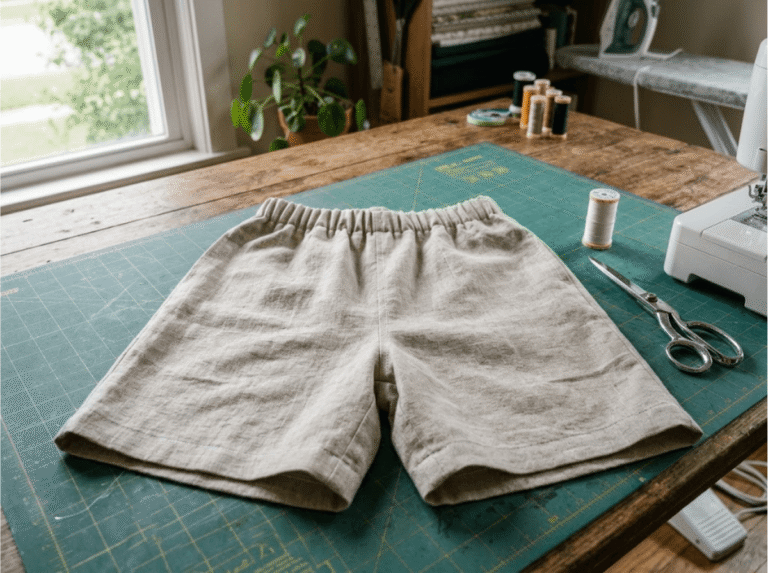
- Elastic-waist skirt in a woven fabric: No zipper, no buttons, one waistband. Skill outcome: You can sew a waistband and finish seams cleanly.
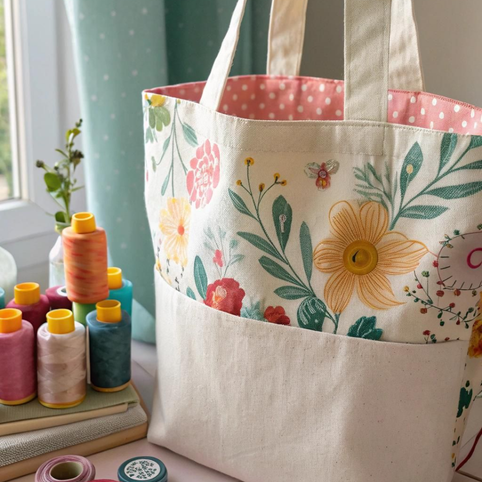
- Tote bag with lining: Two-layer construction teaches you how to turn work right-side out and press a clean edge. Fast enough to finish in an afternoon.
- Wide-leg linen pants (pull-on): Still no zipper. A natural step up from the skirt. Spring linen is forgiving and presses beautifully.
- A-line dress with a simple neckline: No fitted bodice. Choose a pattern with princess seams rather than darts for a cleaner result at this level.
Explore our full list of beginner sewing projects before committing to a pattern.
How do I choose a sewing project I’ll actually finish?
Ask yourself three questions before cutting any fabric:
- Will I wear this? The most beautifully constructed garment in your size is worthless if it does not fit your real life. Before you commit, open your closet and identify one specific gap this project fills.
- Does this fabric match this project? Fiber content and weave structure govern every construction decision downstream. Slippery fabrics, loosely-woven linens, and stretch knits are not beginner-neutral in spring. They punish technique problems. If you are restarting after a gap, reach for a stable woven cotton or a linen-cotton blend.
- Is this pattern at, just above, or above my current skill ceiling? At-level projects build confidence. One level above builds skill. Two levels above builds resentment. During a challenge month, go no more than one level above your confirmed skills.
What Are the Best Spring Sewing Projects by Skill Level?
Here is a skill-level project menu designed for spring. Each project delivers a wearable result and a named skill you take into every future project.
Level 1: Elastic-Waist Linen Skirt
Skill outcome: Enclosed seam finishes, clean waistband construction, pressing a straight hem.
Time estimate: 3 to 5 hours.
Fabric recommendation: Midweight linen or linen-cotton blend. Preshrink before cutting. Linen shrinks 3 to 5% in the first wash, according to The Confident Stitch.
Pattern to try: Any beginner A-line or straight skirt pattern with a casing waistband. The Tilly and the Buttons “Cleo” is a frequently-recommended entry-level skirt or pinafore.
Level 2: Button-Down Shirt or Casual Blouse
Skill outcome: Collar or collar stand construction, shirt placket, sewing buttonholes accurately.
Time estimate: 8 to 12 hours for a first attempt.
Fabric recommendation: Quilting cotton or a light chambray. Both press cleanly and behave predictably.
Press note: Press every seam before crossing it with the next seam. This is not finished. It is a construction. Skipping it at this level shows in the collar and cuffs.
Level 3: Fitted Spring Dress with Bodice
Skill outcome: Dart manipulation, side seam fitting, invisible zipper installation.
Time estimate: 12 to 16 hours including a muslin.
Fit note (curve-inclusive): For any fitted bodice, take your full bust, high bust, and hip-to-waist differential before selecting a pattern size. Size by high bust, then adjust for cup volume. Skipping this measurement step is the single most common reason a spring dress gets abandoned mid-project. See our [garment fitting guide] for the full process.
Fabric recommendation: A woven rayon challis or a lightweight linen. Both move beautifully and are appropriate for spring temperatures.
Level 4: Spring Overshirt or Chore Coat
Skill outcome: Patch pockets, set-in sleeves, flat-felled seams or welt pockets.
Time estimate: 14 to 20 hours.
Fabric recommendation: Medium-weight canvas, denim, or waxed cotton. A walking foot attachment is highly recommended for even feed on heavier layers.
What Fabrics Work Best for Spring Sewing?
Spring sewing calls for breathable, lightweight-to-midweight fabrics that press cleanly and do not fight the machine. Here are the most reliable choices by project type:
- Linen and linen blends: The quintessential spring fabric. Takes pressing beautifully, forgiving of minor seam-width inconsistency, appropriate for skirts, pants, shirts, and jackets. Preshrink in hot water and dry on hot before cutting.
- Quilting cotton: The beginner’s most reliable friend. Stable, easy to press, available in thousands of spring prints. Best for practice garments, blouses, and lightweight skirts rather than structured garments.
- Rayon challis: Soft, drapey, ideal for floaty spring dresses and blouses. Requires sharp scissors, a fine needle (70/10 or 80/12), and patience with bias edges that want to stretch. Not a beginner-neutral fabric.
- Chambray: A lighter-weight denim-adjacent fabric that works for shirts, lightweight jackets, and wide-leg trousers. More forgiving than true denim.
- Deadstock or remnant fabric: Spring is a great season to use up your stash. Match fabric weight and behavior to project type rather than choosing a project to fit a fabric you already have. The reverse approach produces most of the abandoned-project pile.
For guidance on evaluating fiber content and fabric behavior before buying, visit our fabric buying guide.
How Many Projects Can You Realistically Complete in a Month?
Honest answer: two to four, depending on complexity, your available time, and whether you hit an unexpected fit problem or machine issue that requires a half-day detour.
Here is a realistic framework based on available hours per week:
- 4 to 6 hours per week: One Level 1 to 2 project per month. Do not start a Level 3.
- 8 to 10 hours per week: Two Level 1 to 2 projects, or one Level 3 with careful planning.
- 12+ hours per week: Three to four projects at various levels, or one ambitious Level 4 with supporting smaller projects.
If your month is unpredictable, build your list with one anchor project (your main goal) and one fast project (a tote, a pillowcase, an elastic skirt) that can be completed in a single session. The fast project gives you a completion win on any week the anchor project stalls.
One PatternReview.com sewist captured the goal in a single forum thread title: “Trying to finish as many projects as I start.” (Source: PatternReview.com, 2026.) That is the actual win condition. Two finished projects beats six abandoned ones every time.
Your Week-by-Week Challenge Structure
Use this as a template. Adjust to your project count and complexity.
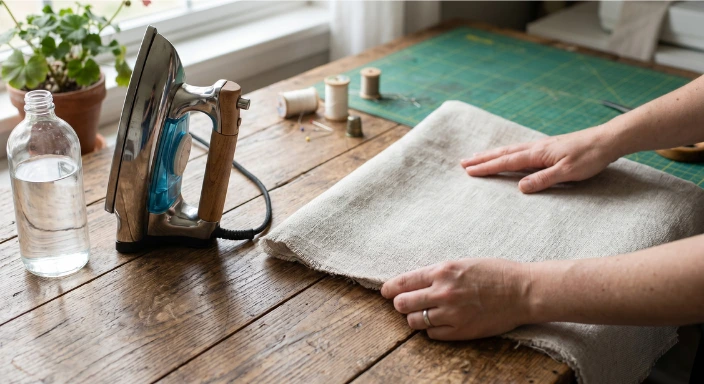
Week 1: Prep Week
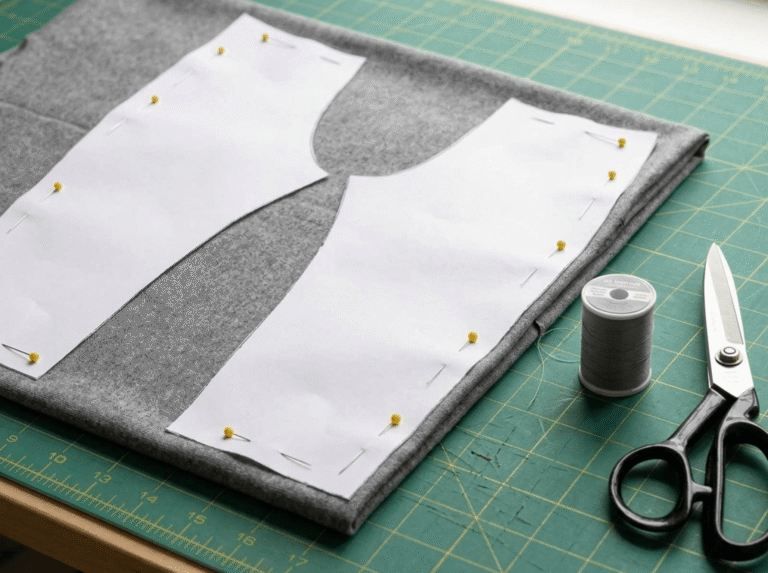
Machine readiness check. Pre-wash and press all fabrics. Cut Pattern 1. Gather notions. Do not skip this step under time pressure. Prep interruptions during construction are the largest source of abandoned projects.
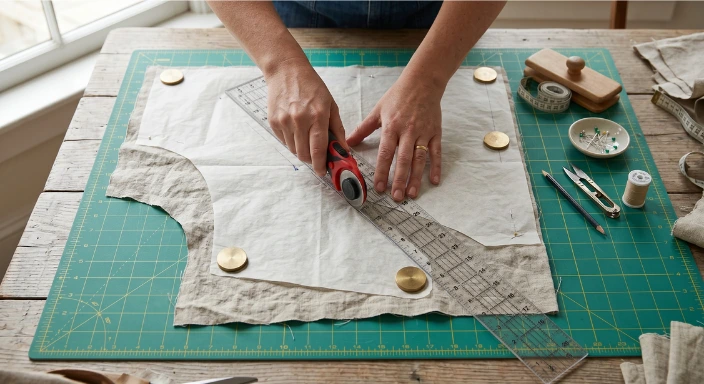
Week 2: First Project Construction
Complete Pattern 1 through final pressing and finishing. If it is a fitted garment, make the muslin in Week 1 and cut the real thing in Week 2.
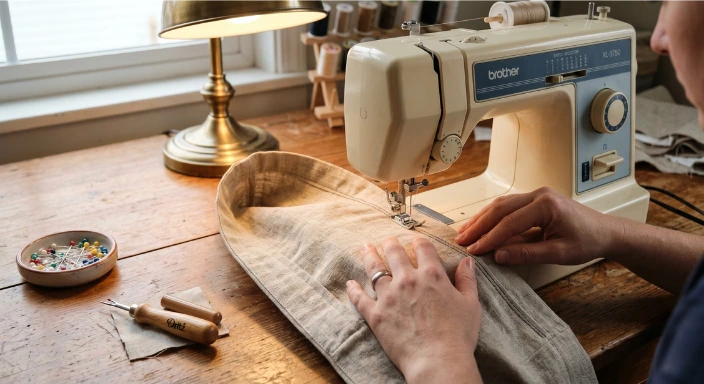
Week 3: Second Project Construction
Apply what you learned in Week 2. If Pattern 1 had a fit problem, note the correction before starting Pattern 2.
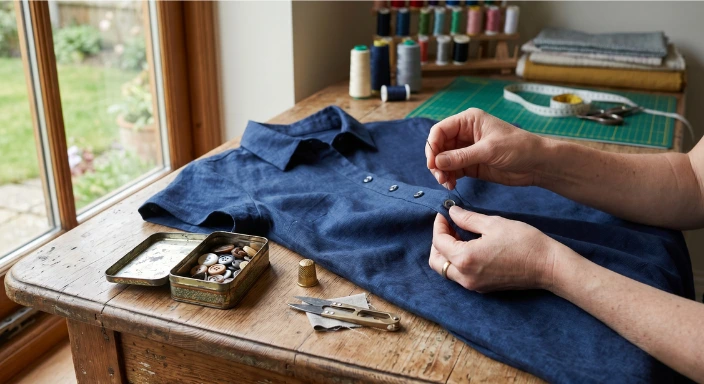
Week 4: Finish and Wear
Final hemming, buttons, snaps, and pressing. Photograph your finished pieces. Wear something you made this month.
Common Mistakes That Derail Challenge Month
- Choosing a project that is two skill levels above where you are. This is the most common challenge-killer. The enthusiasm of April does not change what your current skills can produce. Choose one level above, not two.
- Skipping pre-washing. Linen shrinks. Cotton shifts. Rayon is notorious. The only thing worse than discovering your finished garment shrank in the first wash is knowing it was preventable.
- Cutting without checking your fabric grain. Off-grain cutting creates bias distortion that makes seams pull and hems twist. You cannot fix it after the fact. Take 10 minutes to align your fabric before pattern pieces go down.
- Starting three projects simultaneously. One project at a time through completion. Multi-project multitasking produces three half-finished garments instead of one finished one.
- Not pressing between steps. Pressing is construction, not finishing. Every seam pressed before the next seam is sewn produces a cleaner result. Without pressing, garments look homemade in the wrong sense of the word.
- Treating a bad fitting result as personal failure. If your garment does not fit, that is a pattern adjustment problem, not a you problem. Consult our fitting guide before concluding you cannot sew fitted garments.
Ready to Start Your Spring Sewing Challenge?
Pick two projects this week. Wash your fabric today. Run the machine readiness check tonight. That is the entire entry requirement for a successful challenge month. Everything else is details you will figure out as you go.
The sewing community has been running challenges like this because the evidence is clear. A structured month with a completion goal produces more finished garments than an unstructured year with better intentions. Finished is the whole point.
If you are not sure where to start with patterns, browse our collection of [free sewing patterns]. Several are specifically designed for spring weights and beginner-friendly construction. And if your machine is more than three years old and has not been serviced, it might be time to visit our [sewing machine recommendations] before the challenge month begins. The Brother CS6000i ($199 to $229) and the Singer Heavy Duty 4452 ($179 to $219) are the two most reliable entry-to-mid machines for a multi-project month. Both handle linen and chambray without tension issues.
Get the Free Spring Challenge Project Planner
Download our free Spring Challenge Project Planner. It is a printable worksheet for tracking your project list, fabric prep status, and week-by-week progress. Sign up below to get it sent to your inbox.
Affiliate disclosure: Sewing.com may earn a commission on purchases made through our retailer links. We only recommend tools and patterns we have tested.
That’s Sew Avery‘s Spring/Summer Sewing Plans 2026
Frequently Asked Questions
-
How long should a Spring Sewing Project Month Challenge last?
Four weeks is the standard. One week for prep, two weeks for construction, and one week for finishing. Running shorter than four weeks compresses the prep stage and produces the most common failure (skipped pre-wash, rushed cutting).
-
What’s the easiest spring sewing project for beginners?
An elastic-waist linen skirt. No zipper, no buttons, no fitting adjustments, and one waistband casing. Total construction time runs 3 to 5 hours from cut to hem. Use 1.5 to 2 yards of midweight linen or linen-cotton blend.
-
Do I need to pre-wash linen before sewing?
Yes, every time. Linen shrinks 3 to 5% crosswise on its first wash, according to The Confident Stitch. Pre-wash in hot water, dry on high heat until almost dry, then press while still slightly damp before cutting.
-
How many sewing projects can I finish in one month?
Two to four, depending on complexity and weekly hours. A realistic plan is one Level 3 project plus one Level 1 project, or three Level 1 projects across the month. Two finished projects beats six abandoned ones.
-
What’s the best fabric for a first spring sewing project?
Midweight linen, linen-cotton blend, or quilting cotton. All three press cleanly, hold their shape under the needle, and forgive minor inconsistencies. Skip rayon challis, silk, and slippery wovens until you have three completed projects behind you.
-
What size needle should I use for spring fabrics?
A 70/10 universal needle for cotton lawn and lightweight linen. An 80/12 universal needle for midweight linen, linen-cotton blends, and quilting cotton. Replace the needle every 8 to 10 hours of sewing or at the start of each new project.
-
My machine keeps skipping stitches. How do I fix it?
Re-thread the machine from scratch first. About 40% of skipped stitches are threading errors. Then check the needle: a bent or dull needle is the second most common cause. If the problem persists, clean the bobbin case and feed dogs of lint, then test on a scrap.
Why did you vote that way? Drop your take in the comments.