In Short
Spring 2026 fabric trends point to three wearable directions for beginner sewists: soft neutrals anchored by Pantone’s Cloud Dancer off-white, muted accent colors like sage green and burnished lilac, and small-scale florals continuing from the cottagecore trend. Beginners should match trend colors to forgiving fabrics, such as quilting cotton, cotton lawn, linen blends, rather than the slippery rayons and sheers showing up on runways. Buy for your closet, not the feed.
- Spring 2026’s dominant trend is quiet, wearable color. Off-whites, sage green, soft lilac, and muted orange, not loud prints or bold patterns.
- Cottagecore is still here, but softer. Small-scale florals, gingham, and ticking stripes read as contemporary, not costumey.
- Match trend colors to beginner-friendly fabrics. A floral quilting cotton gets you the look without the slippery rayon challis problem.
- The sewing community is split on whether beginners should sew trends at all. We’ll show you both sides.
- Free download: Our one-page Spring 2026 Fabric Trend Field Card includes the full Pantone color list, beginner-safe fabric pairings, a pre-shopping checklist, and two suggested patterns. Print it and tape it inside your stash cabinet.
What Colors Are Actually Trending for Spring 2026 Sewing?

Pantone named Cloud Dancer a soft, clean off-white as the 2026 Color of the Year. The supporting palette runs warm and muted: Burnished Lilac, Muskmelon (a soft orange), Sage Green, and Acacia (a green-tinted yellow). One trend source described the direction as “earthy, natural tones such as Sage Green, Angora and Cocoa Powder,” taking the lead, paired with brighter accents used sparingly.
What this means for fabric trends at the retail level: these are the colors fabric shops will stock first and deepest. Availability will be highest for sage green, off-white, and soft lilac between March and June. If you want musk melon or Acacia, you may need to order online.
The longevity test matters here. Sage green and off-white have appeared in three-plus consecutive spring seasons; those are safe picks for a first project. Muskmelon, orange, and bright acacia yellow are higher-volatility: gorgeous this season, possibly dated by next spring. Treat them as accent pieces, a tote bag, a kid’s skirt, not as your main garment.
One community member on PatternReview.com gave the best pre-purchase test we’ve seen: “Ask her whether she’d choose an RTW item of clothing in this print.” Apply that to color. If you wouldn’t buy a ready-to-wear blouse in Muskmelon, don’t cut it into two yards.
Fix-it path: If you’re unsure about a color, buy a half-yard swatch before committing to full yardage. Drape it across what’s already in your closet. For a deeper primer on matching color to skin tone and existing wardrobe pieces, see our [Choosing Fabric Colors That Actually Flatter You] guide.

- CONTENTS AND MEASUREMENT:100% COTTON FABRIC This fabric has a smooth finish, with a soft touch. It also has a natural light drape and stiffness, thanks to its cotton content
- Cotton Fabric: Full Width 59"(149cm) and multiple length size to choose from(such as 1 yard, 2 yard, 3 yard 5 yard etc.), natural medium weight natural cotton muslin fabric.
- MULTIPLE USES: Natural 100% cotton fabric are a staple for fashion designers and quilters Use them for backing, backdrops, embroidery, fittings, Draping and more. Used for clothing and curtains, along with quilting, craft and utilitarian functions
- WASHING INSTRUCTION:This fabric can be machine washed and tumble dried, but we always strongly recommend washing on a low temperature, or hand washing and air drying, avoiding exposure to the sun to best preserve its quality.
- DIY Choice:You can share the cotton fabric with your close friends, to make canvas bags, T shirts or other beautiful handicrafts, enjoy the fun of DIY, give full play of your creativity, and enhance your hands on ability.
Which Prints and Patterns Are Worth Sewing This Spring?
Three print directions are carried into spring 2026 fabric trends: small-scale florals (cottagecore continuity), gingham and check, and romantic sheers with lace trim.
The cottagecore story is softening. Mood Sewciety describes the look as leaning on “light soft fabrics like cotton and linen,” the frills and Victorian excess of the 2020–2022 peak are out. Ditsy florals in cotton lawn are the sweet spot. Oversized floral prints, by contrast, can read costumey on a beginner-level garment where the construction isn’t yet confident enough to carry a statement.
Ticking stripes and small gingham are the safest beginner print picks. Small repeats forgive imperfect pattern-matching at the seams, a real advantage before your seam allowances become precise. Both patterns also have decade-long trend history, so a finished skirt won’t look dated by next spring. If you’re new to matching seams on a printed fabric, our [Beginner’s Guide to Pattern-Matching at Seams] walks through the basics.
What to skip this season if you’re a beginner: sheer fabrics, lace overlays, and transparent layering. One PatternReview maker admitted, “Though an experienced home-sewer, I have not used sheer fabrics very often.” If experienced sewists hesitate with these, a beginner should not start there. Come back to Sheers on your fifth or sixth project.
Before any print purchase, run the closet audit: do you own a top or skirt in a coordinating color? A print that doesn’t live alongside existing pieces becomes dead stock in your closet or in your sewing room.
What Fabric Types Should a Beginner Buy for Spring 2026?
Fabric trends show up across every substrate, but the fabric, not the color, decides whether your project survives.
Beginner-friendly substrates in trend colors:
- Quilting cotton is stiff, stable, forgiving to cut and press. Best for simple tops, A-line skirts with body, tote bags, and kids’ clothes. One caution: a PatternReview contributor warned, “quilting cottons are much narrower than garment fabrics, and not all of the yardage is always usable.” Buy 20% more than the pattern calls for.
- Cotton lawn lightweight and drapes beautifully, but still stable under the needle. Best for blouses, summer dresses, and shirtdresses.
- Linen or linen blend breathes well, takes the spring 2026 color palette beautifully, and wrinkles as part of the look. Press every seam as you sew, not at the end.
Skip for your first trend project: rayon challis, silk, chiffon, and anything labeled “sheer” or “transparent.” These are spring 2026 trend stars on the runway, but they shift under the presser foot and require bias-grain handling that frustrates most beginners.
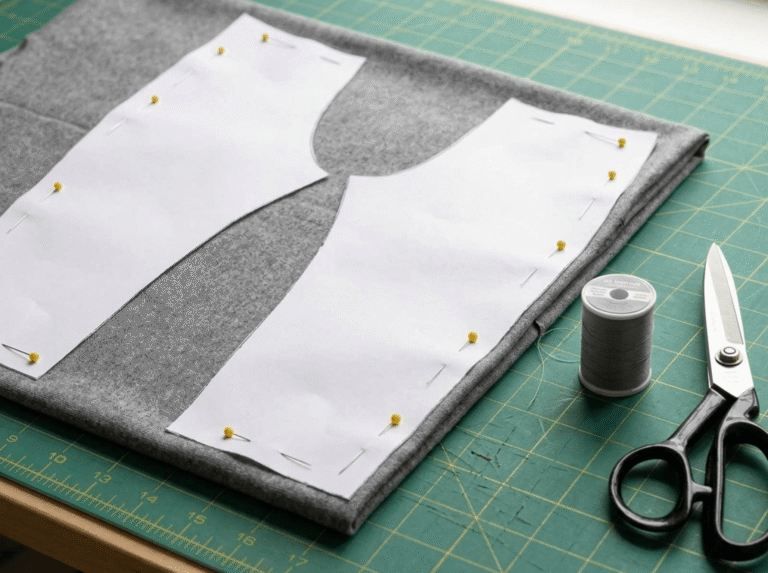
Fix-it path: If a fabric shifts while you’re cutting, set down the pins. Use a rotary cutter with pattern weights on a self-healing mat instead. Pinning slippery fabric creates bias distortion before you’ve sewn a single seam. For more on this, see our [How to Cut Slippery Fabric Without Bias Distortion] tutorial.

- Pin-Free Cutting: Securely holds patterns in place without the need for pins, preventing fabric damage
- Versatile Fabric Compatibility: Works on any fabric type, including delicate materials, ensuring a snag-free experience
- Easy to Use: Simply place the weights on your pattern, and you’re ready to cut—no extra tools required
- Heavy-Duty Construction: Each weight is filled with steel balls and weighs 4 ounces, providing a sturdy grip that won’t budge
- Convenient and Practical: Soft design prevents any damage to fabric; weights can be easily moved as needed during cutting

Fabric vs. Trend Quick-Match Table
Use this as a cross-reference before you buy. Match the trend direction you’re drawn to with the beginner-safe substrate that carries it well.
| Trend Direction | Beginner-Safe Fabric | Skill Level | Best Project Type | Watch For |
| Cloud Dancer solid (off-white) | Cotton lawn, linen blend | Beginner | Blouses, A-line skirts | Shows every stitch press carefully |
| Sage green solid | Quilting cotton, linen | Beginner | Skirts, tote bags, tops | Buy 20% extra for quilting cotton |
| Burnished lilac solid | Cotton lawn, linen blend | Beginner | Summer dresses, blouses | Shows every stitch pressed carefully |
| Small ditsy floral | Quilting cotton, cotton lawn | Beginner | Sundresses, kids’ wear | Small repeats hide seam mismatch |
| Gingham / ticking stripe | Cotton gingham, linen | Beginner | Skirts, aprons, sundresses | Cut on grain check stripe alignment |
| Muskmelon / Acacia accent | Quilting cotton | Beginner | Tote bags, accent pieces only | Higher trend volatility keep small |
| Sheer / lace overlay | (skip for now) | Intermediate+ | Layering pieces | Return after 5–6 completed garments |
| Rayon challis floral | (skip for now) | Intermediate | Drapey tops, wide-leg pants | Higher trend volatility keeps small |
Should a Beginner Even Be Sewing Trends?
The sewing community is split on this, and both positions are defensible.
- Position A: Yes, trends keep beginners motivated. A finished garment that looks contemporary is the psychological reward that keeps new sewists at the machine. A dated first project kills momentum faster than any technique failure.
- Position B: No, buy for your closet. The fastest way to build a wardrobe full of unworn handmade garments is to chase every spring’s fabric trends. Make what fills an actual gap in what you wear.
One community member on PatternReview articulated the real risk: “In my early days, I bought many a fabric which I loved… but I didn’t love the finished garment. I realised it was because the prints I chose weren’t ones which I would buy as clothes in a shop.” That’s the pivot test.
How to decide: If this is your first or second finished garment, take Position A. Choose a forgiving trend color in a stable fabric. If you have three or more completed garments already, run Position B’s closet audit before you buy.

- COMPLETE ROLLING FABRIC CUTTER AND QUILT CUTTING MAT SET – Cut with precision using this premium rotary fabric cutter and crafting mat combo for quilting, sewing, and DIY projects. Includes a sharp fabric rotary cutter with 5 SKS-7 45mm rotary cutter blades and a durable, self-healing fabric cutting mat. A must-have fabric cutter rotary tool and hobby mat
- DURABLE MATERIAL CRAFT CUTTING BOARD – Enhance your projects with this durable fabric cutter mat- a 2-sided cutting mat for sewing featuring a 9x12 inch surface with 1", 1/2", and 1/8" grid markings for precision. This self-healing cutting mat also works as a cutting board for sewing and a cutting board for crafts. Durable, non-slip design for any sewing mat setup
- 45MM ERGONOMIC ROTARY CUTTER & BLADES – Upgrade your cutting game with our comfort-grip roller cutter for fabric, featuring a dual-action safety lock and ergonomic handle for smooth, precise cuts. This set of quilting rotary cutters includes 5 rotary cutter blades 45mm. A sharp, reliable rotary cutting tool for any sewing supplies rotary cutters kit, or rotary fabric cutters collection!
- AMBIDEXTROUS DESIGN FOR RIGHT- AND LEFT-HANDED USERS – This fabric roller cutter is a must-have for crafters with its quick-change blade system allowing easy left- or right-handed use-just place the blade on either side of the fabric cutting wheel and cut. Compatible with rotary blades 45mm refill, this rotary knife works as a rotary cutter for leather or rotary cutter for quilting
- SATISFACTION GUARANTEED – We've built our products to last. If the quality of our hobby cutting mat and rotary cutter set falls below your expectations, contact us and we'll make things right for you
What’s the Easiest Spring 2026 Beginner Project?
Our pick is an elastic-waist A-line skirt or a simple pullover top with no fitting adjustments. No zippers, no buttonholes, no bust adjustments required.
Suggested patterns:
Simplicity 9767 (elastic-waist skirt, beginner-rated)
New Look 6740 (simple pullover top).
Fabric requirement: 1.5 to 2 yards of a 44″ to 54″ wide quilting cotton, cotton lawn, or linen blend in your chosen spring 2026 color. Active construction time is two to four hours. The finished garment slots directly into a casual spring wardrobe, paired with denim, neutrals, or layered over a plain tee. Our [How to Sew an Elastic-Waist A-Line Skirt] walkthrough covers the full build step by step.
Spring 2026 Fabric Trends

Spring 2026 is a quiet color season. Soft whites, sage green, burnished lilac, small florals, and gingham are going to dominate spring fabric shelves, and all of them read contemporary without being micro-trendy. The beginner move is to pick one trend color, match it to a beginner-friendly fabric, and choose a no-fit pattern. Skip the sheers, the rayon challis, and the oversized florals until you’ve got two or three completed garments behind you.
Get the Spring 2026 Fabric Trend Field Card
Download our free one-page PDF field card. It includes all six Pantone color swatches, the beginner-safe fabric pairings from the matrix above, a seven-point pre-shopping checklist, and two suggested patterns, everything condensed onto a single printable sheet. Keep it in your sewing bag or tape it inside your stash cabinet.
Then browse spring florals and solids at Fabric.com with your palette in hand. While online shops like Fabric.com offer the widest variety, don’t skip your local quilt shop or independent fabric store. Seeing Cloud Dancer off-white in person, or feeling the drape of a sage green linen before you buy, can save a returned order. Local shop owners also know which fabrics actually sew well for beginners, and that advice doesn’t cost a dollar.
Affiliate disclosure: Sewing.com earns a commission on purchases made through our retailer links. We only recommend fabrics we’ve tested.
Frequently Asked Questions
-
What fabric prints are trending for spring 2026 sewing projects?
Small-scale florals, gingham, and ticking stripes are the dominant beginner-safe prints for spring 2026 fabric trends. Lace overlays and sheer fabrics are also showing on runways, but require intermediate skills. Stick with small repeats for your first trend project; they forgive imperfect pattern-matching at the seams.
-
Is cottagecore still popular in 2026 for sewing?
Yes, but softer. The 2026 version features smaller-scale florals, muted colors, and less Victorian frill than the 2020–2022 peak. The aesthetic survived by quieting down. Ditsy florals in cotton lawn are the sweet spot of the look to feel current, not so much that it tips costumey.
-
What colors should a beginner sewist buy for spring 2026?
Start with one of three repeat-trend-safe colors: soft off-white (Pantone’s Cloud Dancer), sage green, or soft lilac. These have three-plus years of trend longevity and coordinate with most wardrobes. Save brighter picks like Muskmelon orange or Acacia yellow-green for accent pieces, not full garments.
-
Where do I buy trendy fabric for sewing in 2026?
Most beginners buy online now. One sewist noted, “Fabric shopping has shifted drastically over the past few years. Especially with the closing of Joann Fabric stores.” Reliable online shops for trend fabrics include Fabric.com, Mood Fabrics, Raspberry Creek Fabrics, and Hart’s Fabric. Always order a swatch first, or check your local independent fabric shop.
-
What’s the easiest beginner spring sewing project for 2026?
An elastic-waist A-line skirt or a simple pullover top. No zippers, no buttonholes, no fitting required. You need 1.5 to 2 yards of quilting cotton, cotton lawn, or linen blend. Active construction takes two to four hours, and the finished garment fits into a casual spring wardrobe.
-
Can I use quilting cotton for a spring dress?
Yes, for dresses with structured silhouettes like A-line or fit-and-flare. Skip it for drapey, floaty styles. A PatternReview maker warned, “Quilting cottons are much narrower than garment fabrics, and not all of the yardage is always usable.” Buy 20% more yardage than the pattern calls for.
-
What fabrics should a beginner avoid this spring?
Avoid rayon challis, silk, chiffon, and anything labeled “sheer” or “transparent” for your first two or three garments. These are heavy in spring 2026 fabric trends on the runway, but they shift under the presser foot and need bias-grain handling that frustrates beginners. Stick with stable wovens first.
-
How do I know if a trend fabric will still look current next spring?
Check the trend’s history. Sage green, off-white, and small florals have returned across three-plus consecutive spring seasons; these are safe picks. Micro-trends like chartreuse (2022) or very bold florals can collapse within one season. If the color doesn’t already live somewhere in your closet, it may be a short-cycle pick.
Why did you vote that way? Drop your take in the comments.