
Quick Look
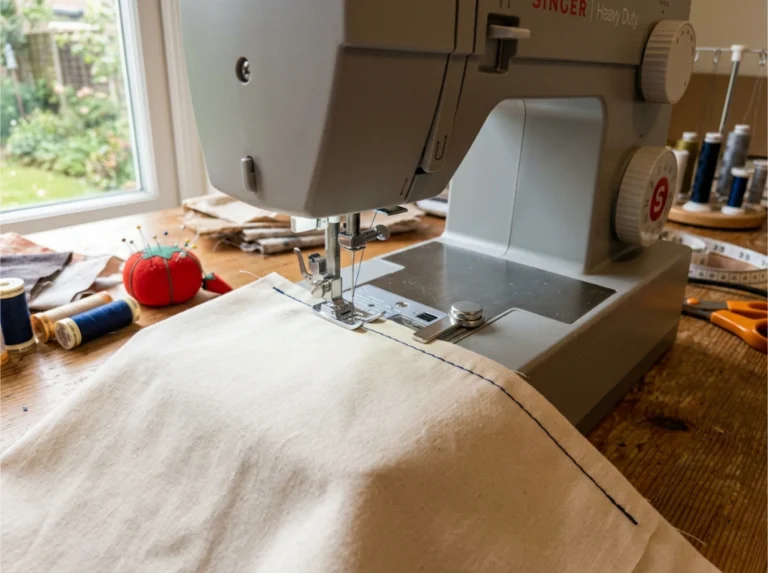
A machine is faster for long seams, but it cannot reach a small gap, ease a sleeve, or close a lining the way your hands can. As one sewist on PatternReview.com noted, hand sewing “gives you so much more control.” Learn these ten stitches and you can repair clothes, finish garments, and add small details anywhere, with a kit that fits in a drawer.
Where Should a Beginner Start With Hand Stitching?
Before any stitch, get three things right: a threaded needle, a secure starting knot, and a scrap of the same fabric to practice on.
This guide assumes you can thread a needle and tie a small knot at the thread tail. If you cannot yet, practice that first. Keep your thread 18 to 24 inches long, because longer threads tangle and form knots, a problem nearly every beginner hits. Work right to left if you are right-handed, and left to right if you are left-handed. Test every new stitch on scrap before you touch the real project, and start at the top of the list, where the stitches are easiest.
Essential Hand Stitching Patterns Useful to Every Sewer
1. Whip Stitch

The whip stitch is one of the easiest hand stitching techniques you can learn. This hand stitch consists of short diagonal stitches, often used in hemming. To create this stitch, follow these step-by-step instructions:
- Pull the yarn or your yarn needle over your top fabric, and ensure the knot stays between the two cloths.
- Pierce through your bottom fabric and exit at the same place you started with the top cloth. It will lock your starting stitches in place.
- Push the needle through the bottom fabric, creating a diagonal stitch on the edges of your fabric. Your quill and thread must exit the top cloth to secure them together.
- Repeat the process until you’ve reached the ends of your fabrics. Don’t forget to lock in your stitches.
2. Catch Stitch

The catch stitch can be called a crisscross stitch, great for front-facing fabrics and hemming-lined garments. This hand-stitching technique allows for a bit of a give. It is also a great stitch to work on circular garments like tablecloths. Unlike most hand-sewn stitches, this technique starts from the left.
To learn more about this, refer to the following steps:
- Starting at the opposite end of where you usually start, pull the thread or your threaded needle.
- Make a diagonal stitch starting where you popped your threaded needle into the other fabric.
- Pull your threaded needle to a small length and make a diagonal seam back to your starting fabric.
- Get a bit of your fabric and continue making diagonal stitches until you’ve attached the two cloths.
No products found.
(As an Amazon Associate, we earn from qualifying purchases.)
3. Basting Stitch

The basting stitch is best for holding pieces of fabric together. Do a quick and bulk straight stitch to perform this pattern. Usually, it sews together using a yarn a different color from the cloth to make it easier to see which stitches are placeholders and easier to remove.
Follow these easy steps to create this stitch:
- Take the needle in and out of the fabric up to ¼ to ½ inch long.
- You can make several stitches by popping the needle in and out of the fabric before pulling through.
- Do not lock the stitch from both ends.
4. Running Stitch

The running stitch is one of the most common and basic stitches you can do, both by hand and machine. Sewing by machine assures precision and firmness. But sewing by hand is great for a speedy stitcher and quick stitches and for stitching together narrow spaces that cannot do by machine.
See the following steps to make this stitch:
- Take the needle in and out of the fabric up to your desired stitch length.
- You can also make stitches by inserting your needle in and out of the fabric. Do it with the same length before pulling your quill into the cloth.
- Make sure stitches are locked once done.

- BEAUTIFUL Tube: 35pcs Hand Sewing Needles in 1 Transparent Storage Tube. All Needles in Assorted Sizes : 5pcs 2.6 inch (super large eye needle), 5pcs 2.4 inch (super large eye needle), 5pcs 2.2 inch (super large eye needle), 5pcs 2.1 inch (super large eye needle), 5pcs 2.0 inch (large eye needle), 5pcs 1.8 inch (large eye needle), 5pcs 1.6 inch (large eye needle)
- PREMIUM METARIALS : The Needles are made of high-quality galvanized steel, which is durable and rust-free. The tip is very small, and the tail has a grooved design. And It has a smooth surface. All these advantagesmakes its resistance through the cloth is small
- EASY THREADING : The size of pinhole is well designed. The Needle has a Large Eye, which is easier to to distinguish. We offer 2 Threaders, so the threading work becomes extremely easier
- THREADERS : We offer 2 Needle Threaders as Gift. These threaders are suitable for threading needles, especially for threading small size needles with small eyes to do sewing crafting,knitting craft, quilting, DIY. And very suitable to solve the problem of difficult threading
- WIDELY USED & PERFECT FOR EVERYONE : Our Sewing needles are perfect for all kinds of hand sewing projects and daily mending. Sewing Needles for Handsewing, Carpets, Crafts, Upholstery, Coats, Tents, Canvas, Mattresses, Mending, Embroidery, Furs, Leather Etc.
(As an Amazon Associate, we earn from qualifying purchases.)
5. Back Stitch
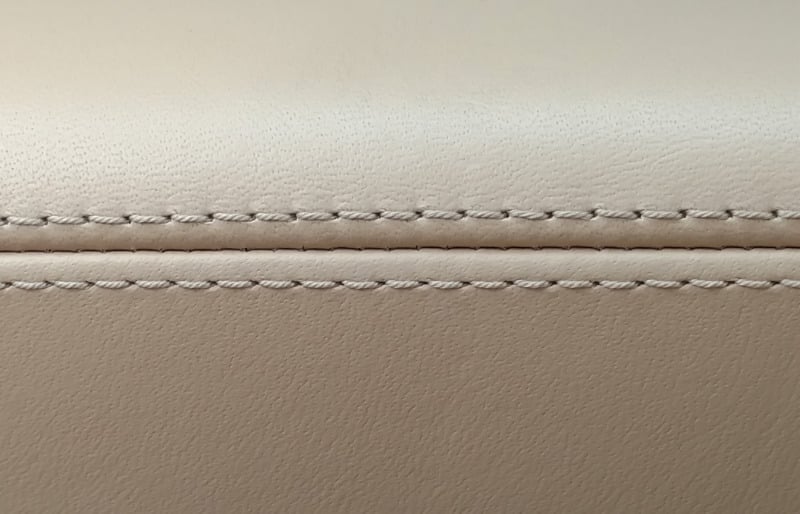
The backstitch features tiny stitches that can hold an amount of strength. This hand-stitching technique works well with mending seams or in a seam that will resist a lot of strains and pulls. Learn how to make this stitch by going through these steps:
- Pull your threaded needle from the underside of your fabric.
- Make a single running stitch.
- From the underside of your fabric, pull the thread to keep the stitch taut.
- Bring your needle up again, piercing through the fabric at a distance equal to the length of your single running stitch. Use the photo above for reference.
- Repeat the process until you finish your stitches.
RELATED: Hand Sewing: 11 Tips and Tricks For Beginners
6. Overcast Stitch
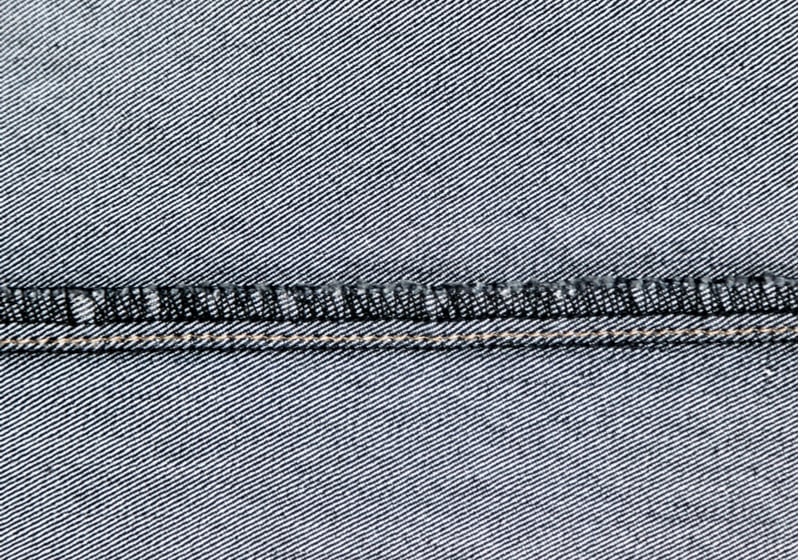
These diagonal stitches are to secure the edges of the fabric to prevent it from unraveling. It can also use to mend a tear.
7. Slip Stitch or Ladder Stitch
The slip stitch is used to make hidden seams between the two-fold edges of a flat edge. It’s also called ladder stitch because, in making this stitch, you’re making stairs using your threads. This stitch is for bindings, closing the lining, placing the applique, or closing stuffed sewing projects.
Here’s how you can do it:
- Iron the folds of the fabric.
- Take the threaded needle underneath the fold to hide the knot.
- Pull the needle and thread out from the folded edge.
- Grab a little bit of fabric underneath from the opposite side of the folded fabric.
- Pull the needle out.
- Insert the needle again to the opposite side.
- Repeat the same pattern until you close the opening.
8. Blind Hem Stitch
The blind hem stitch is known because you are creating invisible hems with this stitch. Like the ladder stitch, you grab a little bit of the fabric and produce an almost flawless hem. This hand-stitching technique works wonders on lighter and silkier fabrics. Learn how to make the blind hem stitch by following these steps:
- Slip the threaded needle underneath the folded side of the cloth to hide the knot.
- From underneath, pull your needle out and through.
- Grab a bit of the fabric underneath where the hem is sitting.
- Then, grab the folded part of the fabric again from the side where you started.
- Repeat the same pattern until you finish the opening.
9. Securing Stitch
Every sewing project ends somewhere. With a securing stitch, you prevent your stitches from unnecessary loosening. Here’s how you can do it:
- Make a small backstitch and create a loop thread.
- Point the needles inside the loop and pull through.
- Repeat the process twice to make a small knot and make a strong lock.

When Should You Use Each Hand Stitch?
| Sewing Situation | Recommended Stitch |
|---|---|
| Temporary stitching | Running stitch |
| Strong seams | Backstitch |
| Invisible hems | Slip stitch |
| Decorative edge finishing | Blanket stitch |
Choosing the right stitch helps ensure durability, appearance, and ease of sewing.
What Tools Do You Need for Hand Stitching?
You can start hand stitching with five low-cost basics: needles, thread, sharp scissors, pins, and an optional thimble.
- Starter (under $15): a mixed pack of hand needles, all-purpose polyester thread, and basic scissors.
- Mid ($15 to $40): sharps and betweens needle sets, cotton and silk thread, a leather thimble, and shears kept only for fabric.
- Invest ($40 and up): quality shears plus a needle set you replace as they dull, since dull or bent needles drag and skip.
Keep a small kit in a drawer so quick repairs stay painless.
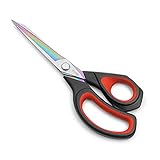
- Durable Strong Stainless Steel Rust Resistant Blades: Forging press manufacturing process enables high-density steel that makes 3 times harder than normal stainless steel and are smoother cutting.
- Ultra Sharp Scissors All Purpose: Easy for cutting more than 16 layers of fabrics. Ideal for sewing, tailoring, quilting, dressmaking, cutting patterns, alterations, hand craft, home and office use etc.
- Multi-color Titanium coating blades. They are strongly resistant to rusting and to adhensives such as glue and tape, making them ideal for almost any kinds of tasks.
- Comfort Grip Handle: Ergonomic design for precision control and max comfort.
- Every Product is independently tested and selected to ensure the performance you expect. The result is a quality item backed by our commitment to your satisfaction.
(As an Amazon Associate, we earn from qualifying purchases.)
Keeping these tools in a small sewing kit makes quick repairs easier.
Beginner Tips for Hand Stitching
Practicing these techniques improves stitching consistency and helps beginners gain confidence.
- Use shorter thread lengths to prevent tangling.
- Match thread color with fabric for invisible seams.
- Practice stitches on scrap fabric before sewing a project.
- Use a thimble if pushing the needle through thick fabric.
Conclusion
Ten stitches, practiced on scrap, give you the foundation for nearly every repair and finish. The running stitch, backstitch, slip stitch, and blanket stitch alone cover gathering, strong seams, invisible closures, and decorative edges. With time, hand stitching becomes faster, neater, and genuinely useful, whether you are mending a hem or finishing a garment by hand.
Frequently Asked Questions
What is the easiest hand stitch for beginners?
The running stitch is the easiest, since you simply pass the needle in and out of the fabric at even intervals. Most beginners sew a steady line within a few minutes of practice. Start there on scrap fabric, then move to the backstitch once your spacing looks consistent.
What is the strongest hand stitch?
The backstitch is strongest because each stitch loops back into the previous one, forming a continuous line like a machine seam. Use it anywhere a seam takes strain, such as a repaired side seam or crotch seam. It uses more thread than a running stitch but holds far better over time.
Why do my hand stitches keep tangling and knotting?
Tangling usually means your thread is too long or twisting on itself. Keep lengths to 18 to 24 inches, and run the thread through beeswax to smooth it. If a knot starts to form, stop and work it loose gently rather than pulling tight, which only sets the knot harder.
Can you really sew a whole garment by hand?
Yes. Before machines existed, every garment was sewn by hand, and many couture pieces still are. It is slower, but hand stitching gives more control on curves, sleeves, and delicate fabric. Most beginners use it for hems, repairs, and finishing rather than full garments, which is a practical place to begin.
How long should hand sewing thread be?
Keep your thread roughly 18 to 24 inches, about the distance from your fingertips to your elbow. Shorter lengths tangle and knot much less than long ones. If you run out mid seam, secure the old thread and start a fresh length rather than fighting an overlong strand.
What can I use if I do not have a thimble?
A thimble protects your finger when pushing the needle through thick layers, but it is optional for light fabric. If you do not have one, a folded scrap of leather or a sturdy adhesive bandage on your fingertip works. For everyday mending on cotton, many sewists skip it entirely.
Which stitch stops fabric edges from fraying?
Both the overcast stitch and the blanket stitch protect raw edges. The overcast stitch wraps the edge with plain diagonal stitches, while the blanket stitch adds a decorative looped border. Choose the overcast stitch for a quick, simple finish, and the blanket stitch when you want the edge to show.
Why did you vote that way? Drop your take in the comments.